Alaska
Eurodam cruise ship review: An ideally sized ship for the Caribbean and Alaska – The Points Guy


Eurodam is proof that cruise lines can indeed change with the times. On my first-ever cruise with Holland America Line nearly two decades ago, I struggled to find onboard entertainment, and the ship was quiet after 9 p.m., with most travelers hidden away in their cabins. This year, on a late-season cruise to Alaska, I feared that onboard life would again be dull.
I should not have worried. I was so busy all day that I often retired to my cabin around 10 p.m., while Eurodam’s more energetic guests continued the party long after I had snuggled into bed. The change from my first Holland America cruise to my most recent was due both to the type of guests on board and the increased entertainment options available on the ship.
The 2,104-passenger Eurodam was completely sold out, and every cabin was occupied for my weeklong Alaska sailing. My shipmates included everyone from young honeymooners and middle-aged couples traveling together without their kids to multigenerational family groups and retired couples and friends.
I can attest that they were game for everything. Live music shows in the Rolling Stone Lounge were standing room only, cocktails flowed in the Ocean Bar and the entertainment team even hosted a bar crawl with games and prizes. I might have fallen asleep before the signature Orange Party started, but many Eurodamers were prepared to party, decked out in orange shirts, gowns, accessories and even wigs.
By day, the Crow’s Nest observation lounge was always packed with cruisers playing games, making art and chatting over drinks and ocean views, and the line for afternoon tea in the dining room snaked halfway down the deck. The energy was palpable in Glacier Bay, where the decks were lined with avid glacier and wildlife spotters. Shore excursions sold like hotcakes, and everyone I spoke to had a blast on their tours.
So if you want a sleepy cruise to Alaska in the summer (or the Caribbean in the winter), keep on looking. Eurodam passengers are here for all the fun (and the food) day and night, on and off the ship.
Overview of Eurodam

The 2,104-passenger, 86,273-ton, 11-deck Eurodam was the first ship in Holland America’s Signature Class. It debuted in 2008, followed two years later by Nieuw Amsterdam. The ship is neither the largest nor the smallest in the fleet, which means it’s big enough to offer plenty of onboard dining and entertainment but not so big that every space feels overcrowded.
Eurodam was the first Holland America ship to feature the pan-Asian restaurant Tamarind and Italian-themed Canaletto, located in a section of the Lido Market buffet. Its third specialty restaurant, Pinnacle Grill, is in a lovely spot that’s open to the atrium rather than within a closed-off restaurant space.
Ideal for cold-weather cruising in Alaska, Eurodam has a retractable glass dome over its main pool, as well as an open-air aft pool. The ship has a main theater and two live music venues, Billboard Onboard (dueling pianos) and the Rolling Stone Lounge (multipiece cover band), but does not have the line’s popular B.B. King’s Blues Club.

Daily Newsletter
Reward your inbox with the TPG Daily newsletter
Join over 700,000 readers for breaking news, in-depth guides and exclusive deals from TPG’s experts
Eurodam is considered a premium cruise ship. It’s smaller and a bit more upscale than 4,000-plus-passenger megaships but larger and has less inclusive fares than luxury cruise ships. While it has a kids and teens club, the ship does not have the expansive kids club space or as robust a roster of family activities as Carnival Cruise Line and Royal Caribbean cruise ships. It’s ideal for multigenerational families (especially with older or adult children), couples and groups of friends, and anyone looking for big-ship amenities without the crowds on giant vessels.
What I loved about Eurodam
Fresh fish


Holland America has doubled down on sourcing fresh fish locally in its major cruise destinations and has partnered with Iron Chef Masaharu Morimoto, who is serving as the line’s global fresh fish ambassador. That means in Alaska, Eurodam’s restaurant menus feature locally caught salmon, cod, halibut, rockfish and Dover sole; in the Caribbean, you’ll have the option to taste local mahi-mahi, flounder, tuna and yellowtail snapper.
The daily salmon bowl in the Dining Room was consistently the best thing on the menu and perfectly cooked. The dinner menus highlighted Alaska-themed fish dishes nightly, and I enjoyed fresh cod sliders and fried fish sandwiches. The ship even ran a pop-up Alaska seafood boil one night (for an added fee) for fish lovers to really dig into locally sourced seafood.
If you enjoy seafood, the program is definitely a reason to choose Eurodam or one of its sister ships.
Rolling Stone Lounge

The place to be on Eurodam after dinner is the Rolling Stone Lounge. A seven-piece band (five of them sing as well as play instruments) performs three sets of rock, pop and R&B covers nightly at this intimate venue on Deck 2.
I’m not sure whether I loved the band or the audience more. The band was incredibly versatile and energetic, jumping around on stage and even coming down onto the dance floor to rock out with the guests. Their vocal range was incredible — and so were their concert outfits.
But the band wouldn’t be quite the same draw without the crowd. Cruisers of all ages crowded the dance floor to bust a move to “Footloose” or hold their sweetheart close to “Unchained Melody.” I watched single ladies unabashedly strutting their stuff, older couples with serious footwork and parents dragging embarrassed teens up to dance with them. The people-watching was as good as the tunes.
Tamarind

If you like Asian food, Tamarind is my favorite restaurant on board and worth the extra fee. The purple-hued restaurant spans Deck 11 midship with window-facing seats on both sides of the ship and a large bar and lounge space on the opposite side of the elevator hall.
The decor is inviting, with plush banquettes lined with pillows scattered among the tables, but the menu here is the real draw. Dishes are full of flavor and offer something for everyone, whether you’re a beef lover or a vegetarian. The themed cocktail menu draws from flavors like lychee and yuzu; try the shiso sour for something delicious and different.
No offense to the Iron Chef, but my travel buddy and I both preferred the regular menu at Tamarind to the Morimoto at Sea pop-up that takes place here one night per cruise.
Alaska-themed activities and dining

Caribbean cruisers can skip this section, but I would be remiss if I didn’t mention Eurodam’s complete embrace of its “We love Alaska” motto (which is plastered across the ship’s bow). The ship offers an Alaska-themed brunch on two sea days, Alaska-themed craft cocktails (with glacial ice!) in the Ocean Bar and talks on Alaskan themes in the World Stage during time at sea. A wildlife guide sails with the ship to help guests spot whales, porpoises and seals in sailing channels where animals are often present. You can buy Alaska-themed gifts in the ship’s shop.
In Glacier Bay National Park and Preserve, the captain has permission to spend an hour at the glacier, and the crew members keep passengers warm by offering pea soup on the outer decks and selling spiked coffee and hot chocolate in souvenir cups. The park rangers, who include Alaska natives, provide narration of the Glacier Bay transit, point out wildlife, answer guest questions, and bring aboard books and national park souvenirs to sell in the Crow’s Nest.
What I didn’t love about Eurodam
The ship is showing its age

Eurodam did get a refurbishment in 2023, but it didn’t touch all areas of the ship. The cabin decor did not feel modern, and the dark wood furnishings in my room (desk, wardrobe, chairs) all showed scratches and dings. The wall paneling in my room had stains and mismatched sections where possibly one section had been replaced and didn’t exactly match.
The ship also seemed to struggle with some plumbing issues. I got whiffs of sewage smells in certain sections of cabin hallways. Our shower drain stopped working on the last few days of our cruise, causing us to constantly flood the bathroom. Overall, it was not a huge problem, but it’s best to approach your onboard living quarters with the right mindset.
Queues

On a roughly 2,100-passenger ship in the premium category, I would expect to find fewer crowds and queues than on a megaship. But on several occasions, Eurodam did not seem ready for passenger demand.
Embarkation in Seattle took two hours (all of it spent standing in lines), partly because there were no porters taking luggage, and we all had to wait in line to drop off our bags inside the terminal before proceeding to security and check-in. I don’t know if that was a one-off problem, but I was surprised Holland America didn’t have the process down pat after an entire season of Alaska cruises from the port.
The queue for the special Royal Dutch Tea formed 15 minutes prior to the dining room doors opening. I made the mistake of showing up just minutes before teatime and was sat at the very back of the dining room. Our table of six never got served the three-tiered tray of snacks. When we finally got up and chased down some waiters, they brought us some plates of leftovers (and we scavenged more food from nearby tables as their guests left).
You’ll also wait in line if you want to purchase coffee drinks at the Explorations Cafe in the Crow’s Nest, get the shuttle back to port in Sitka (wait time can be a half-hour) and dine at peak times in the Dining Room without a reservation. Adjust your expectations accordingly.
Eurodam cabins and suites

Eurodam offers a variety of cabin and suite choices, from the usual window insides, ocean-view rooms and cabins with private balconies to four types of suites and spa-themed rooms in all categories from inside to suite.
I was booked in a guarantee cabin, which meant I would get at least a room with a balcony, but Holland America chose my exact room location from whichever cabins hadn’t been selected by other guests. The line assigned me to Room 6049, an ambulatory-accessible cabin. That meant the room had some features to assist a traveler with mobility issues, such as a ramp onto and out of the balcony and a roll-in shower with handrails, but it did not have as much open space as would be required to accommodate someone in a wheelchair.
The room was located on the corner where the ship’s exterior juts out, so the exterior wall of our room was on a slant (rather than at right angles to the other walls). It also meant our balcony was larger than a standard one, which was a welcome addition in Alaska.
Like most cabins on board, the room featured two twin beds that can be pushed together into a queen. Reading lights and a USB outlet were on each side of the wooden headboard. The bedside tables had an open shelf and two drawers; one had the phone. A large drawer was under the foot of each bed (where I kept extra bags and my laundry); you could slide your suitcases under the main part of the bed.

A flat-screen TV was across from the bed. It offered a handful of news, sports and entertainment channels, movies on demand, podcasts and audiobooks, bow and aft cams, and the same ship information found on the Navigator app.
Crowded in next to one side of the bed and adjacent to the sliding glass door leading to the balcony was a desk with a minifridge and no doors. It was the main place to charge your electronics with two North American 115-volt outlets, two 220-volt European outlets and a USB port. A mirror was above the desk, but there were no shelves.
Pro tip: I asked our room steward to remove all the minibar items that were cluttering up our minifridge and desk area since we did not intend to buy anything.

Most standard cabins seem to have a sofa with a coffee table. Our room had two red upholstered chairs that had seen better days and a coffee table. However, they were lined up against the wall as there wasn’t space to arrange them in a cozy chat layout. I moved one of the chairs to the desk to use my laptop. A corner shelf on the other side of the glass door offered a few additional outlets.
The main storage for the room was a two-section wardrobe. One side had a few shelves, including one holding the safe, and a big empty area housing the life jackets, which seemed wasted. The other side had two hanging racks, but I removed one so we could hang dresses; there was also a high shelf and a low space for shoes.
Bathrobes were also provided in the room for use on board. Additionally, the cabin included a tray with an ice bucket and a corkscrew/bottle opener, throw blankets for use on your balcony in Alaska and a hair dryer. Unusual for cruise ships, one of the drawers also contained a Bible!
1 of 2
Accessible cabin bathroom on Eurodam. ERICA SILVERSTEIN/THE POINTS GUY
The bathroom was large, with a no-threshold shower with a seat and wand showerhead but no additional shelves for toiletries. By the sink, three skinny glass shelves are all you get to store your belongings; there wasn’t much counter space or a shelf below the sink (or even hooks on the back of the door).
The balcony, though larger than average, had the standard furnishings for this ship: two metal-and-mesh chairs with movable footrests (a nice touch!) and a small, round drinks table.

I have to say, I was not a fan of this room for a few reasons:
First, if my description didn’t make it obvious, the room lacked storage. Other than the minidrawers in the nightstands, there were no drawers appropriately sized for storing underwear, socks, swimwear and T-shirts. You can manage with the closet, but many of the shelves are too high to reach if you’re on the shorter side. There are four large hooks by the cabin door for hanging jackets or bags but none in the bathroom for wet towels. Standard cabins have an additional wardrobe section and more bathroom storage as well.
I was glad I brought some magnetic hooks to hang on the walls in the cabin to help with storage.
Also, the room didn’t have an entrance hallway as many standard cabins do. If I was asleep and my friend went out to get coffee, the light from the hallway streamed right into my face.
The odd layout also meant there was no sitting area. The red chairs were really only useful for throwing extra stuff on or sitting by the desk. The coffee table also becomes storage only because you can’t arrange it facing a chair without blocking the navigable space in the cabin. It made ordering room service less appealing as there wasn’t a good dining setup.
While not a problem for me, picky folks should know that the cabin furniture has clearly been around awhile and was not replaced in the ship’s 2023 dry dock. All of the wooden pieces had scratches and dings. The walls were also marked up. The room looked outdated and was not particularly inviting. It did not live up to the premium nature of a Holland America cruise.
Eurodam offers several types of accessible cabins in various cabin categories. Fully accessible cabins are set up for wheelchair users with wider doorways, access to both sides of the bed and a roll-in shower with a seat and lowered controls. Single-side-approach versions of these cabins have the same accessible features but only have space for wheelchair access to one side of the bed. Ambulatory-accessible cabins, like mine, have wider doorways and an accessible shower but do not have the additional floor space to accommodate a wheelchair.
You’ll find accessible cabins in inside, ocean-view, balcony, Signature Suite and Neptune Suite categories.
One unique aspect of Eurodam’s cabin layout is that most standard cabins feature tub-shower combos — great if you love baths but less great if you have trouble stepping into and out of a tub to shower. Inside cabins and accessible rooms are shower-only.
All the cabins and suites on decks 10 and 11 are spa cabins with easy access to the ship’s spa.
The smallest suites are Signature Suites (in both regular and spa varieties), ranging from 273 to 456 square feet, and feature large sitting areas with sofa beds and bathrooms with dual vanities and full-size whirlpool baths. Each Neptune Suite, at 506-590 square feet, upgrades from a queen bed to a king and adds a dressing room and a larger sofa bed.
Two Pinnacle Suites are the top accommodations at 1,357 square feet. These feature separate living and dining rooms, pantries and microwaves, private verandahs with whirlpools, guest toilets and stereo systems.
If you’re not staying in a Neptune or Pinnacle suite and want upgraded amenities and priority, you can pay extra for Club Orange access. This entitles you to priority access (check-in, tender boats, lines at guest services and shore excursions), priority seating and an expanded menu in the Dining Room, concierge service and other amenities. Guests in the top two suite categories get all these perks automatically included in their fare.
Everything you need to know about Holland America cruise cabins and suites
Eurodam restaurants and bars

Eurodam’s most noteworthy dining element is its locally sourced fish program I mentioned above, but that’s not the only culinary standout on board. I found the Dining Room menus to be expansive (especially the breakfast and brunch menus), with a mix of creative or international dishes and more standard cruise favorites.
The buffet is a cut above with its sushi counter and salad bar, which offers a large selection of veggies and proteins. A mix of specialty restaurants and pop-up venues offers dining variety to guests willing to pay extra — and the meals in these eateries are generally worth the extra charge.
Look for dishes across the ship’s restaurants created by world-famous chefs — such as David Burke, Jacques Torres and Ethan Stowell — who partner with Holland America. These are in addition to dishes and drinks curated by chef Morimoto, both in the Dining Room and at his once-a-cruise pop-up restaurant.
Holland America restaurants: The ultimate cruise guide to food and dining on board
Restaurants

The heart of the dining scene on Eurodam is the descriptively named Dining Room on decks 2 and 3. It’s open for breakfast and lunch on port days; on our cruise, an Alaska-themed brunch was served on two of the sea days.
Breakfast and lunch are open seating. You’ll be asked if you’d like to share a table or dine with just your party (possibly incurring a wait if the correct-size table is not currently available).
The breakfast menu is extensive, which makes the Dining Room a more compelling choice than on some cruise ships for a morning meal. In addition to all the cereal, pastries, eggs and pancakes you’d expect, options include several types of Asian congee, Indian aloo masala and egg bhurji, kippered herring with scrambled eggs, corned beef hash, Swedish pancakes and banana oatmeal bread French toast. Do not miss the spiced potatoes that come with the Indian breakfast dish; we talked about them for an entire day, they were that delicious.
Vegans will find nonmeat, nondairy versions of cream cheese, scrambled eggs, yogurt, cheese and sausage links to substitute across the menu.
Lunch is offered on select days, and the menu features an abbreviated list of choices across starters, mains and desserts. I enjoyed a spinach and artichoke dip, and a tuna melt with crispy french fries after a day out in Ketchikan.
1 of 5
Dining Room lunch. ERICA SILVERSTEIN/THE POINTS GUY
The Alaska-themed brunch was so good that we timed our meals to try it for breakfast and lunch. The creamy goat cheese dotted with assorted berries was a lovely little starter; the Alaskan blueberry pancakes needed more blueberries, but the wild forest mushroom crepes were tasty — once I scraped off the excessive Hollandaise sauce. For lunch, the fisherman’s halibut sandwich was essentially a classier version of fish-and-chips.
Guests can choose their dining style for dinner, either assigned table seating at 5 or 8 p.m. or open-seating dining from 5 to 9 p.m. You’ll be assigned one of the two dining rooms.
The dinner menu is divided into starters (fresh cod sliders, seafood deviled eggs), mains (chile rellenos, pork medallions with huckleberry jam, homemade lasagna) and desserts (chocolate and whiskey torte, strawberry crisp), with Alaskan specialties highlighted. You can also pay extra for Pinnacle Grill filet mignon, lobster and strip loin steak and Iron Chef Morimoto’s fresh halibut and epice lobster tails.
Every evening in Alaska, a different salmon bowl was offered, and we found these to be the best entrees. The salmon was moist and tender, and the different sauces and toppings added just the right amount of flavor.
Holland America traces its roots to the Netherlands and loves to embrace its heritage. Look for the Dutch-themed dinner one night per cruise in the Dining Room to try Dutch specialties such as Hodge Podge Klapstuk (braised beef brisket) and Bossche bol cream puffs.
1 of 2
Royal Dutch Tea on Eurodam. ERICA SILVERSTEIN/THE POINTS GUY
A Dutch-themed afternoon tea is served on select days at 3 p.m. and is so popular that the line snakes down the Deck 3 hallway by 2:45 p.m. Arrive early — we were among the last in line on the first sea day and got served leftovers instead of the cute three-tiered trays of finger sandwiches, scones and sweets. The snacks and sandwiches are nothing special, but the experience is fun. The best treats are the stroopwafels, so make sure your tray includes them.
Cruisers looking for a quicker, more casual meal make their dining home the Lido Market buffet, found between the ship’s two pools on Deck 9. It’s open from 6 a.m. to 11:30 p.m. with hourlong closures between meals. Still, it was surprising how many guests we spoke to showed up for a meal at exactly the wrong time. The tea and coffee station closest to the central pool is open 24 hours a day.
Breakfast stations serve all your morning favorites, including made-to-order eggs and omelets.
1 of 6
Lido Market breakfast. ERICA SILVERSTEIN/THE POINTS GUY
At lunch, I was a big fan of the make-your-own salad bar, which was stocked with plenty of veggies and proteins like seared tuna and chicken. I’m not a sushi fan, but my son would have drooled over the always-available sushi. I kept eyeing the Indian and Asian options. My travel buddy was an avid customer of the deli sandwich counter, though some of the hot choices (a pasta bar, lasagna, fish-and-chips and so on) looked tempting. Skip the dessert display and treat yourself to the ship’s worth-the-calorie cookies, with or without a scoop of ice cream on the side.
Dinner is similar to lunch, with a carving station and hot entrees (many repeats from the Dining Room), an international station, a salad bar, a pasta station and an array of desserts. It’s an especially nice option in Alaska when you don’t feel like dressing up for dinner after a day outside in chilly weather. After 8 p.m., most of the stations shut down, and the remaining ones switch to late-night fare, such as macaroni and cheese, fried chicken and a taco bar.
Two casual options are situated on either side of the Lido Market, one on each of Eurodam’s pool areas, so you can grab a quick bite without having to dry off. You can also bring food from these venues into the buffet to mix and match.

Dive-In, by the central pool, is Eurodam’s grill. It serves burgers (beef, portobello mushroom, Beyond and a chicken sandwich) and dogs with crispy french fries, served naked or with a choice of toppings. I’ve never gone wrong with a sandwich here.

NY Pizza by the aft pool behind the Lido Market is open all afternoon and into the evening hours, so it’s a great choice when you’re hungry during off hours. Pick up a slice or a salad, or order a 9-inch thin-crust pie from a list of options or build your own. Try the Primo, created by acclaimed Seattle-based chef Ethan Stowell, with salami, pickled peppers and red onion, or the Wall Street with prosciutto, arugula and gorgonzola. As far as cruise ship pizza goes, it’s not the best, but if you order a pie hot from the oven, it will scratch your itch for cheesy goodness.

You’ll notice that one corner of the Lido Market has an Italian theme and slightly different furnishings. This is Canaletto, an Italian specialty restaurant that takes over a section of the buffet restaurant each evening. It’s a sit-down, waiter-served restaurant featuring Italian specialties such as burrata, veal and sage meatballs, Chianti-braised beef short ribs, spaghetti with shrimp and clams, tiramisu and affogato. The charge to dine here is $25 per person.
Seafood fans cruising in Alaska should keep an eye out for the one-night-only Seafood Boil pop-up in the Lido Market. For $35 per person, you get a mix of Alaska seafood, such as clam chowder, salmon, mussels, clams and shrimp, and a berry crisp and vanilla ice cream for dessert.

If you’re looking to splurge on a fabulous meal, the Pinnacle Grill on Deck 2 midship is Holland America’s signature steakhouse and seafood venue. It’s open for both lunch and dinner for a fee ($19 or $46 per person, respectively). The highlight here is a selection of 28-day wet-aged USDA Prime steaks, but you can also choose from grilled lamb chops, lobster tail, a tomato and eggplant tarte tatin and other nonsteak options.
Personally, I’ll always vote for the chocolate souffle or key lime pie for dessert, but the signature dish here is the Not-So-Classic Baked Alaska, which features Ben and Jerry’s Cherry Garcia ice cream.
You can still order steak off the smaller lunch menu, but you’ll find a mix of entrees and sandwiches, such as the Pinnacle burger, a lobster roll and a beef tri-tip sandwich.

Tamarind is one of my favorite cruise ship specialty restaurants industry-wide because I love Asian food of all kinds. Everything I’ve eaten there has been delicious, from the satay sampler, spring roll appetizers, dan dan noodles and crispy duck entrees to the yuzu cheesecake and yuzu and lychee sorbet desserts.
The purple and gold decor and black Japanese serving ware also speak to me, and the venue on Eurodam seemed brighter to me than on newer ship Rotterdam (though maybe that had more to do with the time of day). The surcharge to dine in Tamarind is $35 per person (and totally worth it).
1 of 7
Tamarind on Eurodam. ERICA SILVERSTEIN/THE POINTS GUY
Tamarind spans both sides of Deck 11 midship — in the middle is its sister restaurant, Nami Sushi. This a la carte restaurant features a mix of sashimi, nigiri sushi and sushi rolls, but you can also order starters, mains and desserts, some from the Tamarind menu and others exclusive to Nami.
Start your meal with tofu and wakame miso soup, tuna poke or spicy edamame; try one of the signature dishes, such as Hamachi usuzukuri or seared albacore tuna; and end on a sweet note with Japanese mochi ice cream.
Tamarind is also the site of the Morimoto at Sea pop-up, a fish-forward dining experience. For $55, you can enjoy a three-course meal with options created by the celebrity Iron Chef. Start with a sushi plate or fresh tuna pizza, and enjoy lobster pad thai or whole sea bass for your main course. Desserts, thankfully, are fish-free. The showstopper is the dark chocolate sphere that melts apart with a drizzle of hot salted caramel; if you like pop rocks and coconut, try the white chocolate lime ganache.
I applaud Holland America for keeping room service complimentary. You can order breakfast between 6 and 10 a.m. from a menu that includes juices, tea and coffee, cereal, toast, fruit, a continental breakfast basket of pastries and yogurt, vegetable frittata, yogurt parfait and an All-American breakfast with eggs, hash browns, bacon and sausage. A few extra-fee items include lobster Benedict, steak and eggs, and a breakfast smoothie.
All-day dining from 11 a.m. to 11 p.m. includes starters like chicken noodle soup and Caesar salad, entrees like three-bean chili and oven-roasted chicken, sandwiches like a barbecue pulled pork sub and club sandwiches, and desserts including New York cheesecake and chocolate layer cake. A limited version of this menu is available for late-night ordering from 11 p.m. to 6 a.m. A kids menu features chicken nuggets, spaghetti with meatballs, miniature burgers, grilled cheese and banana pudding.
For an additional fee, you can order select items to your cabin from the specialty restaurants. Order Dive-In burgers and dogs for $5 per item, 24 hours a day. The Pinnacle Grill and Tamarind menus are available only during dinner hours; select steaks and lobsters are priced a la carte, while bento boxes are $15 each.
Bars

Eurodam is not the biggest cruise ship, but you will still find a bar nearly everywhere you go. Some are stand-alone, while others are connected to entertainment and dining spaces. Look for happy hour specials from 4 to 5 p.m. at Billboard Onboard and the Ocean Bar, when drinks regularly priced up to $11 will be 50% off.
The Pinnacle Bar on Deck 2 outside the Pinnacle Grill has a split personality. In the morning, it serves extra-fee specialty coffee drinks to take the pressure off the main coffee bar on Deck 11. In the evenings, it becomes the ship’s wine bar and the spot for predinner drinks before a meal in the Pinnacle Grill across the way or the Dining Room down the hall.

The Ocean Bar on Deck 3 midship is a popular hangout day or evening, and you can listen to a live band during dinner hours. Here is where you’ll find destination-themed craft cocktails, including six drinks created by mixologist Sam Ross specifically for Alaska. (Don’t miss the Klondiker or the PNW Penicillin.) When the ship heads to the Caribbean, this drink menu will be swapped out for a new collection created by James Beard Award-winning drinks historian David Wondrich.
The bartenders here also create some specialty drinks with a wow factor. If you like your drinks sweet, order a bubble martini; if you like yours smokey (literally), order a foggy boulevardier or a cherry Old-Fashioned.

Music venues Billboard Onboard and the Rolling Stone Lounge, as well as the casino, have bars attached with themed cocktail menus. I’m told the Billboard Onboard bartenders make a mean white Russian.
The Lido Bar by the main pool and the Sea View Bar by the back pool on Deck 9 are your go-to’s for umbrella drinks on a hot day or beer and cocktails with your buffet lunch.
The Explorations Cafe in the Crow’s Nest on Deck 11 is the ship’s main coffee bar, where you can start (or continue) your day with lattes, cappuccinos, hallmark and better-than-the-Lido coffee, with or without alcohol. It also serves cocktails to folks camping out in its comfy seating throughout the day and evening.
1 of 2
Tamarind Bar on Eurodam. ERICA SILVERSTEIN/THE POINTS GUY
A hidden gem on this ship is the Tamarind Bar across the hall from the restaurant. Its exclusive cocktail menu includes Asian-inspired drinks such as the Shiso Sour and the Wasabi Cocktail. Cozy up to the small bar, sink into an easy chair by the window or take a group to one of the curtained-off cabanas. The bar is a quieter alternative to the Crow’s Nest crowds on sea days.
Eurodam activities

You will find your way easier around Eurodam when you remember that all the fun is in the front and all the food is in the back. You’ll find the key entertainment and activity spaces on decks 2 and 3 and decks 9 to 11, mainly forward and midship.
Our cruise was light on activities beyond wildlife viewing, but people had no problem keeping themselves entertained. Sea day fun included line dance classes, arts and crafts, bridge and mahjong games, bingo, trivia and destination talks. You’ll also find all the promotional events, including spa seminars, shopping events and art auctions.
Don’t miss On Deck for a Cause, a charity walkathon around the ship. In Alaska, the funds raised benefit education, science and research in Alaska’s parks. Participants and donors will receive a T-shirt.

The heart of any cruise ship is the pool deck, and Eurodam’s has a retractable glass roof, so the pool can be used in rainy, cool Alaska. The ship has two pool areas on Deck 9. The covered pool is the midship Lido pool, flanked by three hot tubs and plenty of lounge chairs. It does get humid inside with the roof closed. One side of the ship is lined with curtained-off cabanas available for rent.
The aft Sea View pool and its two hot tubs are open to the elements. The smoking area is also here, by the Sea View bar. In Alaska, it’s a popular spot for wildlife viewing, though if you like an outdoor hot tub on a chilly day, come on over.

The Retreat sundeck on Deck 11 is an exclusive area featuring cabanas with padded lounge chairs and a seating area with a table. Only passengers who pay to rent a cabana for the day or the entire cruise can access the sundeck.
Cabanas come with bathrobes and towels, warm and cold towels, chilled bottles of water, a fruit basket, midafternoon ice cream and a late-afternoon snack of sparkling wine, frozen grapes and chocolate-dipped strawberries. You’ll also receive special bar, breakfast and lunch service. The Retreat was empty in Alaska, but in the Caribbean, I’d imagine it’s a great way to escape the pool deck crowds. (Unlike on some Holland America ships, Eurodam’s Retreat does not feature a hot tub.)
Forward of the Lido pool is the ship’s spa, salon and fitness center. You can pamper yourself with massages, facials, men’s shaves, hair styling and pedicures at upmarket prices. Look for embarkation or port day specials or multiple treatment discounts.
You can also buy a day or cruise pass to the ship’s thermal suite. It includes a hydrotherapy pool, as well as a thermal suite with heated lounge chairs, steam rooms and saunas.
1 of 6
Spa on Eurodam. ERICA SILVERSTEIN/THE POINTS GUY
The fitness center seems large because the group fitness class space is in the center of the room rather than in a separate space. Treadmills, elliptical trainers, stationary bikes and rowing machines face a row of windows. You can also work out with free weights or resistance machines.
It’s free to use the fitness center and to attend certain classes, but others — like yoga or boot camp — cost extra.
Pro tip: The only water bottle filling station we could find on board was in the fitness center.
The pickleball craze has taken over the sports court on Deck 11 aft, and both lessons and competitions take place on multiple days throughout each cruise.
1 of 3
Crow’s Nest. ERICA SILVERSTEIN/THE POINTS GUY
The Crow’s Nest on Deck 11 features an art studio on the port side and a game lounge on the starboard side. You can attend free art classes such as watercolors, origami folding or calligraphy, or pay extra for longer and more in-depth classes, such as guided painting on canvas.
We saw many cruisers putting together puzzles or playing board games (found in “Deal or No Deal”-style metal briefcases) on sea days. Between the comfy chairs by the floor-to-ceiling windows and the ever-popular coffee bar, the Crow’s Nest is always packed, so bring your patience if looking for a table.

You can try to win some fun money at the game tables and slot machines in the casino on Deck 2. The venue is nonsmoking, so you can’t light up while you double down.
Spend your winnings at the ship’s shops on Deck 3. You can purchase everything from fine jewelry and watches to makeup and perfume, designer handbags, Holland America logo wear and destination-related souvenirs. A separate display and shopping nook is dedicated to Effy jewelry.
If you’d rather purchase art, head to Deck 2, where Park West has set up an art gallery. You can bid on paintings and sculptures during auctions on board. If your favorite subject is yourself (or your loved ones), you can buy photos taken by the ship’s photographers, as well as cameras and binoculars, at the photo shop on Deck 3. You can also set up a portrait session to get those Christmas card photos.

A library on Deck 3 is more like a bookstore, with multiple copies of a curated collection of popular books, rather than a library with cozy reading nooks. Borrow your book and read it elsewhere on board. There’s also a take-one-leave-one shelf for guest-donated books.
Holland America offers the appropriately (albeit uninspiringly) named Kids Club on all of its ships. It accommodates children from ages 3 to 17 under the supervision of professionally trained youth staff.

Children are split into three groups — Kids (ages 3 to 6), Tweens (7 to 12) and Teens (13 to 17) — for age-appropriate activities that might include video game play, arts and crafts, scavenger hunts, theme parties and poker tournaments. Two play areas are on Deck 10 midship; the High Score game room is stocked with pingpong, skee ball and other games for kids and teens to enjoy on board.
The atrium area on Deck 1 houses the guest services desk and future cruise booking desk, plus a small internet cafe. The shore excursions desk is not in this area (as it might be on other cruise lines) but up in Explorations Central on Deck 11 forward. Groups on board host seminars and meetups in the three meeting rooms on Deck 3.
Eurodam shows

The World Stage, which spans decks 1 to 3 at the front of the ship, is Eurodam’s main entertainment space. On my weeklong cruise, the ship’s cast of singers and dancers put on three song-and-dance revues. If you like that sort of thing, the shows are a fine way to pass 45 minutes, but you will not miss much if you skip them entirely.
On the other nights, guest performers take the stage. On our cruise, these included a comedian and a piano virtuoso.
All Holland America ships are big on live music, and Eurodam is no exception. Billboard Onboard, across from the casino on Deck 2, features dueling pianists who perform themed sets in between, encouraging you to order drinks. Singing along is encouraged. When the pianists say, “The more you drink, the better we sound,” you should believe them.

Down the hall, the better performers take the stage in the Rolling Stone Lounge, where a multipiece band with several singers belts out popular songs in shows featuring the hits of the ’80s or the sounds of soul. Guests are encouraged to get up and dance in the space in front of the stage. The singers and musicians here were outstanding, and the crowd was all too happy to shout out requests and boogie down on the dance floor.
The once-a-cruise Orange Party takes place here; if you forget to pack citrus-colored attire, you can pick up orange accessories in the ship’s shops that day.
Eurodam itineraries and pricing

Eurodam winters in the Caribbean and summers in Alaska and will continue this schedule through summer 2026.
From late April through late September, Eurodam bases in Seattle and sails predominantly seven-night round-trip “Alaska Explorer” cruises, which visit Juneau, Icy Strait Point, Sitka, Ketchikan and Glacier Bay National Park and Preserve.
The ship then repositions down the Pacific Coast and through the Panama Canal to Fort Lauderdale. From its base there, Eurodam offers Caribbean cruises on alternating itineraries that can be combined into one longer cruise. For the 2024-2025 season, it will sail mostly 10- and 11-night cruises that can be combined into 21-night sailings to the Eastern and Southern Caribbean. In 2025-2026, it will sail seven-night Eastern and Western Caribbean routes that can be combined into a two-week cruise with different ports each week.
In early April, the ship reverses course, transiting back through the Panama Canal and up the Pacific Coast to Seattle.
Fares start at $1,079 per person, based on double occupancy, for a seven-night shoulder-season cruise to Alaska. Seven-night Caribbean cruises start at $829 per person for an inside cabin, while 10-night Caribbean cruises start at $969 per person.
All taxes and fees are included in these fares, which are Holland America’s most basic fares. It also offers a “Have It All” add-on package for an extra fee that includes a limited number of specialty dining meals, a shore excursion credit, a Wi-Fi package and a drink package. The cost is $55 per person, per day, when booked precruise (or $65 per person if booked on board).
What to know before you go
Required documents
The majority of Eurodam’s sailings are closed-loop cruises that leave from and return to the same U.S. port (Seattle or Fort Lauderdale). If you are a U.S. citizen taking a closed-loop voyage, you can sail with your original birth certificate and a government-issued photo ID, such as a driver’s license, instead of a passport.
For all other one-way sailings that embark and debark in different ports, you will need a valid passport with at least six months left until expiration and enough blank pages for stamps.
Whether you’re required to have a passport or not, TPG always recommends traveling with one, just in case there’s an emergency that requires you to disembark your sailing in a foreign country.
You will also need your boarding documents, either printed or on your mobile device via the Holland America Line Navigator app, to show at the pier during embarkation.
What documents do you need for a cruise? From passports to printouts, here’s what to take
Gratuities

You will be charged $17 per person, per day for crew gratuities ($19 if you’re booked in a suite). You can adjust the amount up or down or remove it completely (which we don’t recommend doing) by visiting the guest services desk. You cannot adjust or remove gratuities after your sailing has ended.
An 18% service charge will be added to bar drinks, the drink package and specialty restaurant meals, as well as other a la carte food charges and spa purchases.
Consider bringing cash to tip porters at your embarkation port and shore excursion guides and bus drivers.
Tipping on a cruise: What to know about cruise ship gratuities
Wi-Fi
Holland America offers three Wi-Fi packages for an added fee.
The Surf package allows you to use social media and messaging apps (without audio or video access), check email and surf the web.
The Premium package adds access to video and Wi-Fi calling and file transfers to the Surf package.
The Stream package includes everything in the Premium package and adds the ability to play online games and stream shows and music.
If you purchase Holland America’s Have It All all-inclusive package, you will receive the Surf package (but can pay an additional fee to upgrade); occasionally, the Premium package is available with a Have It All purchase as part of an early booking promotion. Internet plan prices vary based on the length of the cruise and the number of devices included.
Wi-Fi on cruise ships: 5 things to know about internet use on board
Carry-on drinks policy
Holland America’s alcohol policy allows cruisers 21 years of age and older to bring bottles (750 milliliters or less) of wine or Champagne on board for a corkage fee of $20 per bottle, regardless of where the alcohol is consumed. No beer, liquor or boxed wine is allowed.
You can bring wine back on board if purchased in port, but liquor and other types of alcohol will be held for you until the end of the voyage. If you purchase wine during a Holland America-sponsored shore excursion to a winery, the line will waive the corkage fee for one bottle per person, per tour.
Most nonalcoholic drinks are not allowed to be brought on board. However, each passenger is allowed to bring cans or cartons of water, not to exceed six 1-liter cans or cartons or 12 500-milliliter cans or cartons. Plastic bottles are not allowed, and you will be asked to dispose of opened beverages before boarding the ship.
Crew members will scan checked and carry-on luggage and discard any contraband beverages.
Can I bring alcohol on a cruise ship? A line-by-line guide
Smoking policy
Smoking generally is not allowed in indoor areas on Eurodam, including cabins and cabin balconies and the casino. This includes e-cigarettes, cigars and pipes. The only designated smoking area on board is the Sea View Bar area.
Violations of these policies will result in a $250 fine; repeated offenses could cause a passenger to be disembarked from the sailing.
As part of Eurodam’s policies to prevent onboard fires, anyone who purchases scented candles in port will have their souvenirs confiscated, to be returned on the last day of the cruise.
Is smoking allowed on cruise ships? A line-by-line guide
Laundry
Eurodam offers send-out laundry, dry cleaning and pressing services for a fee, but there are no self-service laundry facilities on board. You can pay by the item, ranging from $1 to $10.50. You can also purchase an unlimited laundry or pressing package or fill the provided laundry bag and have all items washed for a flat $25 fee.
Electrical outlets
Cabins offer a mix of North American 115-volt and European 220-volt outlets, plus USB ports. In our cabin, for example, there was a USB port on either side of the bed. The desk area had another USB outlet and two 115-volt and two 220-volt outlets. Two additional 115-volt outlets were located above a corner shelf, with a shaver-only outlet in the bathroom.
Currency
The currency on board is the dollar. Eurodam operates a cashless system whereby passengers link a credit card or sum of cash to their room keycards, which can then be used to charge onboard purchases.
The ship does not have an ATM, but you can request a cash advance, subject to restrictions. Your onboard account will be charged for the cash amount plus a 3% fee.
Drinking age

The drinking age on board is 21. Passengers younger than 21 may not purchase or consume alcohol.
Dress code
Holland America has two types of evening dress codes: smart casual and dressy. On smart casual nights, you’ll be fine as long as you don’t wear shorts, ripped jeans, beachwear or men’s tank tops in restaurants.
On dressy nights, women should wear dresses, skirts or nice slacks, and men should put on collared shirts, slacks and jackets. Jeans are not appropriate in the nicer restaurants. Cruisers definitely dress down in Alaska, and the dress codes are not strictly enforced. On the second formal night on our cruise, we skipped the Dining Room for the buffet but saw as many, if not more, people dressed down at the Rolling Stone Lounge than dressed up in jackets and cocktail attire.
Daywear is casual and influenced by the destination and current weather. In the Caribbean, cruisers wear shorts or sun dresses; in Alaska, you’ll see more fleece jackets, jeans and hiking pants. Footwear and shirts/swimwear cover-ups are required indoors.
One night per cruise is the Orange Party, and you might wish to be on theme with orange clothes or accessories. If you’ve forgotten your orange attire, you can purchase some at the shops on board.
What to wear on a cruise: Cruise attire and cruise line dress codes
Bottom line

Eurodam is a perfectly sized ship for weeklong Alaska and Caribbean sailings. It offers enough dining and entertainment variety to supplement busy days in port and a range of cabins to suit various budgets.
The atmosphere is a bit more sophisticated than a megaship experience, but your fellow cruisers will be enthusiastic and up for a fun time. Whether you’re just married, retired or somewhere in between, you can have a wonderful vacation on this ship. I know I did.
Planning a cruise? Start with these stories:

Alaska
Man with same name as Alaska Sen. Dan Sullivan can appear on GOP primary ballot, state’s Supreme Court rules

The battle of the Dan Sullivans is on.
The Alaska Supreme Court ruled Monday that a man with the same name as Republican Sen. Dan Sullivan can challenge the sitting lawmaker in the state’s GOP Senate primary in August. The high court upheld a ruling from a lower court judge that cleared the way for Daniel J. Sullivan to appear on the primary ballot, reversing a decision by state officials earlier this month that he was ineligible because he was allegedly trying to confuse voters.
The state Supreme Court directed Alaska’s Division of Elections to decide how Daniel J. Sullivan should be listed on the ballot “within the confines of existing Alaska ballot design law.”
The conflict is taking place in one of the country’s most closely watched Senate elections. The sitting Sen. Sullivan is running for a third term, but former Democratic Rep. Mary Peltola is vying to challenge him, setting up what could be an unusually competitive race in a deep-red state that hasn’t elected a Democrat to the Senate in almost 20 years.
The senator has called his same-name competitor a “sham candidate” and accused him of trying to trick voters and help Democrats flip the seat. Daniel J. Sullivan — a retired teacher and former U.S. Forest Service employee from Petersburg, Alaska — has denied those allegations and insisted he is both qualified and genuinely interested in running for Senate.
About two weeks ago, the Alaska Division of Elections determined that the challenger Sullivan could not appear on the ballot, arguing his paperwork “was not filed in order to declare an actual good-faith candidacy, but was instead filed with a purpose to confuse or mislead.”
In a letter to the candidate, Director Carol Beecher pointed to the fact that Daniel J. Sullivan had initially requested to appear on the ballot as “Dan Sullivan,” the same name format as the senator. She also wrote that he hadn’t previously been affiliated with the state Republican Party, had a website design that “appears to be deliberate[ly]” similar to the senator’s campaign site and had worked with a political consultant with links to Democratic candidates.
Daniel J. Sullivan asked a state court to reverse the decision. On Friday, Judge Thomas Matthews ruled in his favor, finding the non-senator Sullivan met the requirements to run for U.S. Senate and the state didn’t have the authority to exclude him based on “good faith.”
“The court does not minimize the Division’s concern that voters should not be misled,” the judge wrote. But he added that “Alaska election law gives the Division tools to address that concern,” including regulating how candidates appear on the ballot.
With ballots set to be printed this week, the issue was appealed to the Alaska Supreme Court on an expedited basis, with both sides filing court papers over the weekend.
The state Division of Elections asked the high court to overturn Matthews’ ruling, arguing it would “leave Alaska constitutionally required to permit bad-faith ballot access.” The agency said it reached its conclusion about Daniel J. Sullivan after it received a complaint from the National Republican Senatorial Committee “credibly alleging” he was seeking to “cause voter confusion” and made a “bewildering” request to appear on the ballot with the senator’s middle initial.
If Daniel J. Sullivan is permitted to remain on the ballot, the state asked the Alaska Supreme Court to allow it to print his full name and list his party affiliation as “nonpartisan” to “ensure voters are not forced to guess between two nearly identical names.”
The Alaska Republican Party and several GOP-led states filed amicus briefs siding with Alaska.
Daniel J. Sullivan’s lawyers, meanwhile, argued the state “lacked any basis in Alaska law to exclude Mr. Sullivan from the ballot” and didn’t have the power to look into his “private motivations.” They wrote that state law doesn’t give officials the power to keep qualified candidates off the ballot due to potential confusion.
“[All] that Mr. Sullivan asks here is to be listed on the ballot, and the Division is obviously empowered to do so in a non-confusing manner,” his lawyers wrote.
Following oral arguments, the high court sided with Daniel J. Sullivan in a two-page order late Monday, and said it would issue a fuller opinion at a later date.
Jeffrey Robinson, an attorney for Daniel J. Sullivan, told CBS News his legal team is “grateful” for the Alaska Supreme Court’s decision to “affirm Judge Matthews’ well-reasoned, thorough order vacating the Division’s unlawful decision to exclude Mr. Sullivan as a candidate.”
“We expect that the Division will act in full compliance with existing Alaska ballot design law in its preparation of the ballots,” Robinson said in an email.
The senator’s campaign spokesperson, Nate Adams, said: “We’re disappointed in the court’s decision because as the sham candidate Dan J. Sullivan’s lawyers made clear in their legal arguments, the only reason he is running is to deceive voters and manipulate Alaska’s election system.”
“However, we are encouraged by the fact that the Director of the Division of Elections will be able to use her expertise to differentiate between the Petersburg fraud and the incumbent — Senator Dan Sullivan — to the benefit of Alaska voters,” Adams said.

The first Jesuit missionaries in Alaska sailed up the Yukon River in 1887. By the turn of the 20th century, the religious order of the Catholic Church had as many as 50 Jesuits in the state.
Now, only two remain. And by the end of June, there will be none.
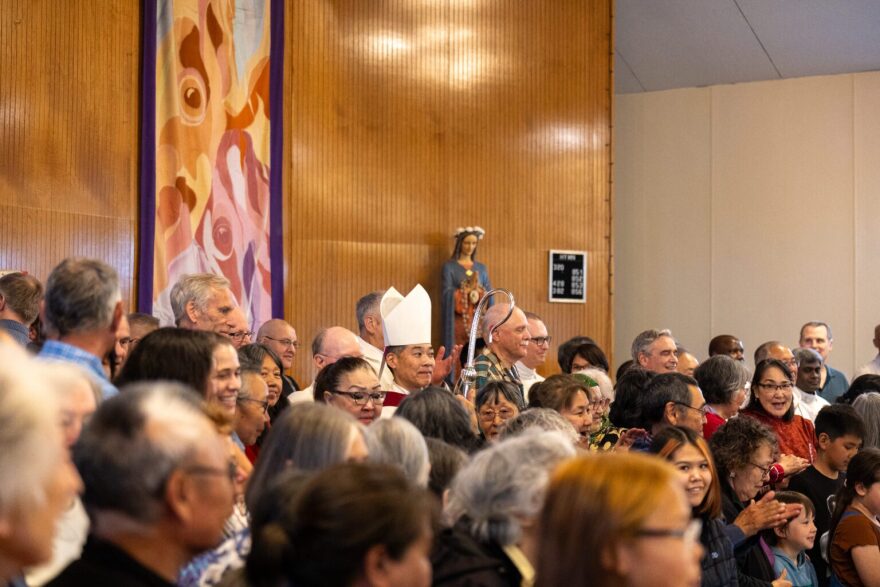
The Jesuits’ nearly 140 years in the state was honored at an event at Bethel’s Immaculate Conception Church on June 16. A procession of priests wearing long white gowns with red hems walked down the aisle to open the event. The Bishop of the Diocese of Fairbanks, Stephen Maekawa, thumped the ground with a shimmering silver staff known as a clozier as he approached the altar.
“My brothers and sisters, we gather together to celebrate this wonderful and blessed occasion to acknowledge the love of God and the work of God through the 139 year mission of the Society of Jesus of the Jesuit fathers,” Maekawa said to open the event.
A traditional Catholic mass followed, with readings in both English and Yup’ik. During the sermon, Maekawa acknowledged the vastness of the Fairbanks diocese, and the tremendous amount of work done by the Jesuits to establish it.
“All of the 46 churches of the Diocese of Fairbanks that we currently have were established by either the Jesuit fathers or by direction of a Jesuit bishop,” Maekawa said. “We have a long history of the Society of Jesus’ presence and ministry here in all of Alaska.”
The Jesuits are an order within the Catholic Church, akin to the Dominicans or Franciscans. They have a reputation for taking on some of the Catholic Church’s most remote assignments.
That missionary spirit brought the Jesuits to the Yukon River in 1887, where they built churches, schools, and ministries. Without their work, Catholicism may not have taken root in huge swaths of Alaska, particularly among Alaska Native communities.

But the Jesuits leave a complicated legacy. Their methods of converting Native people to the religion, particularly in the first half of the 20th century, created generational traumas still felt to this day.
Fr. Sean Carroll is the provincial of the Jesuits West Province, which oversees Alaska and nine other states.

“Thank you for all that you have taught us about who Jesus is and how to love and serve Him wholeheartedly,” Carroll said. “I also thank you for your patience with us. For there have been times when we have sinned and when we have hurt you.”
Missionaries, including the Jesuits, forcefully converted and assimilated Alaska Native people into Western culture and religion. Students at Jesuit-run boarding schools were forced to abandon their Native languages and physically punished when caught speaking languages other than English. Native dancing and drumming were also banned.
The Jesuits West Province maintains a list of 150 Jesuits with credible claims of sexual abuse against minors or vulnerable adults. A quarter of the accused Jesuits served in Alaska at some point in time.
“I ask for your forgiveness for all that we have done that was not rooted in Christ and love for Him, and for when we did not value your culture nor recognize the presence of God in you,” Carroll said.
Carroll gave the order to withdraw from the state last spring. A big issue was the recruitment of Jesuits willing to travel and serve in remote villages. He told the congregation that the Jesuits’ work would continue, just without a permanent presence.
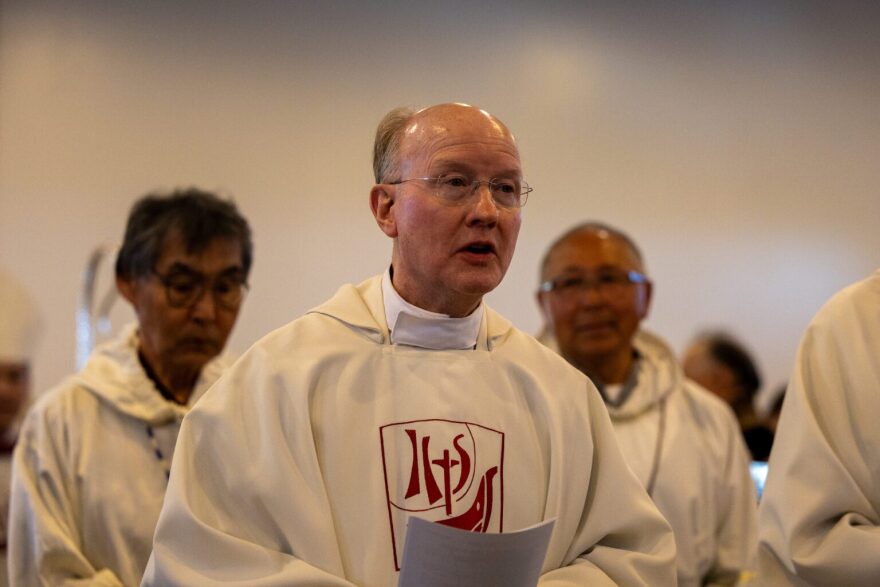
Fr. Rich Magner is one of the two remaining Jesuit priests in Alaska. His last day serving Chevak, Hooper Bay, and Scammon Bay is June 30.
“We all always knew coming in, or should have known, that we’re not going to be here forever. It’s going to be mission accomplished at some point,” Magner said. “And then we hand it off to the diocese that we’ve helped create, and so that’s a good feeling.”
Magner’s next stop is a Clinical Pastoral Education residency in Tacoma, Washington.
The other remaining priest, Fr. Tom Provinsal, first came to Alaska in 1968 to teach. A fond memory, he said, was meeting Elders that practiced traditional subsistence lifestyles.
“Some of the grandmothers, their fingers were just all bent with arthritis and stuff like that, you know, their whole lives they’ve been working out in the cold and the wet, doing food, sewing, all that kind of stuff,” Provinsal said. “I’d say I just feel very privileged to have come when I did come and to see that.”
Provinsal returned in 1975 as a priest and has served in the region ever since. After moving away, he plans to take a five month sabbatical. What happens next, he said, is in God’s hands.
Two lines formed in the aisle for communion at the end of the mass. After taking communion, Bethel’s Parish Administrator Susan Murphy gave a final thank you.
“It’s difficult to say goodbye to people who have been a part of our lives for so long,” Murphy said. “We know that you have done what was yours to do, and have taught us to do what is ours to do. We are grateful.”

Dominic Hunt, a Yup’ik deacon that flew in from Emmonak for the event, led the congregation through a final prayer.
“Bless them with your wisdom, that they may be a word of hope, a world in need. We ask this through Christ, our Lord. Amen,” Hunt said.
About 70 people posed for a photo on the altar – priests, deacons, parishioners, Elders and children — many of them smiling, some standing quietly.
The photo doesn’t tell the whole story. But it’s a moment when gratitude, grief, and memory all shared the same room.

JUNEAU, Alaska (KTUU) – The Supreme Court of Alaska will be taking up the case of the State of Alaska, Division of Elections v. Daniel J. Sullivan, Jr.
The oral arguments will be held Monday at 10 a.m. via Zoom, according to an order and opening notice.
The document also specifies that a decision is expected to be made before noon on Tuesday.
According to documents from the Division of Elections, the state must start printing ballots at noon on the same day.
This comes after an Anchorage Superior Court Judge ordered Dan J. Sullivan on to the ballot Friday.
See a spelling or grammar error? Report it to web@ktuu.com
Copyright 2026 KTUU. All rights reserved.
-

 New York8 minutes ago
Metropolitan Diary Challenge Day 2: How to Write Your N.Y. Story
-

 Los Angeles, Ca13 minutes ago
Company has weeks to complete cleanup of Boyle Heights warehouse fire, officials announce
-

 Detroit, MI35 minutes ago
18 New Kid-Friendly Places That Opened in Metro Detroit in 2026 (So Far!)
-

 San Francisco, CA50 minutes ago
Anza expedition celebrates 250th anniversary in San Francisco
-

 Dallas, TX53 minutes ago
Preston Hollow residents oppose proposed $800 million mixed-use development in Dallas, survey reveals
-

 Miami, FL58 minutes ago
Bradley Beal to Miami Heat rumors draw skepticism
-

 Boston, MA1 hour ago
Boston Pops surprise travelers at Logan Airport with July 4th preview performance
-

 Denver, CO1 hour ago
Denver Broncos Crack Top 10 in NFL Uniform Rankings

