West
Air Force cadet's cause of death blamed on rare bacterial infection

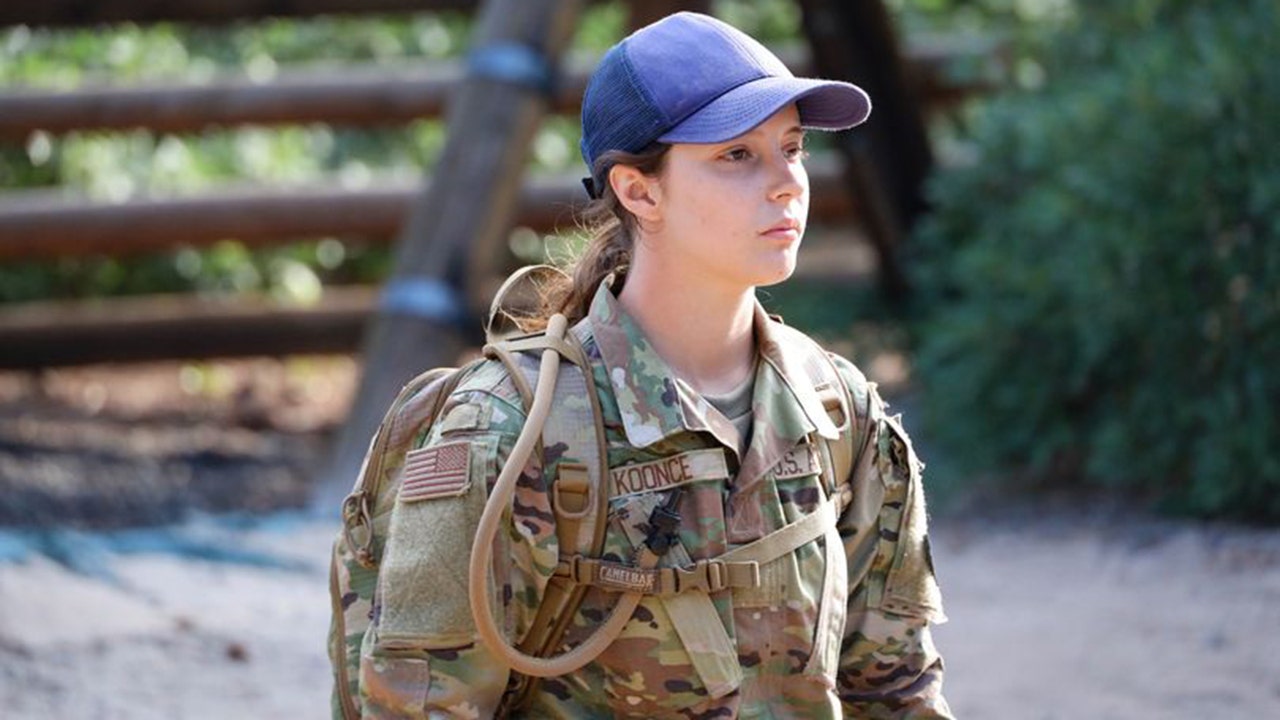
The 19-year-old U.S. Air Force Academy cadet who was found unresponsive in her dorm room in early September died from a rare bacterial infection “associated with a toxic shock-like syndrome,” a coroner has announced.
Avery Koonce had been fighting a cough before dying on Sept. 4 in Colorado from “Paeniclostridium sordellii sepsis complicating parainfluenza laryngotracheobronchitis,” according to an El Paso County Coroner’s Office report obtained by Fox21 News.
Coroner Leon Kelly wrote in the report that Koonce had an abnormal fluid build-up in her left lung along with the bacterium Paeniclostridium sordellii, which can cause “serious disease or death in various clinical settings including airway infection and sepsis,” according to the Colorado Springs Independent.
The bacteria “has been associated with a toxic shock-like syndrome that can rapidly progress to death,” and “It’s likely that the bacterial infection was secondary to the parainfluenza infection… that resulted in… symptoms of severe cough and upper airway inflammation and edema,” the newspaper cited the report as saying.
US AIR FORCE ACADEMY CADET, 19, IS FOUND DEAD IN HER DORM ROOM
Avery Koonce was found dead in her dorm room on Wednesday, the U.S. Air Force Academy says. (U.S. Air Force Academy)
The Centers for Disease Control and Prevention describes sepsis as “the body’s extreme response to an infection” that happens “when an infection you already have triggers a chain reaction throughout your body.”
The U.S. Air Force Academy said Koonce, a 19-year-old from Taylor, Texas, was set to graduate in 2028 and was a member of the women’s track and field team.
MORE THAN $365K RAISED FOR DISABLED AIR FORCE VETERAN, 90, SEEN PAWNING JEWELRY TO SUPPORT WIFE WITH DEMENTIA
A fighter jet is seen on the grounds of the United States Air Force Academy near Colorado Springs, Colo. (Education Images/Universal Images Group via Getty Images)
“We lost an incredible teammate… While only with us for a short time, Avery positively impacted her unit, her intercollegiate team, and her class – her loss will be felt across USAFA,” Academy Superintendent Lt Gen Tony Bauernfeind said at the time of Koonce’s death. “Our team is focused on providing support to Avery’s family, Cadet Squadron 38, the Track and Field team, and the entire Academy family.”
Koonce attended Thrall High School, according to the Austin American-Statesman, which quoted the district’s superintendent as saying that she was the president of the student council and leader of the National Honor Society.
Tusajigwe Owens demonstrates how to operate an air gun before cadets participate in a training exercise at the U.S. Air Force Academy in September 2023. (Reuters)
U.S. Rep. Pete Sessions, who nominated Koonce to attend the U.S. Air Force Academy outside of Colorado Springs, also told the Austin American-Statesman that he was “incredibly saddened to hear about the loss of Cadet Koonce.”
Read the full article from Here


ALBUQUERQUE, N.M. — If you’ve driven or walked by the Rio Grande in Albuquerque, you’ve noticed it’s bone dry. The reason might be obvious to most: We live in the Southwest and have had little rain or snowpack. But as our community, especially farmers, struggle, are our leaders doing anything to solve this issue that seems to be recurring?
“I had been here like maybe a month ago, and there was some water, and then I came a week ago, and I was like, we literally can walk across the Rio Grande,” Kat Walker said.
Even though we live in the Southwest, that’s the reaction most locals have after realizing they can walk through the Rio Grande without getting a drop on them.
Middle Rio Grande Conservancy District CEO Jason Casuga said this year could go down as one of the worst for how much water we’ve received.
“There are communities out there that are suffering to a degree that we haven’t seen in a long, long time,” he said.
Farmers are one of the largest groups being impacted. Some haven’t been able to irrigate their crops in months.
“There are irrigators north of Isleta Pueblo who are 60 days out from the last day they irrigated. Sixty days. Let’s put that into perspective. And so that’s a struggle,” Casuga said.
This is the second summer in a row the Rio Grande has dried up. Right now, an 87-mile-long stretch has no water in the Rio Grande. Casuga said that’s normally in the 40-to-50-mile range.
What can be done?
Casuga believes tools like storing water could help our water issue.
“We have had bad years between the ’50s and now, but MRGCD and others could store water in upstream reservoirs, so in a dry year like this, we would be releasing water,” he said.
But actually doing that isn’t that simple because of what’s known as the Rio Grande Compact. It’s an agreement between New Mexico, Colorado, and Texas that essentially divvies up water from the Rio Grande Basin. It’s law in each state.
“Within the articles of the compact, depending on which article is triggered, you have operational restrictions, and the further that we get in debt as a state to the compact, the more operational restrictions we have,” he continued. “We haven’t violated it yet. We just are behind on our responsibility to deliver water.”
Casuga believes once the state is out of its compact debt, it will have a better chance at managing water. Because that debt means New Mexico can’t store water for itself right now, a restriction water managers wish wasn’t so rigid in dry years.
“I do think there are improvements we can make to delivering water under the compact that would free up some tools to help us manage drought better,” he continued. “Our processes need to be more flexible and more responsive when we have extreme drought.”
He said the state is working with the feds, but unfortunately, it’s a long process. So for now, things will be dry a bit longer.
Hope is in the forecast
Before 2022, the river in Albuquerque hadn’t gone dry like this in 40 years. Casuga reiterated: This is likely one of the worst droughts we’ve ever been in.
“The overall water year is not done yet, but it could go down as one of the worst or the worst years depending on the way the monsoon season shapes up,” he said.
The good news is a strong El Niño is forecast for this year, which could bring some much-needed precipitation.
“In terms of now, what we can do now, we’re really in the hands of whether it rains or not from this point to the end of the year, but I do think things are shaping up that give us indications we can have a much better snow year as we enter November through next March, and maybe we won’t be sitting here in a dry riverbed in July next year,” Casuga said.

When asked if he’d like to join the music program Keys, Beats, Bars, Mikey, who’s currently incarcerated at MacLaren Youth Correctional Facility in Woodburn, figured it would be a good chance to spend some time outside of his unit.
Through a series of workshops, the program brought local musicians and educators into the facilities. They made beats and taught the group about rhyme schemes and rap bars. It was a way for Mikey and his peers to make music, but also to discuss common interests and their shared experiences at MacLaren as they brainstormed lyrics.
Eventually, they recorded a song, “No Ceilings,” about the barriers of incarceration, the music video for which is premiering at a July 11 benefit concert at the Tomorrow Theater dubbed the Restorative Justice Showcase.
Several formerly incarcerated artists feature on the night’s bill, including Keys, Beats, Bars co-founder Talilo Marfil and influential rapper and activist Mic Crenshaw, who led the workshops that produced “No Ceilings.” Hip-hop artist Swiggy Mandela will lead a live cypher, or freestyle rap session, with music by duo Alley Oop to end the show.
Mikey, not his real name, called the songwriting process “therapeutic.”
“Being able to listen to the beats or just channel that, in a positive way,” Mikey says, “I’m glad that I got the opportunity to utilize that while I’m here.”
Music has always been a part of Mikey’s life. His mom played Mariah Carey and DeBarge, and his grandma always had something on when they spent time together on weekends. When he’s feeling irritated or doesn’t want to be bothered, he turns to music.
“You find little achievements and little accolades along the way that, while you’re doing your time, make it easier to get through the day,” Mikey says. “Some people like reading books. Some people like playing basketball. Some people like listening to music.”
Marfil, who is also executive director of the peer advocacy program Ascending Flow, says he wishes he’d had programs like this when he was incarcerated. He found support through church, “but not everybody relates to church,” he says.
After his release, Marfil enrolled in Outside the Frame, an organization that provides homeless youth access to filmmaking resources. “It made me feel like my story mattered and that it was worth telling,” he says. “They gave me opportunities to show my films, my music, to the greater public in front of sold-out shows. Going from dreaming about it in a cell to actually doing it is a game changer for an individual.”
Keys, Beats, Bars runs several music programs for disadvantaged youth. But Marfil, alongside musician and community organizer Adam Carpinelli, launched the workshops at MacLaren.
“I’ve seen it give them hope,” Marfil says. “I think that’s the most important thing: hope, motivation, inspiration and, for a moment, a sense of relief through expression.”

To protect their anonymity, the music video couldn’t feature Mikey, who raps on the song, and his bandmates directly. Instead, Marfil contracted an artist to animate the song’s narrative, which follows a boy from childhood to incarceration.
“Usually, you don’t get to do stuff like that up in jail,” Mikey says, adding that he appreciated the project’s follow-through. “It was kind of cool being able to get the opportunity to record.”
MacLaren is Oregon’s largest juvenile correctional facility. It houses up to 187 youth, ranging ages 12 to 25. While similar to a jail or prison, this style of youth correctional facility places a stronger focus on education and rehabilitation. In contrast to juvenile transitional facilities and residential programs, MacLaren is closed-custody, meaning it’s secure and fenced. In 2025, a Marion County grand jury tasked with assessing MacLaren’s conditions titled its report “Cascading Failures,” citing gang activity, extensive contraband, sexual abuse and staff shortages.
Marfil stresses the role programs like Keys, Beats, Bars play in larger efforts toward restorative justice, and towards ameliorating systemic inequities in the U.S. prison system.
Projecting incarcerated youths’ voices outside of detention facilities is a powerful means for effecting change.
“The song is really just a reflection of being in the facilities and dreaming of what could be possible without the barriers that got them there in the first place, and what they want the community to see about themselves when they get out,” Marfil says. “‘No Ceilings’ is a good example of seeing that youth who are incarcerated have hopes and dreams, and they can contribute something to society.”
SEE IT: Restorative Justice Showcase & Voices From the Inside: A Youth Music Video Premiere at Tomorrow Theater, 3530 SE Division St., tomorrowtheater.org. 3 pm Saturday, July 11. $15. All ages.
HEAR: “No Ceilings” by Keys, Beats, Bars streams on YouTube and Apple Music.

ST. GEORGE, Utah (KUTV) — A jury returned a guilty verdict against a Chicago man accused of trafficking 25 pounds of cocaine through Utah with a firearm and cash.
Marcus Kentral Brown, 41, of Chicago, was found guilty on Tuesday of possessing 500 grams or more of cocaine with the intent to distribute and carrying a firearm in relation to a drug trafficking crime.
A Utah Highway Patrol trooper pulled Brown over in his Jeep Grand Cherokee on July 13, 2021. Brown reportedly said that he was traveling back to Chicago from California.
MORE | Drug Bust
The U.S. Attorney’s Office District of Utah said that, according to evidence presented at trial, the trooper conducted a consensual search of the vehicle and found 10 packages of cocaine (25 pounds worth) and a loaded Glock pistol in a hidden compartment in the rear cargo area. The trooper also found air fresheners and about $14,000 in cash.
Brown is scheduled to be sentenced on Oct. 28 in St. George.
JOIN THE CONVERSATION (1)
_____
-

 New Hampshire3 minutes ago
Dozens Arrested During Fourth Of July Holiday Weekend Enforcement: New Hampshire State Police Roundup
-

 New Jersey6 minutes ago
Water rescue in the ocean off Wildwood, New Jersey caught on video
-

 New Mexico11 minutes ago
What will it take to get the Rio Grande flowing again?
-

 North Carolina18 minutes ago
North Carolina man accused of shooting and killing another tourist inside of a Broward Airbnb, police say
-

 North Dakota21 minutes ago
Gov. Armstrong seeks federal disaster declaration after storms cause $4.6M in damage across North Dakota
-

 Ohio26 minutes ago
Siders’ Ohio house of horrors: locals react to ‘den of evil’
-

 Oklahoma33 minutes ago
NCAA Not Done with Kashie Natt, Oklahoma State After Legal Ruling
-

 Oregon36 minutes ago
A Song Gives a Look Into Oregon’s Largest Juvenile Corrections Facility

