Sports
'Everything they touch turns to gold.' How the Dodgers help pitchers change their fortunes


Alex Wood was preparing for his first full season with the Dodgers in 2016 when then-general manager Andrew Friedman approached him in the team’s spring-training clubhouse and handed him a three-page analysis of his pitching patterns.
“The gist of it was that I was one of the best in baseball at getting to two strikes — I was elite, like in the 99th percentile, of getting to 0-and-2 and 1-2 counts,” said Wood, a left-hander who had been traded from Atlanta to Los Angeles the previous July. “But I was at the bottom third of putting guys away.”
Wood was 25 at the time, with three years of big league experience, but was still pitching with what he called a “high school, college mentality” of wasting a pitch or two — usually fastballs up and out of the zone — when he got ahead of batters.
“Andrew was like, ‘You have two really good secondary pitches, when you get to two strikes, all I want you to think about is using your offspeed as much as possible to punch guys out,’ ” said Wood, who mixes an 83-mph curve and 85-mph changeup with his 91-mph sinker. “That kind of shifted how I was attacking guys throughout the at-bat.”
Wood was limited to 14 games in 2016 after injuring his throwing elbow while batting in late May, but he went 1-4 with a 3.73 ERA and improved his strikeout rate to 9.8 per nine innings that season after whiffing only 6.6 per nine innings in 2015.
Wood had a career year in 2017, going 16-3 with a 2.72 ERA and striking out 8.9 batters per nine innings to help the Dodgers reach the World Series, and he was much better at putting away hitters.
Wood struck out 54 of 138 batters (39%) in plate appearances that began with 0-2 counts and 68 of 182 hitters (37.4%) after going to 1-2 counts in 2015.
Those figures jumped dramatically in 2016, when Wood struck out 29 of 54 batters (53.7%) he started with 0-2 counts and 37 of 86 hitters (43%) after 1-2 counts, and in 2017, when Wood struck out 73 of 144 batters (50.1%) he started with 0-2 counts and 90 of 180 hitters (50%) after 1-2 counts.
“Andrew kind of changed the way I pitched,” said Wood, who played two more seasons (2018 and 2020) for the Dodgers before spending 2021-2023 with the San Francisco Giants. “Instead of wasting a pitch with an 0-2 count, I started attacking guys more. It helped me a ton.”
Left-hander Tyler Anderson won 15 games and was an all-star in his one season with the Dodgers in 2022.
(Marcio Jose Sanchez / Associated Press)
Noah Syndergaard had offers for more money and years, but the veteran right-hander signed a one-year, $13-million deal with the Dodgers last winter because of the organization’s track record for facilitating the kind of rebound he sought after a 2020 Tommy John surgery robbed him of his 98-mph fastball.
“Everything they touch,” Syndergaard said at the time, “turns to gold.”
Syndergaard is living proof the Dodgers don’t have a Midas Touch. He went 1-4 with a 7.16 ERA in 12 starts for them last season and didn’t come close to regaining his velocity. He went on the injured list in early June, was traded to Cleveland in late July and released by the Guardians on Aug. 31.
But more often than not, the Dodgers have revitalized the careers of middling pitchers and optimized the production of pitchers they have, their ability to identify and acquire those with untapped potential and implement plans to maximize performance helping to fuel their run of five 100-win seasons in the last seven years.
“I don’t know if it’s a secret sauce or what, but I do know that from when you first get drafted or if you sign as a free agent or are acquired in a trade, it’s like they have a mark on you,” Clayton Kershaw, the veteran left-hander who won three National League Cy Young Awards in his 16 years with the Dodgers, said during a 2023 interview.
“They see something in you that they feel other teams might not have seen, or they feel like they can really harness and develop something in you that wasn’t there before. Sometimes, it doesn’t work, but most of the time, I feel like they get the most out of guys.”
Evan Phillips had a 7.36 ERA in 44 games for the Baltimore Orioles when, in a span of 15 days in August 2021, he was released by Baltimore, signed with Tampa Bay, designated for assignment by the Rays and claimed off waivers by the Dodgers.
During an initial workout at Dodger Stadium, assistant pitching coach Connor McGuiness suggested Phillips tweak the grip on his slider to give it more spin and sweeping action. Before 2022, McGuinness and pitching coach Mark Prior encouraged Phillips to add a cut fastball and sinker to his repertoire.
Phillips, now 29, transformed himself from castoff to closer, going 10-8 with a 1.74 ERA and 26 saves in 133 games over his first two-plus seasons with the Dodgers and moving from a setup role in 2022 to a ninth-inning role in 2023.
Tyler Anderson went 29-38 with a 4.62 ERA for four teams in six seasons before the journeyman left-hander signed a one-year, $8-million contract with the Dodgers in 2022.
Prior and McGuiness suggested Anderson switch from a two-seam grip to a four-seam grip on his changeup to add more deception to the pitch. Anderson went 15-5 with a career-low 2.57 ERA in 30 games in 2022, earning his first all-star nod and parlaying his strong season into a three-year, $39-million deal with the Angels.
Andrew Heaney’s career took a nosedive in 2021 when he went 8-9 with a 5.83 ERA in 30 games for the Angels and New York Yankees, who released the veteran left-hander after the season.
Heaney signed a one-year, $8.5-million deal with the Dodgers, who helped him refine his pitches and approach. Though slowed by injuries, Heaney went 4-4 with a 3.10 ERA and 110 strikeouts in 72 ⅔ innings over 16 games in 2022, his 13.6 strikeouts-per-nine-innings rate the best among pitchers with at least 70 innings.
Veteran reliever Ryan Brasier had a 7.29 ERA in 20 games when he was released by the Boston Red Sox last May and signed a minor league deal with the Dodgers in early June.
Rob Hill, the team’s director of minor league pitching, and pitching analytics coordinator Brent Minta suggested Brasier start throwing a cut fastball to go with his 96-mph four-seamer and 85-mph slider to give him another weapon against left-handed hitters.
Brasier was called up by the Dodgers in mid-June and went 2-0 with an 0.70 ERA in 39 games, ending the season as the team’s primary setup man.
“It boils down to putting guys in the best position to succeed,” said Friedman, now the team’s president of baseball operations. “When we’re looking to acquire a pitcher by free agent or trade, I think our scouts, analysts and pitching coaches work really well together to identify the levers we want to pull to increase the likelihood of success.
“I think the secret sauce for us is how well our groups work together. The collaboration between our really talented pitching group to our performance group, to our training staff as well as the people who play a role in identifying the talent on the front end. … I think that communication and collaboration is a huge part of why we’ve had success.”
Right-hander Yoshinobu Yamamoto signed a 12-year, $325-million contract with the Dodgers last month.
(Wally Skalij / Los Angeles Times)
When Dodgers pitchers and catchers report to spring training in Phoenix in early February, they will be looking to bounce back from a rare subpar season on the mound in which they ranked 13th in the big leagues with a 4.06 ERA.
The addition of Japanese star Yoshinobu Yamamoto, who signed a 13-year, $325-million deal in late December, and former Rays ace Tyler Glasnow, acquired in a December trade, and the return of Walker Buehler from Tommy John surgery is expected to return the staff to the elite status it has enjoyed for nearly a decade.
The Dodgers finished first or second with team ERAs of 3.38 or below from 2017 to 2022 and ranked fifth in ERA in 2015 and 2016, an extended run of pitching prowess that coincided with the arrival of Friedman from Tampa Bay before the 2015 season.
“When he got here, he pretty much revamped the coaching staff, development staff, minor league staff and training staff,” said Kershaw, who remains a free agent while recovering from shoulder surgery. “The people around here know how to help, and there’s a good, connective line from each group.
“When you get here, they assess your strength, your mobility, to see if there’s something deficient there. If you’re all good, they look at how you throw to see if there’s a deficiency there. There’s always something to look at, whether it’s a mechanical thing, a strength thing, a mobility thing, and they try to fix it.”
The front office, headed by Friedman and GM Brandon Gomes, and pro scouts spearhead the effort to identify free-agent and trade targets. Big league coaches, including Prior, McGuiness and bullpen coach Josh Bard, and minor league pitching coaches and coordinators oversee things such as grip, pitch and delivery changes.
Strength-and-conditioning coaches such as Travis Smith, Eric Yavarone and Brian Stoneberg, who work under Brandon McDaniel, the team’s vice president of player performance, provide important hands-on support.
“A lot of people kind of think it’s me, Mark and Connor going to the lab and sitting down at the table like three mad scientists going to work,” said Hill, who was hired in 2020 from Driveline Baseball, a Seattle-based data-driven player development organization. “But it’s a lot more than that.”
The Dodgers don’t have access to exclusive cutting-edge technology or special analytical and statistical information.
They use the same Edgertronic high-speed video cameras, which shoot in ultra-slow motion to show every detail of a pitcher’s mechanics and release, and Rapsodo devices, which measure the velocity, spin rate, gyro degree, horizontal and vertical break of every pitch, that every big league team uses.
But pitchers who have benefited from their scouting and coaching expertise say they are more effective at diagnosing and correcting problems and formulating and implementing changes than other clubs they have played for.
“They’re just better at weeding out what works and what doesn’t work, you know?” said Anderson, who went 6-6 with a 5.43 ERA in his first season with the Angels in 2023. “Some guys need help with pitch grips, some need help with mechanics, some need help with mental stuff. They’re good at figuring out which guy needs what.
“There’s no secret recipe. It’s just good, hard, quantitative work. They do the [stuff] that matters.”
Anderson was well aware of the Dodgers’ reputation for rehabilitating pitching careers when he signed with them just before the start of spring training in 2022.
“I thought they were gonna teach me something magic,” he said, “help me unlock some potential I didn’t have.”
He did not think the key would be a simple grip change on his signature off-speed pitch, a suggestion he fought at first but continued with the encouragement of the team’s pitching coaches.
“I’ve been in other organizations that would look at the Rapsodo [device] and be like, ‘No, this is no good, I don’t like what the tech says about this pitch,’ ” Anderson, 34, said. “Because the numbers were probably about the same for my two-seam changeup as they were for the four-seam changeup.
“But [the Dodgers coaches] would stand in the batter’s box, watching from a hitter’s perspective. They’d watch from behind the catcher, from the side, from every angle to see how the ball is spinning, and they were like, ‘OK, we like this one.’ They’re putting more thought into it. The devil’s in the details, and they pay attention to all the details.”
Unlike Anderson, Phillips did not protest when the Dodgers urged the right-hander to refine the shape of his slider in 2021 and to lean more heavily on his cutter and sinker in 2022.
Right-hander Brusdar Graterol, with catcher Will Smith, was part of a resurgent Dodgers bullpen late last season.
(Allen J. Schaben / Los Angeles Times)
“I didn’t have a choice — it was sink or swim at that point,” Phillips, 29, said. “When the Los Angeles Dodgers come calling and say, ‘Hey, we think you can be great,’ you tend to listen. They really forced the envelope and said, ‘You’re gonna need to do these things to pitch well,’ and I was in no position to argue with them.”
The Dodgers didn’t just change the grip on Phillips’ slider. They changed how often he throws it and how often he tries to throw it for strikes as opposed to sweeping it down and away in an effort to get the batter to chase.
Phillips credits McGuiness and Bard with overseeing his daily maintenance and throwing programs and Prior and bench coach Danny Lehmann with implementing specific game plans.
“They really amplify the thing you do really well, and then they’ll teach you another tool, something they envision down the road,” Phillips said. “We bring in guys every year who they go through that process with. Sometimes you hit, sometimes you don’t, but they usually get the most out of guys and have turned some careers around.”
The Dodgers were unable to do that for Syndergaard, but the failure of the veteran right-hander to regain his pre-surgery form barely put a dent in the organization’s reputation for getting the most out of its pitchers.
A bullpen that ranked second to last in baseball with a 4.98 ERA last June had a major league-best 2.28 ERA from June 20 on, thanks in large part to Brasier’s dominance, the continued effectiveness of Phillips and setup man Brusdar Graterol and the second-half rebound of left-hander Alex Vesia, whose fastball, thanks to some mechanical tweaks, jumped from an average of 91.7 mph with Miami in 2020 to 94.3 mph with the Dodgers.
And that reputation seemed to play a part in the Dodgers being the preferred landing spot for Yamamoto, Glasnow and two-way star Shohei Ohtani, who signed a 10-year, $700-million deal in December and will be limited to hitting while he recovers from Tommy John surgery in 2024.
“We want to be a destination spot, a place where our own players don’t want to leave and that players from other organizations are longingly looking at,” Friedman said. “That’s something we’re going to continue to work at. We’re going to keep trying to build that culture and environment.”

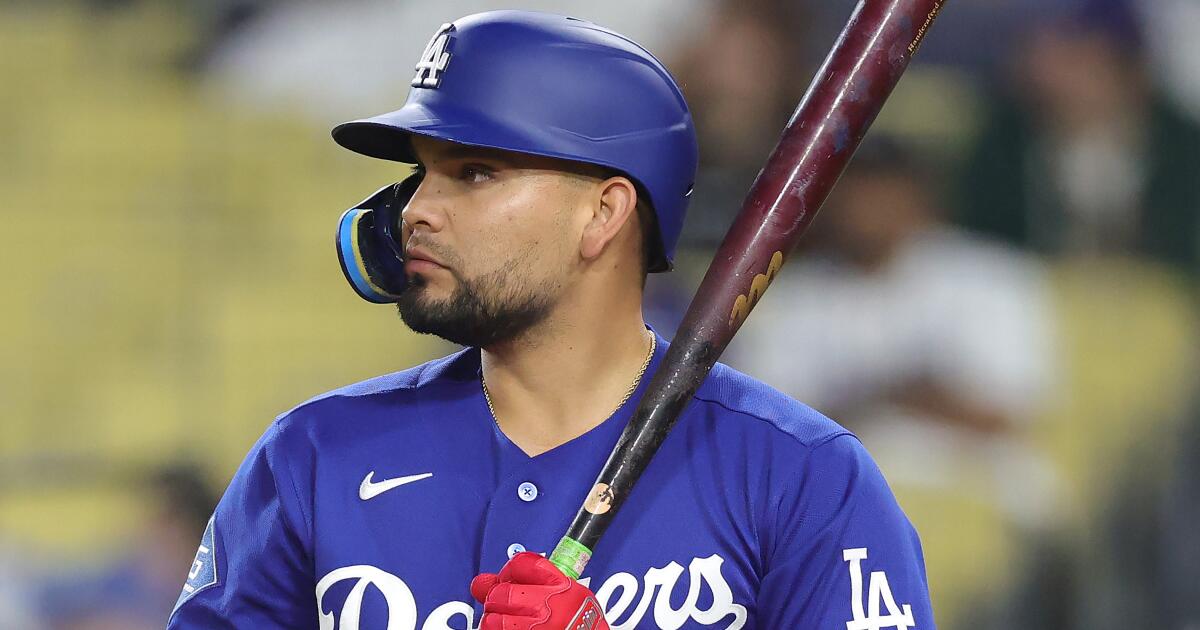
It’ll be the culmination of nine minor-league seasons. But Eliezer Alfonzo‘s major-league debut on Sunday won’t include his family watching from Dodger Stadium.
Alfonzo’s younger sister, Eliana, and stepmother, Patricia, have been missing since last month when earthquakes caused widespread devastation in his home country of Venezuela.
“I’ve been trying to support my dad a lot, every day talking to him, trying to be with him,” Alfonzo said of the elder Eliezer Alfonzo, a retired major-league catcher. “It’s a little tough from here because I would like to be there with him, supporting him every day.”
His father, of course, would love to be in attendance for his son’s debut. He told him as much when he heard the Dodgers were calling him up.
The Dodgers switched their backup catchers Saturday, optioning Chuckie Robinson. They saw an opportunity to give Alfonzo some runway behind Dalton Rushing, with starting catcher Will Smith’s stay on the injured list expected to extend through the All-Star break.
The elder Eliezer Alfonzo, however, is doing whatever he can to locate his wife and daughter. Their dog was found alive, which gave the younger Eliezer Alfonzo hope.
“We’ve just gotta stay together as a family, as a country,” Alfonzo said. “Because I feel like we’re a beautiful country, we’re a really beautiful people over there. It’s not just about my family, it’s all families that have lost people already. But we’ve got hope. We just pray, we ask God to give them back to us alive.”
Alfonzo’s locker in the clubhouse is next to countryman Miguel Rojas’ stall. Rojas’ wife, Mariana, and their two children were in Venezuela, planning to renew Mariana’s passport and seek Venezuelan citizenship for their children, when the earthquakes hit. They managed to stay safe and have returned to the U.S.
“I just want to be here for him,” Rojas said. “At the end of the day, that’s the best thing I can do for him, is being a good teammate and being a friend for him. Because I know there’s going to be ups and downs. He’s going to have a lot of time to be caught [up] in baseball, and that’s going to probably take his mind away from stuff. But sometimes he’s probably going to feel weak, and he’s going to start thinking about his family. So I’m going to be here, I’m right next to him. And that’s what I told him.”
Rojas, who played against the elder Eliezer Alfonzo for years in Venezuela, reached out Saturday morning and promised him he’d save the ball from his son’s first major-league hit.
Sports
Kylian Mbappé’s seventh goal of the World Cup lifts France past Paraguay in physical Round of 16 match

NEWYou can now listen to Fox News articles!
The United States may not have been in action on Independence Day, but France — who fittingly played an important role in the Revolutionary War — was on the pitch in Philadelphia against Paraguay in a massive Round of 16 clash for a trip to the quarterfinals.
It was a hot day in the birthplace of our nation, and that made things difficult for both teams in more ways than one.
While Paraguay is a great squad, they were significant underdogs against a heavily favored French team led by superstar Kylian Mbappé, who has been lighting it up this tournament.
THIS ‘AMERICA THE BEAUTIFUL’ RENDITION BEFORE THE FRANCE VS PARAGUAY MATCH WILL GIVE YOU GOOSEBUMPS
French and Paraguayan players get into a shoving match during their Round of 16 match on Saturday in Philadelphia. (Kyle Ross-Imagn Images)
Obviously, the heat itself is a factor, but it also made for a slower pitch, something that was believed to play into the hands of Paraguay.
However, most of the action in the first half was played on their end as France put the pressure on through the first half hour of the match.
It was intense, and that intensity boiled over in the 35th minute with some pushing and shoving after Mbappé and Paraguay’s Andrés Cubas started a wild shoving match.
VAR DENIES CROATIA’S GAME-TYING GOAL AS CRISTIANO RONALDO LEADS PORTUGAL TO ROUND OF 16
But while the intensity ramped up — and stayed high for pretty much the entire game — Paraguay weathered the storm and had every reason to feel good about reaching halftime with the game scoreless.
France got some more scoring opportunities in the early part of the second half, including a near-breakaway for Mbappé.
France’s Kylian Mbappe scored the go-ahead and ultimately game-winning goal against Paraguay on a penalty kick. (James Lang-Imagn Images)
In the 67th minute, France was awarded a penalty kick for a foul against Desire Doue that had to go to VAR for review, and it was Mbappé who took it.
MESSI, ARGENTINA AVOID A SHOCKING UPSET IN WILD KNOCKOUT STAGE MATCH AGAINST CAPE VERDE
Mbappé has tended to do most of his damage in the second half, and that trend continued here with him drilling the penalty past Paraguay goaltender Orlando Gill.
That was his 19th career World Cup goal, and his seventh of this tournament alone, tying him with Argentina’s Lionel Messi for the tournament lead.
Paraguay seemed to fade after the Mbappé goal, but turned it on again late, forcing Mike Maignan to make his first save of the day about 89 and a half minutes into the match.
CLICK HERE TO DOWNLOAD THE FOX NEWS APP
It seemed like Paraguay’s plan was to try and get a rise out of the French, and they succeeded in drawing three yellow cards. In fact, they even tried to keep that going after the match with players meeting near midfield for some more pushing and shoving.
But France is moving on, and they will take on Morocco in a quarterfinal match on Thursday in Boston.
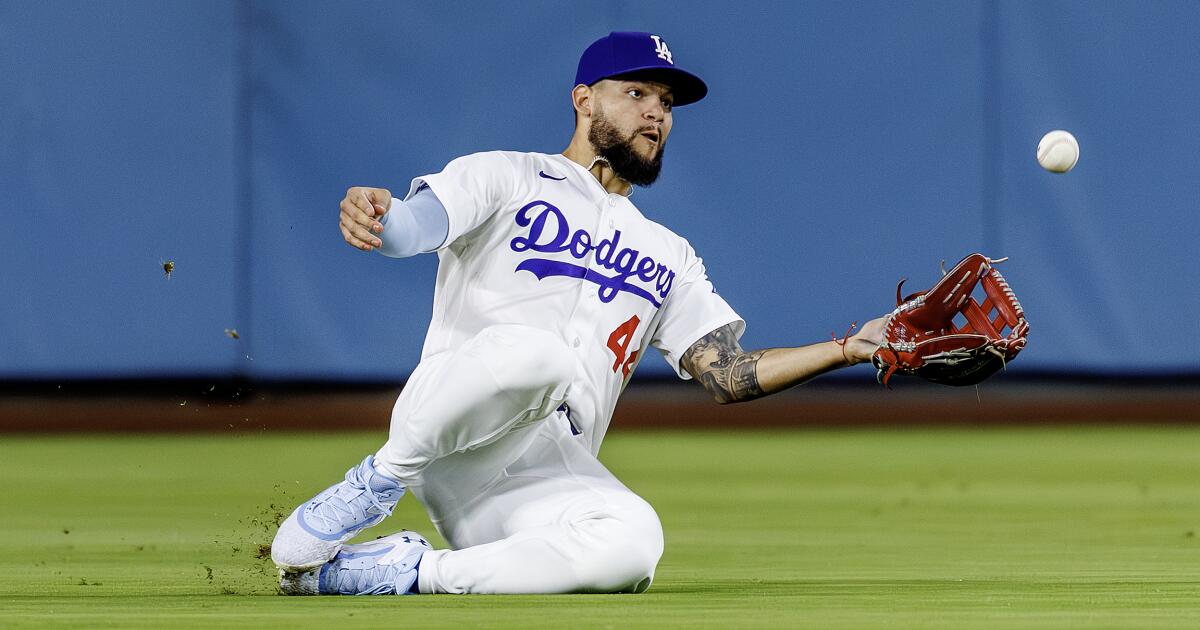
The Dodgers have four more 2026 All-Stars joining Shohei Ohtani on the National League squad.
Center fielder Andy Pages claimed the first All-Star nod of his career. And third baseman Max Muncy (three) first baseman Freddie Freeman (10) and pitcher Yoshinobu Yamamoto (two) added to their Midsummer Classic honors.
Ohtani (six) bypassed phase two of All-Star voting by earning the most fan votes of any player in the first phase.
All of the Dodgers position players were elected as starters, marking the first time since 1980 that the team has had four All-Star starters.
The MLB All-Star Game will be played in Philadelphia on July 14.
-
 Business1 minute ago
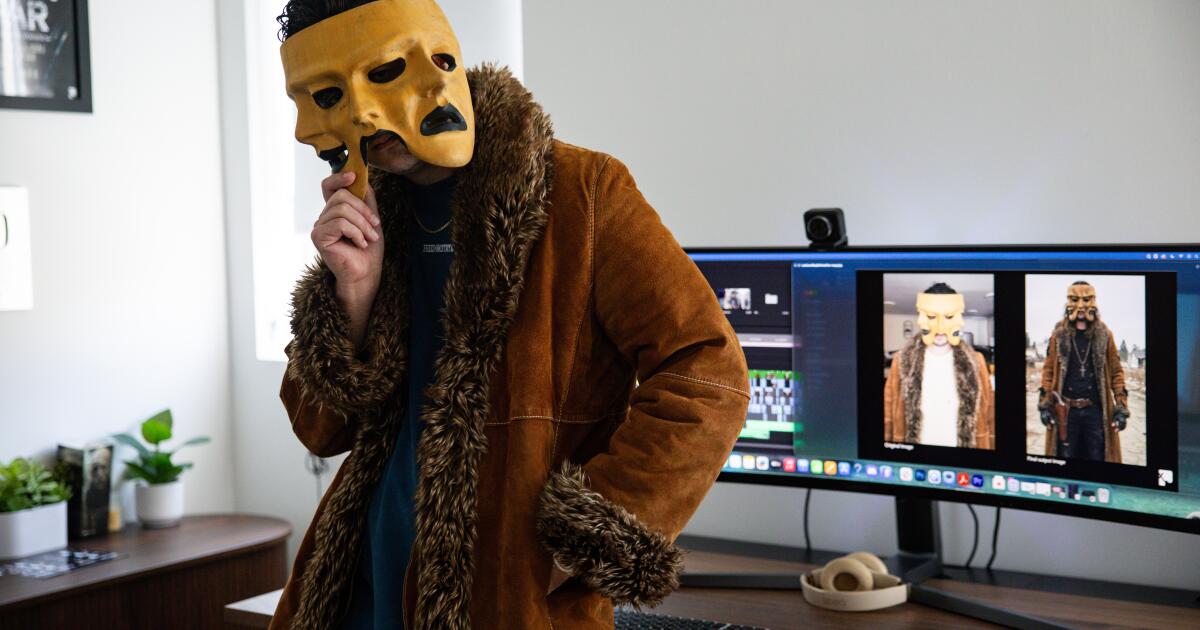
China-backed AI tool behind fake Brad Pitt fight making Hollywood inroads
-
 Entertainment4 minutes ago
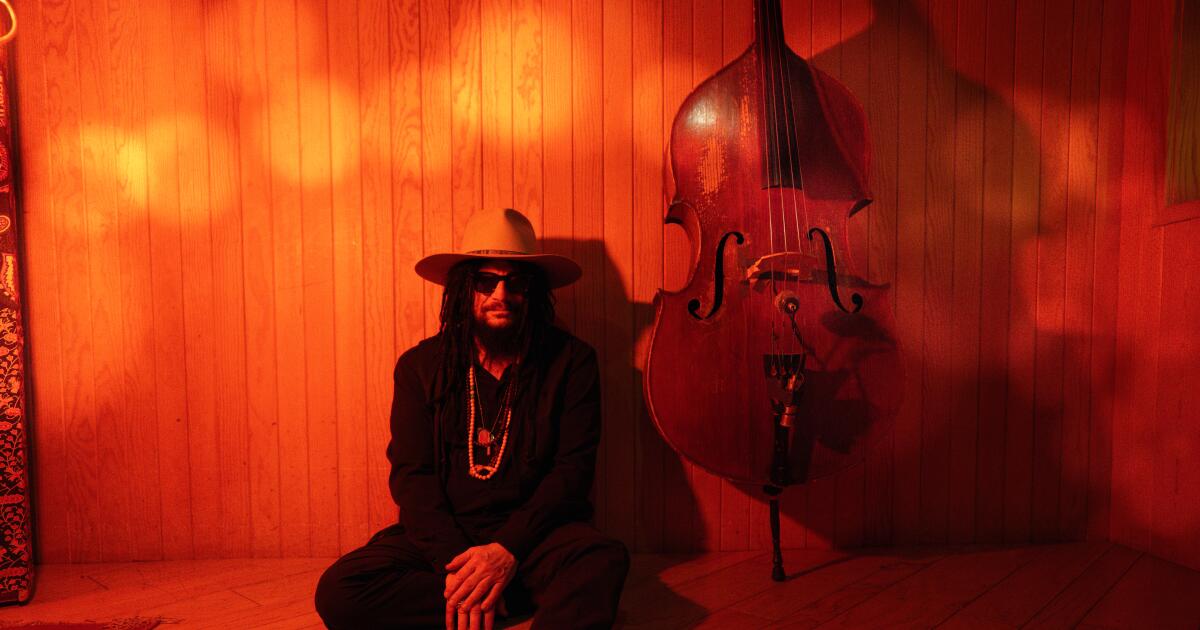
Don Was produced the Rolling Stones, Bob Dylan and Ozzy. At 73, he found his voice in Detroit — and the Dead
-
 Politics16 minutes ago
Commentary: Happy Birthday, America! You’ve weathered another rough year
-
Sports24 minutes ago
Dodgers’ Eliezer Alfonzo praying his sister and stepmother will be found in Venezuela
-

 World34 minutes ago
Reform UK’s Farage failed to disclose funds from convicted criminal: Report
-
 News1 hour ago
Paul Pelosi in hit-and-run in California, car left with major damage, authorities say
-

 Los Angeles, Ca2 hours ago
Firefighters battle Fourth of July blazes around Los Angeles
-

 Detroit, MI3 hours ago
Storm chances linger into the start of the week across Metro Detroit

