Southeast
United Methodist Church abolishes LGBTQ bans, 'last of the major mainline groups to liberalize'


It took just a few days for United Methodist delegates to remove a half-century’s worth of denominational bans on gay clergy and same-sex marriages.
But when asked at a news conference about the lightning speed of the changes, the Rev. Effie McAvoy took a longer view.
“Oh, it didn’t take days, honey,” she said.
UNITED METHODIST CHURCH VOTES TO LIFT BAN ON LGBTQ CLERGY, MARKING HISTORIC POLICY SHIFT
It took decades of activism for a change that was “so very healing,” said McAvoy, pastor of Shepherd of the Valley United Methodist Church in Hope, Rhode Island. A member of the Queer Delegate Caucus at last week’s UMC General Conference in Charlotte, she was grateful to be part of the historic moment.
The reversals can be seen as marking the end of a half-century of epic battles and schisms over LGBTQ involvement — not only in the United Methodist Church but in U.S. mainline Protestant denominations overall. Those are the tall-steeple churches in myriad town squares and rural crossroads, traditionally “big-tent” and culturally mainstream congregations — some predating America’s independence.
The nation’s largest Methodist, Presbyterian, Episcopal and Lutheran denominations have all now removed barriers to LGBTQ participation in the pulpit and at the altar. But this comes amid long-term declines in membership and influence.
The Rev. David Meredith, left, and the Rev. Austin Adkinson, right, sing during a gathering of those in the LGBTQ community and their allies outside the Charlotte Convention Center, in Charlotte, North Carolina, on May 2, 2024. When the United Methodist Church removed anti-LGBTQ language from its official rules in recent days, it marked the end of a half-century of debates over LGBTQ inclusion in mainline Protestant denominations. (AP Photo/Peter Smith, File)
Surely there will be skirmishes to come. Individual congregations, and entire regions across the world, will sort out the implications. Controversies have grown among some conservative evangelical churches and colleges, which largely avoided past battles.
But for mainline Protestants, last week’s General Conference looks like a landmark. It was a relatively quiet coda to what had been an almost annual scene on America’s religious calendar — impassioned showdowns at legislative assemblies of Protestant denominations, marked by protests, political maneuverings and earnest prayers.
Across the decades, there were many cases of ecclesiastical civil disobedience — clergy doing ordinations and marriages that defied church bans, some of whom were tried for heresy or other infractions.
“A part of me still doesn’t believe it,” said the Rev. Frank Schaefer, one of the last United Methodist ministers to face church discipline after presiding at the same-sex wedding of his son. Schaefer was restored to ministry in 2014 by a Methodist appellate panel after a lower tribunal had defrocked him.
“We’ve fought for it so long and hard, and there were so many disappointments along the way,” said Schaefer, now a pastor in California. “Our tears have turned into tears of joy.”
But the UMC faces the same dire challenges as Lutheran, Presbyterian, Episcopal and smaller mainline denominations that took similar routes.
All lost large numbers of congregations in schisms, and they have had to navigate fraught relations with partner churches in Africa and elsewhere.
Retired United Methodist Bishop Will Willimon, a professor at Duke Divinity School, supported greater LGBTQ inclusion in the church — but said bigger issues loom.
“We’re an aging denomination,” he said. “We share that with so many mainline denominations. Unfortunately I don’t see how this vote addresses any of that.”
Willimon said even conservative breakaway groups like the new Global Methodist Church, comprised of many former UMC congregations, face similar challenges with predominately white, aging memberships.
In the U.S., mainline churches have lost millions of members since their peak in the 1960s — some to schism and many to underlying demographics. Their members are aging and don’t have many children, and they struggle to retain the children they do have, said Ryan Burge, associate professor of political science at Eastern Illinois University.
“There is no silver bullet” for reversing mainline decline, said Burge, who studies religious demographics.
The United Methodists counted 5.4 million U.S. members in 2022 — less than half their 1960s peak, and the recent departure of about 7,600 mostly conservative congregations will lower that number further. The Presbyterian Church (U.S.A.)’s 1.1 million membership is barely a quarter its 1960s peak. Other denominations have similar trends.
The mainline battles over LGBTQ issues began heating up in the early 1970s, before those initials were used.
A United Methodist General Conference in 1972 declared homosexual practice “incompatible with Christian teaching.” Other denominations issued similar teachings. Some imposed explicit bans on gay clergy.
An Episcopal bishop was tried and acquitted of heresy in 1996 for ordaining a gay pastor. The 2003 ordination of the first openly gay Episcopal bishop, Gene Robinson, ignited long-simmering controversies.
Conservative and liberal groups formed their own church caucuses for denominational legislative sessions, where Scriptures and slogans flew back and forth between proclamations of Robert’s Rules of Order.
Progressive Presbyterians blocked an entrance to a General Assembly in 2000 and were arrested. As the United Methodists steadily tightened LGBTQ bans, progressives disrupted General Conferences with protests, drums and songs. A conservative United Methodist leader, the Rev. Bill Hinson, roiled the 2004 General Conference in Pittsburgh with a call for denominational divorce — even though his side had won all its legislative battles.
“Why do we go on hurting each other?” asked Hinson. Others quickly tamped down the idea, but it was a foreshadowing.
By the second decade of the 21st century, Presbyterians, Lutherans and Episcopalians had largely dismantled their bans. They navigated major strains with partner churches elsewhere in the world.
Substantial minorities of their U.S. congregations joined more conservative denominations, saying the sexuality debates were symptoms of a deeper theological chasm.
The United Methodist Church is unique because it is international, with many delegates from countries with conservative sexual values and laws. A special legislative session in 2019 reinforced LGBTQ bans.
That result proved short-lived.
U.S. churches increasingly defied the bans and elected more progressive delegates for this year’s gathering. Many churches began disaffiliating under a temporary measure approved in 2019 that let churches keep their properties under favorable conditions.
To Willimon, that process was devastating. Whether the congregation stayed or left, peoples’ relationships were ruptured, he said.
Many churches went independent, but thousands joined the new Global Methodist Church, which pledges to enforce restrictions on LGBTQ clergy and same-sex marriage.
Now attention turns to Africa, where the UMC counts 4.6 million members.
One group of African delegates protested outside the General Conference and said their members would discuss whether to disaffiliate.
“The General Conference did not listen to us,” said the Rev. Jerry Kulah of the conservative group, Africa Initiative, contending the denomination departed from biblical teaching on marriage. “We do not believe we know better than Jesus.”
Bishop John Wesley Yohanna of Nigeria said he would likely leave the denomination after his term ends, though he is staying for now to help heal a rift in the local church. “From the tradition of the church in Africa,” he added, “marriage is between a man and a woman, period.”
But other African delegates are heartened by a plan that expands regional autonomy on such matters. They said African churches will keep the marriage and ordination bans in their region while remaining in the denomination.
“Our decision to stay in the United Methodist Church is not conditioned by what happens in America,” said the Rev. Ande Emmanuel of Southern Nigeria. “God has called us to a church, and the church is not a property of the United States.”
Bishop Eben Nhiwatiwa of Zimbabwe the majority of the African bishops at General Conference agree the regionalization plan respects local cultures.
The United Methodist Church was the last of the major U.S. mainline groups to liberalize its policies on sexuality in part because of its large presence in rural, small-town and Southern areas, where a more conservative sexual ethos prevails, said James Hudnut-Beumler, a professor of American Christian History at Vanderbilt University. He is a Presbyterian Church (U.S.A.) minister and co-author of “The Future of Mainline Protestantism.”
“That’s why they’re the last to go,” he said.
And it won’t automatically bring back the more-accepting younger generations who left over the bans, said Hudnut-Beumler, adding that conservative evangelical congregations are not exempt.
“Some conservative megachurch pastor may be thinking to himself, ‘We won this. Look what happened to the Methodists and Presbyterians and Episcopalians,’” said Hudnut-Beumler, “Don’t be so smug.”
Read the full article from Here

NEWYou can now listen to Fox News articles!
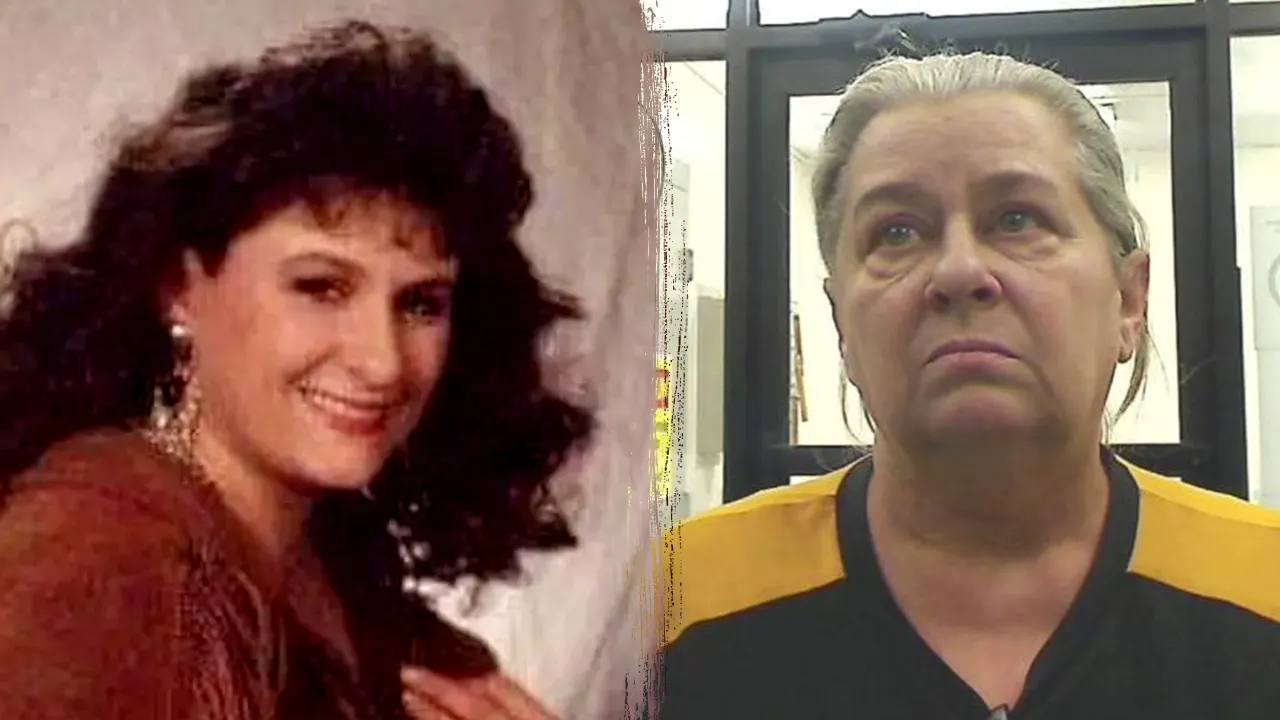
A North Carolina woman whose disappearance in 2001 triggered a 24-year search is now facing criminal charges from the year she vanished.
Michele Hundley Smith, now 63, was located Feb. 20 at an undisclosed location within North Carolina after detectives received new information about her case, the Rockingham County Sheriff’s Office said.
Smith was 38 when her husband reported that she left their Eden home Dec. 9, 2001, to go Christmas shopping in Martinsville, Virginia, and never returned. Her vehicle was never found.
An extensive investigation followed, and, despite years of investigative work, her whereabouts remained unknown until last week.
The 63-year-old woman posted $2,000 bond on a failure to appear charge related to a DWI from the month before she vanished for 24 years. (Robeson County Sheriff’s Office)
Authorities said Smith told investigators she left on her own accord and referenced “domestic issues.”
Sheriff Sam Page told Fox News Digital the sheriff’s office had no prior record of domestic incidents at the home. No criminal charges are expected in her disappearance. However, following her identification, investigators discovered an outstanding order for arrest dating back to 2001.
A missing persons flyer circulated at the time of Michele Hundely Smith’s disappearance in December 2001. (Bring Michele Hundely Smith Home/Facebook)
MISSING NORTH CAROLINA MOM FOUND ALIVE AFTER 24 YEARS REVEALS WHY SHE LEFT
In a statement, the Rockingham County Sheriff’s Office said that, after consultation with the District Attorney’s Office and further investigation, authorities identified an outstanding order for arrest for Smith for failure to appear.
FOLLOW THE FOX TRUE CRIME TEAM ON X
The order stemmed from a DWI charge issued by the Eden Police Department Nov. 11, 2001. Smith failed to appear in court Dec. 27, 2001, for that charge, the statement said.
On Feb. 25, 2026, Smith was taken into custody by the Robeson County Sheriff’s Office at the request of Rockingham County authorities. She later posted a $2,000 bond and is scheduled to appear in Rockingham County District Court March 26, 2026.
A missing mom found alive after 23 years reveals she left due to domestic issues. (Bring Michele Hundely Smith Home/Facebook)
SIGN UP TO GET TRUE CRIME NEWSLETTER
On Thursday, the New York Post reported it had located Smith in a trailer in a rural community near the South Carolina state line. Smith told the outlet she is trying to make amends with her daughter and the family she walked out on decades ago.
“My daughter is forgiving me. We are in contact, so leave me alone,” she told the outlet.
Smith’s neighbors said she had “been here for years and years” and mostly keeps to herself.
“We asked why she didn’t come out of the house much, and she said her husband passed. He passed last year. … She was really sad about it. She said she was depressed and stayed inside,” the neighbor said.
Michele Hundely Smith disappeared after leaving her home in North Carolina to go Christmas shopping in Virginia in December 2001. (Bring Michele Hundely Smith Home/Facebook)
In a 2018 interview on “The Vanished Podcast,” her daughter, Amanda Hundley, said her mother’s marriage was unraveling under the weight of alcohol abuse, infidelity and escalating marital arguments.
Smith had recently lost her job at a veterinary practice after being fired for drinking on the job, Hundley said.
LIKE WHAT YOU’RE READING? FIND MORE ON THE TRUE CRIME HUB
“My dad didn’t like the fact that my mom hid her drinking. I knew about it, and I was the only one. And I felt, you know, I was young, and I felt obligated not to say anything to betray my mom,” Hundley said on the podcast.
SEND US A TIP HERE
According to Hundley, her father suspected the drinking but did not fully understand the extent of it until after Smith vanished.
CLICK HERE TO DOWNLOAD THE FOX NEWS APP
“He said, ‘Do you know where she kept the bottles at?’ And I showed them we had a little red building outside, and it was full of rum bottles, the empties, the ones that she had already drunk,” recalled Hundley, who was 14 at the time.
The couple’s relationship had also deteriorated. Hundley said both her parents had affairs during the marriage. She described frequent arguments that “got physical a few times.”
Related Article

Read the full article from Here
Southeast
Atlanta-area police blast parents over vodka martini packed in school lunch: ‘That is NOT apple juice’

MAHA eyes SNAP, school lunch restrictions for junk food
Agriculture Secretary Brooke Rollins joins ‘Fox & Friends’ to discuss the Trump administration’s ‘Make America Healthy Again’ initiative, detailing new efforts to restrict ultra-processed foods in school lunches and limiting SNAP benefit purchases.
NEWYou can now listen to Fox News articles!
An Atlanta-area police department issued a blunt notice to parents after officers claimed a child brought a vodka-based beverage to school — tucked beside Doritos in a packed lunch.
The City of South Fulton Police Department sounded off about the incident in a now-viral Facebook post, warning parents to “CHECK. THE. LUNCHBOX.”
“Say Twin… Before you send them babies off to school… CHECK. THE. LUNCHBOX. Because why are we getting reports of juice boxes sitting next to… Cutwater margaritas??” the department wrote.
Officials also shared a photo of the alleged lunchbox, containing what appears to be a child’s lunch, Doritos and a Cutwater Lemon Drop Martini.
The police department shared a photo of a Cutwater canned cocktail in a lunchbox. (City of South Fulton Police Department via Facebook)
“That is NOT Capri Sun. That is NOT Apple Juice. That is a whole ‘Parent had a long night’ starter pack,” the department wrote. “Now little Johnny done pulled up to 3rd period talking about: ‘Who want fruit snacks?’ knowing good and well he got a Lemon Drop Martini in the zipper pocket.”
Cutwater Lemon Drop Martinis, as found in the lunchbox, are 11% ABV ready-to-drink cocktails made with vodka, triple sec, lemon juice and natural flavors.
They come in 12-ounce cans, similar in appearance to a soda can.
The City of South Fulton Police Department issued a statement after the apparent mishap. (City of South Fulton Police Department via Facebook)
CALIFORNIA ‘PARTY MOM’ ACCUSED OF GROOMING VICTIMS FOR SEX, DRINKING IN RITZY MANSION, TEENS TESTIFY AT TRIAL
The department said it understands mornings can be hectic, but issued a stern notice to parents to “TIGHTEN UP.”
“Your child shouldn’t be the only one in the cafeteria with a beverage that requires an ID,” authorities wrote. “If it says 12% ABV… it does NOT belong next to a PB&J.”
Officials also provided a “quick parent checklist,” with items including: “Homework,” “Lunch packed,” and “Alcoholic beverages.”
Boxes of Cutwater Tiki Rum Mai Tai and Strawberry Margarita canned cocktails. (Gado/Getty Images)
“Check the lunchbox before the Fulton County Schools Police resource officers gotta do inventory at recess,” the department added.
It is unclear if any parents or students were disciplined in relation to the mix-up.
CLICK HERE TO DOWNLOAD THE FOX NEWS APP
Fulton County Schools did not immediately respond to Fox News Digital’s request for comment.
The City of South Fulton, Georgia, is a rapidly growing municipality located about 20 minutes from Atlanta and Hartsfield-Jackson International Airport.
Related Article
Read the full article from Here
NEWYou can now listen to Fox News articles!
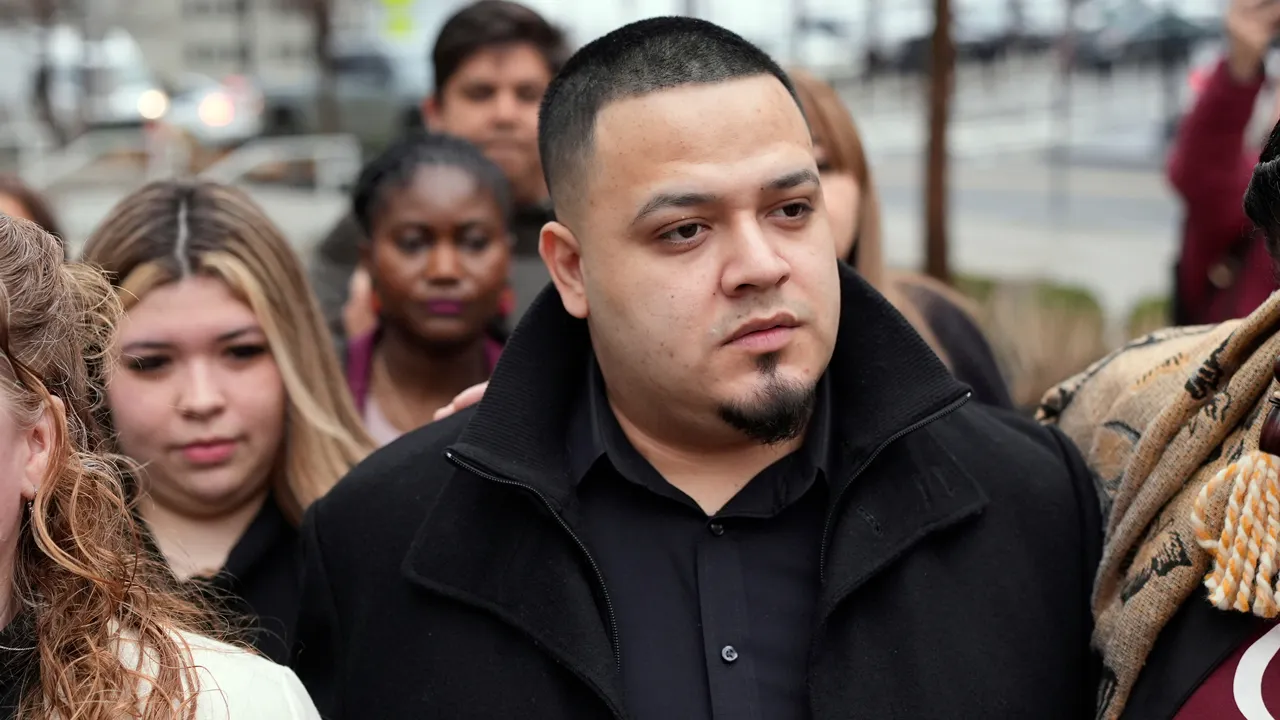
A federal prosecutor acknowledged Thursday that the decision to charge Salvadoran migrant Kilmar Abrego Garcia two years after a routine traffic stop was “extraordinary” while defending the human smuggling case as legally justified.
Abrego Garcia, 31, has become a flash point in the national immigration debate since last March, when he was deported to El Salvador in violation of a 2019 court order in what Trump administration officials acknowledged was an “administrative error.”
The Supreme Court later ruled that the administration had to work to bring him back to the U.S.
After returning in June, Abrego Garcia was taken into federal custody in Nashville and detained on human smuggling charges stemming from a 2022 traffic stop in Tennessee.
He has pleaded not guilty and is seeking dismissal of the charges on the grounds of vindictive and selective prosecution.
Kilmar Abrego Garcia and his wife Jennifer Vasquez Sura, left, are accompanied by Lydia Walther-Rodriguez, right, of We Are Casa, as they leave the federal courthouse, Thursday, in Nashville, Tenn. (AP Photo/George Walker IV)
A 2019 court order prevents Abrego Garcia from being deported to El Salvador after an immigration judge determined he faced danger from a gang that had threatened his family. He immigrated to the U.S. illegally as a teenager and has been under the supervision of Immigration and Customs Enforcement (ICE).
Abrego Garcia was accused in court records of repeated domestic violence against his wife, who alleged multiple incidents of physical abuse in protective order filings. She later withdrew the protective order request and has defended her husband publicly.
The Department of Homeland Security has also said he was living in the U.S. illegally and has alleged ties to MS-13, disputing portrayals of him as simply a “Maryland man.” His attorneys have denied the gang allegations.
Tennessee Highway Patrol body camera footage from when Abrego Garcia was pulled over for speeding shows a calm exchange with officers. While officers discussed suspicions of smuggling among themselves — noting there were nine passengers in the vehicle — Abrego Garcia was issued only a warning.
TENNESSEE BODYCAM OF ‘MARYLAND MAN’ TRAFFIC STOP SHOWS TROOPERS’ HANDS TIED DESPITE SMUGGLING CLUES
A woman holds a sign in support of Kilmar Abrego Garcia in front of the U.S. District Court in Nashville. (Getty Images )
First Assistant U.S. Attorney for the Middle District of Tennessee Rob McGuire, who was acting U.S. attorney in April 2025, testified Thursday that his decision to charge Abrego Garcia was based on the evidence.
“I had previously prosecuted several human smuggling cases,” McGuire said, noting that after seeing video of the traffic stop, “I was immediately struck by how similar what was being depicted in the body cam was to those investigations.”
McGuire said Abrego Garcia’s vehicle belonged to someone with “a human smuggling background” and added that the route was “suspicious.”
“It was a large number of individuals traveling in one SUV with a driver who spoke for the group. No one had luggage… the car had Texas plates… the route was suspicious,” McGuire said.
DEM JUDGE IN HOT SEAT AFTER DHS EXPOSES ‘WHOLE NEW LEVEL’ OF ACTIVISM, SHELTERING ILLEGAL IMMIGRANT
Kilmar Abrego Garcia arrived at the federal courthouse, Thursday, for a hearing on whether the charges against him should be dismissed. (AP Photo/George Walker IV)
During cross-examination, McGuire acknowledged that the timing of the charges, coming so long after the traffic stop, was “extraordinary.”
He said he had not previously been aware of the traffic stop but reiterated that nobody in the Trump administration, including the White House or the Department of Justice, pressured him to seek the indictment.
When asked about whether he might have felt pressure to prosecute the case, McGuire said, “I’m not going to do something that is wrong to keep my job.”
DHS OFFICIAL RIPS KILMAR ABREGO GARCIA FOR ‘MAKING TIKTOKS’ WHILE AGENCY FACES GAG ORDER
Kilmar Abrego Garcia, right, and his brother Cesar Abrego Garcia, center, arrive at the Immigration and Customs Enforcement field office in Baltimore, Aug. 25, 2025. (AP Photo/Stephanie Scarbrough)
McGuire also said timing factored into charging Abrego Garcia since he was being held in El Salvador, and he did not want the indictment to go public before all senior officials were briefed on the matter.
“I knew from the get-go that this was going to be a controversial matter,” McGuire said.
U.S. District Judge Waverly D. Crenshaw did not make a ruling Thursday and said he would wait to receive post-hearing briefs from attorneys by March 5 before determining whether another hearing is necessary.
Crenshaw previously found some evidence that the prosecution “may be vindictive” and that prior statements by Trump administration officials “raise cause for concern.”
CLICK HERE TO DOWNLOAD THE FOX NEWS APP
Thursday’s court appearance came after a federal judge blocked the Trump administration from re-arresting Abrego Garcia into federal immigration custody on Feb. 17.
Fox News Digital’s Breanne Deppisch, Jake Gibson and The Associated Press contributed to this report.
Related Article
Read the full article from Here

Police search for suspect, accomplice after teen injured in shooting outside Detroit school gym

Celebrated San Francisco historic landmark, the Huntington Hotel officially reopens

GOP candidates for Texas House face off in Collin County, Park Cities, North Dallas

First Alert: Mix of snow and rain today, then looking ahead to warmer weather

Former Avs defenseman launches beer brand in Denver

Florida High School Football Rankings: Top 25 teams – Oct. 21

Cleary's 21 help Le Moyne down Central Connecticut State 69-64 in OT

How old is Bo Nix? What to know about Oregon quarterback ahead of 2024 NFL Draft

99th annual Pony Swim held in Virginia

Indiana Members Credit Union announced as new anchor tenant at Bottleworks District

Fraud-plagued Minnesota sues Trump admin for withholding $243M in Medicaid payments

Is Iran expanding attacks to target energy and civilian sites in the Gulf?

Trump claims US stockpiles mean wars can be fought ‘forever’; Kristi Noem testifies before Congress – US politics live

War in the Middle East: Iran’s broad retaliation in the Gulf • FRANCE 24 English

Melania Trump presides at UN Security Council meeting • FRANCE 24 English
-

 World6 days ago
Exclusive: DeepSeek withholds latest AI model from US chipmakers including Nvidia, sources say
-

 Massachusetts6 days ago
Mother and daughter injured in Taunton house explosion
-

 Denver, CO6 days ago
10 acres charred, 5 injured in Thornton grass fire, evacuation orders lifted
-

 Louisiana1 week ago
Wildfire near Gum Swamp Road in Livingston Parish now under control; more than 200 acres burned
-

 Oregon4 days ago
2026 OSAA Oregon Wrestling State Championship Results And Brackets – FloWrestling
-

 Florida3 days ago
Florida man rescued after being stuck in shoulder-deep mud for days
-

 Technology1 week ago
Arturia’s FX Collection 6 adds two new effects and a $99 intro version
-

 News1 week ago
Video: How Lunar New Year Traditions Take Root Across America