The West Virginia First Foundation, which is responsible for guiding how the state uses money from opioid litigation settlements, has awarded some of the contracts to support the work.
Following a discussion in closed session, members of the foundation board awarded the work for accounting services to Smith Cochran and Hicks of Charleston.
Banking services were awarded to to West Virginia-headquartered United Bank and investment services were split equally between two banks, WesBanco as the lead and United Bank in support. Each had responded to a request for proposal, representing competitive bidding.
The West Virginia First Foundation board also discussed policies for a newly-constituted expert panel meant to advise it, plus a regional panel meant to provide expertise for local decisions.
Advertisement
“This structure will give us broad geographic understanding and distribution of what’s happening at the local level and will give us subject matter expertise,” said Matthew Christiansen, the state health officer.
The foundation has $220,129,242.95 banked, said board member Jeff Sandy, the state’s former Homeland Security secretary. That includes interest of $2,629,142.
The West Virginia First Foundation is having its meetings at 2 p.m. the first Thursdays of each month. The next one is March 7.
The grim discovery was made on the morning of June 14 on Cabin Creek Road in Kanawha County. PHOTO: WCHS TV
CHARLESTON, W.Va. — A Putnam County man has been identified as the victim in a homicide from two weeks ago.
The Kanawha County Sheriff’s Office announced Tuesday afternoon that the victim was Joseph Lovett, 28, of Hurricane. Human remains were discovered near a burning vehicle in the 300 block of Cabin Creek Road on June 14. Those remains were sent to the Office of the Chief Medical Examiner to be identified.
Advertisement
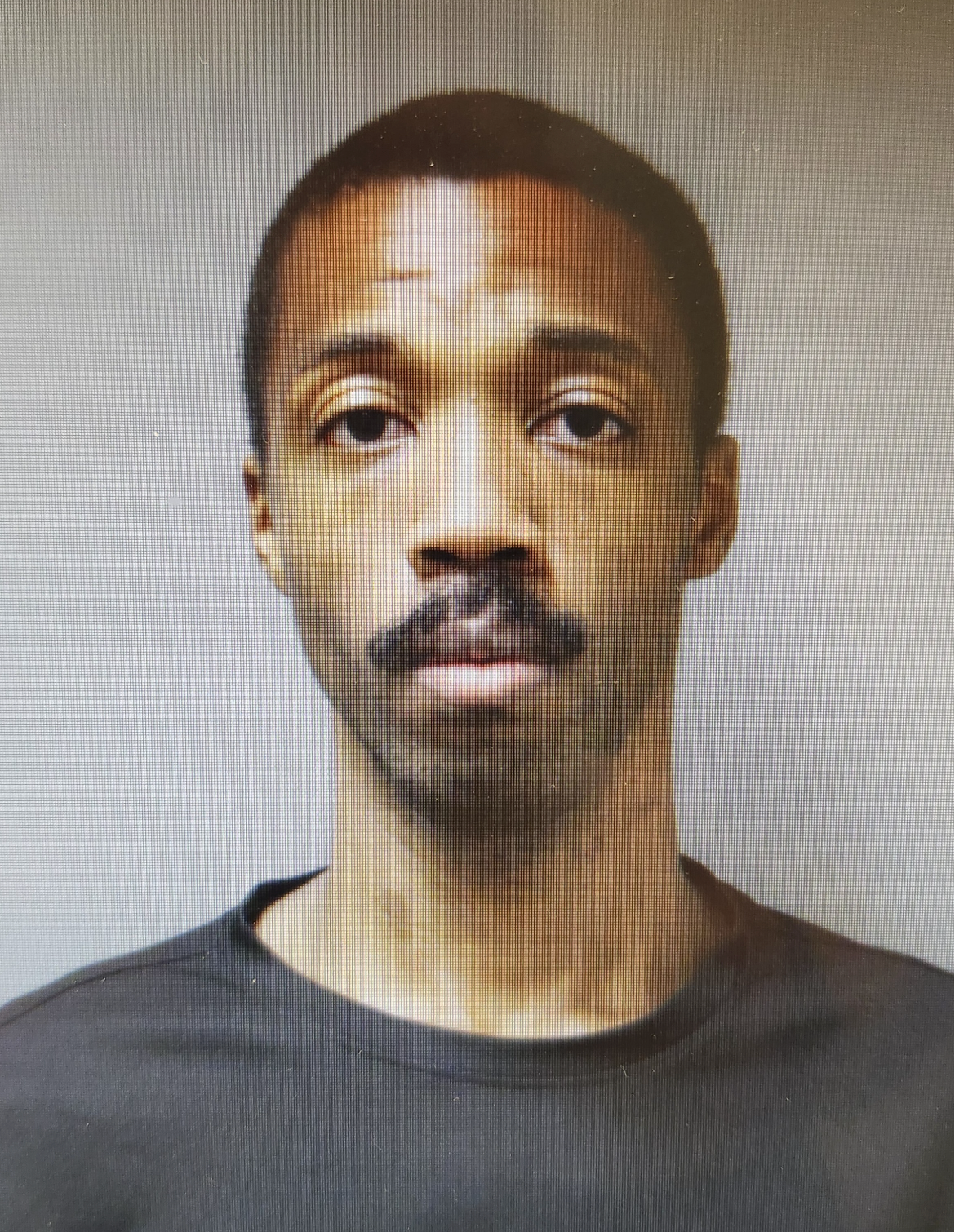
Harold Patterson
A man was already in custody in connection to Lovett’s death. A coordinated law enforcement effort from Kanawha and Putnam counties, in addition to North Carolina authorities, led to the arrest of Harold Patterson, 27, of Laurinburg, North Carolina, on June 16.
Patterson was charged with first-degree murder.
He’s being held in the Scotland County Detention Center in North Carolina, pending extradition back to West Virginia.
The Kanawha County Sheriff’s Office said the investigation is ongoing.
by Jasmine Milbourne, Mountain State Spotlight June 30, 2026
HUNDRED, W.Va, — Every day, Austin Hayes drives with his mom through the mountains of West Virginia’s northern corridor heading east to school. A once proud Hundred High School Hornet, Hayes is now an incoming junior at North Marion High School in Farmington.
After the consolidation of his high school in Wetzel County, Hayes decided to attend school in another county. His commute is about 20 minutes, but that’s only a fifth of the time some of his former classmates travel to their new school, Valley High.
“There’s a lot of kids that have to sit on the bus, that was the main complaint,” he said. “The bus times.”
Advertisement
In November 2024, the Wetzel County Board of Education voted to consolidate four of the county’s high schools into two. Students at Paden City High School would go to Magnolia High School and those at Hundred High School would go to Valley High School. By 2029, all students would go to one school.
Students in Wetzel County are hardly alone. Across West Virginia, public schools are rapidly closing. Political leaders are cutting taxes and funneling hundreds of millions of taxpayer money into a school voucher program, while wringing their hands about local school financial struggles.
Meanwhile students, parents and community members in Wetzel County want change. They’d like elected officials and bureaucrats to listen more to the people, fix the school funding formula and try to protect other communities from losing their schools.
Before the Wetzel County school board voted to consolidate, board members held public meetings at multiple schools in the county to hear the community’s concerns.
Hayes, then a student at Hundred High School, joined the teachers, staff and other community members who came out. He participated in football, basketball and track.
Advertisement
Austin Hayes, began attending school in Marion county after his previous school, Hundred High, in Wetzel County, consolidated with Valley High at the end of the 2024 – 2025 school year. Courtesy Photo
“A lot of Hundred students that go to Valley now, sit on the bus for at least an hour every day, just going one way, and it’s just unfeasible for a lot of Hundred students to have the same opportunities for after-school sports and stuff,” he said.
A mother of three, Abby Tennant’s youngest child attended Paden City High School before it shut down. “I loved Paden City,” Tennant said. “Everybody knew my daughter, they knew what was going on with her. She needed help. It was freely given.”
Tennant went to multiple board meetings, asking questions and raising concerns about what this would mean for the students. After the consolidation decision, she opted to put her daughter in school in another county.
Wetzel County school board member Jimmy Glasscock was the only member to vote against both consolidations. He said he was disappointed that the board didn’t listen to the voters in the county.
“We’ve lost our students, we’ve lost our communities, we’ve lost our teachers, we’ve lost our service personnel, we just continue losing, and we will continue losing,” he said.
Advertisement
Following the county school board’s vote to consolidate, the West Virginia Board of Education met and voted to approve the consolidation.
“I went to the state board meeting and spoke out against it as well, and honestly, that disappointed me just as much,” Hayes said. He said that neither the county nor the state school boards had adequately addressed concerns the community shared.
Since attending North Marion, Hayes doesn’t participate in as many extracurriculars or sports.
In this year’s legislative session, Sen. Jay Taylor, R-Taylor, sponsored a bill that would have required a county vote before closing schools. Although Taylor is a member of the Senate Education Committee, he said he doesn’t know why the bill didn’t come up for a vote.
“I wanted to protect rural schools,” Taylor said. He believes more money should be going to the students and that part of that change is fixing the funding formula.
Advertisement
School funding formula ‘outdated and convoluted’
Schools around West Virginia are hemorrhaging enrollment. State school board President Paul Hardesty warned in January that financial hardship and closures they were seeing in Hancock County were only the beginning. This month, he said up to 20 schools could close in the coming year.
Since 2019, 70 public schools have closed and over 30,000 students have left the West Virginia public school system. In the last year, Wetzel County Public Schools have lost over 150 students, dipping below 2,000 students in the county.
At the beginning of this year’s legislative session, House legislators heard from consultants they had hired to study the state’s public education system. The consultants told them they needed to rework the state’s school funding formula and cap the Hope Scholarship. Lawmakers made no changes to either.
Wetzel County is the biggest producer of oil and gas in the state, but the drilling boom hasn’t brought the prosperity that advocates predicted, as the school funding formula bases pay for teachers on enrollment. And the county’s enrollment doesn’t support the number of teachers on the payroll.
Del. Bill Bell, a fifth-grade teacher in Wetzel County, said, “The formula itself is outdated and convoluted.”
Advertisement
Bell campaigned during the Republican primary on strengthening public schools and ensuring that teachers and service personnel were compensated competitively. He lost.
Sen. Charles Clements, R-Wetzel, served as the vice chair of the Senate Education Committee. He sponsored a bill this year that would have updated the school aid formula mandating funding for 1,200 students per county even if enrollment falls below that. The education committee never put the bill on the agenda.
“We have a constitutional obligation to provide an education to the students in West Virginia,” Clements said. He is not running for reelection.
Clements’ bill was among several proposed changes to the formula. Other proposals included one by Del. Joe Ellington, R-Mercer, that would have created a block grant for all counties and a supplemental account for special needs students. Ellington introduced the legislation in February, and the clock ran out on the session while lawmakers were still talking about it. He did not respond to repeated requests for comment.
Beyond the classroom
Jessup Higgins, a 2026 graduate of Magnolia High School, is hoping to go to community college for electrical work. He was originally a student at Paden City before it closed.
Advertisement
“It was definitely a nerve-wracking transfer to Magnolia, because I didn’t know anybody there, and I had no idea what it was going to be like, because it’s probably three times the [size] school that I went to,” Higgins said.
He attended the Wetzel County Technical Education Center during his high school career. He said that aside from his family, he doesn’t plan to stay in Wetzel to explore other opportunities.
“[I’d] like to leave my hometown and go, you know, see what the world has to offer,” Higgins said. “And also, there isn’t a whole lot of money around here.”
Lisa Stillion, a retired nurse who taught in both Wetzel and Ohio counties believes the state needs to invest in broadband, infrastructure and technical education programs to keep its students.
“Our state just keeps losing people, and there’s nothing you can do to replace them, because the industry is just not here,” she said.
Advertisement
The Paden City High School building now houses a few small businesses.
In November 2025, the Wetzel County school board purchased land in Porters Falls to build a new campus that will include a new career and technical center. Part of pulling their resources together is making sure they have qualified teachers including those for technical education.
“I think these kids need to be better prepared for what’s going to be their career and their way of supporting themselves as they graduate,” Stillion said. “Not every kid’s going to college, and that mindset needs to be looked at.”
Born and raised in Paden City, Rodney McWilliams is a 1984 graduate of Paden City High School. He is a distinguished alumni award winner. McWilliams believes part of keeping people in the communities is making sure their schools stay open and investing in their students.
He said there aren’t many business or work opportunities in Paden City that would make people stay in the community otherwise. McWilliams is the president of the Paden City Foundation, a philanthropic organization that gives scholarships to Paden City High School alumni and supports various civic projects around the city.
He opposed the decision to consolidate the schools because he said the school was the main hub of the town.
“My interest is basically sentimental for myself and for people that hold the school near and dear, historical reasons,” he said. “And, also, to keep the town on the map.”
Advertisement
This <a target=”_blank” href=”https://mountainstatespotlight.org/2026/06/30/school-closures-impact-communities/”>article</a> first appeared on <a target=”_blank” href=”https://mountainstatespotlight.org”>Mountain State Spotlight</a> and is republished here under a <a target=”_blank” href=”https://creativecommons.org/licenses/by-nd/4.0/”>Creative Commons Attribution-NoDerivatives 4.0 International License</a>.<img src=”https://i0.wp.com/mountainstatespotlight.org/wp-content/uploads/2020/09/cropped-MountainStateSpotlight-Icon.png?resize=150%2C150&ssl=1″ style=”width:1em;height:1em;margin-left:10px;”>
CHARLESTON, W.Va. (WCHS) — West Virginians who receive Supplemental Nutrition Assistance Program benefits can once again use them to purchase soda after a federal judge blocked the state’s restriction, though the ruling could still face an appeal.
U.S. District Judge Amy Berman Jackson ruled that the U.S. Department of Agriculture exceeded its authority and failed to follow required public notice procedures before approving waivers allowing five states, including West Virginia, to restrict certain SNAP purchases. The ruling vacates those waivers, effectively restoring previous purchasing rules unless a higher court intervenes.
Gov. Patrick Morrisey said the state is consulting with the U.S. Department of Justice and the other states involved in the lawsuit before deciding whether to appeal the decision.
“We do think it’s lawful,” Morrisey said. “We think that the way that SNAP was designed, it’s trying to focus on nutrition, and I think our decisions are consistent with that. We want nutritious foods for people.”
Advertisement
Morrisey said discussions are ongoing about the state’s legal strategy.
“We’re conferring with the other states. We’re conferring with the Department of Justice on that, and we’re going to be developing our litigation plan,” he said.
The lawsuit was filed by the National Center for Law and Economic Justice on behalf of plaintiffs challenging the USDA’s approval of the restrictions.
Katherine Deabler-Meadows, an attorney with NCLEJ, said the ruling provides immediate relief for SNAP recipients and retailers.
“For our clients it means a lot that they’re going to be able to buy the food products that they need to buy to manage their lives and their health conditions,” she said.
Advertisement
Deabler-Meadows said the restrictions created confusion for grocery stores and made it more difficult for recipients to use their benefits.
“Legally, this is very clear,” she said. “The district court vacated the five waivers. USDA’s approval of those restrictions has been vacated. Legally, people should be able to just walk in and use their SNAP benefits the exact same way they could before the restrictions went into effect.”
Supporters of the restrictions argued they would encourage healthier food choices. However, Deabler-Meadows said the limits placed an unnecessary burden on families relying on SNAP benefits.
“It might seem like a small thing to not be able to drink a soda,” she said. “If your day is that long and you have that many things to juggle, sometimes that is something that you need in order to meet all of those responsibilities.”
Although the restriction has been struck down, it may take time for retailers across West Virginia to update their systems. The federal government may also appeal the ruling, but unless a court issues a stay, attorneys say the restrictions are no longer legally in effect.