West Virginia
Officials say list of unmet school safety needs in West Virginia adds up to $258 million – WV MetroNews

State education officials told lawmakers that $258 million is needed to complete the many upgrades that local school system leaders believe are necessary for safety.
“When you look at that total request for state funds, that’s a pretty large number obviously,” said Jonah Adkins, director of the Office of Safety & Tiered Support Systems. “But we would love to work with Homeland Security and a team of your choosing to kind of take a deeper look and further prioritize these needs because we know we would never be able to meet all of this at once, but if we could chip away a little bit each year I believe we could make some good headway.”
He told lawmakers that local school systems spent $23 million to address security needs, “so our school districts are working with the resources that they have available to them to address those needs as they arise. But obviously there is a greater need. It’s the unfortunate reality of our society that we live in that we have people targeting our children and targeting our schools to do bad things.”
Among the most expensive improvements widely needed are entrance systems consisting of a small space and two interlocking doors, commonly called man-traps. One set of the doors must close before the other one can be opened, so the person entering is briefly “trapped” in between before clearing the second door.
There are 272 West Virginia schools trying to make those upgrades, according to a presentation made to lawmakers during interim meetings on Sunday.
That represents some incremental progress from the 299 schools that said they needed the safer entrances last year and 327 the year before that.
“So they are trending down. It’s just maybe not as fast as hopefully we could,” said Micah Whitlow, director of the Office of School Facilities.
The annual school facility safety and security measure report was presented during a meeting of the Legislative Oversight Commission on Education Accountability. Speaking for the state Department of Education were Whitlow and Adkins.
“I find it quite astonishing that we still have 272 schools that don’t have the mantrip,” said Delegate Joe Statler, R-Monongalia, vice chairman of the House Education Committee.
“What is causing us to have so many at this point in the game that don’t have the safe entrance way?”
The report described an average of $319,000 for upgrades to school entrances.
“It’s just expensive so it’s hard to pay for a whole lot of those, especially if a county doesn’t have a levy or a bond or those extra ways of building things,” Whitlow said.
Whitlow said, from experience, it’s clear that the “mantrap” improvements could cost between $300,000 to $500,000. “Some of them could be super complicated and be a million (dollars), depending on the configuration and age of the building and some might be very simple and be $100,000,” he said. “It’s a wide range number due to the different building circumstances.”
He said factors can include requirements for the number of doors, glazings necessary for the work and needing to move office space closer to the front door. “In some cases it might be as easy as adding a layer of doors, but in most it’s quite expensive the amount of work you have to do,” Whitlow said.


Senator Robert Plymale, D-Wayne, said the need for school safety upgrades became clearer after the shootings at Columbine High School in Colorado in 1999. But he said school systems went into those improvements without a clear idea at the time of how extensive or expensive they would be.
Now, Plymale asked, “of all these priorities, what is the number one need of what we need to do? Is it the entrances?”
“I would say that’s a great place to start,” Adkins responded.

House Education Chairman Joe Ellington, R-Mercer, expressed exasperation over how much work on school safety still must be done.
“My concern is, I would imagine most of us here would think this is one of the priorities for the school system — the safety of our children. You’re asking for a quarter of a billion dollars here. I mean, why haven’t we been addressing this over the previous years to this to that level?”
Ellington went on to ask what to expect in coming years. “If we give you a quarter of a billion dollars, what are we getting next year? Recurring requests for needs? Because obviously things need to be updated, changed.” He asked, “Is this just a wish list or what?”


Senator Mike Oliverio, R-Monongalia, asked a series of questions focused on what financial resources local school systems have — and whether those options are actually limited.
“Let’s say I’m in a county that can’t really extract much from the local share, can’t get a levy passed — you know, the voters don’t want to pass a levy. Then can I come to the state for money as a county superintendent?” Oliverio asked. “Can I go to the federal government? Do we have a pattern of our 55 school systems of any type of consistent funding from the federal government?”
The answers he received were not particularly solid.
“Is there anywhere else that I would go as superintendent to try to make my school safer?” Oliverio asked.
“Nothing right off the top of my head, no,” Adkins replied.
“But we’re providing nothing, the state Legislature, to support schools?” Oliverio wanted to confirm.
Adkins responded, “Correct.”
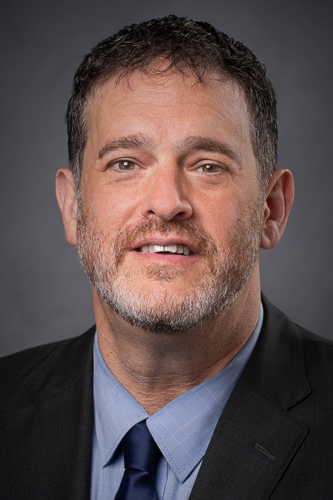
Delegate Mike Pushkin, D-Kanawha, followed up by asking whether any shortfalls on school security funding would be the responsibility of the county.
“That’s on the county to pay for, correct — so whether it’s additional access road or metal detectors or cameras in these schools, if these counties can’t afford it then they don’t have it,” Pushkin said. “And basically, it’s on us, the Legislature, to provide this.”