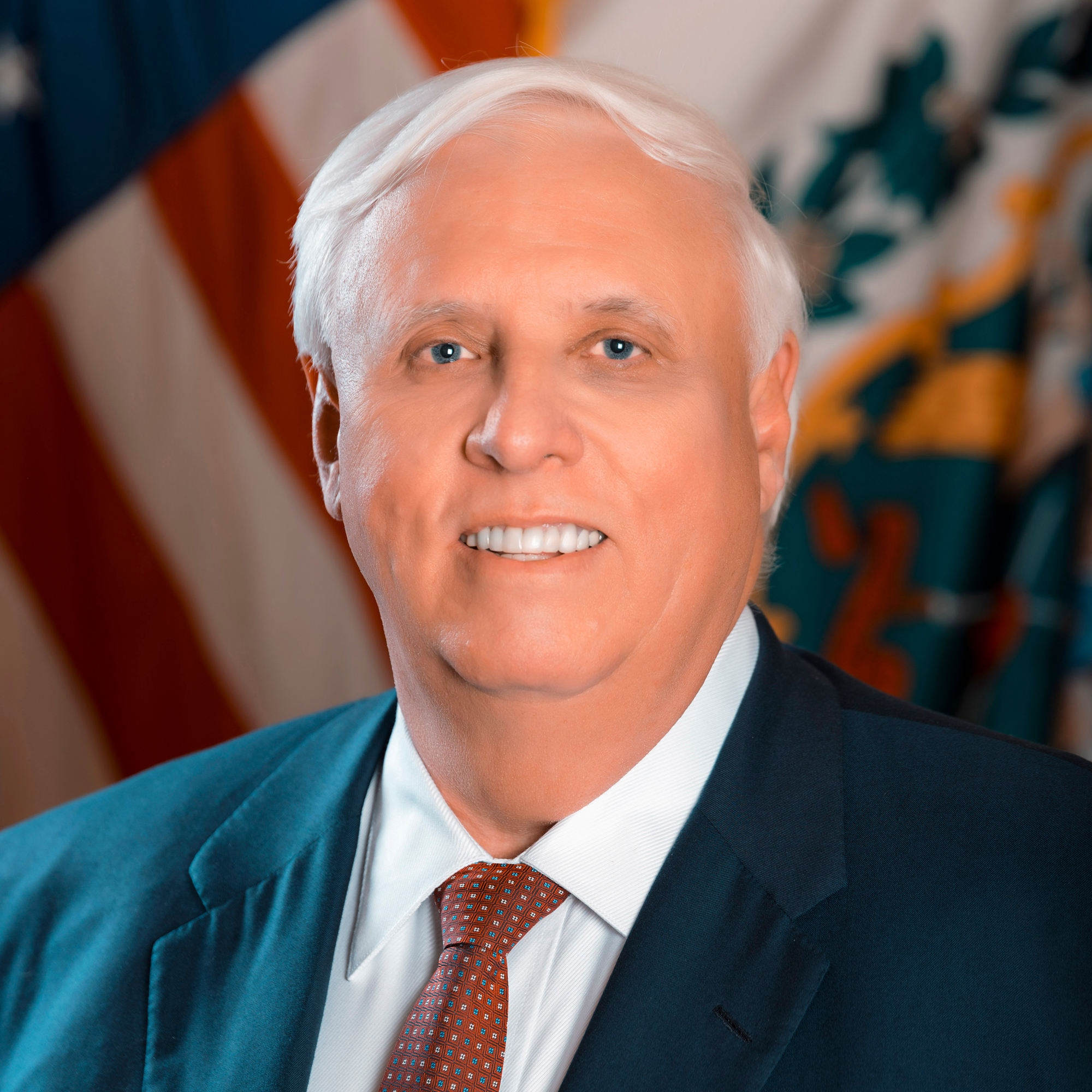
For decades, West Virginia has elected senators who have played an oversized role in United States energy policy, backing fossil fuels and resisting robust action on climate change.
Sen. Joe Manchin may have been outside the mainstream of the Democratic party in his views, but in a closely divided Senate, he was able to set the boundaries of what President Joe Biden could accomplish on climate.
Manchin opted to refrain from testing a moderate’s chances at re-election given West Virginia’s sharp political turn to the right. He announced he would retire at the end of this year, and broke from the Democrats entirely in May when he registered as an Independent.
Now, the race to fill his seat this fall could radically change West Virginia’s role as the state limiting the ambitions of national climate policy. The nation’s No. 2 coal state could elect a full-throated, fossil fuel-boosting senator in November—in fact, coal operator and businessman Jim Justice, the current Republican governor and an acolyte of former President Donald Trump, is running more than 30 points ahead in the latest polls.
Advertisement
We’re hiring!
Please take a look at the new openings in our newsroom.
See jobs
But Justice, 73, would just add to what is now essentially the unanimous pro-fossil fuel bloc of Republicans in Congress. His Democratic opponent, Glenn Elliott, 52, an attorney and mayor of Wheeling, sits firmly in the mainstream of his party on climate change. Elliott argues that warming is bringing dangerous weather extremes like torrential downpours to West Virginia and that an energy transition away from fossil fuels is inevitable.
The choice for West Virginia voters on one side or the other of the nation’s politically polarized energy policy couldn’t be clearer. But the 2024 Senate race also ends the state’s long reign at the fulcrum of that policy, with the balance in the Senate often tipped by Manchin over his 14 years in Washington, and for more than 50 years prior, by his predecessor, the late Sen. Robert Byrd.
Advertisement
In a speech two years ago, Justice downplayed renewable wind and solar power, and even the prospect of energy powered by hydrogen, as “the parsley around the side of the plate” where “oil, gas and coal” are the “meat and potatoes.”
Of climate change, Justice said, “I don’t know if it’s for real or not.” In backing coal, he went on to play the religion card, while ignoring the economic reality of coal losing its competitive edge to natural gas and renewable energy. “I truly believe with all my heart that God wants us to progress and like it or not, civilization only progresses with abundant cheap energy,” he said.
Glenn Elliott, an attorney and mayor of Wheeling, West Virginia. Credit: Elliott for West Virginia
West Virginia Governor Jim Justice. Credit: Office of the Governor
For his part, Elliott said in an interview that he is “not trying to end anybody’s job in coal. But I do think we need to start thinking in a much more sort of open-minded, expansive way the way we make our energy.
“The market itself is going to steer us away from a fossil fuel-based energy production model and we need to be doing something to prepare for that reality, instead of just doubling down on the way we’ve done things.”
‘Acres of Diamonds Under Our Feet’
West Virginia remains the second-largest coal-producing state despite a plummet in production by more than half over the last 15 years. Over about the same period, West Virginia has emerged from a regional fracking boom as the fourth-largest producer of natural gas.
The state’s representatives in Washington have sought to maintain the dominance of fossil fuel in the nation’s energy system, playing a leading role in some of the earliest debates in Congress on climate change. In 1997, Byrd, by then former Senate Majority Leader, reached across the aisle to join with Nebraska Republican Sen. Chuck Hagel to author and secure a unanimous resolution opposing the United Nations climate agreement known as the Kyoto Protocol that was then taking shape, effectively blocking U.S. ratification of the treaty.
Advertisement
Another significant Byrd moment came 10 years later when the Senate was debating what eventually became the Energy Independence and Security Act of 2007. The Democrats had full control of Congress for the first time since 1993, with the Senate essentially evenly split as it is today. It was the Democrats’ big chance to address climate change.
The legislation that President George H.W. Bush ultimately signed improved fuel economy and supported biofuels and energy efficiency. But mainly because of Byrd and other Democratic “moderates” at the time, the Senate jettisoned the House-passed effort to establish a National Renewable Energy Portfolio standard like those that were becoming popular at the state level. The proposal was for 15 percent of U.S. power to come from clean energy.
“Our coal supplies are large enough to last for generations, fueling the electricity needs of our homes and our businesses,” Byrd said on the Senate floor. “We don’t have to ask someone else for this cheaper and abundant energy source; it is right here, like acres of diamonds, under our feet. It is there, there in the ground, for the taking.”
Sen. Robert Byrd stands next to his desk in 1977. Credit: Marion S. Trikosko/Library of Congress
Most recently, Manchin, whose family also has coal interests and who has been a tireless advocate for coal mining and miners, played a leading role in limiting the scope of President Biden’s clean energy and green infrastructure aspirations by effectively killing the $2 trillion Build Back Better plan that Biden ran on in 2020.
Manchin then provided pivotal votes to secure passage of two landmark bills—the $1.2 trillion Bipartisan Infrastructure Law of 2021 and the Inflation Reduction Act of 2022.
However, the infrastructure law is heavily weighted to road and bridge building instead of public transit or clean alternatives. Biden’s originally planned $174 billion investment in electric vehicles and a network of charging stations was pared back to $7.5 billion for EVs, charging infrastructure and electric school buses, for example.
Advertisement
While the Inflation Reduction Act invests $370 billion in fighting climate change, more federal dollars than any other federal action, Manchin made sure the legislation included items that bolstered the fossil fuel industry, such as a requirement that the U.S. government offer millions of acres of federal land for new oil and gas leasing over the next decade.
Some environmental critics decried the fossil fuel support, with one calling the comprises “climate suicide,” but other Washington insiders who support climate action praise Manchin’s bipartisan approach.
Manchin doesn’t get the credit he deserves in climate policy circles, with his legislative style of seeking bipartisan cooperation, said Sasha Mackler, executive director of the Energy Program at the Bipartisan Policy Center, a Washington-based think tank.
“Sen. Manchin has been a leader on these issues for a very long time, and has at times been a bit of a thorn in the side of the climate policy community,” Mackler said. “But he has also enabled significant action to happen, and that has been very important in setting an energy agenda that has broad support from both Democrats and Republicans.”
Debts, Fines and Babydog
The Cook Political Report rates the 2024 Senate race in West Virginia as “solid” Republican.
Advertisement
Justice is viewed as an “extremely popular governor here, and also comparatively, nationwide,” said Sam Workman, a professor of political science and director of the Institute for Policy Research and Public Affairs at West Virginia University.
Given Justice’s strong position in the race, Workman doesn’t see the governor trying to engage his challenger very much, hoping to “coast to victory,” he said.
“On that chord, Gov. Justice is signaling more than ever his alignment with sort of national Republican priorities,” such as Southern border control and immigration. “He’s lockstep in line with President Trump’s take on things.”
West Virginia Governor Jim Justice speaks next to President Donald Trump at a campaign rally in Huntington, West Virginia on Aug. 3, 2017. Credit: Justin Merriman/Getty Images
Political observers in the state say he takes advantage of an “aw-shucks” manner of speaking and the ever-presence of an English bulldog, Babydog.
Neither Justice’s campaign nor the governor’s office responded to requests for an interview. On his campaign website, Justice promises to “remain a coal, natural gas and oil champion.”
Justice earned the endorsement of the West Virginia Manufacturers Association in part because of the governor’s views on energy production, said Bill Bissett, president of the lobby group. “We are an association that believes in energy development, not just with coal, but with all forms of energy. Overall, we have found him to be definitely willing to listen and definitely not stand in the way of energy industry development,” Bissett said.
Advertisement
Bissett said the state’s economy is going in the right direction, “so to continue that leadership, from the governor’s office to the U.S. Senate simply made a lot of sense to us.”
Bissett also praised Justice’s “overall business acumen” as the patriarch of a family enterprise that includes coal, agriculture and, since 2009, the historic and plush Greenbrier resort, which he bought out of bankruptcy.
But state and national news reports, from the Mountain State Spotlight and ProPublica to Politico and the New York Times, paint Justice’s business practices in a far different light. Formerly on the Forbes billionaire list, Justice inherited a fortune in coal interests from his father, and his family’s companies have faced and continue to confront a staggering trail of lawsuits, debt and environmental health and safety fines.
The environmental and safety record of mining companies run by the Justice family is among the worst in the industry, said West Virginia University Law Professor Pat McGinley, who came to the state in 1975 and has worked on behalf of coalfield residents and successfully challenged the permitting of mountaintop removal coal mining.
McGinley counts “literally millions of dollars” in fines paid on “thousands” of mine safety violations, while the Environmental Protection Agency has also sought payment of millions of dollars in fines from Justice family coal companies.
Advertisement
“His companies have failed to reclaim mine lands after the coal has been extracted” in states across Appalachia, leaving scarred landscapes “oozing acid mine drainage, causing flooding, soil erosion, sedimentation and putting miners’ lives at risk,” McGinley said.
Justice “is right at the forefront of those who wink and nod at mine safety and environmental regulation. In the Senate, I’ve no doubt that that’s where he will go,” McGinley said.
Elliott said his campaign intends to show how Justice hasn’t had “to play by the same rules as everyone else.”
Looking Forward vs. ‘the Past’
West Virginia Democratic consultant Mike Plante, who is not working on Elliott’s campaign, said Democrats running for statewide office in West Virginia have a chance if they can demonstrate they are putting West Virginia first.
He sees the race as a referendum on Justice and one offering divergent outlooks.
Advertisement
“Glenn Elliott represents the future of West Virginia,” Plante said, describing him as “forward-looking. And Jim Justice represents the past.”
Elliott is a Wheeling native who left home to earn academic degrees from the University of Pennsylvania’s Wharton School of Business and Georgetown University’s law school.
He worked as a legislative assistant to Byrd from 1994 to 1999 and practiced corporate law in the Washington area before returning home in 2009 to set up a solo law practice. He’s been mayor of the state’s third-largest city since 2016.
Manchin endorsed him before the May 14 Democratic primary, when Elliott defeated two other candidates.
This story is funded by readers like you.
Our nonprofit newsroom provides award-winning climate coverage free of charge and advertising. We rely on donations from readers like you to keep going. Please donate now to support our work.
Advertisement
Donate Now
Elliott, following at least part of the Democratic Party playbook, touts women’s health issues and reproductive choice as among his top campaign themes. Democrats elsewhere have found success defending pro-choice positions in the wake of the Supreme Court’s reversal of Roe v. Wade two years ago, after which West Virginia lawmakers almost completely banned abortion.
“A lot of people who may not be completely comfortable with (abortion) are now saying, wait a second, we went too far, and we are making women in West Virginia almost second-class citizens,” Elliott said. “So for me, that’s the single most critical issue for this campaign.”
Regarding energy, Elliott said he recognizes the role that West Virginia coal has played in the economy of the state and nation but coal has also “come at great cost. It’s killed a lot of miners either directly in the mines or it has sickened miners after the fact. It’s damaged a lot of communities.
Advertisement
“It’s important for West Virginia’s senator to advocate that if we’re going to be moving away from these fossil fuels that we’ve always relied on, West Virginia needs to make sure we get made whole in that equation. We can’t be just left behind.”
James Bruggers
Reporter, Southeast
James Bruggers covers the U.S. Southeast, part of Inside Climate News’ National Environment Reporting Network. He previously covered energy and the environment for Louisville’s Courier Journal, where he worked as a correspondent for USA Today and was a member of the USA Today Network environment team. Before moving to Kentucky in 1999, Bruggers worked as a journalist in Montana, Alaska, Washington and California. Bruggers’ work has won numerous recognitions, including best beat reporting, Society of Environmental Journalists, and the National Press Foundation’s Thomas Stokes Award for energy reporting. He served on the board of directors of the SEJ for 13 years, including two years as president. He lives in Louisville with his wife, Christine Bruggers.
Advertisement
Marianne Lavelle
Reporter, Washington, D.C.
Marianne Lavelle is a reporter for Inside Climate News. She has covered environment, science, law, and business in Washington, D.C. for more than two decades. She has won the Polk Award, the Investigative Editors and Reporters Award, and numerous other honors. Lavelle spent four years as online energy news editor and writer at National Geographic. She spearheaded a project on climate lobbying for the nonprofit journalism organization, the Center for Public Integrity. She also has worked at U.S. News and World Report magazine and The National Law Journal. While there, she led the award-winning 1992 investigation, “Unequal Protection,” on the disparity in environmental law enforcement against polluters in minority and white communities. Lavelle received her master’s degree from Columbia University Graduate School of Journalism, and is a graduate of Villanova University.
CHARLESTON, W.Va. –Governor Patrick Morrisey has appointed a new member of the state House of Delegates.
Shane Thomas Stack, of Triadelphia, was appointed Tuesday to represent District 4. Stack replaces former Delegate Bill Flanigan who resigned to join the Supreme Court of Appeals of West Virginia following his election to the Division 2 seat.
Advertisement
“Shane Stack is an outstanding choice to represent the families and communities of the fourth district,” Morrisey said in a release. “With his deep roots in the local community, his background as a business owner, and his proven experience managing municipal finances, Shane understands what it takes to support economic growth and advocate for working West Virginians. He will serve his constituents well in Charleston.”
In Morrisey’s release, it said that Stack has a diverse background in small business ownership, municipal finance, and higher education administration. Stack currently is the owner, licensed auctioneer, and certified appraiser for Frio Stack & Associates, as well as the owner of Island Pawn & Gun.
Stack previously worked as the Town Treasurer for West Liberty.
He earned his Bachelor of Science in Business Administration with a specialization in General Business from West Liberty University.
MINGO COUNTY, W.Va. (WSAZ) – Sentencing is underway for Timothy Kennedy, the man convicted of murdering West Virginia State Police Trooper Cory Maynard.
Trooper Maynard was shot to death in June 2023.
The jury found Kennedy guilty on all counts: first-degree murder, first-degree robbery, first-degree disarming a law enforcement officer, and two counts of first-degree attempted murder.
Shannon Litton has has that, plus your other top stories for Tuesday, July 7th.