Washington, D.C
House leaves Washington without approving radiation exposure compensation act

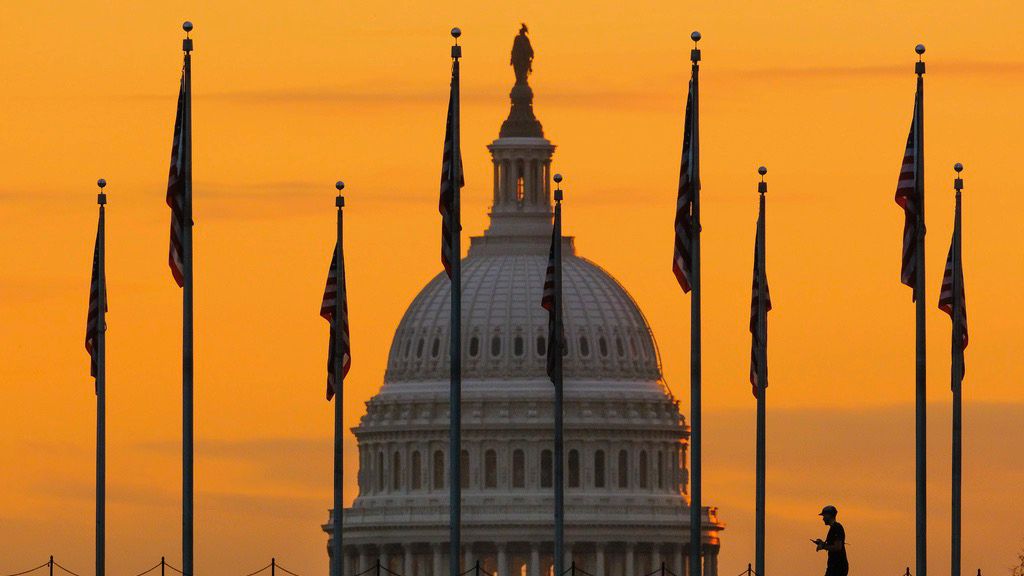
With the House not set to return to Washington until next week, the clock has run out on time to extend and expand the Radiation Exposure Compensation Act.
“It is sitting in the House, the House needs to act,” said Sen. Josh Hawley, R-Mo., in an interview with Spectrum News. “If the House doesn’t act, it’s going to be on the House. They’re going to have to explain to the American people why they don’t want to help our veterans, they don’t want to help folks exposed to radiation — they’re going to deny compensation to people who are dependent on it all their lives. I mean, this is crazy.”
Hawley, who has been leading the charge for RECA expansion in the Senate alongside Sen. Ben Ray Luján, D-N.M., has expressed frustration over recent weeks by the lack of commitment from House leadership to bring up the bill for a vote, considering it passed the Senate by an overwhelming bipartisan measure not once, but twice.
Under the proposed RECA expansion, coverage would be included for uranium miners and individuals who were “downwinders” from the testing and mining sites, including New Mexico, Idaho, Montana, Guam, Colorado, Tennessee, Kentucky and Alaska. In Missouri, it would cover people tied to almost two dozen ZIP codes who may have been sickened by contamination from uranium enrichment in the St. Louis dating back to the Manhattan Project. The bill would cost $50 billion over five years and add as many as 600,000 new claimants.
The U.S. Army Corps of Engineers confirmed Wednesday that work to remediate a small portion of a contaminated waterway where nuclear waste was dumped in North St. Louis County resulted in removing more than 7,000 cubic yards of soil–enough to fill eight Olympic-sized swimming pools. The entire Coldwater Creek corridor may not be fully remediated until the late 2030s.
According to the Department of Justice, which facilitates the claim program, the 1992 law has helped over 41,000 individuals access approximately $2.6 billion in funds to help pay for their medical bills for treating cancer and other illnesses traced to exposure to radiation waste.
Claims need to be postmarked by June 10 to be considered to receive compensation.
“If you’ve been poisoned by the federal government, if the government has exposed you to nuclear radiation, and that is so many people in Missouri, the government ought to make it right. They ought to help at the least with your medical bills — pay em. And that’s what my bill would do,” said Hawley.
“The state of Missouri has been lied to for 50 and 60 years. They’ve told us — the federal government — there was no radiation exposure in Missouri. That was a lie. They said it’s all cleaned up. That was a lie. They said we couldn’t get sick because of it. That was a lie. Now our schools are closed, we’ve got the highest rates of breast cancer in the nation, some of the highest rates of childhood cancers and other diseases associated with radiation. This needs to be fixed. It should have been fixed 50 years ago.”
“We shouldn’t have to beg for people to be taken care of because they were exposed to radioactive waste,” Rep. Cori Bush, D-Mo. said bluntly Wednesday. “World War II is still killing people right now.”
Bush and other advocates are claiming a small victory in that a bill that would have only extended the existing program did not make it to the floor. They believe an extension would have killed momentum for expansion.
But past experience with other pieces of legislation may not back that theory up.
“History has shown that there’s been a number of things, such as the assault weapons ban and, others — such as the Patriot Act — that become much more difficult to reauthorize if you don’t give them the automatic extension,” said Todd Belt, a professor and Political Management program director at the George Washington University,
“Generally, when the government has done something that has caused harm to people, you think of the burn pits legislation that was recently passed, you usually get real big bipartisan support for it. So it’s somewhat unusual that you would see some recalcitrance from the House to move on this Senate bill.”
Advocates for expansion traveled to a political event featuring House Speaker Mike Johnson in Peoria, Illinois last weekend hoping to land a meeting in Washington this week. Once it became clear that no legislation was going to move in time to beat Friday’s deadline, those plans changed and they will instead be back at the Capitol next week.
Johnson’s staff did not respond to new questions about the possibility of a vote on the expansion bill this week.
Hawley said the fight is far from over.
“If it takes as long as I’m in the Senate, I will not stop until this is made right.”
Spectrum News’ Angi Gonzalez contributed to this report.



D.C. is the second riskiest city for driving, an insurance company report says.
Allstate said it looked at the number of crashes, how often they happen and certain types of behavior behind the wheel.
“On the phones, bike lanes, people on motor scooters having no regard for the law,” one driver told News4. “It is risky, yeah. I’ve seen a lot of close calls.”
The average driver around D.C. goes just about four years in between collisions. Drivers in the least risky city — Brownsville, Texas — go about 15 years in between collisions.
D.C. also got dinged for bad driving — like being on phones a lot — and plenty of nighttime driving, which increases risk.
Allstate analyzed property damage claims from January 2023 through December 2024 to rank cities. Here’s the Top 10:
- Boston
- D.C.
- Baltimore
- Worcester, Mass.
- Springfield, Mass.
- Glendale, Calif.
- Providence
- Sunrise Manor, Nev.
- Los Angeles
- Philadelphia
But local Allstate agent Rudy Alston says D.C. drivers themselves may not deserve the bad rap.
“I think a lot of it isn’t so much from D.C. natives,” he said. “I think it’s a lot of people coming from outside of D.C. — coming from Maryland and Virginia that commute to D.C. — that maybe aren’t as familiar with the traffic laws in D.C. and how congested D.C. is with the influx of pedestrians, Uber drivers, the Door Dash guys on the scooters, the Metrobuses. So, I just think when they get here, they’re just not familiar with it.”
Washington, D.C
Greenberg Traurig Adds Former Commerce Official Joe Bartlett to Washington, D.C., Office

WASHINGTON, July 7, 2026 /PRNewswire/ — Global law firm Greenberg Traurig, LLP made another key hire in its Washington, D.C., office with the addition of Joe Bartlett, who served as Deputy Under Secretary at the U.S. Department of Commerce’s Bureau of Industry and Security (BIS). Bartlett, who joins as a Senior Director, will be part of the firm’s Government Law & Policy, International Trade, National Security, and Defense, Aviation & Space practices.
Bartlett leverages more than a decade of experience through a wide-ranging career in Commerce, several U.S. House of Representatives offices and committees, and the private sector, giving him a comprehensive view of issues affecting the defense, international trade, technology, artificial intelligence, semiconductors, manufacturing, and emerging technology sectors from inside and outside the government. He’s established deep credibility with officials throughout the Administration and Congress, allowing Bartlett to counsel clients operating at the intersection of trade and national security by advising them on tariffs, export controls, trade policy, industrial and supply chain matters, and national security issues.
“As we continue to strategically expand our capabilities in Washington, D.C., across government policy, regulatory, litigation, lobbying, and transactional disciplines, we have been able to attract exceptional talent with deep experience at the highest levels of government and industry,” said Ernest LaMont Greer, Co-President of Greenberg Traurig and chairman of the Washington, D.C., office. “Joe’s unique background further strengthens our ability to help clients navigate increasingly complex challenges that combine business, policy, and national security concerns. His addition reflects both the strength of our Washington platform and our continued commitment to investing in the people and capabilities that matter most to our clients.”
Barlett’s arrival comes amid a string of high-profile additions to Greenberg Traurig’s Washington, D.C., office, including former Federal Aviation Administration (FAA) Assistant Administrator Christopher J. Senn, who joined the firm’s Government Law & Policy Practice in June. Two months earlier, the firm added a six-member team that further bolstered the firm’s lobbying capabilities, including Shareholder Christopher DeLacy, co-chair of the Federal Government Law & Policy Practice, Shareholder Daniel Sennott, co-chair of the National Security Group, Shareholder Joel E. Roberson and Senior Director Matthew P. Satterley in the Government Law & Policy Practice, and Senior Director Misha Lehrer and Assistant Director James K. Hickey in the National Security Group. In January, the office also expanded its National Security Group with Shareholder E. Patrick Gilman, who co-chairs the group, Shareholder Neal Higgins, and Of Counsel Joshua W. Johnson.
“By combining the capabilities of our lawyers in different practices and taking advantage of Greenberg Traurig’s strategy of firmwide collaboration, we have created an all-in-one D.C. platform to guide our clients through the often-opaque world of government regulation and international trade,” DeLacy and Sennott said in a joint statement. “Given his experience in key positions in Congress, the Administration, and the private sector, Joe is a marquee addition to our growing group who will serve as a guide for our clients, and our colleagues, across a wide range of issues. We’re thrilled to have him on board.”
Bartlett held progressively senior roles on the House Armed Services Committee and in member offices, focused on defense, intelligence, foreign affairs, and trade policy. He then worked for a leading American autonomous drone manufacturer, giving him firsthand understanding of how technology companies navigate federal policy and government procurement frameworks. Bartlett earned a master’s degree in Defense and Strategic Studies from the U.S. Naval War College.
In 2025, he joined the administration as Director of Legislative Affairs for BIS, giving him insight into how export control policy is shaped through the interplay of executive action and congressional oversight. He was then promoted to Deputy Under Secretary of the Bureau, where he oversaw policy and operations related to U.S. export control regulations, trade in dual-use technologies, and various industrial base policies.
Bartlett said his experience has shown him how the government handles strategic trade issues related to everything from steel and critical minerals to semiconductors and other critical technologies. He decided to join Greenberg Traurig because the firm has the resources and expertise to handle that full range of matters and the global reach to follow his clients wherever their work takes them.
“There has been a fundamental reordering of global trade across virtually every industry, and clients need to understand what that means for them,” Bartlett said. “All industries, and technology companies especially, are adapting every day to better understand and take advantage of the opportunities provided by the changing political environment and we are well positioned to help them navigate these changes. I’m excited to get started.”
With this addition, Greenberg Traurig has welcomed more than 20 shareholders, of counsel, and senior policy professionals to its Washington, D.C., office since the start of 2025, reflecting one of the most sustained periods of strategic growth in the office’s history. Those arrivals include Environmental Shareholder Stacey Bosshardt and Of Counsel Edward Roggenkamp; Financial Regulatory & Compliance Shareholder Ryan Hayden; Gaming Shareholder Rajat R. Shah; International Trade Shareholder Luciano Racco; Space & Satellite Shareholder Dr. Michael C. Mineiro; Technology, Media & Telecommunications Shareholder Kathryne C. Dickerson; State Attorneys General Practice Shareholders Douglas Gansler and Stephen Ruckman; State & Local Tax Shareholder John Ormonde; and Energy & Natural Resources Shareholder Adam Gendelman, among others.
Bartlett is not admitted to the practice of law.
About Greenberg Traurig: Greenberg Traurig, LLP has more than 3,100 lawyers across 51 locations in the United States, Europe, the Middle East, Latin America, and Asia. The firm’s broad geographic and practice range enables the delivery of innovative and strategic legal services across borders and industries. Recognized as a 2025 BTI “Best of the Best Recommended Law Firm” by general counsel for trust and relationship management, Greenberg Traurig is consistently ranked among the top firms on the Am Law Global 100, NLJ 500, and Law360 400. Greenberg Traurig is also known for its philanthropic giving, culture, innovation, and pro bono work. Web: www.gtlaw.com.
SOURCE Greenberg Traurig, LLP

4 things to know about the weather:
- Foggy start Tuesday morning
- Scattered showers & a few storms again Tuesday
- Not as hot Tuesday
- Slowly moving storms could cause flooding conditions later Tuesday afternoon/evening
After Monday night’s storms, we’re waking up to a fair amount of fog. Expect highs in the low 80s on Tuesday.
A few isolated showers are working across some of the northern suburbs of D.C. and they’ll move towards to east. Like Storm Team4 said on Monday, there’s daily chances of thunderstorms in the forecast now until the start of the upcoming weekend.
Look out for storms starting at about 6 p.m. Tuesday night and again at 9:30 p.m. In some areas, there’s a chance of flooding again.
On Wednesday, we’ll see clouds again but less rain chances. There’s a chance of on-and-off showers and a rumble of thunder on Thursday and then finally we’ll start to see a trend where things will start to get brighter and drier as a weather front comes though on Friday.
That weather front actually late into the evening may touch off a few more showers and storms that could linger into Saturday morning, but the trend Saturday and into Sunday is for drier air to replace all this moisture humidity. We’re going to see drying conditions on Saturday with highs right around 87 degrees.
Download the NBC Washington app on iOS and Android to check the weather radar on the go.
XXXXXXXXXXXXXXX you can add additional text here XXXXXXXXXXXXXXX
QuickCast
TUESDAY
Mostly Cloudy | Muggy | Scattered Showers & Storms (50% Chance)
HIGH: 84F
TUESDAY NIGHT
Scattered Showers/Storms | Muggy
Temps: 70s Area-Wide
WEDNESDAY
Mostly Cloudy | Muggy | Scattered Showers & Storms (50% Chance)
HIGH: 83F
THURSDAY
Mostly Cloudy | Showers/ Storms Likely (60% Chance)
HIGHS: Upper 80s
FRIDAY
Partly Sunny | Isolated Showers/Storms Storms (30% Chance) | Hot
HIGHS: Near 90F
SUNSET: 8:36p
Averages: 89/72F
Stay with Storm Team4 for the latest forecast. Download the NBC Washington app on iOS and Android to get severe weather alerts on your phone.
-

 News5 seconds ago
Manhattan Building’s Columns Buckled Beneath New Addition, Images Show
-
 Lifestyle37 minutes ago
Can you say no to a friend’s wedding? : It’s Been a Minute
-

 Technology45 minutes ago
The robotaxi law that could ban Tesla
-

 World52 minutes ago
US urges donors to abandon UNRWA funding as UN defends agency’s mission
-

 Politics55 minutes ago
EXCLUSIVE: FBI adds alleged COVID fraudster accused of taking $5M from kids’ meal program to Most Wanted list
-

 Health1 hour ago
One walking habit could signal a healthier brain after 80, scientists say
-

 Sports1 hour ago
New Jersey pro wrestling promotion bringing the fight to the beach
-

 Technology1 hour ago
Are airline miles still worth it?

