Virginia
Virginia Sen. L. Louise Lucas has been vocal advocate for marijuana legalization


PORTSMOUTH, Va. (AP) — Virginia Sen. L. Louise Lucas has carved out a reputation as a fierce and outspoken advocate during her political career. One issue, in particular, has been at the forefront of her agenda: legalization of marijuana, which she says disproportionately affects members of the African American community.
She felt so strongly about the issue, she sponsored a legalization bill and opened her own cannabis shop. Now, she’s under the microscope as federal law enforcement appears to have raided that business. It wasn’t immediately clear what they were looking for but it’s drawn attention to Lucas and her 34-year career in politics.
In 2019, she became the state’s first Black woman to hold the leadership post of Senate president pro tempore after Democrats seized the majority.
The next year, she appeared at a protest of a Confederate monument that led to felony charges against her. A judge later dismissed the charges.
Lucas was born in Portsmouth and worked at the Norfolk Naval Shipyard earlier in her life, where she was the first female ship fitter, according to a biography in the state library.
She has been the CEO of a Portsmouth business that runs residences, day programs and transportation for intellectually disabled adults. And in 2021, Lucas opened a store in her hometown of Portsmouth, The Cannabis Outlet, that sells legal hemp and CBD products.
“Let’s talk about pot,” Lucas said in a social media post on X in 2022. “Yes, we legalized it and I even opened the Cannabis Outlet after we did! But the job isn’t done. People are still in jail for something that is legal today.”
An armored FBI vehicle and several agents were seen outside Lucas’ cannabis store on Wednesday. The FBI would say only that it was conducting a court-authorized search warrant in Portsmouth.



.jpg?ssl=1 "On Virginia’s Crooked Road, the Hills Are Alive—With Bluegrass, Old-Time, and Country Jams")
After, I headed west, retracing my path up Shooting Creek Road in a rush to spend time on the Appalachian Trail, which I’d hiked from Georgia to Maine six years earlier. That you can spend your day in some of the country’s most beautiful landscapes and still make it to a show or jam by nightfall is one of the underrated features of the Crooked Road.
In the town of Marion, the Wayne C. Henderson School of Appalachian Arts, named for the legendary guitar maker who famously built one of Eric Clapton’s guitars, was hosting a Monday-night jam. Born in Grayson County in 1947, Henderson is such an area icon that a painting of him covers one side of the Skyline National Bank in Independence. This old schoolhouse has been turned into a community hub and arts center. In a former first-grade classroom, I found a dozen people seated in a circle, one person at a time selecting the next song that everyone else then played. Dropping his fiddle to his knee, Jim King, the de facto leader, looked my way and nodded, welcoming a stranger with a smile. His wife, Gert, sat to his right, checking the tuning on her banjo. A bassist stood behind her, another fiddler in turn at his side.
On the drive over, I’d been listening to a set of Smithsonian Folkways recordings by Uncle Wade Ward, a banjo and fiddle player from Independence. He’s been dead for half a century, but his mural remains on a wall there. In those sessions from the early ’60s, he talked about a buoyant fiddle number called “Arkansas Traveler,” one of those “wonderful old tunes…about to fade away.” I’d been at the jam an hour, the sinking sun shining through a bottle of Mountain Dew on the windowsill, when someone asked, “How ’bout we try ‘Arkansas Traveler’?” A young guitarist cued the chords on his iPad, and the fiddle began sawing. Sure, it was wobbly and ragged. It had not, however, faded away.
My last day along the Crooked Road was a rainy Tuesday, and I spent it shuttling between museums. I’d driven through Virginia coal country and McClure, the town where pioneering singer Ralph Stanley was born, then raced two hours southeast to Bristol, getting to the Birthplace of Country Music Museum just before it closed. I teared up when I saw the back of Jimmie Rodgers’s guitar, which read simply “THANKS” in enormous gold letters. It was a note of gratitude to an audience he had likely never imagined when he died from tuberculosis in 1933.
There is only a parking lot now at 408 State Street, right where Bristol splits across Tennessee and Virginia. In July 1927, though, it was home to the Taylor-Christian Hat Company, a building big enough for an ad hoc recording studio set up by the Victor Talking Machine Company. For a few days that summer, musicians rolled in from the surrounding countryside to cut their songs. There was the Carter Family, Ernest Stoneman, and Blind Alfred Reed, all pillars of what has since been called the Big Bang of Country Music. It was that moment, a century ago, when these hardscrabble acoustic sounds began their journey to becoming global exports, when the songs that had once seeped out of these hills began to rush out and form the foundation of country music. It was the moment that made this region’s music famous.

Virginia Tech football embarks on its penultimate road test of the season in late November when it travels to Miami Gardens, Fla., to take on perennial ACC power Miami.
While the Hurricanes haven’t won the ACC title yet — they’ve consistently been near the top, and they won the Coastal Division in 2017 — they’ve been at the forefront of the conference, and this year, they seem to be the lone proven unit that doesn’t have a gaping weakness.
Miami boasts the only top-15 defense on SP+, entering the season with the No. 7 projected deffense. Its offense clocks in at No. 12, which is also tops, while its overall ranking of No. 8 places it 15 spots ahead of Clemson. Notre Dame clocks in at No. 3 overall, but since it isn’t a part of the conference for football, Miami takes the cake for the conference.
That starts under center. Darian Mensah arrives after a hotly contested exit from Duke. Mensah, who projects out as an NFL-level quarterback, tied for second in the nation in both passing yards (3,973) and passing touchdowns (34), while throwing only six interceptions and producing a QBR of 76.6, good for No. 19 in the country.
Mensah isn’t a dual threat quarterback, however. He absorbed 27 sacks last year with the Blue Devils and logged a net-minus-32 rushing yards on 59 totes. He’s on his third school in as many years after coming from Tulane to Duke, and now, from Durham to the Hurricanes. Mensah was named All-ACC Second Team after his near-4,000-yard season — and his passing yard total led the conference, too. He threw for 300-plus yards in six games — including a four-touchdown, 361-yard output against Clemson in a 46-45 win and a 327-yard, four-touchdown contest against Arizona State in the Sun Bowl.
Intriguingly enough, the Virginia Tech-Miami matchup will pit Mensah up against one of his former receivers in Que’Sean Brown, who will likely start at wideout for the Hokies. Brown recorded 846 receiving yards and five receiving touchdowns on 64 catches for the Blue Devils last season.
Mensah wasn’t the only prospect to defect from Duke to Miami. Wide receiver Cooper Barkate is also maing the trek south. Barkate, who’s also on his third school after a prior stint at Harvard, racked up 1,106 receiving yards, seven touchdowns and 72 receptions last season as a Blue Devil, and the returning quarterback-wideout connection should serve the Hurricanes very well.
If that’s not enough, Miami also added Cam Vaughn, a redshirt junior who’s totaled 1,344 receiving yards and nine touchdowns over the past two seasons, which included a season apiece at Jacksonville State and West Virginia. They also brought in South Carolina wideout Vandrevius Jacobs, who totaled 548 receiving yards and four touchdowns for 17.1 yards per catch in 2025.
Oh, and then there’s Malachi Toney. Last season, the then-true freshman led the nation in receptions with 109, finished fifth in the FBS with 1,211 receiving yards and added 10 touchdowns. Moreover, he added 113 rushing yards and a touchdown on 23 totes, went 4-for-7 for 82 yards nad two touchdowns as a Wildcat quarterback and returned 23 punts for 298 yards.
That consistency does not stop when purveying the running back position. Mark Fletcher is back after a 1,192-yard, 216-carry, 12-touchdown season. Over the past three seasons, he’s racked up a daunting 2,313 rushing yards and 26 rushing touchdowns, adding 140 receiving yards in 2025, too.
Miami also returns depth piece Charmar Brown. After a 1,181-yard, 15-touchdown season with North Dakota State in 2024, Brown logged 474 rushing yards and seven touchdowns last season as a Hurricane. Girard Pringle also returns after a 375-yard, four-touchdown output as a true freshman; against NC State, he produced 116 rushing yards (17 carries) and he also added 82 rushing yards (10 carries) against then-No. 22 Pittsburgh in a 38-7 blowout win.
Where Miami may hold a weakness — if it can be called that — is in its front. The Hurricanes lost defensive ends Rueben Bain Jr. and Akheem Mesidor in the first round of this year’s NFL Draft, though they return Ahmad Moten Sr., who logged 31 tackles and 4.5 sacks. Armondo Blount also comes back after a 17-tackle, 2.5-sack season, though the D-line is undoubtedly less proven than a year prior.
When pivoting towards the secondary, one name that jumps out is defensive back Omar Thornton, who comes over from Boston College. Last year, he totaled 82 tackles (56 solo), 5.5 tackles for loss, two sacks and forced four fumbles. Star freshman Bryce Fitzgerald is also back for Year 2 after he totaled six interceptions last season. Xavier Lucas and Ethan O’Connor also return after combining for 15 pass breakups and 13 pass deflections in 2025.
I think Miami should be the No. 1 game circled on Virginia Tech’s schedule this season. It’s also why I believe it’ll be the least-debated of the Hokies’ 12 games. While the Hurricanes haven’t always closed the deal in recent years, Virginia Tech’s relative lack of proven production leads me to side with the known quantity.
The Hokies have not won against Miami since 2019. In 2025, Virginia Tech fell behind 20-3 at halftime and couldn’t recover in a 34-17 loss. The 2024 rendition was far more competitive, coming down to the wire in a hotly-contested 38-34 loss for the Hokies. Virginia Tech initially won on a Hail Mary pass to wide receiver Da’Quan Felton that was overturned following a lengthy review.
Virginia Tech’s clash against Miami will take place on Saturday, Nov. 21, at Hard Rock Stadium, with no time or TV channel announced at the time of writing. Only one game remains after that in the regular season for the Hokies: the Smithfield Commonwealth Clash, coming against archrival Virginia on Saturday, Nov. 28 at Lane Stadium.
Follow

Staunton sits in the Shenandoah Valley with a theater company performing in a reconstructed Jacobean playhouse, a presidential library, and a downtown of intact railroad-era brick lined with working offices and shops. It also still costs less than Charlottesville an hour away. That mix, a center worth living in and a price a working household can actually carry, is harder to find in Virginia than it used to be, as the Charlottesville and Northern Virginia markets price out the people who grew up near them. The ten towns below manage it. None of them is a secret, and none needs to be.
Staunton
Cost is a real part of Staunton’s case: prices have risen across the Valley, yet the city often remains below Charlottesville while keeping a stronger center than most nearby towns. Beverley Street carries offices, restaurants, shops, and the Wharf district, so the old railroad fabric is still in everyday use. The American Shakespeare Center’s Blackfriars Playhouse gives the city a serious theater draw, and it sits near the Woodrow Wilson Presidential Library and Museum without either institution overwhelming the other. The Staunton Farmers’ Market draws a steady local crowd on Saturday mornings. Reunion Bakery & Espresso, Gypsy Hill Park, and the R.R. Smith Center for History & Art fill out a downtown with more going on than its size suggests.
Abingdon

On Abingdon’s Main Street, the courthouse, storefronts, inns, and restaurants still sit on the same walkable line. Barter Theatre is the obvious institution, but local identity does not depend on one name. The Virginia Creeper Trail starts close by and shapes weekends before and after the ride. White’s Mill keeps Washington County craft and milling history visible without requiring a dedicated trip. The Martha Washington Inn & Spa keeps a major 19th-century building in active use as a hotel and restaurant. Wolf Hills Coffee and the Abingdon Farmers Market are well-used local establishments. Housing remains less expensive than in larger Virginia metro areas, though addresses nearest the center bring their own premium.
Lexington
For a town of its size, Lexington carries an unusually heavy public memory. The courthouse area still serves present needs through the Lexington Farmers Market, coffee stops, bookstores, offices, and dinner at Zunzun. That said, Washington and Lee University and Virginia Military Institute still make the past difficult to ignore through the University Chapel & Galleries, the VMI Museum and the George C. Marshall Foundation’s research library and public programs. That weight can be useful, and it can also crowd the municipality. Prices run higher here than in many Valley towns, pushed by campus demand and limited inventory within the municipal grid. The Chessie Nature Trail gives the place a needed release, with a Maury River route for walking and cycling when the institutional presence feels dense.
Waynesboro
Waynesboro is at its best when it does not try to smooth out its industrial past. The main outdoor draw is the Claudius Crozet Blue Ridge Tunnel Trail, a 4,273-foot walk through a railroad tunnel bored under Rockfish Gap in the 1850s. Back in town, the South River, freight lines, older brick masonry, and former factory space give Waynesboro a plain Blue Ridge character that holds up. Basic City Beer Co. uses that inheritance well, with beer, music, and pizza in a reused industrial property. The central blocks include the Waynesboro Heritage Museum, the Shenandoah Valley Art Center, seasonal produce stalls, and a working stock of shops and services. Housing generally remains more attainable than in Charlottesville or Albemarle, which explains part of the appeal.
Front Royal
At the north end of Skyline Drive, Front Royal has a role few places can avoid once they receive it: gateway to Shenandoah National Park. That fact shapes restaurants, traffic, and weekend timing. Even so, the town has its own civic texture. Belle Boyd Cottage gives the Civil War record a human scale, Skyline Caverns has taken visitors underground since the 1930s, and Warren County growers keep Saturday mornings from belonging only to park traffic. Main Street Daily Grind remains the coffee stop, while Spelunker’s has built a direct reputation on burgers, custard, and a line at busy hours. Prices are no longer bargain-level, but Front Royal still undercuts the towns closer to the Washington suburbs, which is much of why commuters willing to drive the I-66 corridor have kept settling here.
Luray
Luray Caverns sets the public image, and the Great Stalacpipe Organ remains the detail visitors remember, but the town around them stands on its own. Practical services matter here as much as the visitor draw: groceries, schools, Page Memorial Hospital, and a downtown solid enough to support full-time residents. Gathering Grounds Patisserie & Cafe and Page County growers at Ruffner Plaza give the center an everyday pull of its own. The Hawksbill Greenway gives walkers a creekside route through town. Shenandoah National Park sits close enough for early hikes or late drives on Skyline Drive, and the Mimslyn Inn adds a 1930s landmark that earns its keep through dining, lodging, and area events.
Farmville
Far enough from Richmond and Lynchburg to have its own pull, Farmville is anchored by Longwood University, Prince Edward County offices, and Green Front Furniture’s warehouse buildings. The Robert Russa Moton Museum gives the area’s civil-rights record the seriousness it requires. High Bridge Trail State Park is the clear outdoor asset, especially where the restored bridge carries walkers and cyclists above the Appomattox River. Uptown Coffee Café and the Farmville Community Marketplace see steady local traffic. The Fishin’ Pig fills a different role, serving barbecue and fish to a steady regional crowd. Housing has tended to be lower-priced than in fast-growing parts of the state, but distance from larger employment hubs is built into that price.
Bedford
Bedford does not need much staging. The National D-Day Memorial is the defining institution, sober and specific, tied to the Bedford Boys and the losses in Normandy. Around the courthouse area, Bridge Street Café, the Bedford Farmers Market, and older residential blocks sit within easy reach of one another. Peaks of Otter and Sharp Top put demanding Blue Ridge hiking within a short drive. Beale’s Brewery brings evening traffic to Grove Street, and the Bower Center for the Arts keeps classes, exhibits, and events available without overstating its role. Buyers can find houses within the grid, brick ranches, and acreage outside it. What Bedford offers is a serious institution, a walkable center, and quick mountain access, without the price of the larger metros.
Wytheville
At the meeting point of I-77 and I-81, Wytheville holds a functional role that predates travel branding. It serves motorists, nearby rural areas, courthouse business, and residents who want Southwest Virginia prices without leaving services behind. Skeeter’s World Famous Hotdogs, open since 1925, remains the lunch counter that needs little explanation. Big Walker Lookout provides the clearest mountain view, with a country store and craft demonstrations at the tower. The Edith Bolling Wilson Birthplace is a worthwhile stop on its own terms, focused on the only Appalachian-born First Lady. The Haller-Gibboney Rock House preserves early Wytheville history in an 1820s brick structure. Seasonal vendor stalls give the center its own pull for the people who live around it.
Christiansburg
Christiansburg often gets read as a Blacksburg satellite, but it carries its own economy. The appeal begins with function: Virginia Tech access, the Huckleberry Trail, Roanoke Valley jobs, and Montgomery County services usually come at a lower cost than Blacksburg allows. The Montgomery Museum of Art & History keeps local records, railroad material, Civil War items, and rotating exhibits in public view. The town farmers market runs Thursdays at Huckleberry Park from May through October. Fatback Soul Shack serves barbecue and fried chicken without performance. Sinkland Farms, just outside town, adds concerts, pumpkins, and farm events that draw a crowd separate from campus calendars. Christiansburg is plain in ways that matter: useful roads, real stores, civic institutions, and enough distance from campus culture to keep its own habits.
What The Cost Gap Buys
The thread running through these ten is a cost gap that has not yet closed. A salary that buys a condo in Charlottesville or a townhouse outside the Beltway buys a house with a yard in Waynesboro, Farmville, or Wytheville, and buys it inside a town that still has a downtown worth walking to. What you trade is distance, from the biggest job markets, sometimes from the nearest interstate, and that trade is the whole calculation. For households who can make the distance work, whether through remote jobs, a commuter bus, or simply a shorter career drive, these are the Virginia towns where the math still favors staying.
-
 Lifestyle4 minutes ago
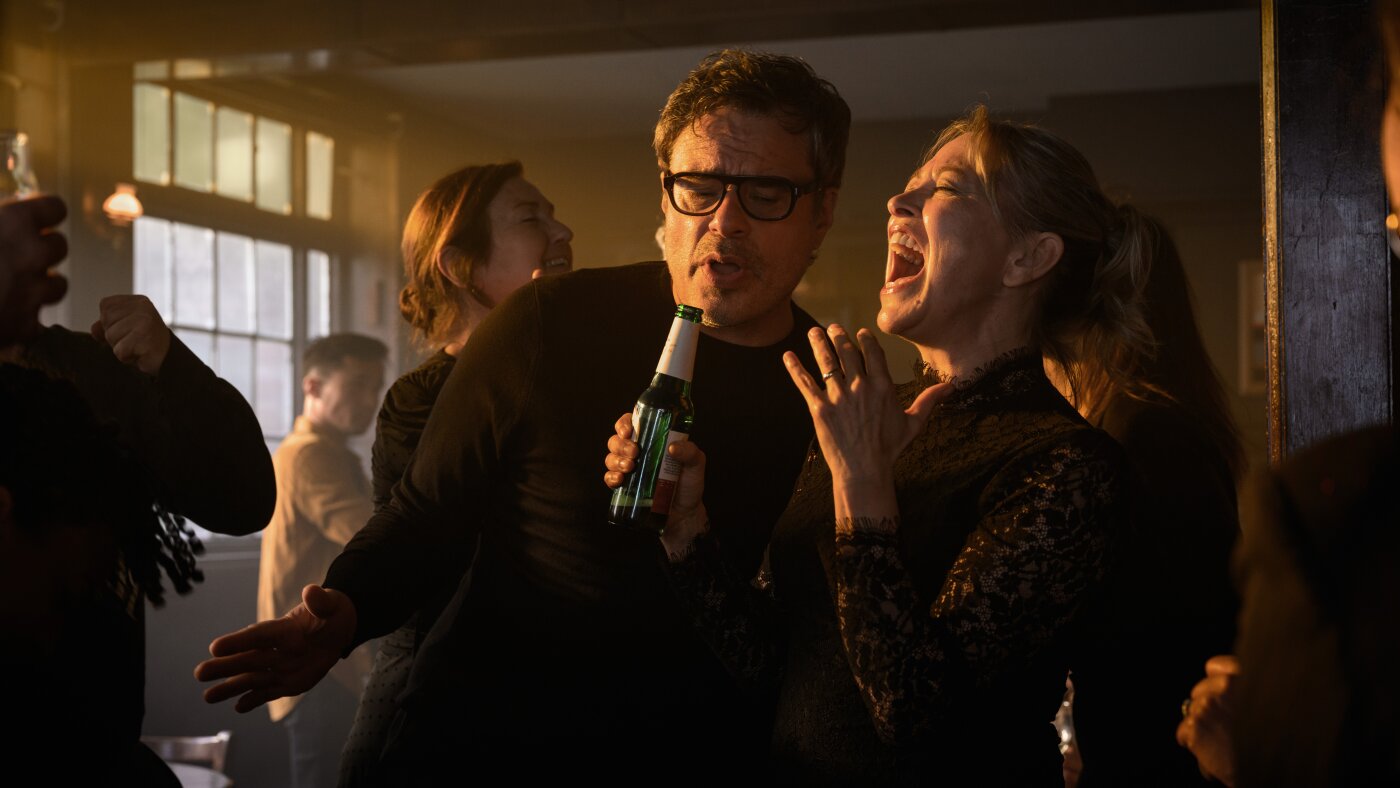
‘Alice and Steve’ might be a mess — but it’s also too fun to stop watching
-

 Technology12 minutes ago
America’s greatest idea is still under threat
-

 World19 minutes ago
Zelenskyy pressures US and Europe for more ‘air defense’ assistance amid ongoing war with Russia
-

 Politics22 minutes ago
ICE renews hunt for El Chapo’s last two fugitive sons with massive reward
-

 Health34 minutes ago
Biohacker hoping to live to 160 reveals alarming diagnosis: ‘My stomach is eating itself’
-

 Sports37 minutes ago
FIFA president addresses Trump call amid scrutiny over decision on USA World Cup star
-

 Technology42 minutes ago
Fake Booking.com travel credit scam targets travelers
-
 Business49 minutes ago
Many indie festival films struggle to get distribution. Alamo Drafthouse is trying to change that

