South-Carolina
In ruby red South Carolina, ‘like-minded’ Democrats to meet, mobilize at annual convention


Two key Democratic governors are coming to the Palmetto State to speak at the South Carolina Democratic Party’s annual two-day event in Columbia.
The 2025 event features Maryland Gov. Wes Moore, who will speak May 30 at the Palmetto Blue Dinner and Minnesota Gov. Tim Walz gives the keynote address May 31.
Christale Spain, the Democratic Party state chairperson, said Moore and Walz were chosen because of their growing national presence.
She said Moore stands out because of the work he’s doing in Maryland and his emergence as a young leader among Democrats. Walz was the Democratic Party’s 2024 vice presidential nominee on the ticket with then-Vice President Kamala Harris, the nominee for president.
The state party will select its officers for the upcoming year during the convention held at the state fairgrounds. Spain is running unopposed for chair.
Each county will also send delegates to the convention to represent their area’s interests. A total of 1,758 delegates will attend the convention.
Greenville County Democratic Party Chair Stacey Mars is attending the convention as one of the 180 delegates from Greenville County. Mars said that anyone who is a member of the state’s Democratic Party is eligible to serve as a delegate.
She said she is excited to see Spain’s reelection because the state chair has been an active presence in county party races since taking on the leadership position.
Mars said the convention is important because it helps anyone new to the party become familiar with its platform and candidates.
“We are in the minority, so it always helps being around like-minded individuals,” Mars said.
South Carolina’s Electoral College has voted for the Republican candidate in every presidential election since 1980. Almost 60% of South Carolinians who voted in the 2024 election cast ballots for Donald Trump, according to the South Carolina Election Commission.
According to party officials, the weekend convention creates an important opportunity to strategize and expand the party’s base in the state.
Delegates will vote on the party’s resolution and convention rules for the year. This resolution report, written by the Platform and Resolutions Committee, outlines the party’s stance on key issues.
The committee report advocates for the passage or expansion of national legislation, such as the John Lewis Voting Rights Advancement Act or the Affordable Care Act. It also addresses topics that the party wants to see addressed on the state level, including improved access to early childhood education and an expansion of Medicaid coverage.



What is alpha-gal syndrome? Symptoms, risks of tick-borne disease
Alpha-gal, a tick-triggered red-meat allergy, is spreading in the South. Here’s what to k now about symptoms, risks, and how to protect yourself.
Lone star, Gulf Coast, and American Dog are some of the unique names for South Carolina’s most common bloodsucking ticks that are out and about now that the summer season is in full swing.
One of the ticks in particular has been making headlines recently for causing alpha-gal syndrome, an immune system reaction that makes those bitten allergic to red meat.
If you plan to spend much of your time outdoors this summer, you’ll want to take precautions to avoid tick bites and tick-borne diseases. Here’s what to know about the Palmetto State’s most common ticks and why you should steer clear of tall grass.
Are ticks active year-round in South Carolina?
Tick season is active year-round in South Carolina due to the state’s mild winters. They are most active in the warmer months from April to September, increasing the risk of exposure during the period, according to the Centers for Disease Control and Prevention.
What is questing?
The National Library of Medicine defines “questing” as a tick’s heat-seeking behavior in which they climb plants and stretch out their front legs, waiting to attach themselves to a passerby. During this process, ticks rely on sensing cues such as carbon monoxide, heat, and movement.
Common ticks in South Carolina
In South Carolina, five ticks are commonly observed. Here’s what they are and the diseases they carry, according to Clemson University:
Lone Star Tick
- The most common tick in South Carolina.
- Can cause alpha-gal allergy (meat allergy), ehrlichiosis (bacterial disease that causes fever, headache, muscle aches, fatigue), and Southern Tick-Associated Rash Illness (Lyme disease-like rash that may cause fatigue, fever, headache, muscle, or joint aches).
Black-legged Tick
- Found in low volume in South Carolina.
- Can transmit Lyme disease, tick-borne relapsing fever, and anaplasmosis (bacterial illness that causes fever, headache, chills, and muscle aches).
Gulf Coast Tick
- An important South Carolina tick that can cause Rickettsia parkeri, a recently identified disease that can cause spotted fever in humans.
American Dog Tick
- Transmits Rocky Mountain Spotted fever, an illness that presents with fever, severe headache, muscle aches, and a characteristic rash that requires prompt treatment with doxycycline to prevent medical emergencies.
Brown Dog Tick
- Also transmits Rocky Mountain Spotted Fever.
Lyme disease and South Carolina ticks
Lyme disease is the most common tick-borne disease in the country, and the Centers for Disease Control and Prevention estimates 476,000 patients are treated for it annually.
Black-legged ticks are the culprits behind the spread and must be removed within 24 hours of the bite to prevent infection.
Some of the symptoms of Lyme disease include fever, facial paralysis, an irregular heartbeat, arthritis, and a bull’s-eye rash. The disease has no cure, although treatment options are available.
Tips to prevent tick bites
The South Carolina Department of Public Health listed the following tips to reduce your chances of being bitten by a tick:
- Wear repellent containing 20% or more of any active ingredient approved by EPA as a tick repellent (such as DEET) year-round.
- Wear long pants tucked into socks.
- Pretreat clothing with 0.5% permethrin, which can provide protection even after a few washes.
- Avoid wooded and brushy areas with tall vegetation.
- Stay in the center of walking/hiking trails.
- Check in and around the hair and ears, under the arms, inside the belly button, around the waist, between the legs, and the back of the knees. These areas on the body are where ticks can hide.
How to safely remove a tick from the body
To safely remove a tick from the body, use fine-tipped tweezers to grasp the tick closely to the skin, according to the Centers for Disease Control and Prevention. Pull upwards with steady, even pressure without jerking or twisting the tick, as this may cause the mouthparts to break off and remain in the skin.
Upon removal, cleanse the bite area with soap and water. Apply an antiseptic like iodine, hydrogen peroxide, or rubbing alcohol.
Record the date of the bite and contact your doctor immediately if symptoms arise.
Nina Tran is the breaking news and education reporter for The Greenville News, part of the USA TODAY Network. Reach her via email at ntran@usatodayco.com.

On July 1, three days before fireworks erupted across the United States, South Carolina football launched some of their own across the college football world after landing five-star cornerback Joshua Dobson.
Dobson’s commitment to the Gamecocks marked the highest-rated defensive back commit in program history. Additionally, the No. 12 prospect in the nation is the third-highest-ranked Gamecock commit ever, according to the Rivals Industry Ranking.
On July 3, ESPN’s Craig Haubert, Eli Lederman and Tom Luginbill predicted the fit of all current five-star prospects with their future schools. That list included Dobson’s fit with South Carolina.
What does this mean for the Gamecocks? Mingo Martin and fellow subscribers are discussing it now on The Insiders Forum.
“ESPN’s No. 2 cornerback was a priority local target for South Carolina coach Shane Beamer in the 2027 cycle,” Lederman wrote. ” … If he signs later this year, Dobson will represent the program’s highest-ranked signee since defensive end Jordan Burch arrived at South Carolina as the No. 4 overall recruit in the 2020 class.”
Dobson, originally of Fort Mill, S.C., transferred to Hough High School in Cornelius, N.C., after his junior season. In the days following his commitment, his Hough teammate, Davion Jones, joined him in South Carolina’s recruiting class.
“A long, gifted corner with elite level speed, he posted a 4.39 40 this spring. Dobson is smooth and transitions extremely quickly in and out when turning and running or closing on the ball,” Luginbill wrote. “He can mirror without allowing separation in man-to-man, shadowing receivers out of their breaks. He tracks the deep throw well, showing a second gear to break under the ball and has outstanding hands and ball skills.”
The former quarterback and ESPN national recruiting director also predicted that Dobson can be an early starter at South Carolina.
There is precedent in ensuring young defensive backs see the field as freshmen under Beamer. During the 2025 season, true freshmen Kendall Daniels Jr. and Damarcus Leach saw limited action.
Daniels featured in nine games primarily on special teams while Leach saw limited time across seven matchups. Both players returned to the Gamecocks for a sophomore season in 2026.
Earlier during the Beamer era, Nick Emmanwori, DQ Smith, and Jalon Kilgore all earned Freshman All-American honors with the Gamecocks.
“He also shows good closing speed and aggressiveness in run support, and isn’t just a finesse cover corner,” Luginbill wrote about the Gamecocks’ 2027 Freshman All-American hopeful. “Dobson has awareness and instincts for the position that are coveted, and his speed sets him apart.”
Dobson’s speed features 100-meter track times in the 10.4-second range alongside his 6-foot 5-inch wingspan.
However, the crown jewel of South Carolina’s 2027 recruiting class still has a senior year to play. In an age of NIL and constant player movement, Dobson’s recruitment remains far from over. Should the Gamecocks retain their potential star through signing day, the sky is the limit for him and Clayton White’s secondary.
South-Carolina
Federal court revives NAACP lawsuit challenging SC education law limiting how schools can teach race

A legislative effort to put a similar ban in regular state law — minus the “discomfort” item — failed in 2024 after the House and Senate couldn’t agree on how it would be enforced.
A second part of the lawsuit and appeal concerned the Lexington Three school district’s decision to remove the book “Stamped,” by noted anti-racist author Ibram X. Kendi from its libraries.
Kendi alleges in the lawsuit that the removal of his book constitutes unconstitutional viewpoint discrimination, linked to the budget provision because at least one member of the district review committee pointed to the law as a reason for the removal.
Lydon had also tossed that claim on standing grounds, which the appeals court similarly reversed, finding that the lawsuit “plausibly alleges” that Kendi’s book was pulled from shelves because of the budget provision.
As with the AP course part of the lawsuit, Agee’s opinion doesn’t rule on the larger legal question of whether an author has a First Amendment right to keep their book in a school library, just that it’s not reason to deny the author standing.
The Budget Provision
The Budget Provision
The following proviso has been included in South Carolina’s annual budgets since 2021.
For the current fiscal year, of the funds allocated by the Department of Education to school districts, no monies shall be used by any school district or school to provide instruction in, to teach, instruct, or train any administrator, teacher, staff member, or employee to adopt or believe, or to approve for use, make use of, or carry out standards, curricula, lesson plans, textbooks, instructional materials, or instructional practices that serve to inculcate any of the following concepts:
(1) one race or sex is inherently superior to another race or sex;
(2) an individual, by virtue of his race or sex, is inherently racist, sexist, or oppressive, whether consciously or unconsciously;
(3) an individual should be discriminated against or receive adverse treatment solely or partly because of his race or sex;
(4) an individual’s moral standing or worth is necessarily determined by his race or sex;
(5) an individual, by virtue of his race or sex, bears responsibility for actions committed in the past by other members of the same race or sex;
(6) an individual should feel discomfort, guilt, anguish, or any other form of psychological distress on account of his race or sex;
(7) meritocracy or traits such as a hard work ethic are racist or sexist, or were created by members of a particular race to oppress members of another race; and
(8) fault, blame, or bias should be assigned to a race or sex, or to members of a race or sex because of their race or sex.
Nothing contained herein shall be construed as prohibiting any professional development training for teachers related to issues of addressing unconscious bias within the context of teaching certain literary or historical concepts or issues related to the impacts of historical or past discriminatory policies.
-

 South Dakota4 minutes ago
Petition to clarify South Dakota proof of citizenship law shot down over technicality
-

 Tennessee7 minutes ago
Tennessee State men’s hockey cancels 2026-27 inaugural season for second straight year
-

 Texas12 minutes ago
Ted Cruz warns Talarico has ‘real chance’ to flip Texas’ U.S. Senate seat
-

 Utah19 minutes ago
Man suspected in 2006 Utah murder left suicide note in Las Vegas jail cell: police
-
 Vermont22 minutes ago
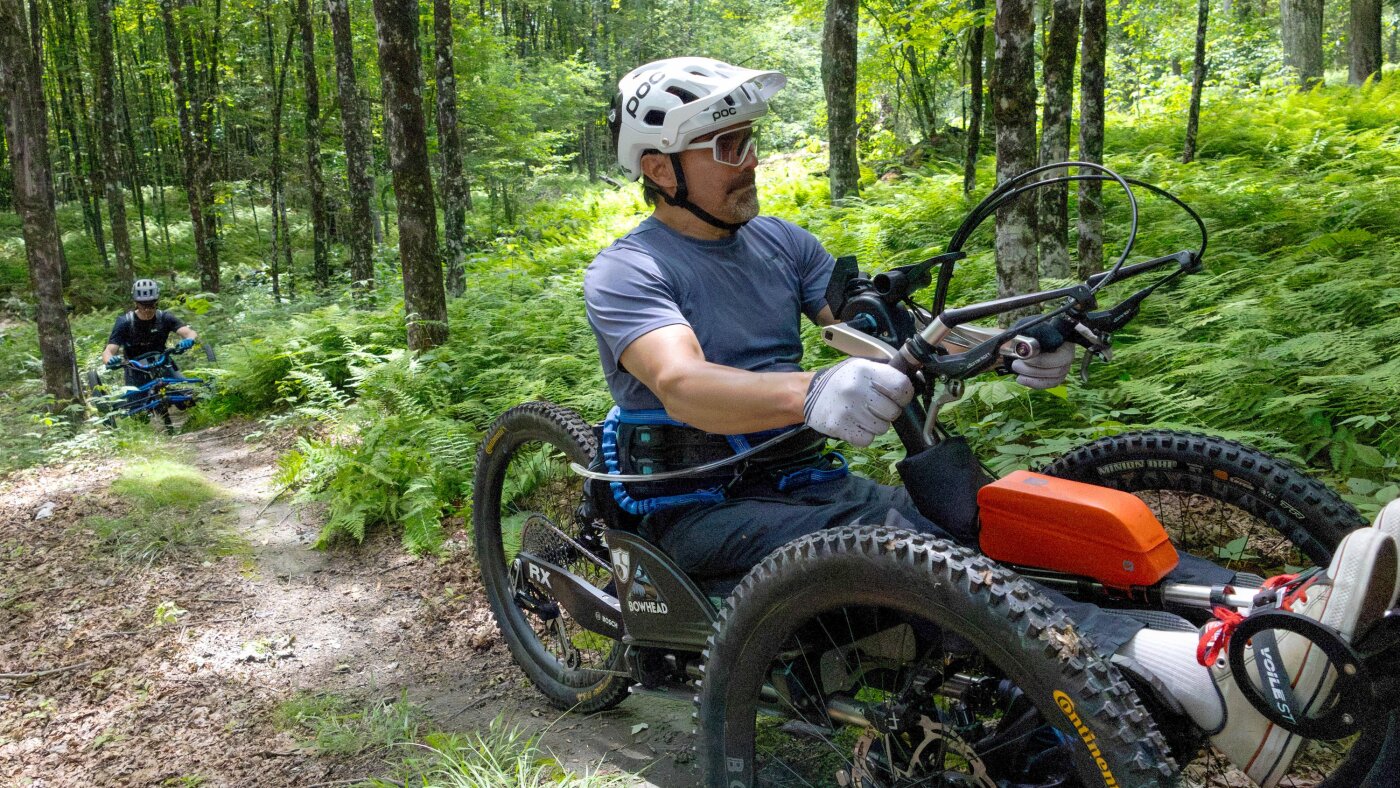
OUTDOOR ACCESS FOR DISABLED IN VERMONT
-
 Virginia27 minutes ago
4 indicted in Virginia double homicide; second victim ID’d as grandmother of 6
-

 Washington34 minutes ago
Washington Commanders are retiring Hall of Famer John Riggins’ No. 44
-

 Wisconsin37 minutes ago
Wisconsin State Patrol rides with truck and bus drivers to spot violations in five areas

