Oklahoma
A MAGA Troll Almost Ran a Whole State’s Public School System Into the Ground. They Might Just Elect Another One.


This story about Oklahoma schools was produced by the Hechinger Report, a nonprofit, independent news organization focused on inequality and innovation in education. Sign up for the Hechinger newsletter.
The most exciting thing about Lindel Fields, Oklahoma’s superintendent of public instruction, is how boring he is.
Sitting in a state education office conference room recently while his office was under renovation, Fields described his work as “building a foundation” for a strong public education system. “And the foundation of a house isn’t sexy, right?”
He hopes that once students’ literacy scores improve and school districts adequately support and retain teachers, people “will forget who built the foundation.”
It’s a sharp contrast to Ryan Walters, who stepped down as state superintendent last September after 33 months. Walters, who had a falling-out with Oklahoma Gov. Kevin Stitt and riled state Board of Education members, left to lead the Teacher Freedom Alliance, formed by the conservative activist Freedom Foundation to challenge existing teachers unions. Stitt then appointed Fields. The new superintendent is finishing Walters’ term and not running for the position in November, an election considered key to Oklahoma’s educational future.
Walters’ MAGA-style edicts—calling for Bibles in classrooms, book bans, anti-diversity measures, and ideological tests for teachers coming from blue states—drew national attention, spurred lawsuits and protests, and plunged Oklahoma public education into chaos. (Through a spokesperson, Walters declined to be interviewed or respond to a list of detailed questions.)
Educators “still experience some PTSD,” said April Grace, a former school superintendent and member of the Choctaw Nation who in 2022 lost to Walters in the Republican primary for state superintendent. During Walters’ tenure, “there was a lot of fear,” said Grace, who is now the executive director of the nonprofit Oklahoma Public School Resource Center. “People were concerned about being targeted.”
The question now: How do you make public education normal again?
Around the country, schools have become ideological battlegrounds. Amid efforts to address foundering academic achievement, the deluge of extremist laws, orders, and policies, some say, distracts from actual learning.
“We needed to be about the business of literacy and math and career education,” said Grace, noting Oklahoma’s poor national test results. The state ranks near the bottom in national test scores for fourth and eighth graders in reading and math. “We just kind of wasted two and a half years,” she added. “And we didn’t have two and a half years to waste.”
There are educational costs to political turmoil, said John Rogers, director of the Institute for Democracy, Education, and Access at the University of California, Los Angeles. Rogers and colleagues tallied direct expenses of responding to “culturally divisive conflict,” including increased security, communications, and consultants, finding that it cost some $3.2 billion across the U.S. during the 2023–24 school year.
Oklahoma is not the only state where schools have been hit by political turbulence. State legislatures are still jammed with controversial bills that shape what students learn, what teachers can say, and what pronouns educators can use to address students.
Utah recently passed a law requiring Bible passages be taught in social studies starting in third grade. In Texas, the Board of Education moved to create a list of mandatory books all schools must teach beginning in 2030 that includes Bible materials. A U.S. appeals court recently ruled that Texas can require schools to display the Ten Commandments in classrooms; a similar law was upheld in Louisiana, but recently struck down in Arkansas.
This is not just a red-state matter. California, among others, has jumped into the political waters with laws preempting book bans and protecting students’ gender presentation. The Supreme Court recently blocked California’s law banning automatic parental notification if a student changes pronouns or gender expression at school. At the federal level, Congress continues to debate “parental rights” bills around student gender expression, and the U.S. Department of Education recently affirmed the “right to pray” in public school.
The political environment under Walters in Oklahoma became so disruptive that educators feared each state board meeting and what might transpire, said Kate C. White, whose firm provides counsel for the Oklahoma Education Association, the largest state teachers union. “It was chaos,” she said. “Paranoia is the perfect way to say it.”

Nick Oxford for The Hechinger Report
Regan Killackey, an English teacher at Edmond Memorial High School in Edmond, a suburban school district north of Oklahoma City, recalled that after the passage of a law forbidding instruction around “divisive concepts” on race and gender, his district told teachers “to refrain from or try to avoid using terms of diversity and white privilege in class.” The problem is, “that’s, like, half my curriculum in Advanced Placement Language and Composition,” he said. After all, Killackey urges students to consider “your own identity, your own hidden biases” to craft strong arguments. Now, under Fields, said White, “there’s an open line of communication. We can talk about the issues.”
Whether that continues come November is a question: Seven Republicans and two Democrats, representing a broad political spectrum, are running for the post, with primaries June 16. Given Republicans’ dominance in the state, the June election is likely to be decisive.
“It’s pretty consequential,” Deven Carlson, a professor of political science at the University of Oklahoma who studies education policy and politics, said of the vote. Part of the election, he said, is about the state’s poor academic performance, “and are we going to do anything about that?”
But Carlson said it is also about tone: “Do we want a combative Ryan Walters–esque kind of state leadership around public education, or do we want a more, you know, Lindel Fields, quieter, the kind of traditional state Department of Ed where if anyone knows the name of the state superintendent, it’s surprising?”
Like many Oklahomans, Fields is Republican and religious (he’s Catholic). But as a dad to a grade-schooler and as a retired superintendent-turned-education consultant, he struggled with Walters’ dictums. “I’m like, gosh, this doesn’t feel right,” he said of the state’s poor test scores and attacks on educators, particularly in Tulsa, where he lives.
His first moves as superintendent were undoing actions Walters had taken. Among them, Fields rescinded mandates for Bible instruction in schools and the requirement that there be a Bible in every classroom. The mandate originally favored two Bibles backed by Donald Trump and his family, who received fees for their endorsements, and Walters attempted to purchase 55,000 of them for the state until the criteria were changed. Walters had requested $3 million for Bible purchases, but Fields said the state spent $25,000. The Bibles now sit in a basement storage room.
While Fields recognizes that “Oklahomans love their Bibles,” he said there are plenty of opportunities to access religious instruction outside of the public schools.
Fields also halted Walters’ social studies curriculum; the state Supreme Court then struck down the standards and called for new ones. (Walters also created an Office of Religious Liberty and Patriotism to protect the right to pray in school. It still exists.)
But the biggest change was Fields’ drive to, he said, “set a tone of decorum.” He tells staff, “If you wouldn’t say it to your neighbor’s sixth grader, don’t say it, right?” and has shifted the Department of Education’s focus from compliance to, he said, declaring “that we are a customer service organization.”
This has contributed to what many Oklahoma educators describe as a reprieve from the fear, animosity, and surveillance state Walters fed as he sought to elevate his national profile. Teachers whose licenses were targeted for revocation felt the brunt of it. Summer Boismier, a high school English teacher in Norman, got national attention when the state revoked her license after she shared with her students a link to the Books Unbanned project at the Brooklyn Public Library. The state argued that Boismier violated H.B. 1775, the state law that restricts teaching about “divisive concepts” around race, gender, and history. She has filed a federal lawsuit.
The law, versions of which have been adopted by more than a dozen states, faces challenges. A U.S. district court in 2024 blocked some aspects of it, citing vague language. The Oklahoma Supreme Court last year ruled it did not apply to higher education. The 10th U.S. Circuit Court of Appeals in Denver heard arguments in March and is expected to rule soon.
Educators around Oklahoma may be taking a breath, but few are relaxing. With Fields not a candidate, there is uncertainty about what’s next. Pat McFerron, a prominent local Republican political consultant, released a poll on May 14 showing 61 percent of likely Republican voters were undecided a month before the primary—and no candidate had a meaningful lead. Speaking more than a week later, he said that little had changed.
“It is incredibly wide-open,” McFerron said. With so many statewide primaries, including for governor, he said, Republican superintendent campaigns “have not been able to cut through the clutter.” The two Democratic contenders? “Not relevant,” he said.
Among those running for state superintendent of public instruction is state Rep. Toni Hasenbeck, a Republican who recently sponsored a bill mandating time in school for prayer and reading religious texts. Hasenbeck has been playing hardball: She sought to disqualify another candidate, Republican Sen. Adam Pugh, contending that he was ineligible to run for technical reasons, but the Oklahoma Supreme Court ruled in April that Pugh could stay on the ballot.
Pugh, a former Air Force officer and chair of the state Senate Education Committee, is pitching “practical, student-focused education reform” and “NO DRAMA, ONLY SOLUTIONS.” Carlson said that Pugh is “more of a successor to Lindel Fields” while Hasenbeck “is probably more on the Ryan Walters side of things.”
Another candidate, John Cox, is a rural superintendent who previously ran twice as a Democrat, and then as a Republican in 2022 and this year. He is vowing to “Make Education Great Again” in the state. Robert Franklin, another Republican, is a veteran Tulsa educator whose tagline is “44 years in education. Not one day in politics.” Debra Herlihy, also a Republican, is a senior research analyst at Southern Nazarene University. William Crozier, a former teacher and U.S. Air Force security officer, ran in 2006 as a Republican, proposing then that students use thick textbooks as shields in school shootings. He made a video in which he and aides fired at math, language, and telephone books with weapons, including an AK-47 and a 9 mm pistol. James Taylor, another Republican candidate, is a teacher, senior pastor, and author, including of a 2015 book, It’s Biblical, Not Political!: How to Line Candidates Up Biblically.
“Some people think we can get back to normal because Ryan Walters is gone,” said Erika Wright, director of the Oklahoma Rural Schools Coalition and a community education organizer with the Oklahoma Appleseed Center for Law & Justice, a nonprofit legal group. But, she said, “we are in a very precarious time.”
Moderate Republicans need to go to the polls and independents “might want to rethink” being independent, because they are ineligible to vote in the Republican primary, she said, adding that low turnouts mean outcomes are decided by a few votes.
Carlson, the political science professor, predicted that “whoever wins June 16 will be the next superintendent.” He expects a strong voter turnout given that there is also the gubernatorial primary—Stitt is not eligible to seek another term—and a ballot measure seeking a $15 state minimum wage.
The stakes are high: Christian hard-right fundraisers who favor a Walters-style candidate remain involved. As Wright put it, “The people who got him elected are still here.”



By: Braylea Lawson – Mulhall-Orlando FFA Chapter Reporter
Special to Guthrie News Page
The Mulhall-Orlando FFA Chapter was represented at the 54th Annual Oklahoma FFA Alumni Leadership Camp, held at Camp Tulakogee in Wagoner, Oklahoma.
More than 1,300 FFA members from over 300 Oklahoma FFA chapters have registered to participate in one of four 3½-day sessions scheduled from June 28 through July 11, 2026. Attendees from this chapter include: Lane Brown, Garrett Schoonover, Fletcher Inman, Braylea Lawson, Brylie Cook, and Kilee Blehm
This year’s camp, themed “Uncharted: Go Beyond Your Limits,” is designed to engage FFA members in fun, action-packed activities focused on personal, team, and service leadership. Special presenters include kickoff speaker Bill Cordes of Kansas, hypnotist Dr. Al Snyder of Wyoming, and nationally recognized clean comedian and youth speaker Mike Paramore, who will serve as the camp’s keynote speaker.

DAVIS, Okla. (KXII) – Law enforcement is searching for a 15-year-old boy from Davis who has been reported as an endangered missing person.
According to an OHP post on X, James Pletcher of Davis was last seen after 11 p.m. Saturday, July 4th. He was wearing a black shirt, black shorts and black shoes.
Anyone who sees Pletcher or has information on his whereabouts is asked to call 911.
Copyright 2026 KXII. All rights reserved.
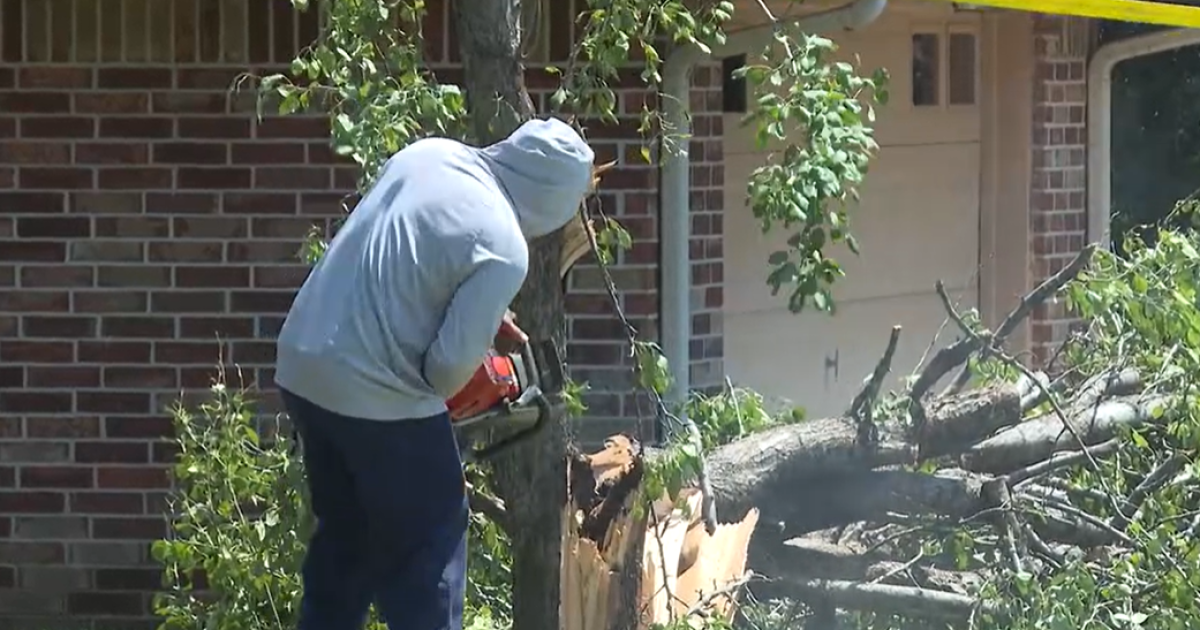
TULSA, Okla. — Oklahoma Governor Kevin Stitt signed an executive order declaring a disaster emergency for Cleveland and Washington Counties, following powerful severe weather that moved across the state on July 4.
The declaration will ensure recovery resources can be deployed to those impacted areas quickly.
Related Coverage>>> THOUSANDS WITHOUT POWER: Cooling centers open in Bartlesville and Dewey
The Governor’s office is asking anyone with damage to their home or business to report it at Damage.ok.gov.
In a news release, the Governor’s office said the state is also coordinating with Oklahoma Baptist Disaster Relief to assist residents affected by the storms.
People needing assistance from Oklahoma Baptist Disaster Relief can call (844) 690-9198 or fill out a request form online at www.okdisasterhelp.org.
“State and local crews are out across Cleveland and Washington counties this morning checking on families, clearing debris, and helping our communities get back on their feet after these severe storms,” said Governor Stitt in the news release. “As crews work to get power restored to those impacted, please help by reporting damage and checking on your neighbors.”
The full text of the executive order can be read here.
Stay in touch with us anytime, anywhere —
-
Tennessee2 minutes ago
TN Lottery Powerball, Lotto America winning numbers for July 6, 2026
-

 Texas9 minutes ago
Supreme Court won’t block Texas from enforcing a law requiring age verification for app downloads
-

 Utah17 minutes ago
Memphis Grizzlies vs Utah Jazz Jul 6, 2026 Game Summary
-
Vermont24 minutes ago
VT Lottery Powerball, Gimme 5 results for July 6, 2026
-

 Virginia27 minutes ago
Virginia man charged with murder in crash that killed family of 4 on I-75 in Oakland County
-

 Wisconsin42 minutes ago
Wisconsin DOT begins $6.87M I-41 ramp deck overlay upgrades in Brown County Tuesday
-

 West Virginia47 minutes ago
11 Marshall student athletes suing NCAA over new rule – WV MetroNews
-

 Wyoming54 minutes ago
Election Q&A: Qwenton Eagle Oviatt for Wyoming secretary of state

