Mississippi
MS death row inmate Charles Crawford petitioned to halt his execution. See status


Executions in Mississippi: What to know
A look at the process of determining when and how a prisoner on death row in Mississippi should be executed.
As of 1:30 p.m. Tuesday, Oct. 14, the U.S. Supreme Court has yet to issue a ruling on Mississippi death row inmate Charles Ray Crawford’s petition to halt his scheduled execution.
Crawford’s execution is set for 6 p.m. Wednesday, Oct. 15, at the Mississippi State Penitentiary at Parchman.
Court records filed Oct. 1 show Crawford’s legal team asked the U.S. Supreme Court to block his execution and to take up his case, saying his Sixth Amendment rights were violated when his then-attorneys conceded his guilt to the jury during his criminal trial, despite Crawford’s objections.
The State of Mississippi argued in its response filed Oct. 9 that Crawford’s filings are a last-minute effort to halt his execution, years after the case was decided and far too late to be raised now.
According to Mississippi Gov. Tate Reeves, as of Monday, Oct. 13, all necessary procedures for Crawford’s execution are being followed under the guidance that “justice must be served.”
Crawford, now 59, was convicted and sentenced to death in 1994 for the 1993 kidnapping, rape and murder of Kristy Ray from her Tippah County home in the Chalybeate community. Ray was a 20-year-old student at Northeast Mississippi Community College student.
In 1993, Crawford was out on bond awaiting trial on charges of aggravated assault and rape. Four days before the trial, Crawford abducted Ray from her parents’ home in Chalybeate — about 255 miles north of Jackson. Crawford told authorities he did not remember the incident but later led them to the body buried in leaves in a wooded area.
Attorney General Lynn Fitch’s office has sought an execution date for Crawford twice in less than a year, first in November 2024 and again, in June 2025.
Crawford, has spent more than 30 years on death row. Crawford’s execution will be the second this year in Mississippi.
Richard Jordan was put to death on June 25. Jordan was the state’s longest-serving and oldest death row inmate. Jordan was executed around 6:15 p.m. by lethal injection one month after his 79th birthday. He received his last meal at 4 p.m.
Pam Dankins is the breaking news reporter for the Clarion Ledger. Email her at pdankins@gannett.com.



Mississippi
Mississippi Highway Patrol deployed to Goodman after viral gun video, leaders explain goals

GOODMAN, Miss. — The Mississippi Department of Public Safety has deployed state troopers to the Town of Goodman indefinitely following a viral video showing people waving guns and mocking the absence of police in the town.
DPS Commissioner Sean Tindell and other department leaders flew into Goodman on Thursday to meet with town officials. Tindell said the video drew the attention of both himself and Gov. Tate Reeves.
“We felt like there needed to be a presence of law enforcement in Goodman to send a message,” Tindell said. “That it’s not a town or any town in Mississippi that we’re going to allow lawlessness to prevail.”
Troopers conducting stops, working alongside sheriff’s office
Since Wednesday, troopers have been stopping drivers in downtown Goodman and in neighborhoods. Tindell said the Mississippi Highway Patrol is working alongside the Holmes County Sheriff’s Office as part of the investigation.
“It’s more regular law enforcement duties at this point,” Tindell said. “You know, we’re looking at individuals in the video to ask who they were and go from there.”
Tindell said MHP deployments to towns across the state are not uncommon, and include safety checkpoints, driver’s license verifications and insurance verifications.
“So that’s not unusual anywhere on any given day,” Tindell said. “We just happen to be in Goodman because they needed additional help at that time.”
Mayor supports presence; some residents question it
Mayor Michael Howard said he supports MHP’s increased presence in the town. However, resident Keni El questioned whether the deployment was necessary.
“It really doesn’t change anything because if the people they’ve seen on the video are who they came for then that’s who they need to be looking for,” El said. “Because in a way, it’s kind of harassing the people for stupidity of some younglings.”
El said leaders should instead focus on providing resources to mentor young people.
“The youth need to be taught the right knowledge, right wisdom, right understanding,” El said. “But I’m not going to be afraid of no child.”
Tindell said he is unsure how long state troopers will remain in Goodman but will stay in contact with town officials until a departure date is determined.
Want more WLBT news in your inbox? Click here to subscribe to our newsletter.
See a spelling or grammar error in our story? Please click here to report it and include the headline of the story in your email.
Copyright 2026 WLBT. All rights reserved.

-
Now Playing
Death of Mississippi teen Nolan Wells under investigation
02:48
-
UP NEXT
Prosecutors show video from interview with Tyler Robinson’s former roommate
04:42
-
‘A lot of people say big falsehoods’: Trump weighs in on Platner allegations
00:40
-
Dozens of people injured in Maryland bus accident
03:30
-
New warning about social media trend involving popular squishy toys
02:37
-
Grand Canyon rafters report mystery illnesses on social media
02:57
-
Utah boarding school accused of abusing Paris Hilton loses license
02:29
-
Disturbing video of molotov cocktail attack
01:05
-
Questions about what caused beams in Manhattan building to buckle
01:36
-
Actor Patrick Dempsey says he won’t run for Senate in Maine
02:45
-
Parents sue fitness club daycare after video appears to show worker throwing child
02:53
-
New York City officials ‘confident’ high-rise building is stable
02:29
-
Colorado mayor sleeps at a homeless shelter as part of transitional program
06:23
-
Thick smoke and flames seen in Iran as U.S. launches retaliatory strikes
04:51
-
Walmart digital price tags collide with shopper anxiety over ‘surveillance pricing’
04:07
-
Millions across the Northeast cleaning up
01:19
-
Officials say contractors can begin stabilizing NYC high-rise after interior columns buckled
04:15
-
Cases of illness that causes explosive diarrhea on the rise across the U.S.
03:21
-
‘The building remains unstable’: Mamdani briefs on high-rise with buckling beams
02:14
-
Prosecution shows new video of moments before and after Charlie Kirk’s assassination
03:32
NBC News NOW
-
Now Playing
Death of Mississippi teen Nolan Wells under investigation
02:48
-
UP NEXT
Prosecutors show video from interview with Tyler Robinson’s former roommate
04:42
-
‘A lot of people say big falsehoods’: Trump weighs in on Platner allegations
00:40
-
Dozens of people injured in Maryland bus accident
03:30
-
New warning about social media trend involving popular squishy toys
02:37
-
Grand Canyon rafters report mystery illnesses on social media
02:57
Meet the Press
Meet the Press
Meet the Press
Meet the Press
Dateline
Play All

STARKVILLE — Mississippi State baseball could have its first position player picked in the first round of the MLB draft since 2020.
That’s where star third baseman Ace Reese is ranked ahead of the 2026 MLB Draft. He has two years of eligibility remaining but is not expected back with the Bulldogs because of his high draft ranking.
There are other draft outcomes that can impact MSU’s 2027 roster for coach Brian O’Connor’s second season. The draft begins July 11 (noon, NBC/Peacock) with Rounds 1-4 and continues July 12 with Rounds 5-20.
Here’s a look at where Mississippi State players are ranked for the draft, including high school signees.
MLB draft rankings for Ace Reese, other Mississippi State players
MLB.com’s list of the top 250 prospects has Reese at No. 18. He’s the highest-ranked third baseman. USA Today’s mock draft predicts the Miami Marlins to select Reese with the No. 14 pick, which has a slot value of nearly $5.5 million.
If Reese is picked in the top 10, he’d be Mississippi State’s first top 10 pick since Paul Maholm in 2003.
The only other Mississippi State player in MLB.com’s top 250 is relief pitcher Ben Davis at No. 232. Davis does not have any college eligibility remaining.
That does not mean there won’t be more MSU players drafted. MSU has two starters in particular, catcher Kevin Milewski and outfielder Aidan Teel, who are draft eligible. If they are drafted, they’ll have to decide whether to sign with the pro team or return to Mississippi State. Relief pitcher Maddox Webb is in the same situation.
None of Mississippi State’s incoming transfers are ranked as top 250 draft prospects.
Mississippi State baseball signees rankings for MLB draft
Mississippi State has the No. 6 recruiting class, according to Perfect Game, and there are many players who are draft risks.
Eight of the signees are ranked inside MLB.com’s top 250 with four in the top 100.
Catcher Will Brick is the top signee at No. 46 after reclassifying to the 2026 class. Shortstop Rocco Maniscalco is just behind him at No. 49, followed by pitchers Landon Brown (No. 77) and Denton Lord (No. 80).
Other signees in the top 250 are pitcher Wilson Andersen (No. 111), outfielder Martin Shelar (No. 175), pitcher Jake Carbaugh (No. 203) and shortstop Noah Danza (No. 239).
Last summer, Mississippi State got signees Jack Bauer and Jacob Parker to turn down the MLB draft and play for the Bulldogs. Bauer was ranked as the No. 44 prospect and Parker, who turned into a freshman All-American, was No. 109.
The deadline for draftees to sign contracts with pro teams is July 27 at 4 p.m. CT.
Sam Sklar is the Mississippi State beat reporter for the Clarion Ledger. Email him at ssklar@usatodayco.com and follow him on X @sklarsam_.
-

 World31 seconds ago
Does more World Cup history beckon for Norway? England stand in their way
-
 News28 minutes ago
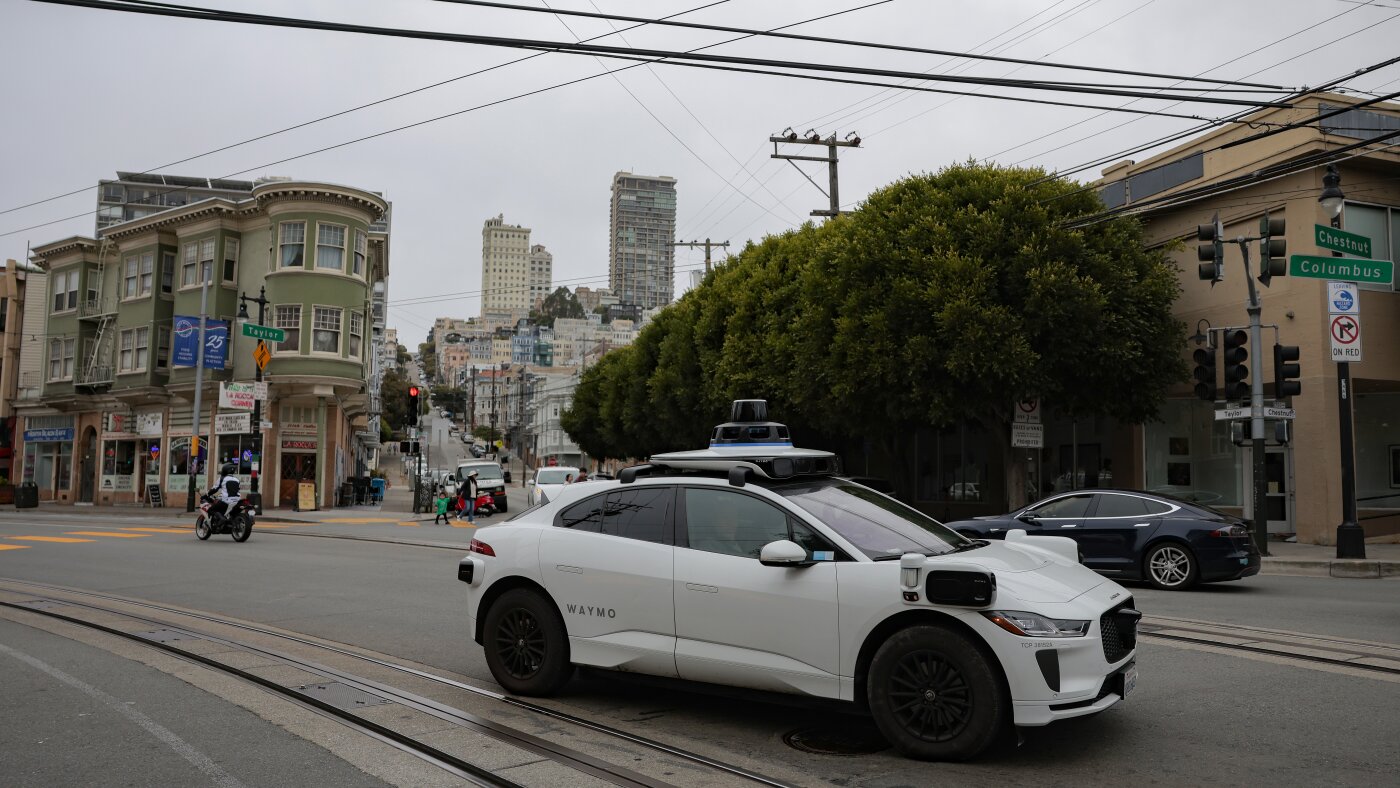
Waymo called the cops on teen riders, raising privacy concerns
-

 Los Angeles, Ca2 hours ago
O.C. police prep for beach, theme park ‘takeovers’ promoted on social media
-

 Detroit, MI2 hours ago
Detroit city leaders to DHS: Stop ICE pursuits which endanger the community
-

 San Francisco, CA2 hours ago
SF Supervisor Jackie Fielder hosts listening session after medical leave
-

 Dallas, TX2 hours ago
The Stewpot artists find healing, purpose and income through art in Dallas
-

 Miami, FL3 hours ago
Can Jason Marshall push for a starting spot – The Splash Zone 7/10/26
-

 Boston, MA3 hours ago
Police investigating shooting in Downtown Crossing – Boston News, Weather, Sports | WHDH 7News

