Mississippi
Mississippi State’s clash with LSU to feature multiple reunions

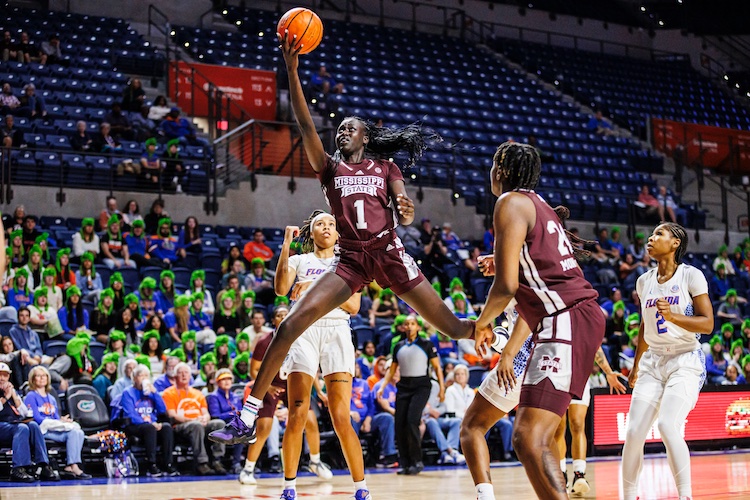
Last year, Darrione Rogers was Aneesah Morrow’s co-star at DePaul, with the duo helping the Blue Demons lead the Big East in scoring offense as Morrow finished second in the conference in points per game with Rogers in fourth.
The Chicago natives have both found new homes this season in the Southeastern Conference, and will play against each other for the first time in their collegiate careers on Monday night when Rogers and Mississippi State host Morrow and No. 9 LSU.
“I respect Aneesah as a player. We had a great relationship,” Rogers said. “But we have not spoken or anything, so at the end of the day, I wish her nothing but the best. She’s at LSU, I’m at Mississippi State, no bad blood. We’re both competitors. When we step on the court, she’s going to try to win and do what it takes for her team to win, and I’m going to try to lead my team to a victory.”
The defending national champion Tigers also added star point guard Hailey Van Lith from Louisville in the transfer portal, and Van Lith’s time with the Cardinals overlapped with that of Bulldogs head coach Sam Purcell, who was a longtime Louisville assistant coach before taking the MSU job in 2022.
Purcell was the Cardinals’ recruiting coordinator when Van Lith was going through her recruiting process, and the two have maintained a strong relationship.
“I know that kid like the back of my hand. She’s special,” Purcell said. “She keeps reaching out, she checks on my kids and my family. Her parents are awesome. We’ll hug, and she knows it’s nothing but love, but when the lights come on, we’ll both be going at each other because that’s who we are.”
The Bulldogs (16-5, 3-3 SEC) have a full week to prepare for LSU after their road win over Florida this past Monday, while the Tigers (18-3, 5-2) are coming off a home loss to No. 1 South Carolina on Thursday night in which they led for nearly 33 minutes. With LSU star Angel Reese battling foul trouble and ultimately fouling out with four minutes left, the Gamecocks took control late and outscored the Tigers 24-14 in the fourth quarter.
Reese, who played her first two college seasons at Maryland, leads LSU with 19.6 points and 11.9 rebounds per game, both of which are second in the SEC. Morrow is fourth in the conference in scoring with 18 points per game, and Mikaylah Williams is the Tigers’ 3-point specialist, having made 41 of her 100 attempts this season. Van Lith is fourth in the SEC in assists with 4.5 per contest.
“They had the No. 1 transfer class in the country (and) they had the No. 1 high school recruiting class in the country,” Purcell said. “They’re a lot like us where they had some injuries, and what’s scary is that team is playing their best basketball.”
MSU is in a better place on the injury front with the return of Nyayongah Gony, who played eight minutes against the Gators in her first action since early December. Gony gives the Bulldogs more depth in the paint alongside Jessika Carter and Erynn Barnum, which will be critical against an LSU team that has the best rebounding margin in the SEC, pulling down 15.3 more boards per game than their opponents.
The Tigers also have the third-best overall offense in the country, putting up more than 90 points per game, and are in the top three in the conference in field goal percentage, free throw percentage, assists and steals. They also force 21.6 turnovers per contest, the most in the SEC.
LSU opened the season with a home loss to a Colorado team that has since risen to No. 3 in the AP poll, then reeled off 16 straight wins before falling at Auburn on Jan. 14. The Tigers then blew out Alabama and Arkansas before dropping Thursday’s home showdown to South Carolina.
“We’re looking forward to hosting them here at our place,” Purcell said. “It’s as simple as this: You have to rebound. The way they’re able to get after it, looking at last year’s box score, we gave up 24 second-chance points. That’s game. Our team knows that, we have to be tough, and most importantly, we have to be a four-quarter team.”
Quality, in-depth journalism is essential to a healthy community. The Dispatch brings you the most complete reporting and insightful commentary in the Golden Triangle, but we need your help to continue our efforts. In the past week, our reporters have posted 47 articles to cdispatch.com. Please consider subscribing to our website for only $2.30 per week to help support local journalism and our community.



JACKSON, Miss. (WLBT) – Eleven people have been indicted in connection with an alleged Medicaid fraud scheme involving more than $12.3 million.
This according to Mississippi Attorney General Lynn Fitch, who said the indictments involve allegations of fraudulent billing, wire fraud, and/or false documentation seeking to defraud the government.
All 11 charged include:
- Isluv Robertson, 36, of Jackson
- Shawncee Vassar-Cunningham, 51, of Olive Branch
- Katricia Smith, 47, of Olive Branch
- Sheila Boney Collins, 53, of Hollandale
- Ahyana Nicole Crosby, 34, of Laurel
- Angela Nannette Crosby, 51, of Laurel
- Yolanda Evette Blackman, 54, of Hattiesburg
- Linda Jenkins, 46, of Hermanville
- Deja Almore, 30, of Yazoo City
- Curtis Moore, 51, of Gulfport
- Taylor Christian Rushing, 34, of Gautier
Officials said the defendants are accused of participating in health care fraud schemes involving more than $6.5 billion in intended loss.
“These indictments are just the latest efforts we are taking to fight waste, fraud, and corruption,” said Attorney General Lynn Fitch. “I am proud to partner with President Trump to protect taxpayer dollars and ensure that money meant to help those in need is not stolen from safety net programs. I will remain laser-focused on rooting out fraud, recovering money wrongfully stolen from hard-working taxpayers, and holding fraudsters accountable.”
Want more WLBT news in your inbox? Click here to subscribe to our newsletter.
See a spelling or grammar error in our story? Please click here to report it and include the headline of the story in your email.
Copyright 2026 WLBT. All rights reserved.
Mississippi
Governor: At least 47 homes, 50 roads damaged by Mississippi storms, flooding – SuperTalk Mississippi

Gov. Tate Reeves has released updated damage assessments following the severe weather and flooding that inundated parts of southern Mississippi last week.
According to Reeves, assessments through the Mississippi Emergency Management Agency are ongoing, and disaster aid is still being distributed through a mix of federal, state, and local agencies, along with nonprofits. But numbers as of Monday morning showed dozens of homes and businesses damaged and even more public roads affected.

Among the counties with significant impacts are Covington, Forrest, George, Greene, Hancock, Jackson, Pearl River, Perry and Stone. Across those counties and others, at least 47 homes were affected, seven of which were completely destroyed. Nine businesses sustained damaged, six of which are considered major. One farm sustained major damage.
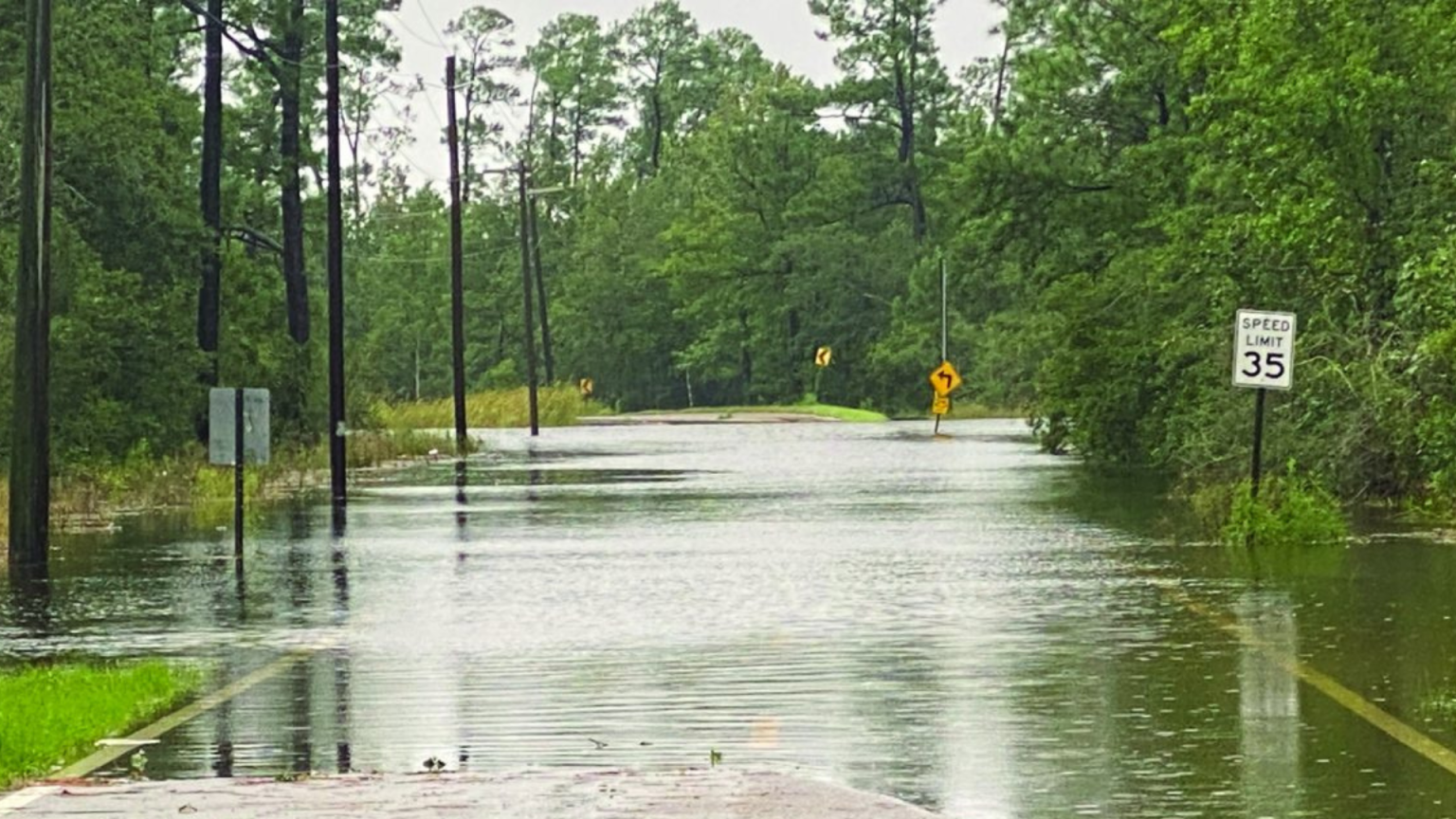
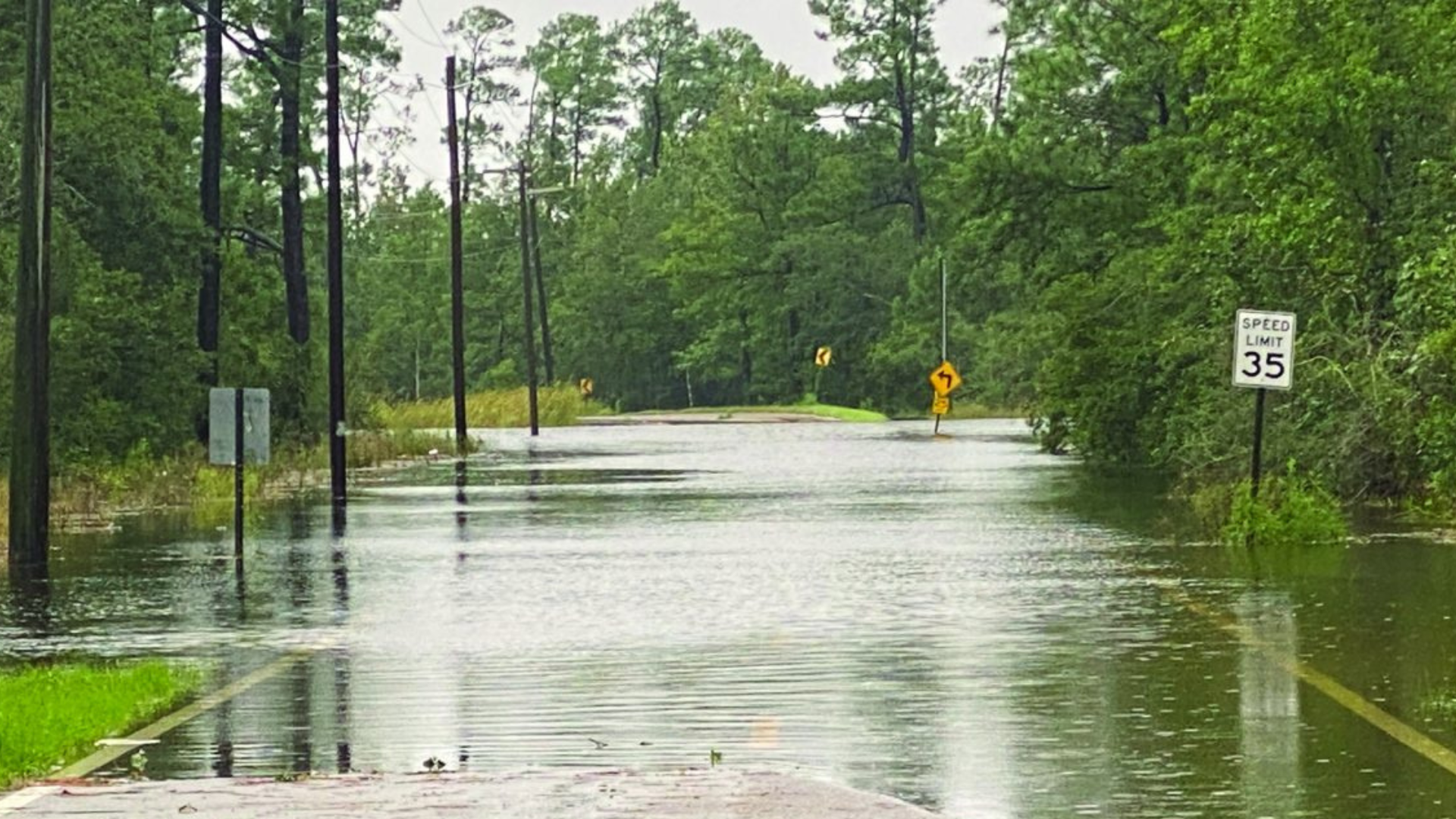
50 public roadways were affected, including four that are considered major and four that were completely destroyed. Two bridges sustained major damage, while two public buildings sustained minor damage.
Reeves said two rivers are in the moderate flood stage – Leaf River near McClain and the Pascagoula River at Graham Ferry.
15 other waterways are in the minor flood stage: Big Black River near Bentonia, Biloxi River near Lyman, Chickasawhay River at Enterprise, Chickasawhay River at Leakesville, East Hobolochitto Creek near Caesar, Pascagoula River at Merrill, Pearl River at Jackson, Pearl River near Pearl River, Pearl River near Philadelphia, Pearl River at Rockport, Strong River at D’Lo, Tallahala Creek at Laurel, Tuscolameta Creek at Laurel, West Hobolochitto Creek near McNeill, and Wolf River around Gulfport.


Damage reports could have worsened on Monday with additional rounds of severe weather in some parts of the state. The worst of the storms and floods came with the remnants of what was Tropical Storm Arthur late last week and into the weekend.

(AP) – A Mississippi family whose 1-year-old child was killed when police fired into a moving vehicle said Monday they want authorities to release video showing whether officers were in danger of being struck when one of them opened fire.
The shooting has sparked outrage in the small city of Senatobia, where some say it’s the latest in a series of troubling encounters between police and Black residents.
Kohen Wiley was riding with his mother and another woman in a Walmart parking lot on June 14 when police responded to a shoplifting call. The family says they were driving away, while the officers say the car was heading toward them.
“I watched my baby take his first breath, and I watched my baby take his last breath,” Vellesiya Wiley said at a news conference Monday.
The other woman in the car, whose name has not been released, suffered “critical injuries,” according to the Mississippi Bureau of Investigation, which is handling the inquiry.
Standing alongside Kohen’s parents and grandparents at a local church, civil rights attorney Ben Crump told reporters Monday that the best way to determine whether the officers were at risk is to publicly release any body camera, dash camera or Walmart security camera video.
“If that is the truth, then show us that,” Crump said. “The longer you delay releasing the video, the more distrustful we become.”
The Mississippi Bureau of Investigation declined to comment on what videos investigators have or whether they would be released, agency spokesperson Bailey Martin said Monday.
“This case has been made a top priority,” Martin said in an emailed statement, “and we currently have multiple agents working tirelessly to ensure every aspect of the investigation is thoroughly examined.”
The agency says the officers weren’t hurt. Senatobia Police Chief Harold Vanderford did not return a phone message seeking comment Monday.
State investigators gave an initial account of the shooting last week, saying that when Senatobia police arrived at the Walmart, they found two women and a child getting into a car and driving away.
“Officers attempted to stop the vehicle, but the driver drove in the direction of the officers, almost striking one. An officer then discharged their weapon and the vehicle fled the scene,” the agency statement said.
Kohen’s mother has said the shoplifting call was over a box of diapers that her friend was carrying — and that she believes her friend had paid for the diapers. State investigators declined to comment on those details.
Crump questioned why police didn’t let the car go and take down the license plate number.
“They were called over a box of diapers and a family now has to bury their baby,” Crump said Monday. “You cannot put those two things next to each other and call it reasonable policing.”
Crump also said an independent autopsy would be performed.
While there’s no question the child was shot by police, he said, details about the angles at which any bullets struck the child could yield clues as to whether the officer fired from in front of the car or off to the side — and therefore whether that officer was in any danger.
Policing expert Ian Adams, who teaches criminal justice at the University of South Carolina, told The Associated Press last week that police should know that “shooting into a moving vehicle is a very bad idea and one to be avoided at almost all costs,” noting the danger to passengers and other bystanders.
Copyright 2026 The Associated Press. All rights reserved.
-
 San Diego, CA51 seconds ago
San Diego Unified leaders propose policy to limit technology in classrooms
-
 Milwaukee, WI4 minutes ago
Racine’s Greek community reflects on Giannis’ celebration of Greek culture
-
Atlanta, GA9 minutes ago
Report: Atlanta Falcons agree to terms with Kyle Pitts on contract extension
-

 Minneapolis, MN16 minutes ago
Mayor Frey outlines timeline for selecting next Minneapolis police chief
-

 Indianapolis, IN19 minutes ago
Rain & storms will return soon, hot & humid next week
-

 Pittsburg, PA24 minutes ago
Will Howard, Drew Allar Huge Winners of Steelers QB News
-

 Augusta, GA31 minutes ago
Richmond County school board member Walter H. Eubanks dies
-

 Washington, D.C34 minutes ago
First Nebraska civics bee champion crowned, will head to Washington, D.C. for national competition

