Mississippi
Curious Mississippi: Is execution by firing squad legal in MS? Has it ever been used here?


Firing squad executes Brad Keith Sigmon in South Carolina
A firing squad in South Carolina executed Brad Keith Sigmon for the beating deaths of his ex-girlfriend’s parents in 2001.
Editor’s note: This is the latest edition of Curious Mississippi, a service to the readers of the Clarion Ledger. Other questions answered by Curious Mississippi have surrounded recycling, potholes, UMMC construction, cicadas and the international nature of the Jackson airport. Readers can submit questions by email to CuriousMississippi@ClarionLedger.com and editors will pick out the best and reporters will answer them in an upcoming edition.
Mississippi is one of five states that still permit executions by firing squad, alongside Utah, Oklahoma, Idaho and South Carolina.
However, a firing squad execution has never been conducted in Mississippi’s long history with the death penalty. The only methods that have been used to execute prisoners are hangings, the electric chair, gas chamber and lethal injection, according to the Mississippi Department of Corrections website. MDOC is responsible for carrying out executions.
Currently, there are 35 inmates on death row in Mississippi, according to an MDOC spokesperson. The Clarion Ledger attempted to find out MDOC’s policy on executions by firing squad, but was told “due to pending litigation surrounding death row inmates, our office does not comment on execution methods/processes.”
In early March, South Carolina became the first state since 2010 to execute a death row inmate by firing squad, reigniting ethical debates over capital punishment.
On March 7, Brad Sigmon, 67, was executed by three sharpshooters from the South Carolina Department of Corrections, who volunteered for the task, according to the Greenville News. Sigmon was convicted of the 2001 murders of his ex-girlfriend’s parents, David and Gladys Larke, whom he beat to death with a baseball bat. He then kidnapped his ex-girlfriend, Rebecca Armstrong, but she managed to escape.
During the execution, Sigmon was hooded and strapped to a metal chair with his shoulder facing the shooters. The chair was mounted on a platform in the corner of the execution chamber. At 6:05, the prison warden gave the order and the three-member firing squad shot with rifles simultaneously through a hole in the chamber wall. A doctor declared Simon dead three minutes later.
Sigmon’s execution marked the first time in South Carolina’s history that a death row inmate was killed by firing squad. The last U.S. execution by firing squad occurred in Utah in 2010.
The death penalty methods in Mississippi
While Mississippi has never executed an inmate by firing squad, the method remains legal in the state. It was as recently as 2017 when the Mississippi Legislature proposed a bill that included firing squad as one of four execution options. The bill was signed into law by then-Gov. Phil Bryant that summer.
The 2017 bill outlined a preferred order of execution methods for MDOC. The first option is lethal injection, which is the primary method for a majority of the 27 states where the death penalty is legal. If lethal injection wasn’t possible, either due to a successful court challenge or lack of availability, MDOC should pursue execution via nitrogen hypoxia. If that wasn’t an option, it moved to the electric chair. Firing squad would be the last resort.
But in 2022, a new bill was filed removing the preferred order and giving MDOC more discretion in choosing execution methods. It lists all available execution methods — lethal injection, nitrogen hypoxia, electrocution and firing squad — together and adds the statement, “It is the policy of the State of Mississippi that intravenous injection of a substance or substances in a lethal quantity into the body shall be the preferred method of execution,” according to previous Clarion Ledger reporting. The bill was signed into law by Republican Gov. Tate Reeves.
History of the death penalty in Mississippi
The last lethal injection execution in Mississippi was in December 2022, when Thomas “Eddie” Loden, a white male, was put to death for the 2000 kidnapping, rape and murder of 16-year-old Leesa Marie Gray in Itawamba County. Loden repeatedly and unsuccessfully challenged the conviction in state and federal courts over the 20-plus years he was imprisoned on death row.
According to July 2021 court papers, Loden’s lethal injection consisted of a mixture of the sedative midazolam, vecuronium bromide and potassium chloride. Vecuronium bromide paralyzes the muscles, potassium chloride stops the heart.
Loden is one of 19 prisoners to be executed by lethal injection in the state, which was first introduced as Mississippi’s preferred method in the 1980s, according to the MDOC website. In total, 16 white men and three Black men have been executed by lethal injection in the state.
Tracy Alan Hansen, a white male, was the first death row inmate to be executed by lethal injection in July 2002. Hansen was convicted, along with his girlfriend, of the 1987 shooting murder of a Mississippi state trooper. His girlfriend, Anita Krecic, still sits in prison after being sentenced to life in prison in 1988.
Before lethal injection, MDOC used the gas chamber for executions starting in 1954 when the chamber was installed in the Mississippi State Penitentiary. A total of 35 male inmates — 27 Black and eight white — were killed using the chamber over the course of 34 years.
The first to be executed in the gas chamber was Gerald A. Gallego in 1955, according to the Death Penalty Information Center, a nonprofit based in Washington D.C. Gallego was an escaped white convict from California who was convicted of the 1954 murder of a police officer outside Ocean Springs. The last to be executed in the gas chamber was Leo Edwards, a Black man who was convicted of the murder of a Jackson convenience store clerk in 1980. Edwards was executed in the gas chamber in 1989.
And prior to the gas chamber, “the old oak electric chair” was moved from county to county between 1940 and Feb. 5, 1952. A total of 75 prisoners were executed in this fashion with the first being Hilton Fortenberry. He was convicted of capital murder in Jefferson Davis County. The electric chair is now on display at the Mississippi Law Enforcement Training Academy in Pearl.
Hanging was the primary form of execution in Mississippi until the introduction of the electric chair in 1940.



Mississippi
Mississippi Highway Patrol deployed to Goodman after viral gun video, leaders explain goals

GOODMAN, Miss. — The Mississippi Department of Public Safety has deployed state troopers to the Town of Goodman indefinitely following a viral video showing people waving guns and mocking the absence of police in the town.
DPS Commissioner Sean Tindell and other department leaders flew into Goodman on Thursday to meet with town officials. Tindell said the video drew the attention of both himself and Gov. Tate Reeves.
“We felt like there needed to be a presence of law enforcement in Goodman to send a message,” Tindell said. “That it’s not a town or any town in Mississippi that we’re going to allow lawlessness to prevail.”
Troopers conducting stops, working alongside sheriff’s office
Since Wednesday, troopers have been stopping drivers in downtown Goodman and in neighborhoods. Tindell said the Mississippi Highway Patrol is working alongside the Holmes County Sheriff’s Office as part of the investigation.
“It’s more regular law enforcement duties at this point,” Tindell said. “You know, we’re looking at individuals in the video to ask who they were and go from there.”
Tindell said MHP deployments to towns across the state are not uncommon, and include safety checkpoints, driver’s license verifications and insurance verifications.
“So that’s not unusual anywhere on any given day,” Tindell said. “We just happen to be in Goodman because they needed additional help at that time.”
Mayor supports presence; some residents question it
Mayor Michael Howard said he supports MHP’s increased presence in the town. However, resident Keni El questioned whether the deployment was necessary.
“It really doesn’t change anything because if the people they’ve seen on the video are who they came for then that’s who they need to be looking for,” El said. “Because in a way, it’s kind of harassing the people for stupidity of some younglings.”
El said leaders should instead focus on providing resources to mentor young people.
“The youth need to be taught the right knowledge, right wisdom, right understanding,” El said. “But I’m not going to be afraid of no child.”
Tindell said he is unsure how long state troopers will remain in Goodman but will stay in contact with town officials until a departure date is determined.
Want more WLBT news in your inbox? Click here to subscribe to our newsletter.
See a spelling or grammar error in our story? Please click here to report it and include the headline of the story in your email.
Copyright 2026 WLBT. All rights reserved.

-
Now Playing
Death of Mississippi teen Nolan Wells under investigation
02:48
-
UP NEXT
Prosecutors show video from interview with Tyler Robinson’s former roommate
04:42
-
‘A lot of people say big falsehoods’: Trump weighs in on Platner allegations
00:40
-
Dozens of people injured in Maryland bus accident
03:30
-
New warning about social media trend involving popular squishy toys
02:37
-
Grand Canyon rafters report mystery illnesses on social media
02:57
-
Utah boarding school accused of abusing Paris Hilton loses license
02:29
-
Disturbing video of molotov cocktail attack
01:05
-
Questions about what caused beams in Manhattan building to buckle
01:36
-
Actor Patrick Dempsey says he won’t run for Senate in Maine
02:45
-
Parents sue fitness club daycare after video appears to show worker throwing child
02:53
-
New York City officials ‘confident’ high-rise building is stable
02:29
-
Colorado mayor sleeps at a homeless shelter as part of transitional program
06:23
-
Thick smoke and flames seen in Iran as U.S. launches retaliatory strikes
04:51
-
Walmart digital price tags collide with shopper anxiety over ‘surveillance pricing’
04:07
-
Millions across the Northeast cleaning up
01:19
-
Officials say contractors can begin stabilizing NYC high-rise after interior columns buckled
04:15
-
Cases of illness that causes explosive diarrhea on the rise across the U.S.
03:21
-
‘The building remains unstable’: Mamdani briefs on high-rise with buckling beams
02:14
-
Prosecution shows new video of moments before and after Charlie Kirk’s assassination
03:32
NBC News NOW
-
Now Playing
Death of Mississippi teen Nolan Wells under investigation
02:48
-
UP NEXT
Prosecutors show video from interview with Tyler Robinson’s former roommate
04:42
-
‘A lot of people say big falsehoods’: Trump weighs in on Platner allegations
00:40
-
Dozens of people injured in Maryland bus accident
03:30
-
New warning about social media trend involving popular squishy toys
02:37
-
Grand Canyon rafters report mystery illnesses on social media
02:57
Meet the Press
Meet the Press
Meet the Press
Meet the Press
Dateline
Play All

STARKVILLE — Mississippi State baseball could have its first position player picked in the first round of the MLB draft since 2020.
That’s where star third baseman Ace Reese is ranked ahead of the 2026 MLB Draft. He has two years of eligibility remaining but is not expected back with the Bulldogs because of his high draft ranking.
There are other draft outcomes that can impact MSU’s 2027 roster for coach Brian O’Connor’s second season. The draft begins July 11 (noon, NBC/Peacock) with Rounds 1-4 and continues July 12 with Rounds 5-20.
Here’s a look at where Mississippi State players are ranked for the draft, including high school signees.
MLB draft rankings for Ace Reese, other Mississippi State players
MLB.com’s list of the top 250 prospects has Reese at No. 18. He’s the highest-ranked third baseman. USA Today’s mock draft predicts the Miami Marlins to select Reese with the No. 14 pick, which has a slot value of nearly $5.5 million.
If Reese is picked in the top 10, he’d be Mississippi State’s first top 10 pick since Paul Maholm in 2003.
The only other Mississippi State player in MLB.com’s top 250 is relief pitcher Ben Davis at No. 232. Davis does not have any college eligibility remaining.
That does not mean there won’t be more MSU players drafted. MSU has two starters in particular, catcher Kevin Milewski and outfielder Aidan Teel, who are draft eligible. If they are drafted, they’ll have to decide whether to sign with the pro team or return to Mississippi State. Relief pitcher Maddox Webb is in the same situation.
None of Mississippi State’s incoming transfers are ranked as top 250 draft prospects.
Mississippi State baseball signees rankings for MLB draft
Mississippi State has the No. 6 recruiting class, according to Perfect Game, and there are many players who are draft risks.
Eight of the signees are ranked inside MLB.com’s top 250 with four in the top 100.
Catcher Will Brick is the top signee at No. 46 after reclassifying to the 2026 class. Shortstop Rocco Maniscalco is just behind him at No. 49, followed by pitchers Landon Brown (No. 77) and Denton Lord (No. 80).
Other signees in the top 250 are pitcher Wilson Andersen (No. 111), outfielder Martin Shelar (No. 175), pitcher Jake Carbaugh (No. 203) and shortstop Noah Danza (No. 239).
Last summer, Mississippi State got signees Jack Bauer and Jacob Parker to turn down the MLB draft and play for the Bulldogs. Bauer was ranked as the No. 44 prospect and Parker, who turned into a freshman All-American, was No. 109.
The deadline for draftees to sign contracts with pro teams is July 27 at 4 p.m. CT.
Sam Sklar is the Mississippi State beat reporter for the Clarion Ledger. Email him at ssklar@usatodayco.com and follow him on X @sklarsam_.
-

 Georgia4 minutes ago
Georgia cops’ alleged misuse of Flock license plate tracking data fuels privacy concerns
-

 Hawaii8 minutes ago
3 candidates to be considered for District 18 seat
-
 Idaho13 minutes ago
“We won’t insure you”: Robie Creek homeowners struggle to get home insurance due to wildfire risks
-

 Illinois20 minutes ago
After recent Illinois lightning strikes, officials share safety tips
-

 Indiana23 minutes ago
Kelsey Mitchell winner completes Fever comeback against Mercury, without Caitlin Clark
-

 Iowa28 minutes ago
McKeever’s 7′3″ frame made Iowa the ‘obvious choice’ in the transfer portal
-
 Kansas35 minutes ago
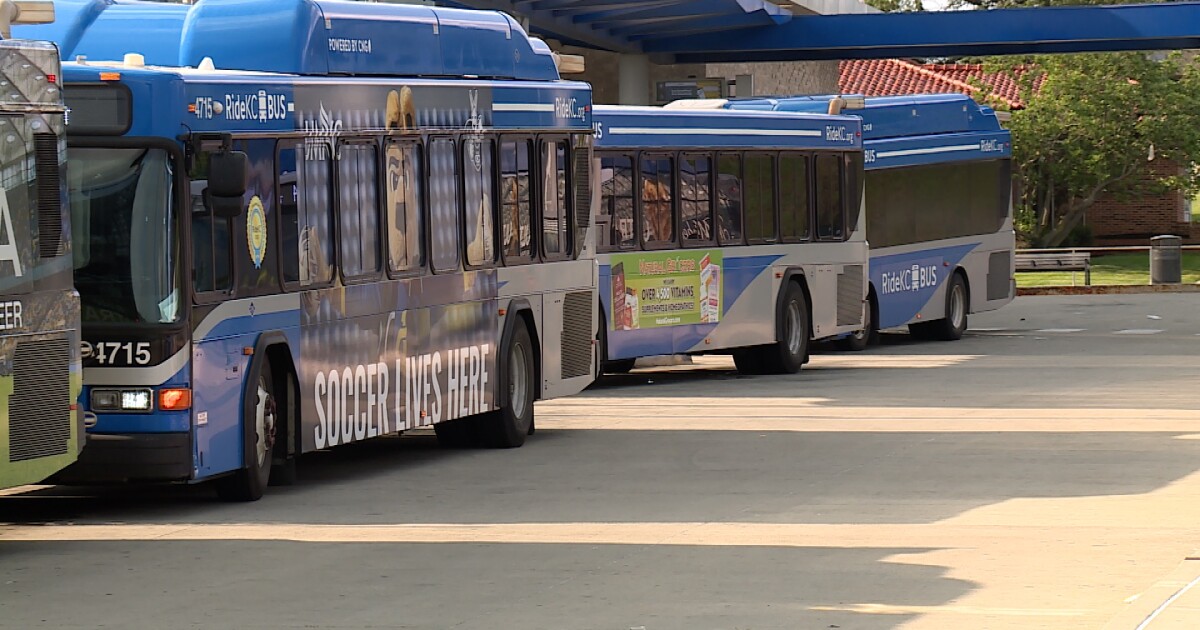
Kansas City to reduce bus transit frequency, extended hours after World Cup matches end
-

 Kentucky37 minutes ago
Public Health Student Hollie Hagan found her calling in rural Kentucky

