Maryland
Maryland awards contract for Francis Scott Key Bridge rebuild after deadly collapse


BALTIMORE (AP) — Maryland transportation leaders on Thursday approved a contract for rebuilding the Francis Scott Key Bridge several months after the 1.6-mile (2.6-kilometer) steel span collapsed under the impact of a massive container ship that lost power and crashed into one of its supporting columns.
In the immediate aftermath of the deadly March 26 collapse, officials quickly promised to rebuild the bridge — a longstanding Baltimore landmark and vital piece of transportation infrastructure.
They cited a 2028 completion date and estimated the project would cost $1.7 billion and would include significantly more pier protection to better defend against future wayward ships.
At a monthly meeting Thursday morning, the Maryland Transportation Authority board awarded a $73 million contract for the first phase of the project to Kiewit Infrastructure, which calls itself “one of North America’s largest and most respected engineering and construction organizations.”
Bruce Gartner, executive director of the Maryland Transportation Authority, said the contract award signifies a big step forward in the recovery and rebuild process.
“This really represents such an order of magnitude bigger than all our previous milestones,” he said in an interview Thursday. He said the agency hopes to release renderings of a preliminary design within the next few months, which will give the public an idea of what the new bridge will look like.
Kiewit was founded in 1884 to provide masonry services in Omaha, Nebraska, according to its website. Its notable past projects include the Fort McHenry Tunnel under Baltimore’s harbor, which opened in 1985. More drivers have been using the tunnel since the bridge collapse eliminated one of three water crossings that allowed them to bypass downtown Baltimore.
Gartner said the state has worked with Kiewit before and that the company has managed construction of major water crossings with maritime activity similar to the Key Bridge.
“We look forward to partnering with the Maryland Transportation Authority, many local subcontractors and suppliers, and our strong craft workforce to safely deliver and restore this vital transportation link in the city of Baltimore and the greater region,” the company said in a statement Thursday.
In announcing their recommendation to the board, state transportation officials said the company’s proposal was ranked first for its technical contents despite being somewhat more expensive than others.
Officials said the project will advance in two phases, with the first focusing on the design work and other necessary steps before construction begins, which could include demolition of the remaining pieces of the bridge that are still standing. Phase one is expected to be completed within a year.
Kiewit will have “exclusive negotiating rights” for the second phase, transportation officials said in a statement following the board meeting. “In the event a guaranteed maximum price is not agreed upon, the MDTA will deliver the work under a separate contracting mechanism,” the statement read.
Officials have said the new bridge will be somewhat taller than the old one to accommodate ever-larger ships entering Baltimore’s harbor. The original Key Bridge took five years to construct and opened in 1977.
The March bridge collapse killed six members of a road work crew who were filling potholes on the bridge when it came crashing down into the water below. Baltimore’s busy port was closed for months after the collapse and increased traffic congestion in the region remains a problem for drivers.
An FBI investigation is ongoing into the circumstances leading up to the collapse, including power outages experienced by the cargo ship Dali while it was still docked in Baltimore.
The state transportation board also on Thursday approved a proposal to remit the proceeds from a recent $350 million insurance payout to the federal government. They called the decision a show of good faith as discussions continue about whether the federal government will cover 100% of the cleanup and rebuilding costs. Chubb, the company that insured the bridge, made the $350 million payout to the state, officials said this week.
Ongoing litigation will ultimately determine other assignments of liability in the bridge collapse, which could become one of the most expensive maritime disasters in U.S. history.
Impacted businesses have joined Baltimore’s mayor and city council in filing claims arguing the owner and manager of the Dali should have to pay damages. Underwood Energy, a Baltimore-based company that transports hazardous materials, filed a new claim Thursday based on revenue losses associated with the bridge collapse. Hazmat trucks are not allowed in two tunnels under the Baltimore harbor, so those vehicles “now must make a 30-mile detour to cross the Patapsco River,” the complaint says.
The federal government generally picks up 90% of the tab and the state 10% when replacing disaster-damaged interstate highways and bridges, but the Biden administration and members of Maryland’s congressional delegation are pushing congressional lawmakers to approve a 100% reimbursement.
Officials have said they expect that federal taxpayers will eventually be made whole for replacing the bridge through insurance payouts and damages, but that may take a while.
___
Associated Press writer Brian Witte contributed from Annapolis.



GLEN BURNIE, Md. (WBFF) — An office building in Glen Burnie was evacuated on Thursday afternoon after its underground parking garage experienced a shift in one of its floors.
The Anne Arundel County Fire Department initially responded to the 7300 block of Ritchie Highway around 2:30 p.m. on July 9 after reports of a partial building collapse.
However, the department later clarified that there has been no collapse of the 10-story building.
Officials said crews are evaluating the building’s structural integrity after work was being performed in the parking garage.
All occupants were safely evacuated, and no injuries have been reported, according to Fire Captain Jenny Macallair.
The fire department is asking drivers to avoid the area while crews continue their assessment.
FOX45 News has a crew on the way to the scene, and we will provide updates as they become available.


See America’s most iconic hot dogs
Welcome to the United States of Hot Dogs! We’ve compiled a few of the best hot dogs eaten across the country.
Although Maryland is often celebrated for its seafood, one over-the-top creation has carved out its own loyal following among locals and visitors alike: The Baltimore-style hot dog.
Sausage is merely its first layer of meat. It’s wrapped in a thick slice of fried beef bologna and piled high with toppings.
It’s proof that while hot dogs are truly an All-American food, their real power lies in how they adapt to local tastes.
Hot dogs were “invented” in the U.S. after German sausages were served in buns. They’re a staple of baseball games — the all-American pastime. And they are truly a democratic food: nearly anyone can afford to enjoy them.
But even more, hot dogs are American because of their adaptability, reflecting the ingenuity and diversity that gives our country such a rich culinary tapestry.
“You can tell the story of America through hot dogs. There are probably other things you could use, other objects or icons, but I think hot dog is a really good one,” said Bruce Kraig, a Ph.D. food historian and author of “Hot Dog: A Global History’ and ‘Man Bites Dog: Hot Dog Culture in America.”
Regional hot dog toppings, from chili in Cincinnati to celery salt in Chicago to jalapeños in the Southwest, tell distinct stories of place.
Here in Baltimore, Maryland, our contribution to the United States of Hot Dogs is the Baltimore-style hot dog.
What is a Baltimore-style hot dog?
At its core, the Baltimore dog is a meat-on-meat masterpiece. It starts with a kosher all-beef sausage that is split, fried and wrapped alongside thick, charred bologna slices.
It’s traditionally topped with raw onions and yellow mustard, with a pickle spear on top or on the side. Some variations include the addition of sweet relish, ketchup or cheese.
“In this creation, grease from the bologna mixes with the grease from the hot dog, and both find their way into the bread to form an unforgettable aroma, taste and aftertaste — and 200 points on your cholesterol count,” Baltimore historian Gilbert Sandler told The Baltimore Sun in a 2019 story.
Where did the Baltimore-style hot dog come from?
Its origins are often somewhat unclear, but it’s believed to have originated during the Great Depression when, according to TasteAtlas.com, “people added bologna slices to the hot dog in order to make it a fuller, heartier meal.”
Jewish delis along Baltimore’s historic “Corned Beef Row” were looking for ways to offer working-class customers a filling, calorie-dense meal for a small chunk of change, leading to the birth of the Baltimore-style hot dog.
First becoming popular in the early 1940s at Mandell and Ballow deli, the bologna-wrapped hot dog spread throughout Baltimore, The Sun reported.
“Despite being a nutritionally questionable combo of two of the world’s least-healthful meats, the bologna dog continues to be a local favorite, enjoyed without apology,” FoodRepublic.com wrote in 2023.
Four best places to try a Baltimore-style hot dog
Attman’s Delicatessen: A Baltimore institution since 1915, Attman’s version of the Baltimore-style hot dog sits at the top of its menu. Its dog — for $7.99 — comes with your choice of mustard, relish, chopped onions and ketchup. Details: 1019 East Lombard St., Baltimore; 410-563-2666, attmansdeli.com.
Weiss Deli: Another Baltimore staple, Weiss serves speciality sandwiches and, of course, the Baltimore-style hot dog. You can customize the $7.49 dog with up to eight toppings, but its most popular version comes with just deli mustard and raw onions on top of the bologna-wrapped sausage. Details: 1127 East Lombard St., Baltimore; 410-276-7910, baltimoreweissdeli.com
The Dog House Carryout: A legendary landmark in Baltimore, The Dog House Carryout has been slinging its classic comfort food for more than 75 years. You can get a quarter-pound all-beef hot dog for $6.95, with bologna added for an extra $1.25. The dog comes with your choice of mustard, relish, onions and ketchup. Details: 617 Fallsway, Baltimore; 410-685-7269, thedoghousebaltimore.com
Killa Dogz: Killa Dogz, one of the more modern hot dog spots in the city, offers a wide variety of options, including what it calls the “Bmore” dog. At $7, its version is deep fried, wrapped in bologna and “served on a squishy bun with mustard.” Chili and cheese are among the top ways to customize its dog. Details: 6106 Belair Rd, Baltimore; 443-438-7822. killadogz.com.
Jennifer Borresen contributed the interactive graphic to this story. She is a graphic journalist at USA TODAY, specializing in explanatory graphics and illustrations in various fields, including politics, science, weather and entertainment.

BALTIMORE, MD. – A Hanover man was sentenced to 15 years in federal prison followed by lifetime supervised release on Wednesday for attempting to provide material support to ISIS, federal prosecutors announced.
Michael Sam Teekaye, Jr., 22, pleaded guilty in January 2026 after unknowingly revealing a plot to travel abroad and fight for the designated foreign terrorist organization to an undercover law enforcement officer, prosecutors said.
What we know:
Court documents reveal that between March and October 2024, Teekaye coordinated travel arrangements with a Somali ISIS fighter. His itinerary detailed a flight departing from Baltimore/Washington International Airport (BWI) to Turkey, with subsequent travel through Ethiopia to cross into Somalia.
FBI agents arrested Teekaye at BWI on October 14, 2024, after he cleared airport security, according to previous FOX 5 D.C. reporting.
READ MORE: Maryland man arrested for allegedly attempting to join ISIS
Leading up to his arrest, court documents say that Teekaye prepared for his departure by practicing at a Maryland shooting range and attempting to purchase an assault rifle, which was blocked due to an existing state probation status.
Days before his arrest, Teekaye sent the undercover officer a photograph of himself wearing a mask and wielding a large machete, declaring a choice of “victory or martyrdom.”
Following his arrest, prosecutors say Teekaye made multiple unprovoked statements to law enforcement vowing to resume his violent efforts upon his eventual release from custody and threatening the lives of prison guards.
Dig deeper:
Federal authorities noted that Teekaye established a secondary plan to execute domestic terrorist attacks targeting Jewish individuals and institutions supporting Israel within Maryland if his international travel failed. A digital forensic search of his phone uncovered specific search histories focused on Jewish organizations and community members in Howard County, alongside queries regarding home break-ins and escaping murder charges.
A local rabbi impacted by the surveillance spoke during the sentencing hearing regarding the threat’s toll on the community.
The Source: Information from the U.S. Attorney’s Office for the District of Maryland and previous FOX 5 D.C. reporting.
-

 Technology7 minutes ago
Microsoft’s carbon emissions went up 25 percent last year
-

 World10 minutes ago
Jailed Catholic woman’s hunger strike highlights Iran religious persecution — US demands action
-

 Politics15 minutes ago
Israel shares intelligence warning Iran plotted new assassination attempt against Trump: report
-

 Health22 minutes ago
Parasitic infection causing ‘explosive’ stomach illness exceeds 1,000 cases in northern state
-

 Sports24 minutes ago
London descends into disorder as Morocco fans flood streets after World Cup elimination by France
-

 Technology30 minutes ago
Google turns old phones into cloud servers
-
 Business37 minutes ago
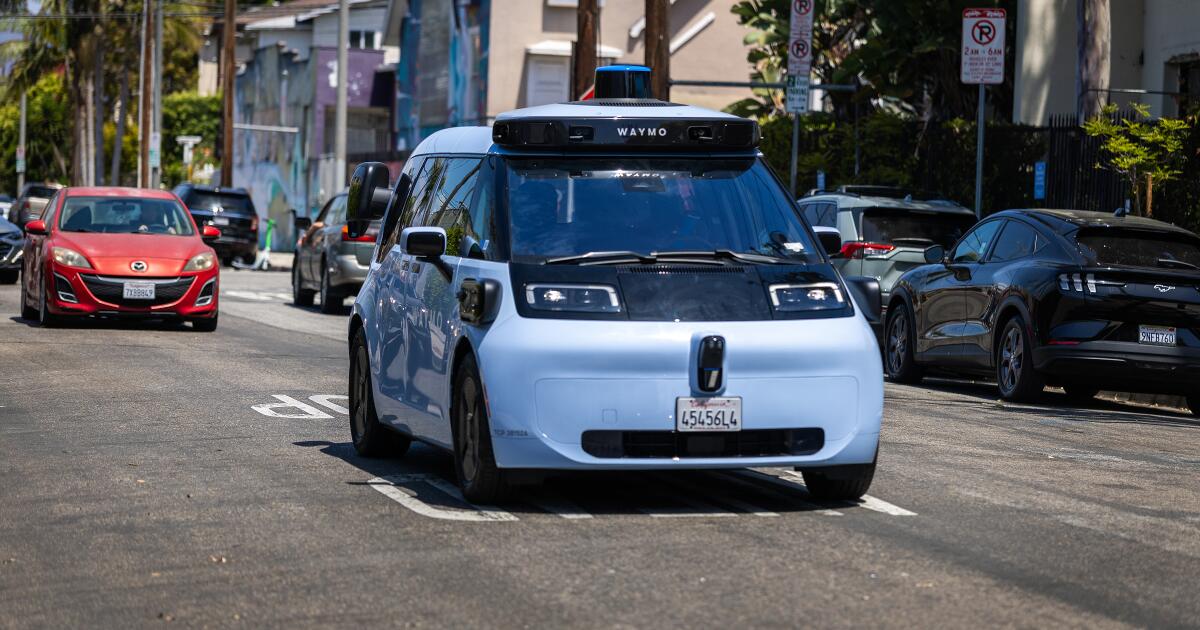
Waymo is starting robotaxi service in San Diego
-
 Entertainment40 minutes ago
‘Children of Blood and Bone’ author won’t see film after feud with star Amandla Stenberg

