Louisiana
Who were the 700 people from New Orleans who helped bring bananas to the U.S.?


Bananas are everywhere — school cafeterias, $9 smoothies, perhaps even rotting on your kitchen counter. They’re a cheap source of fiber and potassium, and it’s no wonder they’re Walmart’s best selling product.
Bella Gamboa, currently a med student in Baltimore, has been casually interested in the history of the banana since high school.
“They are such an omnipresent fruit in the U.S.,” she said. “But the way that we eat them here is also a very particular thing.”
The most ubiquitous variety of banana in the U.S., the Cavendish banana, is a relatively recent invention. It wasn’t popularized until the 1950s, and in much of the world, they still eat other, very different varieties of the fruit which aren’t necessarily yellow, long or skinny.
Recently, Gamboa was listening to an episode of NPR’s Throughline from 2020, “There Will Be Bananas,” which details the history of the banana in the States. The episode follows Minor Cooper Keith, a businessman who ruthlessly recruited people to lay railroads in Costa Rica in the early 1870s.
He eventually used the railroad to export bananas to the U.S., a business venture that eventually became the United Fruit Company, but before completion, most of the workers he recruited died or ran away once they knew how bad the conditions were. The railroads are the result of thousands of deaths. Even Keith’s own brothers lost their lives working on the project.
A few years into the endeavor, Keith went to New Orleans to recruit more workers, allegedly from prisons.
“He basically calls for volunteers,” said Dan Koeppel, author of the book “Banana: The Fate of the Fruit that Changed the World,” on the podcast. “And he says, anybody who volunteers — helps me build my railroad to completion — is going to get a pardon. Seven hundred prisoners volunteer. But only 25 prisoners survive to get their pardons — 25 out of 700.”
Looking into prisoners’ stories
“I was really intrigued by this detail,” said Gamboa.
The detail was presented as an aside in the larger story about bananas, but to Gamboa, the historic footnote was “part of this broader trend that’s often sort of at the margins.” The story of bananas, and many other things for that matter, seem to be a story about incarcerated labor.
“Who were these prisoners? What were their stories/fates?” Gamboa asked Curious Louisiana. “How does Louisiana unexpectedly fit into the story of bananas as an American staple food?”
Let’s start with Koeppel. He’s far from the first to repeat this statistic. Many contemporary books and articles about the history of bananas repeat a similar line with minimal variation: “700 prisoners” arrived in Costa Rica to work on the railroads, and only 25 survived. But these sources provide scant details regarding these people or what actually happened to them. Through library archives, old newspaper clippings and interviews with both Koeppel and a historian, Curious Louisiana looked into it.
They weren’t prisoners. At least, not all of them.
According to Eric Seiferth, curator/historian and lead on the current exhibition at The Historic New Orleans Collection titled “Captive State: Louisiana and the Making of Mass Incarceration,” there’s no known original source information documenting 700 prisoners leaving New Orleans for Costa Rica. If that did happen, someone should have definitely noticed.
“Seven hundred people would be more people than there were spaces to incarcerate in New Orleans,” he said. He doesn’t have exact numbers for the Orleans Parish Prison at the time, but he said when its replacement was built in 1930, the capacity was 400 beds. “It’s hard for me to believe that there were so many people that they had 700 people in the Orleans Parish Prison, when 100 years later, the jail had half that capacity.”
Plus, Seiferth said, the story doesn’t really cohere with incarcerated labor practices or the pardon system at the time. According to him, the early 1870s lines up with the convict lease era in Louisiana where rights to contract out that labor were owned by one guy: Samuel James.
“The city would have no incentive to send away prisoners because they relied on them for their urban workforce,” he said. “That’s who did everything in the city, who took care of the streets and cleaned the markets and cleaned the buildings. All that work was done by people in the workhouses and in the police jails and things like that.”
Plus, Keith also wouldn’t have the authority to grant pardons to anyone — that was and still is under the discretion of the governor.
‘It will be repeated again’
Here’s what we do know: in the 1870s, Minor Cooper Keith was strapped for labor while building the railroad, and he, or someone he was affiliated with, went to New Orleans to do some recruiting.
According to “Empire of Green and Gold,” a book written by Charles Morrow Wilson, a former publicist for the United Fruit Company, Keith’s uncle, Henry Meiggs placed an ad in New Orleans’ newspapers enticing people with the promise of steady work and $1/day. The book “Bananas: How the United Fruit Company Shaped the World” by Peter Chapman tells a similar story, adding that the wages attracted “many occupants of the city’s jail.”
But there are no citations for where these books got that information from, and a library associate at the New Orleans Public Library was unable to turn up the advertisement or any advertisement placed by Meiggs. A search in the Times-Picayune archives yielded an 1872 ad recruiting people to work on the railroad in Costa Rica but for $.80 per day. It was not placed by Keith or his uncle.
Either way, people went. Probably because the promise of a job and pay were better than whatever their lives looked like at home. Working on the railroad was hard and dangerous. Most people didn’t make it back, and their stories seem to be lost to history.
New Orleans comes into play
As for how New Orleans fits into the larger story of bananas, that part of the question is much more straightforward — a matter purely of geography. According to Koeppel, it was key to bringing bananas into the U.S. because it was centrally located. The company that eventually merged with Keith’s venture to become the United Fruit Company was the Boston Fruit Company.
“That gives you an idea of where they were shipping bananas before: Boston, New York, Port of New Jersey,” said Koeppel. “That’s great for urban demand in the most populated parts of the country, but if you’re trying to get to Chicago, St. Louis, other Midwestern cities, then you need to be a little closer.”
New Orleans was that closer port to help distribute bananas beyond New England and to the rest of the U.S., and workers from New Orleans lost their lives laying the tracks that made exporting bananas from Costa Rica possible.
Today, incarcerated labor is still embedded in the nation’s supply chain.
“In prisons across Louisiana today,” Seiferth said, “everybody’s forced to labor, and they’re not really paid.”


BATON ROUGE, La. (WAFB) – A 53-year-old Louisiana man will serve 22 years in prison following a child sex crimes case that included possession of handmade childlike sex dolls — items that state lawmakers have since moved to ban.
Sabine Parish prosecutors say Yancy Elie Normand was sentenced after investigators received a tip that he forced someone to view child sexual abuse material. A search of his home allegedly uncovered more than 200 illegal files — including child sexual abuse material and bestiality — along with two handmade childlike sex dolls.
New state law bans child sex dolls
Louisiana lawmakers passed a law banning the possession, trafficking, and importation of child sex dolls statewide in 2024. State Sen. Beth Mizell said the push began after conversations with Homeland Security about human trafficking during the Super Bowl in New Orleans, at a time when the state had no specific law covering the dolls. The measure passed with near-unanimous support.
“I think the importance is that it’s a precursor to actual crimes against children,” Mizell said.
Mizell said the issue extends well beyond Louisiana’s borders.
“It’s a nationwide problem…when you look at just the volume of child abuse cases, to the point where our Attorney General now has multiple task forces in place all over the state,” Mizell said.
Task force expands statewide reach
The Louisiana Attorney General’s Office says protecting children remains the focus of its Louisiana Internet Crimes Against Children Task Force. Supervisory Special Agent Chris Masters leads the group, which now includes more than 80 agencies and 250 detectives.
Masters said the dolls are often misunderstood by the public.
“When people hear sex doll, they think of the blow-up thing. These things are thousands of dollars, and they’re anatomically appropriate to a child,” Masters said. “They’re gonna look like a child. It’s not just what you think on TV.”
Masters said coordination across agencies is essential to the task force’s work.
“It’s completely impossible if law enforcement is not together on the same page with the same type of training, the same access, the same type of equipment,” Masters said. “We can tend to continue expanding our partnerships until there is no safe haven for any sex predator or child predator in this state.”
Lawmakers urge parents to monitor children’s online activity
Mizell said the volume of harmful material accessible online makes parental awareness critical.
“You have access to abhorrent material online in your hand all day, every day,” Mizell said. “Pay attention. Don’t be afraid to look at your child’s phone.”
Click here to report a typo. Please include the headline.
Click here to subscribe to our WAFB 9 News daily digest and breaking news alerts delivered straight to your email inbox.
Watch the latest WAFB news and weather now.

MONROE, La. (KNOE)—Over the past week, average gas prices in Louisiana have fallen 6.8 cents. That averages to $3.41/g today, according to a survey of 2,436 stations conducted by ‘GasBuddy’.
Compared to a month ago, prices in Louisiana are 45.3 cents lower per gallon. The lowest price of gas in Louisiana was $2.59/g on Sunday, with the highest being $4.99/g.
For reference, the national average price of gas has fallen 6.9 cents per gallon in the last week, which averages to $3.78/g, and is down 55.6 cents per gallon from a month ago.
On this date for the past five years, here’s how Louisiana’s gas prices compare to the nation’s average:
June 29, 2025: $2.75/g (U.S. Average: $3.14/g)
June 29, 2024: $2.93/g (U.S. Average: $3.48/g)
June 29, 2023: $3.02/g (U.S. Average: $3.51/g)
June 29, 2022: $4.37/g (U.S. Average: $4.85/g)
June 29, 2021: $2.76/g (U.S. Average: $3.12/g)
Copyright 2026 KNOE. All rights reserved.

BATON ROUGE, La. (WAFB) – Julia Letlow and Jamie Davis will face off this fall for U.S. Sen. Bill Cassidy’s seat after winning their respective party runoffs Saturday night.
Letlow won the Republican runoff over John Fleming with 57% of the vote, less than an hour after polls closed on June 27. Davis won the Democratic nomination in a landslide, securing 80% of the vote over Gary Crockett.
Letlow, Davis claim victories
“I’ll fight for our families, I’ll fight for our farmers. I’ll fight for our teachers. I will fight for our parents. I’ll fight for our law enforcement. I will fight for everyone in this room, and we are just getting started,” Letlow said.
Davis said the issues driving his campaign cross party lines.
“Everybody wants better healthcare. Everybody wants better education for their children. Everybody wants a leg up with affordability. And everybody wants the Constitution to be upheld. Those issues are nonpartisan. I don’t have to change nothing but keep working,” Davis said.
Low turnout, Trump endorsement shaped Republican race
Estimated turnout was about 18% of registered voters. Political analyst Jim Engster said the low turnout actually benefited Fleming, who captured 43% of the vote, but was not enough to overcome President Trump’s endorsement of Letlow.
“He really had the 8 ball against him when President Trump endorsed Julia Letlow. President Trump is Hercules of Republican politics, and he’s carried this state three times by about 60 percent of the votes each time,” Engster said.
Engster said the results reflect the broader political landscape in Louisiana.
“It says that it’s more of the same. We’re a Republican state, and until further notice, we vote red in major elections,” Engster said.
New closed primary system draws scrutiny
Saturday’s election was the first major cycle under Louisiana’s new closed party primary system, in which Democratic voters could only choose Democratic candidates and Republican voters could only choose Republican candidates.
Engster said the change had a significant impact on participation, pointing to Cassidy’s vote totals as an example.
“Bill Cassidy might very well have held onto his seat in an open primary. After all, in the last open primary, he got 1,228,000 votes. This time he got 99,000 votes, so that’s a big difference,” Engster said.
Engster said critics of the closed primary system will use the turnout figures to make their case.
“It’ll be a case in which those who are against the closed primary will make the case that ‘The open primary may have its flaws, but more people participate. And after all, that is what we want. We want more people voting in our elections,” Engster said.
Road to November 2026
History suggests Republicans hold the advantage heading into the general election. Engster noted that Louisiana’s last elected Democratic senator was Mary Landrieu in 2008.
“It would really be a political miracle for Jamie Davis to win. Those things happen, but right now it’s a long shot, and there’s a lot of heavy lifting for him to do and for the Democratic Party to do to try to make up the inherent gap that is evident in Louisiana politics,” Engster said.
Letlow and Davis will face off in the general election on November 3.
Click here to report a typo. Please include the headline.
Click here to subscribe to our WAFB 9 News daily digest and breaking news alerts delivered straight to your email inbox.
Watch the latest WAFB news and weather now.
-
 Entertainment3 minutes ago
Alannah Keyser is latest fired ‘Love Island USA’ contestant to apologize for using a racist slur
-

 Lifestyle10 minutes ago
Chanel’s Bruno Pavlovsky on Reengineering an Iconic Brand
-
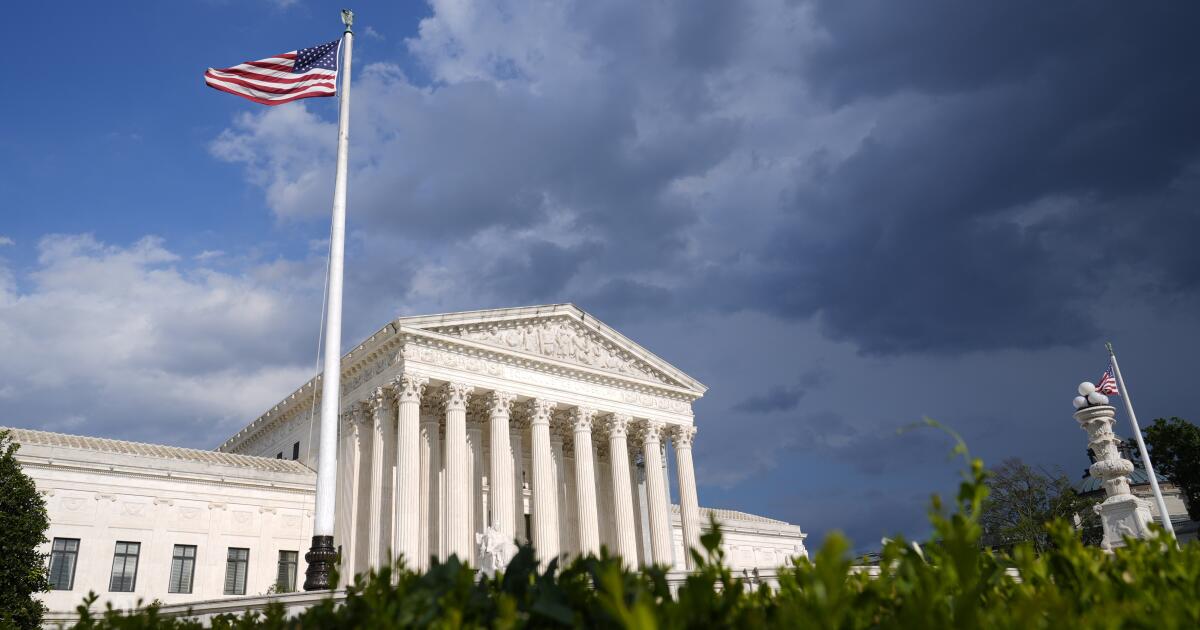 Politics13 minutes ago
Supreme Court limits police use of cellphone data to find crime suspects
-
 Sports25 minutes ago
Teoscar Hernández returns, and Dodgers unleash 17-hit barrage in win over Athletics
-

 World33 minutes ago
DR Congo says 1,307 Ebola cases confirmed, including 377 deaths
-
 News58 minutes ago
Michigan governor threatens to pull troops from D.C. if used for Trump task force
-

 New York2 hours ago
Metropolitan Diary Challenge Day 2: How to Write Your N.Y. Story
-

 Los Angeles, Ca2 hours ago
Company has weeks to complete cleanup of Boyle Heights warehouse fire, officials announce

