Florida
Lawmakers seal lean budget deal, aim for June 16 final vote


‘Nobody wanted a government shutdown. Nobody wanted employees to be without a paycheck,’ one top lawmaker said.

PNJ Headlines: Here’s what’s in the news Friday
Rep. Andrade responds to DeSantis’ ‘jackass’ remark, Children’s Trust’s plan for owed tax money, and clearing the way for oysters in Friday’s news
State lawmakers finally put the finishing touches on a drawn-out budget negotiation this year, agreeing to nearly $560 million in funding for projects and sealing deals on environmental and higher education funding.
The move sets up a vote on the 2025-26 budget – delayed for more than a month over a standoff between House and Senate leaders over tax cuts – for June 16. Florida’s constitution requires a 72-hour “cooling off” period once the budget is made public before legislators can vote on it.
A price tag for the total budget wasn’t available the afternoon of June 13, but House budget chief Lawrence McClure, R-Dover, said it would be less than Gov. Ron DeSantis’ proposal of $115.6 billion. The current year’s budget is $118.6 billion.
“Choices have to be made, right? And we all come from different corners of this state with different experiences and different situations so that conversation took a little bit longer than expected,” McClure told reporters.
“Hopefully next year’s legislature and future legislatures will be the beneficiaries, where otherwise they would have been making equally if not more difficult decisions than we did this year,” he added.
The cuts include eliminating more than 1,000 vacant positions throughout the state government and setting aside $750 million per year into a key reserve fund.
Not every portion of the budget, though, will see cuts. State workers will receive an across-the-board raise of 2%, and teachers and law enforcement will receive targeted raises, as will judges, state attorneys and public defenders.
Lawmakers agree on over half-billion dollars’ worth of special projects
As part of the last-minute deals, lawmakers agreed to $560 million in special projects in what have come to be known as “sprinkle lists,” a nickname from the idea that lawmakers are “sprinkling” extra money across the state.
That includes $136.9 million to boost nursing home reimbursement rates, $23 million in operational funds for the Florida State Guard, $10 million for a cancer research fund supported by First Lady Casey DeSantis and $1.8 million for the Mary Brogan Breast and Cervical Cancer Early Detection Program.
Senate budget chief Ed Hooper, R-Clearwater, said with President Donald Trump and other top federal officials talking about phasing out the Federal Emergency Management Agency, it was important to provide funding for the Florida State Guard to help state residents recover from future hurricanes.
“We heard yesterday from our friends in Washington after this hurricane season there may be no more FEMA. We may be on our own some day and that would not be the time to start thinking, ‘Should we plan ahead?’ ” Hooper said. “The State Guard’s an important part of making sure we have the resources.”
Florida House Speaker Daniel Perez, R-Miami, has said he wanted to cut expenses, concerned about a projected $7 billion shortfall in two years if current spending trends continued. But he clashed with Senate President Ben Albritton, R-Wauchula, about how to do it.
Perez’s main priority was cutting the state sales tax from 6% to 5.25%, costing state coffers about $5 billion per year. Albritton initially refused to go along, concerned such a big cut would hamper the ability to fund vital programs for a growing state.
The dispute pushed the budget negotiations past the original May 2 end date for the regular session. Then a “framework” agreed to by Albritton and Perez to cut the sales tax to 5.75% was scuttled by DeSantis, who vowed to veto any tax cut plan that included an overall sales tax reduction. He was concerned such a move would crowd out his push for a property tax cut on the 2026 statewide ballot.
When House and Senate negotiators went back to the drawing board, another framework for a tax cut deal emerged, with $1.6 billion in cuts. Those details still need to be worked out, but Hooper and McClure said they’d meet again to hash out a deal on the tax bill.
Before the latest agreement, lawmakers knew they were pressed for time to pass a spending plan. The fiscal year ends June 30, and if a budget isn’t in place by then, parts of state government may need to shut down.
“We knew that we had to come here to get where we are today because, come July 1, nobody wanted a government shutdown. Nobody wanted employees to be without a paycheck,” Hooper said.
Lawmakers are poised to vote on the budget the evening of June 16. DeSantis, who has line-item veto authority, must still sign it into law by June 30. Given the fights with the Legislature, he could wield a heavy veto pen when he does.
This is a developing news story and will be updated. Check back later for more.
Gray Rohrer is a reporter with the USA TODAY Network-Florida Capital Bureau. He can be reached at grohrer@gannett.com. Follow him on X: @GrayRohrer.



An Iranian-made drone displayed at the Biltmore Hotel served as a stark warning from national security advocates and South Florida officials who say Cuba’s growing military ties with Iran could pose a threat to the United States.
Former Florida Gov. Jeb Bush, chairman of the advocacy group United Against Nuclear Iran, joined U.S. Rep. Carlos Gimenez, R-Florida, to highlight concerns about what they say are roughly 300 Iranian drones that have been delivered to Cuba.
Standing alongside one of the drones, Bush described the weapon as among the deadliest battlefield threats faced by American forces in recent years.
“Most loss of life of the U.S. military than any single weapon that exists over the last 15 years,” Bush said.
Gimenez warned that the drones’ capabilities make them particularly concerning because of their ability to carry significant explosive payloads over long distances.
“This particular model, there is about over 100 pounds of explosives,” Gimenez said. “That’s a pretty big bang. That’s why they call them kamikaze drones — they crash into their target and they explode.”
According to Gimenez, the drones can reach speeds of about 115 miles per hour and travel more than 1,000 miles, placing South Florida well within range. He said the aircraft could also reach the U.S. naval base at Guantanamo Bay and other cities throughout the southeastern United States, including Tallahassee and Atlanta.
The congressman said one of the primary concerns is the potential for Iran-style drone warfare tactics, in which large numbers of drones are launched simultaneously to overwhelm air defense systems.
While the United States has sophisticated defense systems capable of intercepting incoming drones, Gimenez noted that a successful strike may require only one, or a handful of aircraft to penetrate those defenses.
The event was organized by United Against Nuclear Iran, which has sought to draw attention to expanding military and strategic cooperation between Iran and countries aligned with its interests, including Cuba.
Supporters of the group’s effort say the growing presence of Iranian military technology in the Western Hemisphere warrants increased attention from policymakers and defense officials.
For South Florida residents, the warning underscores the region’s proximity to Cuba and the continuing role the island nation plays in broader geopolitical tensions involving the United States and its adversaries.

Body camera video shows a man fighting with Florida deputies who were trying to rescue him from a snake-and-alligator-infested canal, authorities said.
The incident happened July 3 when Flagler County Sheriff’s Office deputies found a man lying on the ground shirtless in front of an elementary school.
The man, 47-year-old Ryan McMinn, who had been then subject of a previous welfare check, fled on foot, the sheriff’s office said.
A short time later, authorities received a call about a man trying to climb on the side of a house in Palm Coast.
Deputies responded and found McMinn near the canal behind the house and when he spotted the deputies, McMinn ran into the canal and started swimming, authorities said.
“What’s your name?” a deputy asks him in the bodycam footage, as McMinn is seen swimming backwards. “You getting tired?”
Officials said McMinn was ordered to get out of the water multiple times but refused, and when he started to show signs of exhaustion, two deputies went into the canal to pull him out.
The video released by the sheriff’s office on Monday shows the deputies wading into the water before a struggle ensues.
Authorities said McMinn tried to grab one deputy’s head to push it under the water, before he tried to grab the neck of the other deputy.
The deputies were able to get control of McMinn and get him safely to shore.
He was hospitalized before he was arrested and booked into jail on two counts of battery on a law enforcement officer.
“Battering a Deputy Sheriff will guarantee you the loss of your freedom and a trip to jail,” Flagler Sheriff Rick Staly said. “These deputies went into the water to rescue this guy, and he responded by fighting them. I commend our deputies for their willingness to get in a canal that usually have snakes and gators and pull this guy to safety before he drowned.”

The Sunshine State closed out the first month of meteorological summer with a mixed-bag of temperatures, as daily thunderstorm activity helped to keep some communities cooler while others reported one of their hottest Junes on record.
The contrasting observations across the state highlights just how localized Florida’s weather can be, with the sometimes cooler than average temperatures occurring just miles away from heat islands.
Clermont, in Central Florida, recorded its warmest June when compared to typical values, finishing about 4 degrees above average for the month. Meanwhile, Pensacola was the coolest major metro area across the state, ending the month approximately 2 degrees below average.
Cooler than average temperatures were largely found along the Panhandle, while Central and South Florida were home to the heat.
Regions that experienced frequent afternoon showers and thunderstorms generally recorded temperatures closer to seasonal averages, while locations that missed out on the rainfall often experienced temperatures that were well above average.
As a whole, warmer readings outweighed the cooler ones during the first month of meteorological summer, allowing the Sunshine State to experience one of its tenth warmest Junes on record.
The arrival of July has done little to change the pattern, with temperatures expected to get even warmer during the next few weeks.
Forecast models show another extended period of above-average temperatures developing this week as a ridge of high pressure builds across the Sunshine State.
The warmer conditions are expected along and north of the Interstate 4 corridor, where afternoon high temperatures are expected to climb into at least the upper 90s.
When combined with the humidity, the heat index could reach between 104 and 110 degrees through most of the state through the remaining days of the workweek and into the weekend.

The heat indices mean that NOAA’s HeatRisk will reach the Major category in many areas with some neighborhoods potentially reaching the Extreme category.
Residents and visitors spending time outdoors are encouraged to drink plenty of water, take frequent breaks in the air conditioning and avoid strenuous activity during the hottest parts of the day.
Forecast guidance suggests that some ridging will remain in place through at least the middle of next week, leading to several days of above normal heat.
Due to the abundance of seeking air, widespread shower and thunderstorm activity will be hard to come by.
Whether the current pattern persists through the remainder of the month remains uncertain, but the final week of July is climatologically the warmest period of the year, when average afternoon highs reach at least the low to mid-90s.

-

 Washington, D.C3 minutes ago
Police search for suspect caught on camera slashing tires in Georgetown
-

 Cleveland, OH10 minutes ago
Ohio ICAC Task Force’s “Operation Guardians’ Watch” Results in 25 Individuals Arrested and Charged for Attempting to Meet with an Underage Child to Engage in Sexual Activity
-

 Austin, TX13 minutes ago
Texas’ Goosby hosts camp to benefit heart research
-

 Alabama18 minutes ago
Alabama teen charged with stabbing mom to death issued vile threat to dad — as new pic shows bloodbath left behind
-

 Alaska25 minutes ago
Outmigration, inflation, choice schools: Alaska school closures likely to continue without changes
-
 Arizona28 minutes ago
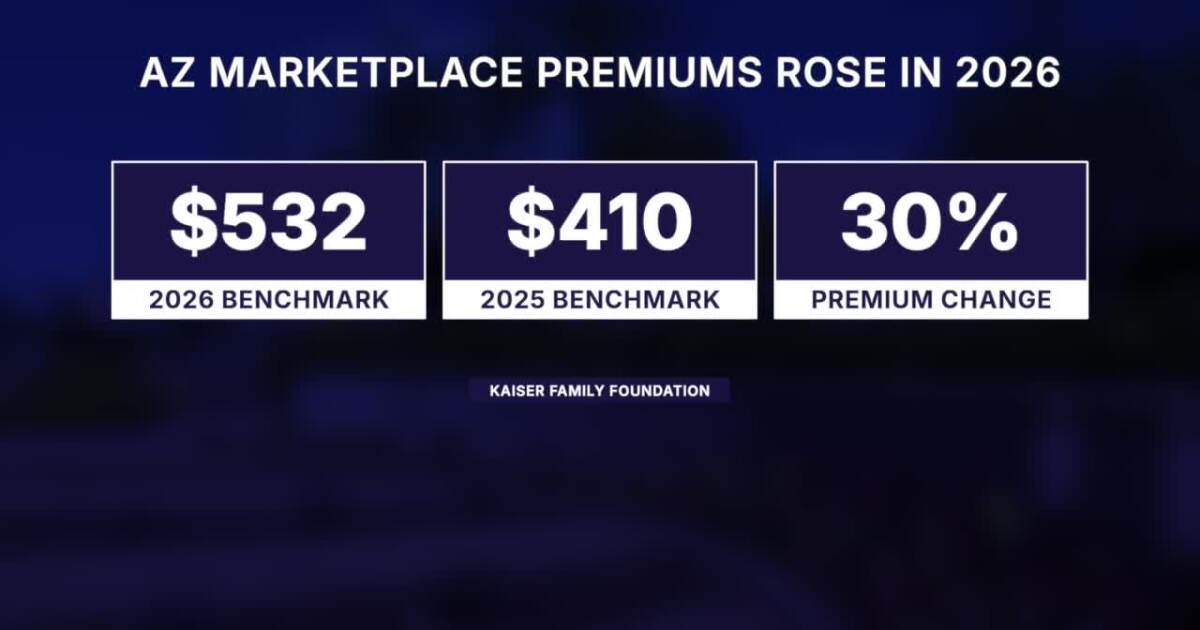
WATCH: Arizona’s health insurance marketplace is seeing dropping enrollment
-

 Arkansas33 minutes ago
ARKANSAS SIGHTSEEING: Randolph County can claim many firsts in Arkansas | Northwest Arkansas Democrat-Gazette
-

 California40 minutes ago
Toddler sustains brain injury in fall after California childcare worker threw him into the air, lawsuit says

