Delaware
Hornets on the rise? Delaware State receives $20 million for new field house


Delaware State football schedule first season under DeSean Jackson
See who DSU Hornets play in football in 2025
There’s a new feeling of optimism around Delaware State University Alumni Stadium, where the school’s red-and-blue hornet logo highlights a field where fall football practice will soon begin.
The Hornets began the first steps of what they’ve deemed their “Athletics Transformation Project” in 2024 to expand and enhance their athletic facilities.
Delaware’s bond bill approved on July 1 included $20 million for DSU to construct a new field house to continue this “transformation.”
“It’s going to inject a lot of energy and goodwill into our campus,” said Athletic Director Tony Tucker. “We can’t wait to get started.”
Capitalizing on celebrity
Delaware State’s new project, years in the making, drew in-state interest. But another move by the HBCU has drawn nationwide attention.
DSU hired former Philadelphia Eagles wide receiver/returnman DeSean Jackson as its new head football coach in December.
“He’s still a very relevant name and figure,” said Tucker. “He’s brought a lot of energy to the football program, as well as the university as a whole.”
Tucker was elevated to the AD position last December just before Jackson’s hiring, which Tucker termed a “perfect storm” coinciding with the school’s “transformation.”
“This is the perfect time for Delaware State athletics, not just to revitalize itself, but to reach heights never seen before by the university,” said Tucker.
What will the new Delaware State University field house include?
The new field house would be a 70,000-square-foot building near Alumni Stadium.
The main draw would be a 50-yard turf field, creating indoor practice space for the school’s sports teams. There would also be meeting sites, lounge spaces and new locker rooms.
Jackson said the building will help the program attract talent, an area where the Hornets have struggled in the past.
“Coming from a big school like Cal and seeing them transform over the years [through upgrades], I think it’s really gonna help with recruiting,” he said.
“Not having people overlook us, and go to rival schools like Norfolk and Howard who have eye-popping facilities, will be huge.”
While the facilities would mostly be used by the football program, they would be available to all students.
“Other sports that do indoor training will have access, and even non-student athletes on campus will have access to the various spaces,” Tucker said. “We’re very excited for the energy and goodwill it’s going to inject into our athletic programs and our community.”
What steps lie ahead?
While the approval for the field house was huge for Delaware State, it was far from its only win on July 1.
The Joint Finance Committee included in the bill a section highlighting its desire to “work towards exploring options for funding” a new convocation center for the school.
The center would be a new home for indoor sports such as basketball, wrestling and volleyball, while also giving the university additional ability to host events. Currently, the teams play at the campus’ Memorial Hall, an 1,800-seat arena.
The space is projected to cost $90 million. But Tucker emphasized that the center, as well as upgrades to Alumni Stadium, could have potential benefits to the entire community.
“Delaware is a small state, which we happen to be in the direct center of,” said Tucker. “Our location at the center of the state could be a shiny new place for a lot of Delaware high school competitions.”
Currently, the University of Delaware hosts many of these events. Recent controversy surfaced over the school’s rental fees, the DIAA turned away from UD as football championship host. The Class 3A and Unified football state championships were both at Alumni Stadium in 2024.
Tucker emphasized the goal would be not to step on UD’s toes, but to benefit the greater Delaware athletic community.
“It’s just about providing a situation where our high school athletes and parents are the winners,” he said. “Not having to travel all the way to Northern Delaware would be very beneficial for some of the Southern Delaware community.”
Jackson added, however, that the improvements could lessen the gap between Delaware and Delaware State, especially in football.
“Delaware has been getting a lot of talent over us over the past year or so,” said the coach. “If we can say ‘We can play on the same playing field,’ we’re probably going to be able to get some guys we couldn’t have before.”
When will the DSU field house be built?
No timeline is set yet for the construction of the field house. However, Tucker said they have a goal of 18 to 24 months.
The other changes will likely take more time and more funding. But Jackson feels confident they’ll come, as the team grows in success.
“The sky’s the limit,” the coach said. “I think the success we’re going to have this year will open up a lot of eyes, and make us hard to look over.”
Adam Denn is a general assignments reporter for Delaware Online/The News Journal. You can reach him for story ideas at ADenn@gannett.com



From Delco to Chesco and Montco to Bucks, what about life in Philly’s suburbs do you want WHYY News to cover? Let us know!
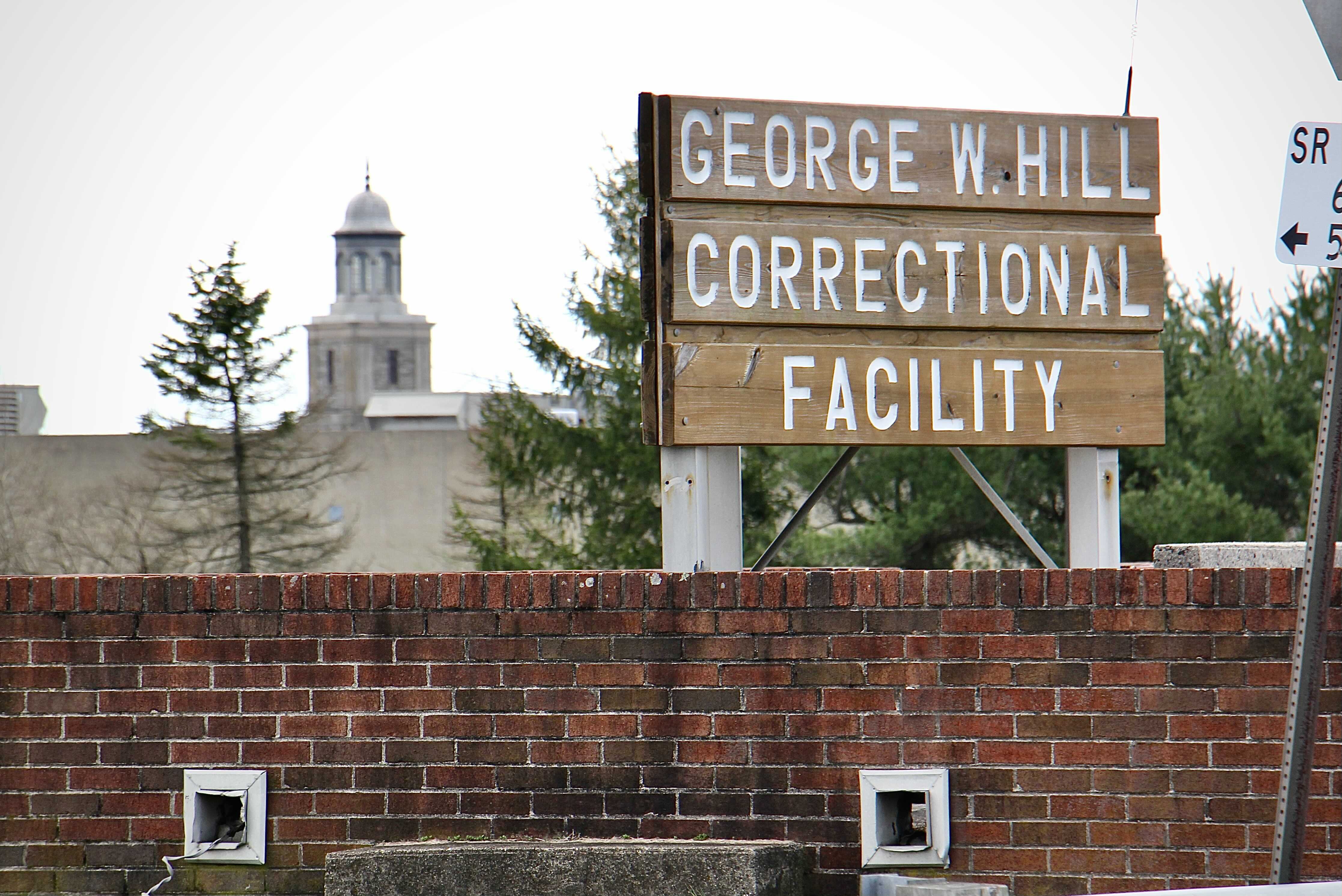
Willie Bonds has tendered his resignation as warden of the George W. Hill Correctional Facility in Delaware County after less than six months running the prison.
“The resignation was submitted due to a personal family matter and an opportunity to pursue other career interests,” said Michael Connolly, communications director of Delaware County, in a written statement.
The Delaware County Jail Oversight Board named Bonds the warden in February. He took over for interim warden David Mascollino, who spent five months on the job.
Mascollino had stepped in following the resignation of warden Laura Williams in August 2025. Bonds will remain in his current role until the county implements a succession plan.
“While the County was looking forward to his continued good service, County leadership respects his personal decision and is immensely grateful for his work on behalf of our residents, the incarcerated population, and the dedicated staff of George W. Hill,” Connolly said.
The county will name an interim warden and work with the prison’s leadership to identify a permanent replacement, Connolly said.
“As this process moves ahead, Delaware County remains committed to continuing its efforts to build George W. Hill into a facility that every resident can be proud of and continuing the major investments and upgrades to the facility already well under way,” he said.

When will Delaware’s 2026 midterm elections take place?
Delaware’s midterm elections are coming up. Here’s what voters need to know before heading to the polls.
Delaware candidates and elected officials may soon be able to use campaign funds to protect themselves on and off the campaign trail.
A House bill introduced June 4 would allow funding for security costs for Delaware officials and candidates. Lawmakers said those expenses would be covered through voluntary contributions, not taxpayer dollars.
Nationally, the bill arrives during a fraught period for public officials. In recent years, several lawmakers in other states have been targets of politically motivated violence, resulting in serious injuries, property damage and, in some cases, deaths.
In Delaware, lawmakers didn’t point to any local examples, but said many legislators are on edge. A 2024 research report from the Brennan Center for Justice found that 43% of interviewed state lawmakers experienced threats, as well as 18% of local officials.
Some public officials in that research said they were less likely to hold public events, work on contentious topics or even run for higher office.
The Delaware bill mirrors similar proposals introduced across the country aimed at improving safety. At the federal level, candidates and officeholders — along with their families and staff — are already allowed to receive such protections.
To advance, the bill will need to clear its final committee and the Senate floor before June 30. Otherwise, lawmakers start all over again next session, after the midterms.
‘A responsibility to act’
Campaign expenditures in Delaware are currently limited to mostly advertising, food and refreshments, as well as attendance at political events and travel expenses.
If passed, House Speaker Melissa Minor-Brown’s bill would cover several security-related expenses, include:
- Electronic security systems located in a candidate’s home or office
- “Personal security,” a category the Delaware Department of Elections said it would further define if the bill passes.
- Cameras, fences or “other comparable security-related equipment”
These funds can also be used to help protect their families in certain circumstances, Minor-Brown told Delaware Online/The News Journal.
They cannot be used to pay for firearms, however.
House Minority Whip Jeff Spiegelman raised a concern about this during the bill’s June 11 hearing in his chamber, calling guns another matter of defense.
Fellow sponsor House Majority Leader Kerri Evelyn Harris said the choice was not to include firearms in the bill, saying this could lead to discomfort for many, and potentially do more harm than good.
Minor-Brown also said candidates covered in this bill must have filed for office and currently be campaigning. Additionally, the New Castle Democrat said money must come from voluntary contributors.
No officeholder or candidate is required to abide by this measure, Harris told lawmakers, as the use of funds will remain “entirely optional.”
The bill comes as lawmakers nationwide have faced rising intimidation and violence in recent years.
This includes former Minnesota House Speaker Melissa Hortman, who, alongside her husband Mark, were shot and killed in what officials described as “a politically motivated assassination” last year, as reported by USA TODAY.
In Pennsylvania, Governor Josh Shapiro’s home was the target of an arson attack last April.
And just a few weeks before, New Mexico Republican Party headquarters in Albuquerque was vandalized, almost a year after it was damaged in an arson attack.
Minor-Brown also pointed toward the 2022 attack on former U.S. House Speaker Nancy Pelosi’s husband, the assassination of conservative politico Charlie Kirk last year, as well as the attempts on the life of President Donald Trump.
“This is not about politics. It’s not about partisanship,” Harris said ahead of the floor vote. “It’s about safety.”
Minor-Brown said lawmakers should not have to choose between their safety and performing their elected responsibilities. As such, lawmakers have “a responsibility to act” now, she said.
Several other states – including New Jersey and Maryland – have proposed similar legislation, according to the National Conference of State Legislatures.
Other states have also enacted laws on the safety of candidate families and staff, cybersecurity and using campaign funds to pay for home security systems. Minor-Brown told Delaware Online/The News Journal she expects to see measures regarding cybersecurity in Delaware.
This bill passed the House on June 11. It is now scheduled to be heard in Senate committee on June 25.
Olivia Montes covers state government and community impact for Delaware Online/The News Journal. If you have a tip or a story idea, reach out to her at omontes@delawareonline.com.
Delaware
Comcast Xfinity cable down: TV streaming outage hits New Hampshire, Texas, Delaware, Wyoming and Maine

Comcast’s Xfinity cable service is down for thousands of people in the United States on Monday afternoon.
More than 12,000 users are reporting the outage with the cable service run by NBC’s parent company, according to Down Detector, a platform that tracks such outages based on users’ reports.
Much of the outages seemed to be concentrated in New Hampshire, Texas, Delaware, Wyoming and Maine, according to the outage map shown on Down Detector.
According to Down Detector, 77% of the customers reported issues with the cable TV services, 12% with the broadband internet and 8% with TV streaming.
Also read: Who is Dasha Kilpatrick? Texas healthcare worker’s row with Muslim women at HEB store viral
Comcast Xfinity Outage Map
The map of Comcast’s Xfinity outage showed that urban centers across the country were affected. It included cities in the east and west cost, north and southern states and well as parts of central US.
The map showed outage reports concentrated in Boston, New York City, Atlanta, Jacksonville, Miami and large parts of Florida.
In the north, Minneapolis and Chicago reported the most outages. While in the South, Houston was affected. Customers from Denver also reported a significant number of outages.
In the east coast, most outages were reported up north. Portland Salem and Seattle reported a large number of outages. Additionally, the areas around San Francisco and Carson City reported outages.
Here’s the map of the Comcast outage per Down Detector, as of 4:28pm ET.
Comcast’s Response
As of now, Comcast or Xfinity has not acknowledged that the issue is widespread. The X account of Xfinity support is replying to queries on social media, asking customers to message them their service ID.
Also read: Alaska coast guard helicopter crash: MH-60 Jayhawk goes down in Sitka, search and rescue crews responding
For instance, one such post on X read: “Hello! Thank you for contacting the Xfinity support team. We sincerely apologize for the inconvenience due to the service interruption. Please DM us with your first and last name and your complete service address, so we can assist you further.”
Thus, those seeking a solution to the problem may send their service details and the disruption that is happening to Xfinity.
Comcast’s Xfinity is one of the largest cable and broadband services in the US. It serves around 11.27 million traditional cable TV customers in the Unites States. Its broadband user base is approximately 31.25 million strong.
This is a developing story.
-

 Education5 minutes ago
The Patriot Housewife Whose Plays Helped Push America Toward Revolution
-

 Technology8 minutes ago
The best robot vacuum deals available during Prime Day
-

 World13 minutes ago
Turkey detains over 200 suspects, including alleged ISIS militants, in sweeping raid ahead of NATO summit
-

 Politics20 minutes ago
Trump foe wins crucial Dem primary as 2028 presidential speculation swirls
-

 Sports28 minutes ago
Wizards select AJ Dybantsa first overall in 2026 NBA Draft
-
Business38 minutes ago
SpaceX stock returns to Earth after record IPO
-
 Entertainment43 minutes ago
This is why the Madonna biopic starring Julia Garner isn’t happening after all
-
 Lifestyle50 minutes ago
‘Worth every penny’: This is how much fans spent to attend the World Cup in L.A.


