Austin, TX
Transcript: Historian H.W. Brands on


The following is a transcript of an interview with H.W. Brands, Jack S. Blanton Sr. Chair in History at the University of Texas at Austin and author of “America First: Roosevelt vs. Lindbergh in the Shadow of War,” on “Face the Nation with Margaret Brennan” that aired on Dec. 1, 2024.
MAJOR GARRETT: Welcome back. We turn now to author and historian H.W. Brands. He is the Jack S. Blanton Sr. Chair at the University of Texas at Austin, and his latest book is “America First: Roosevelt vs. Lindbergh in the Shadow of War.” He joins us this morning from Austin, Texas. H.W., it’s great to see you. First of all, what does this “America First” clash then tell us, if anything, about today and references to “America first”?
H.W. BRANDS: The debate that I describe in the book is whether the United States should enter World War II between the time Germany started the war in September of 1939 and the United States entered the war in December of 1941. That was the narrow focus of the debate. The larger question, and the one that persists today, is, what do Americans think their country’s role in the world ought to be? Should the United States, must the United States, take a leading role in the world? Should the United States concern itself in conflicts among other nations that perhaps don’t directly address American interests? This- this was the question then, it’s a question we’re dealing with again today.
MAJOR GARRETT: If you could, sketch out briefly Charles Lindbergh’s stature at the time this debate with Franklin Delano Roosevelt was engaged.
BRANDS: Lindbergh came to the attention of the American public, indeed, to the world public, in 1927 when he flew a solo flight for the first time across the Atlantic Ocean. He became this national hero. He became a world celebrity for accomplishing this great technical feat, but it was also a feat of personal daring. He was a darling of the United States, a darling in other countries. He was decorated by foreign governments. He became an early celebrity in an age when celebrity was first starting to take form. So that was his position as of 1927. His celebrity took a different turn in the early 1930s when his and his wife’s infant son was kidnapped and murdered in what then was called the “crime of the century,” which gave raise- which gave rise to the “trial of the century.” And so this golden boy, all of a sudden, had a dark shadow cast across his life. And so he was, in some ways, this star crossed hero, at that point. He continued to be influential in aeronautical engineering circles. He knew a lot about aircraft, but in the American mind, he was this- he was this great celebrity. And many people were surprised, actually, that he did take a leading role in the debate over American policy, because he was not a political figure. He eschewed politics.
MAJOR GARRETT: And in that debate with Roosevelt, did Roosevelt and his administration regard Charles Lindbergh as a potential political threat? And if so, how did they deal with him?
BRANDS: It’s a little bit hard to say. Franklin Roosevelt, at some point, decided that he wanted to run for a third term. This broke a long standing informal rule of American politics. And he knew that Republicans were constantly going up to Charles Lindbergh and saying, you could be president, you’d be a great candidate. Lindbergh’s father had been a congressman, but Lindbergh took from his father’s experience, which- which turned out badly because of his opposition to American policy during World War I, that he didn’t want to have anything to do with politics or politicians. He considered politicians a bunch of liars, people who could not be trusted, and he considered politics this low and sort of mean occupation that he wanted to have nothing to do with.
MAJOR GARRETT: When this debate began in 1931, Lindbergh was in one place. When it ended in 1941, he was in a different place in the public mind. Some accused him of being a Nazi sympathizer. Some editorialists described him as an antisemite. Where do you come down?
BRANDS: The one thing I should say is that everybody who called him an antisemite or a Nazi sympathizer had political reasons for doing so, because Lindbergh became the face of opposition to American intervention in the war. And it served his opponents’ purposes to paint him in this negative category. In terms of his Nazi sympathy, he- there were American Nazis. There was an American Nazi Party. They were clearly Nazi sympathizers. Lindbergh was not a member of the party. In fact, the America First Committee, of which Lindbergh was a part, took pains to keep its distance from those. Lindbergh did not want Germany to win the war. His position was that the United States should not place its frontier of security in the middle of Europe,the way Franklin Roosevelt and the interventions appeared to be doing. But because he took that position, and it was a position that the Germans supported, the Germans didn’t want the United States to enter the war. There was this objective sense in which one could say that when Lindbergh gave a speech, it served the purposes of the German government.
MAJOR GARRETT: How about his appraisal of American Jews wanting to push America into the war and then exercising outsized influence culturally in our country?
BRANDS: So, the charges of antisemitism against Lindbergh really are associated with a single speech he gave in the autumn of 1941, in which he identified three groups that, in his opinion, were most influential in pushing the United States toward war. One was the British government. Britain was already at war, and he explained it was natural that they would try to get the United States involved in the war. The second group, he said, was American Jews, and he said it’s perfectly understandable that they should want the United States to get into the war, given what Hitler and the Nazis have done to their relatives, friends, co-religionists in Europe. And the third group was the Roosevelt administration. He was most critical of the Roosevelt administration because Lindbergh claimed that Roosevelt was using the excuse of the war to further his own political ambitions. Now, merely for mentioning American Jews in the context of war policy, the sky fell down upon Lindbergh. Everybody who wanted to make sure that they weren’t accused of antisemitism, everybody who opposed Lindbergh’s policy, came down and pointed the finger of antisemitism at Lindbergh. To what extent was Lindbergh actually an antisemite? Well, I would say- I would- I put him in the category of the sort of, not in my country club, kind of antisemite, which was extremely common in the United States at the time.
MAJOR GARRETT: Very quickly, H.W., there’s a clash over information and disinformation, both sides warn each other and the American public about that. Unspool that for us, if you could, real quick.
BRANDS: The British government and the German government, the two antagonists that were at that point, were both engaged in propaganda campaigns in the United States. And so when the British government would plant editorials, features, in American newspapers, often unknown to the reading public, then Lindbergh and his side would say, well, look what the British government is doing. When the German government would do something similar, then the Roosevelt administration would say, look at what the German government is doing. So each side then, the governments of the two sides, they were doing their best to sway American public opinion, because they realized that, in the end, it was American public opinion that had to be persuaded.
MAJOR GARRETT: Foreign interference in American public opinion, then and now. H.W. Brands, it’s been a pleasure. Thank you so much. And we’ll be right back


AUSTIN, Texas — Texas is expanding its response to severe flooding as state leaders warn another round of heavy rain could bring more dangerous conditions to parts of Central and South Texas.
During a Thursday briefing at the State Operations Center, Gov. Greg Abbott said protecting lives remains the state’s top priority as life-threatening flooding continues.
“Once again, life-threatening catastrophic flooding remains our main risk tonight and overnight through the early morning hours,” Abbott said.
Abbott said 59 counties remain under a flood watch, with Uvalde and Johnson City among the communities facing the greatest risk over the next 24 hours. He also warned that record river levels are expected in several locations, including along the Nueces River near Uvalde.
The state has expanded its emergency response since Wednesday, with about 2,350 emergency responders now deployed along with more than 1,400 vehicles and pieces of equipment, including more than 85 boats, 21 aircraft, and more than 200 high-profile vehicles.
Abbott said those crews have completed more than 230 water rescues.
RELATED| Two deaths reported in Texas Hill Country floods, Abbott confirms
KEYE
Chief Nim Kidd, who leads the Texas Division of Emergency Management, said National Weather Service meteorologists are forecasting more rain over already saturated areas.
“Meteorologists from the National Weather Service tell us an additional 10 to 15 inches of rain is possible over already wet areas,” Kidd said.
Kidd said some communities in the Uvalde area remain cut off because of flooding. The state has half a million meals ready to eat and one million bottles of water prepared for delivery by high-profile vehicles or military aircraft.
The Texas Department of Transportation said 125 roadway sections across the state had been impacted by floodwaters as of Thursday afternoon, with 87 remaining closed. Officials warned that even after floodwaters recede, roads and bridges may still be unsafe because of hidden damage.
Abbott also confirmed two flood-related deaths. One victim was a man who was swept away in an RV near Comfort. The second was a 75-year-old man who was swept away while driving in Uvalde.
During the briefing, CBS Austin asked the governor when the state’s focus would begin shifting from rescue operations to recovery.
“The most important thing we can do right now during the immediacy of all the rain coming down is doing everything we can to protect human life,” Abbott said. “But that said people can begin the process maybe as early as tomorrow to go through damage assessment.”
Abbott urged Texans to continue avoiding flooded roadways as the threat continues.
“Together, all of us Texans can be diligent over the next 24 hours to make sure we avoid rising water or heading into water on roadways,” he said.
Austin, TX
More dangerous Texas floods expected after at least 2 killed and hundreds of people rescued in high water, governor says – WTOP News

AUSTIN, Texas (AP) — More dangerous Texas floods expected after at least 2 killed and hundreds of people rescued in…
AUSTIN, Texas (AP) — More dangerous Texas floods expected after at least 2 killed and hundreds of people rescued in high water, governor says.
Copyright
© 2026 The Associated Press. All rights reserved. This material may not be published, broadcast, written or redistributed.

KERRVILLE, Texas (KXAN) — The City of Kerrville issued a shelter-in-place Thursday morning, with heavy rain causing reported evacuations early Thursday morning. A Flash Flood Warning is currently in place for Kerr County as the Guadalupe River continues to rise.
Around 5:30 a.m., the National Weather Service said a “large and deadly flood wave is moving down” the Guadalupe River.
KXAN First Warning Weather Meteorologist Kristen Currie said approximately 11 inches of rain have fallen northwest of Kerr County since 10 p.m. on Wednesday. The Guadalupe River is expected to reach major flood stage in multiple areas.
Kerr County PIO Lisa Walter said “there have been multiple swift water rescues and evacuations.” Officials emphasized not to drive through flooded streets and to turn around if water covers the roadway.
Evacuations were underway in multiple areas, according to the county, including:
- Goat Creek
- Arcadia Loop
- Lowery/Guadalupe area
- Junction Highway low-water crossings
- Other low-lying neighborhoods
Emergency shelters are open at Impact Church (Goat Creek evacuation point), Calvary Temple Church and City West Church for people in West Kerr County, the county said.
Here are the latest headlines:
Live updates
7:03 a.m.: KXAN’s Kevin Baskar is in Gillespie County providing updates on the latest flood conditions in the area. Watch his update below.
6:37 a.m.: Kerr County officials emphasized not to drive through flooded streets and to turn around if water covers the roadway.
Evacuations were underway in multiple areas, according to the county, including:
- Goat Creek
- Arcadia Loop
- Lowery/Guadalupe area
- Junction Highway low-water crossings
- Other low-lying neighborhoods
Emergency shelters are open at Impact Church (Goat Creek evacuation point), Calvary Temple Church and City West Church for people in West Kerr County, the county said.
6:27 a.m.: Video shows emergency crews hauling boats and rescue equipment through Kerrville.
6:15 a.m. NewsNation correspondent Xavier Walton and his photographer captured a structure being swept up in river water and crashing into a Kerrville bridge. The structure appears to be some sort of shipping container, pushing against the bridge.
Watch the video below:
6:08 a.m.: Kerr County PIO Lisa Walter confirms “there have been multiple swift water rescues and evacuations.”
6:02 a.m.: The Guadalupe River at Center Point is expected to crest at 35 feet, which is the same crest as July 4, 2025.
5:57 a.m.: The National Weather Service said “a large deadly flood wave” is moving down the Guadalupe River.
5:49 a.m.: The Comfort Volunteer Fire Department said it has units in Kerrville and Centerpoint alerting people along the Guadalupe River. They’re helping Kerr County with evacuations along Highway 27 between Comfort and Centerpoint. They said all VFD personnel are OK.
5:30 a.m.: The Kerr County Sheriff’s Office said in a Facebook post that it’s received reports of “street flooding in Ingram, and it’s likely many roads and city streets are flooded as well.”
-

 Los Angeles, Ca1 hour ago
LADWP begins long-term repairs after West Hollywood water main rupture
-

 Detroit, MI2 hours ago
Livestream: Mayor Sheffield, Detroit health chief to address wildfire smoke threat
-
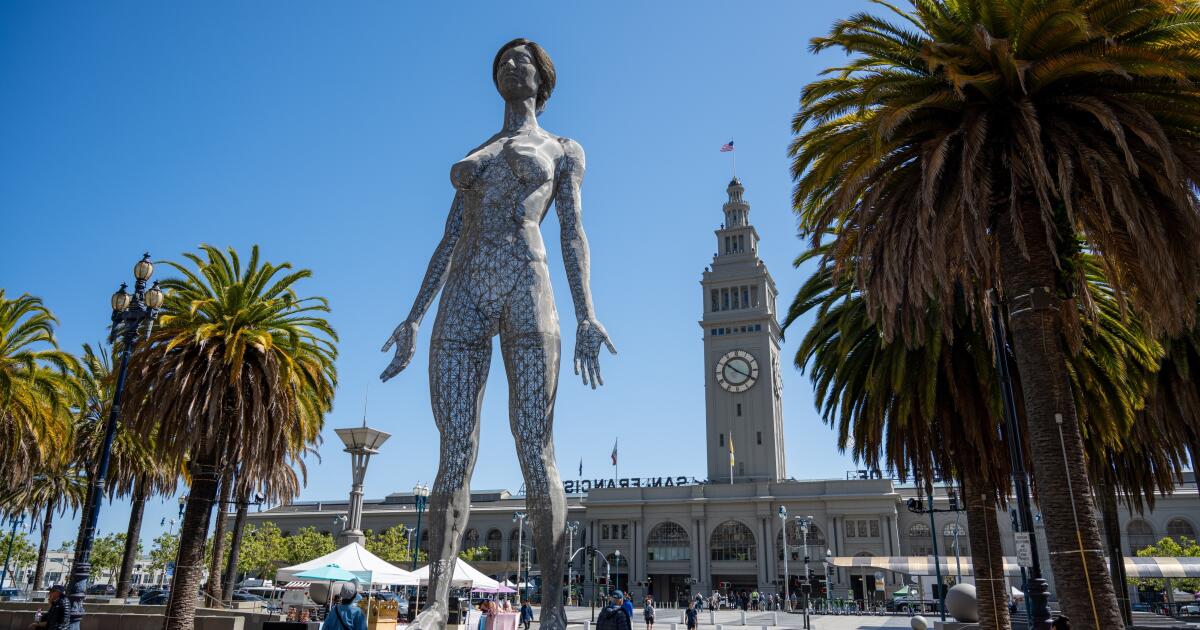 San Francisco, CA2 hours ago
A sculpture of a giant naked woman goes on sale in San Francisco. Bring a crane
-

 Dallas, TX2 hours ago
No ‘straight answer’: Why Pioneer Cemetery is the latest battleground at City Hall
-

 Miami, FL2 hours ago
TSA hosts news conference ahead of World Cup third place match at Miami Stadium
-

 Boston, MA2 hours ago
ICE Boston arrests Barbados national during targeted operations in Attleboro
-

 Denver, CO2 hours ago
Denver Broncos training camp is 2 weeks away
-

 San Diego, CA2 hours ago
Daily Business Report: July 17, 2026, San Diego Metro Magazine

