Austin, TX
How Austin's real-estate boom went bust

Acouple of years into the COVID-19 pandemic, a California state flag appeared on a front porch near my parents’ home in suburban Austin. The whole thing felt a little too on the nose, as if one household was trying to sum up all of the city’s recent changes — the tidal wave of coastal dwellers, the skyrocketing home values, the maddening traffic — with a single banner.
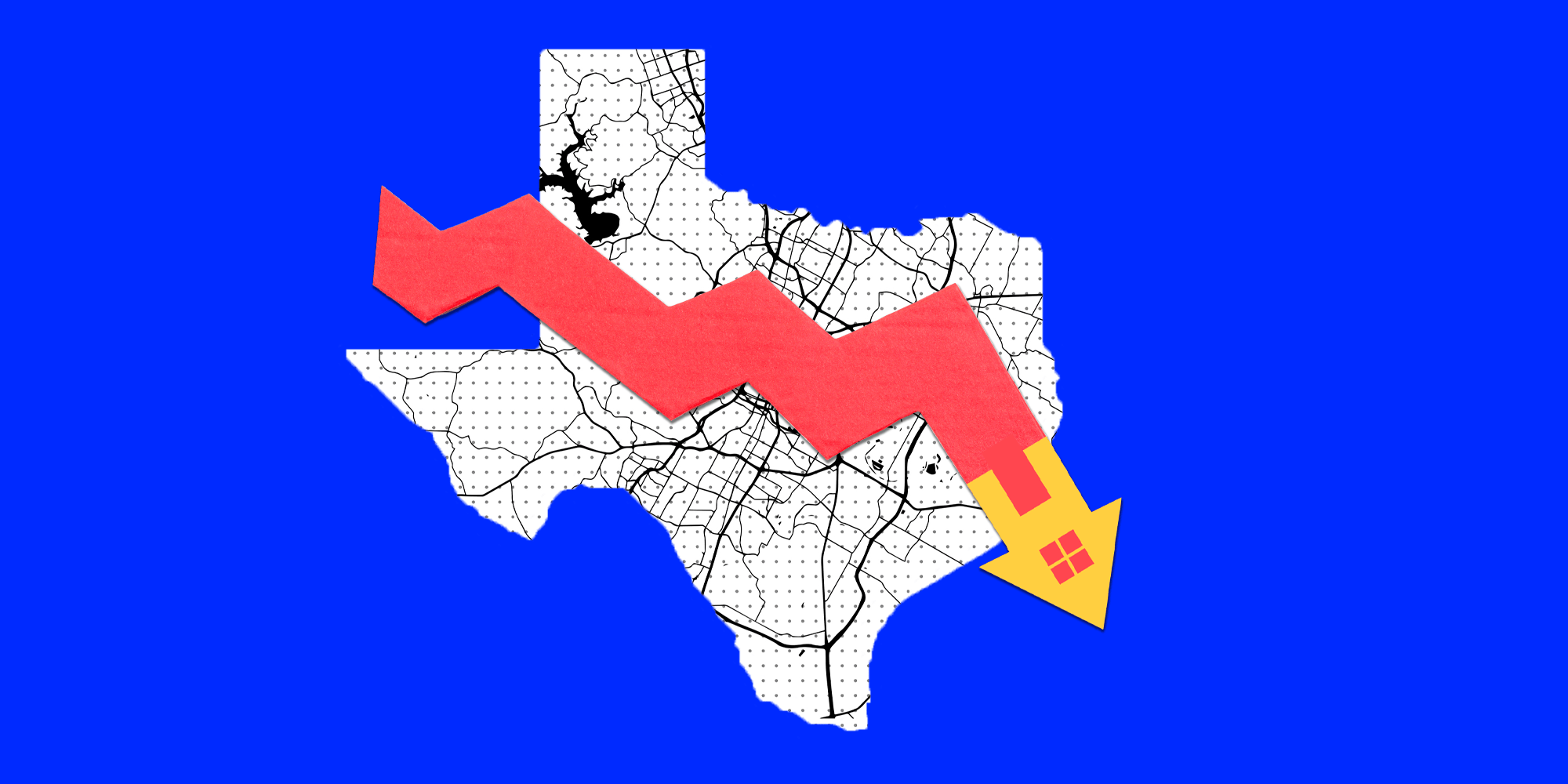
The flag is gone now, and so is the gold rush. Home prices and asking rents in Austin are down significantly from a year ago. Local Zillow listings are littered with price cuts. Real-estate agents who once doubled as bouncers at crowded open houses are now hiring ice-cream trucks to lure prospective buyers into properties.
The sudden shift in Austin’s real-estate market can be read in two ways. Look at it through one lens, and it’s a cautionary tale in which FOMO-filled buyers irrationally bid up home prices, setting the stage for an inevitable bust. Look at it another way, though, and it’s a success story of a growing city: Real-estate developers saw all those millennials and out-of-towners clamoring for a piece of Austin and answered the call, building tens of thousands of new homes in just a few years. The construction boom, combined with spiking mortgage rates, kept prices from spiraling further out of control. In other words, Econ 101 happened.
This isn’t a bust in the traditional sense — pretty much anyone who owned a home in Austin before 2020 is substantially richer today than they were a few years ago. But as other pandemic Zoomtowns continue to see increases in prices and rents, Austin stands alone in its change of fortune. The reversal has meant short-term pain for homebuyers who bought near the peak, disappointed sellers who now expect smaller windfalls, and homebuilders who are eager to offload their inventory. But letting some air out of the bubble will turn out to be a great thing for Austin in the long run. The slowdown, experts told me, is a sign of a healthy market, an example of how cities can dodge a true housing crisis by allowing developers to do what they do best: build, build, build.
Housing in Austin has been through so many extreme distortions that nobody really knows what “normal” even means anymore. Long before offices shuttered and remote workers started pining for more space, Austin residents were sounding the alarm on the city’s rising costs. New construction practically ground to a halt after the financial crisis in 2008, but as the economy recovered, the city’s population exploded. No major metropolitan area in the US grew faster between 2010 and 2020 than Austin, where the number of residents surged by 33% over the decade. Real-estate developers ramped up construction to meet the demand, but they couldn’t get enough shovels in the ground to keep prices in check. The median cost of a house in the Austin metro area grew by 63% during that time, Zillow found, reaching $323,000 at the cusp of the COVID-19 crisis.
Then the real boom began. To well-paid workers unmoored from their desks during the pandemic, Austin looked like paradise: lower taxes, cheaper homes, and a thriving business ecosystem. Big-name tech firms like Oracle, Facebook, and Google endorsed the city, as did “manosphere” figureheads such as Elon Musk and Joe Rogan, who urged others to follow in their footsteps. Austin was once again the fastest-growing large metro from 2020 to 2022, according to the Census Bureau, surging in population by 5.3%, or more than 120,000 people.
As people flocked to the city, home prices exploded. I don’t need to tell you that Austin got really expensive really fast, but the raw numbers are still stunning: The typical home price rose by nearly 56% in just a couple of years, Zillow found, surpassing $500,000 by the start of 2023. Homebuyers got swept up in bidding wars, reasoning that even if the price ended up being steep, it would only climb higher if they waited. Things got so crazy that one large-scale builder started accepting bids for homes on its website, sight unseen. “That never happens,” Keith Hughes, an Austin-based executive at the housing-research firm Zonda, told me. “It was that kind of frothy.”
I’d already moved out of Texas by that point, but I worried from afar that my hometown would meet the same fate as San Francisco, the poster child of the housing shortage and all its associated woes. I feared that Austin would become known as a playground for the rich, a city where displacement and mind-boggling home prices marred the natural beauty that once made it such a draw. In my hand-wringing, though, I’d overlooked one crucial detail: Texas is better at building homes than almost anywhere else in the country.
Austin-area builders immediately raced to meet the new demand, securing permits for about 2,600 new single-family homes in April 2021 alone, a 45% jump from the same month in 2019. All told, plans for more than 130,000 new housing units of all kinds were approved from 2020 through 2022. Once the paperwork goes through, it can take anywhere from a few months to a couple of years for homes to hit the market, so for a while, it didn’t feel like any relief was on the way. That couldn’t have been further from the truth.
Consider the following trend: In the spring of 2022, more than 3,000 new listings were hitting the market each month, Parcl Labs, a real-estate-analytics company, found. By the following spring, the figure had surpassed 5,000. All told, Austin’s housing stock has ballooned by more than 76,000 units since 2020, an 8.34% increase that includes single-family homes, condos, and townhomes. That’s to say nothing of the roughly 40,000 new rental apartments that also opened their doors during that time. Now compare Austin’s building blitz with San Francisco, which has added a measly 14,000 homes over the same period and grew its housing stock by less than 1%.
“It’s pretty amazing when you think about it,” Jason Lewris, a cofounder of Parcl Labs, told me. Considering the size of the Austin market, moving the stock of homes by nearly 10% is a colossal feat. “These are huge housing markets,” Lewris added. “Austin wasn’t small in 2019.”
Thousands of new homes weren’t the only things pumping the brakes on Austin’s runaway market. Mortgage rates reached record lows during the thick of the pandemic in 2021, making it easy for homebuyers to stretch their budgets by borrowing a lot of money for cheap. Then in spring 2022, the Federal Reserve started hiking interest rates to bring down inflation, and mortgage rates leaped. In October 2023, the rate for a typical home loan hit a 20-year high, making the prospect of buying — or selling, for that matter — a lot less appealing. More expensive loans forced buyers to consider the possibility of paying several hundred dollars more each month for the same home, and many decided to play the waiting game instead. The result is homes are sitting on the market longer. These days, “there’s no sense of urgency,” Doreen Sidney, a local real-estate agent, told me. “There’s no rush. The home that you saw two weeks ago, it’ll still be there.”
The job market cooled as companies pulled back on hiring or laid off workers in the face of higher borrowing rates. Migration to Austin also slowed considerably. Between July 2022 and July 2023, more people moved out of the city’s main county than moved in for the first time in two decades. Some departed for the suburbs or cheaper Texas locales like San Antonio — 20% of new San Antonians in 2022 had moved from Austin. Others, including some tech workers from places such as California, decided Austin wasn’t all it was cracked up to be and moved on. “Austin is where ambition goes to die,” one disappointed founder and angel investor told Business Insider last year.
There was no shortage of ambition among Austin’s homebuilders, however. Their efforts may have been focused on chasing all the profit that comes with a crush of demand, but they ended up doing what hopeful buyers had been praying for — bringing down home prices. The typical home price in Austin was down almost 4% in July compared with the same month in 2023, according to the Freddie Mac House Price Index, while prices across the US were up more than 4%. On the one hand, a single-digit drop like Austin’s “is not a huge number,” Sean Kelly-Rand, a Boston lender who works with home developers, told me, adding: “On the other hand, that’s massive.” Overall, Austin home prices are down more than 14% from the peak in 2022, according to Freddie Mac, and more than 18% according to Zillow.
Homeowners and -builders don’t like to see price drops — they want to watch their wealth balloon and reap the rewards of a market that’s running red hot. But just like a collapse in prices is bad news for everyone, an unsustainable run-up in home values is also unhealthy. Companies don’t want to move to a place where workers can’t afford to live. Wannabe sellers might choose to stay in homes they’ve outgrown if they can’t find anything else within their budget. Add up all these problems and you get San Francisco. A crash in home prices would’ve also been bad news for Austin, sure, but that’s not what’s going on here. The vast majority of homeowners in Austin are still wealthier than they were before all this craziness, and local homebuilders made plenty of hay while the sun was shining. For that reason, Austin’s slowdown isn’t a doom signal — it’s a dazzling success.
“It’s nice to see the positive developments in Austin,” Orphe Divounguy, a senior economist at Zillow, told me. “Austin should be a model for the rest of the country in terms of allowing builders to meet demand.”
Austin’s long-standing advantages were on full display during the building boom: Sun Belt cities in the lower half of the US have traditionally been more permissive of growth, which enabled developers to mobilize when they saw the first signs of Austin’s unprecedented spike in home values. And most of the new construction was concentrated in the suburbs, where there was plenty of space to build outward. Not all cities have the luxury of ample space, but they do have the power to cut red tape and make it easier to build more types of housing. When developers can get projects approved more quickly, they’re more responsive to buyer demand, which prevents prices from getting out of hand. Relaxing the zoning laws, which tell builders what they can and can’t build, allows developers to get creative and add multiple housing units to lots that might have traditionally allowed only single-family homes.
Nobody watching the Austin market should be having flashbacks to the Great Recession. The market’s cooling is less a disturbing sign of cratering demand and more a hopeful hint that the city can adapt to people’s desire to call it home.
“I think Austin is going to be fine in the medium to long run,” Jenny Schuetz, a housing-policy expert at the Brookings Institution, told me. “The fundamentals of Austin’s economy are great, and it’s going to continue to grow with jobs and population over time.”
Austin should be a model for the rest of the country in terms of allowing builders to meet demand.
In fact, easing the housing crunch will probably add to Austin’s allure, which has always been at least partly predicated on being cheaper than the big cities on the coasts. The next challenge will be to avoid forfeiting this success — homebuilding is prone to cycles of booms and busts, and developers are already pulling back on new construction as they try to get their already-built units off their books. Home prices in Austin may be down year over year today, but it’s not like there’s a glut of empty homes like there was around the country in 2008. If building in Austin dries up, prices may very well resume their rise.
Kelly-Rand, the Boston lender, thought about making inroads in Austin a few years ago when the building renaissance was in full swing. But ultimately, he decided not to — buyers’ behavior was too frenzied for his taste, and prices seemed likely to come down when all those homes on the horizon actually got built. Nevertheless, Kelly-Rand told me he’s still a believer in the Texas capital.
“Long term, I think Austin will be in an even better position,” Kelly-Rand told me. “I think the right thing is happening in that developers are meeting demand.”
James Rodriguez is a senior reporter on Business Insider’s Discourse team.



AUSTIN, Texas — After Senator Charles Perry vowed to introduce another bill to ban THC in Texas next legislative session, an Austin cannabis shop owner is urging lawmakers to find a middle ground.
Estella Castro owns Austinite Cannabis Co., a family-owned shop that makes and sells cannabis and hemp products.
Austinite Cannabis Co. (Photo: CBS Austin/Audrey Wong)
Her business has faced a potential THC ban before. During the 2025 legislative session, Senate Bill 3 attempted to enact a broad ban on all cannabinoids except CBD and CBG.
Castro says she was most worried for her customers. “It was a big initial hit of like, what are we gonna do? How are we gonna pivot? How are we gonna keep the doors open for everybody to keep their jobs?” she said.
RELATED | Texas state senator plans to introduce new THC ban bill in upcoming session
That bill passed, but was later vetoed by Governor Greg Abbott. Similar legislation failed to pass during the subsequent special session.
However, the possibility of a total ban bill being introduced and passed next session could spell trouble for Austinite Cannabis.
During a hearing Tuesday, July 7, Senator Charles Perry vowed to present such a bill next session as public officials, medical experts, and others discussed THC’s medical uses, effects on minors, and regulation.
Castro says over half of the store’s revenue comes from products that contain THC.
“I would say it’s about a 60/40 split: 60% THC and 40 CBD… So feel like it is a huge number that affects my store in so many ways,” she said.
ALSO | Texas French Bread reopens dining room four years after fire
She feels that a total ban on THC would negatively affect multiple parties.
“Banning it is just hurting the consumer,” she said. “Making the consumer go and find a street dealer… killing any dispensaries… it’s gonna hurt your small business owner.”
If another THC ban bill is written, it will be introduced during the next legislative session, which begins in January 2027.
In the meantime, Castro’s two stores will continue to operate as normal. She hopes lawmakers will think twice about instituting a complete ban on THC.
“I feel like we’re better than that, you know, we’re Texas,” she said. “We need to find some middle ground where it’s not a complete ban, and we can still be able to come together.”

AUSTIN (KXAN) – Trevor Goosby is a projected first-round pick in the upcoming 2027 NFL Draft. The Texas offensive lineman anchors the group up front for one of the best teams in the country and was named a preseason All-American by Walter Camp.
But his football career felt in jeopardy when he was in high school.
“That was kind of my biggest question,” said Goosby. “I was really nervous because would I be the same football player coming back?”
Goosby was born with a congenital heart defect and had open-heart surgery when he was just 16 years old. He wasn’t sure how this would change his everyday life, including his football career.
“Definitely a lot of nerves just because you’re getting your ribs cracked open essentially and getting your heart worked on…It was a scary moment. I remember driving up to the hospital super nervous.”
Goosby was able to recover and become a great football player. He said not only has he become a person in learning to fight through adversity, but it helped him as a player as well with improved endurance.
Now, the star Longhorn is giving back as much as possible.
Goosby hosted a camp in Austin to benefit the Children’s Heart Foundation. The organization works to fund research on congenital heart defects.

The offensive tackle is matching all donations up to $20,000 made to the Children’s Heart Foundation through the event and campaign.
“It means a lot to me just because of the heart condition I did have back when I was 16. That just kind of changed my life. I just want to bring awareness to that.”
The camp was at Hyde Park High School in Northwest Austin. Goosby spoke about what he hopes the young campers took away from the event.
“I think it’s just more than football. Football is a big part of what I do but it’s not who I am…I just want to show all these kids that I’m just another great guy and just someone they can look up to.”

-
 Business1 minute ago
California soccer fans sue StubHub after it fails to deliver expensive World Cup tickets
-
 Entertainment4 minutes ago
Lucas Museum to give free annual passes to South L.A. neighbors, host community preview day
-
 Lifestyle9 minutes ago
Meow Wolf taps famed L.A. animation house for its new Los Angeles venue
-
Politics16 minutes ago
Column: Trump decries ‘communism’ while his government takes ownership of companies
-
 Science19 minutes ago
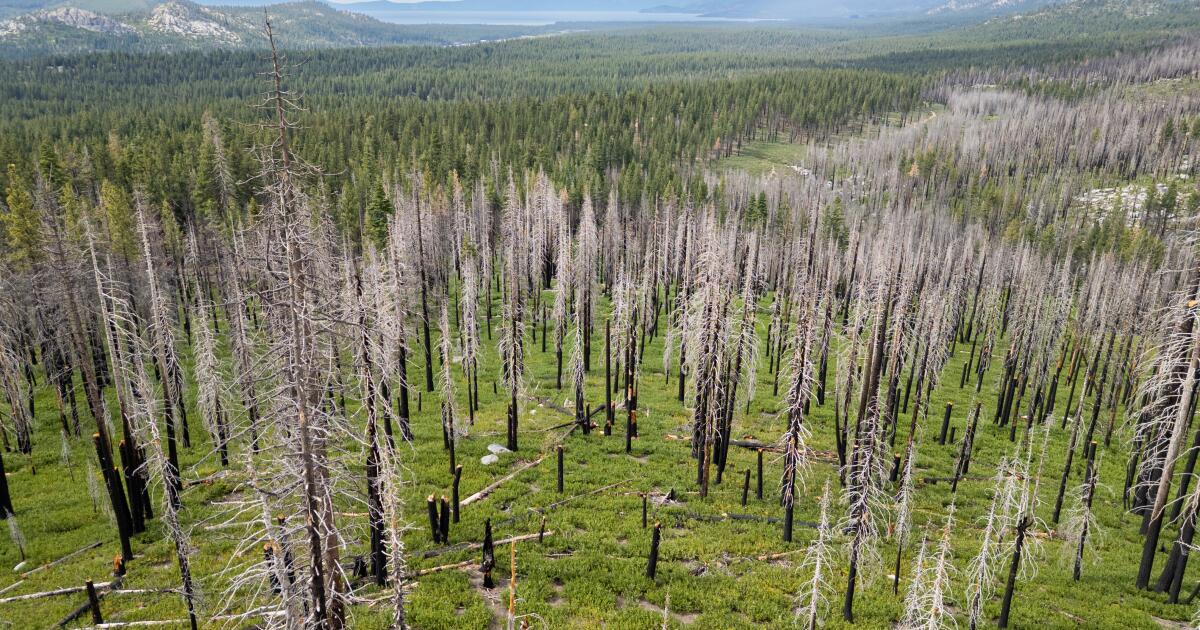
‘I’d rather my house burn down than get cancer’: Herbicide use upends California’s fight to save forests
-
 Sports24 minutes ago
Dodgers scheduled to visit White House in late July to celebrate 2025 World Series win
-

 World34 minutes ago
Former US Olympian pleads not guilty in DC reflecting pool vandalism case
-
 News1 hour ago
Former Olympian pleads not guilty in reflecting pool vandalism charges


