Austin, TX
Flash Flood Warnings issued in Central Texas, ground search operations suspended


Flash Flood Warnings
AUSTIN – Life-threatening flash flooding is underway in the Texas Hill Country, with multiple counties under emergency warnings.
The Latest:
Flash Flood Warning from 7/13/2025 10:52 AM to 1:00 PM CDT for San Saba County, TX.
Flash Flood Warning from 7/13/2025 10:28 AM to 12:30 PM CDT for Mason County, TX
Flash Flood Warning from 7/13/2025 10:16 AM to 12:45 PM CDT for Gillespie County, TX, Llano County, TX
Flood Warnings
Flood Warning from 7/13/2025 11:18 AM to 7/15/2025 2:20 PM CDT for Llano County
Flood Warning from 7/13/2025 10:49 AM to 2:00 PM CDT for Lampasas County, TX.
Flood Warning from 7/13/2025 11:48 AM to 7/17/2025 3:49 AM CDT for San Saba County, TX
Flood Warning from 7/13/2025 9:28 AM to 6:00 PM CDT for Bell County, TX.
UPDATE (8:50 AM): LCRA has opened one floodgate at Wirtz Dam and will open multiple floodgates at Starcke Dam soon to release storm runoff flowing into Lake LBJ. Conditions are dynamic, and it is possible LCRA may need to open additional floodgates throughout the day.
Road Closures
Travis County
1431 Cow Creek Bridge: Crews are actively removing debris and the damaged bridge structure from the Cow Creek area on RM 1431 in northwest Travis County. This critical work is being done in preparation for full reconstruction. TxDOT is expediting the process with plans to award a construction contract as soon as next week. Once a contractor is secured, construction will begin immediately.
Lampasas
The Lampasas River 190 Bridge in Kempner is closed. There are power/phone lines in the water snagging debris. Please stay clear of the water.
Due to last night’s excessive rainfall, Lampasas city departments have been working to keep everyone safe. The Lampasas Streets Department has closed numerous low-water crossings and roadways. Due to the severe flooding, many sections of road that aren’t normally closed are currently impassable. Crews will reopen them as soon as conditions allow.
The Fire Department rescued several people and pets from homes and coordinated temporary relocation.
All electrical outages have been repaired by the Electric Department. The Police Department has been busy coordinating communications for these services, assisting the other departments, and patrolling to spot any dangers.
Please be aware that WM Brook Park is closed today due to high water in Sulphur Creek.
With a continued chance of rain in the forecast, please watch for high water and debris in the roadway if you must drive.
Kerr County
The Rio Vista low water crossing off Highway 39 is closed. Residents and emergency responders may use the Cade Loop bridge crossing at this time. Please stay home and avoid the area, and remain weather-aware for further warnings.
San Saba
Due to the overnight and continuing rains this morning, the San Saba River is now at 16–18 feet (not 30.5 feet) and rising. LCRA is predicting the river to crest at 31.5 feet at midnight. Please be aware and be prepared, particularly those citizens north of the railroad tracks close to the river.
Burnet County
Closures because of flooded crossings in Pct 2 as of 9:25am
RM 963
FM 243
FM 2340
CR 223
CR 207
CR 228
CR 202
CR 203
CR 200
Due to unsafe conditions following last night’s rain, the Burnet Recycle Center is closed today. You will not be able to dispose of flood debris this Sunday, July 13, 2025. We hope it will be back open tomorrow, but please look for updates on this page to see when operations will resume.
Bell County
Bell County Emergency Management has an Emergency Operations Command at the Southwestern Bell County Volunteer Fire Department. There has been substantial rainfall west (upstream) and the Lampasas River is reacting to that rainfall. The Gulf River Authority has said to expect the Lampasas River to rise to 41 feet, which will cause some flood issues along Riverside Trail in Triple 7, and west around Maxdale.
A Code Red alert was sent to those in that affected area. Southwestern Bell VFD has gone door to door all morning, making everyone aware and evacuating those in danger, and two swift water rescue crews are staged and on standby.
TxDOT is en route with barricades for FM2670 and Road and Bridge is en route to stage here for county road issues that may take place.
Assets are staged in areas of Lampasas, Kempner and Adamsville to respond anywhere along the Lampasas river if needed.
Emergency Alerts
8:27 a.m. An Emergency Alert was sent to people in the flash flood warning areas saying this is a dangerous and life-threatening situation. Do not attempt to travel unless you are fleeing an area subject to flooding or under an evacuation order.
7:54 a.m. There is a high probability of the Guadalupe River at Hunt reaching flood stage today. All persons, equipment and vehicles should be removed from the river immediately.
Power Outages
9 a.m. Pedernales Electric reports more than 1,000 customers are without power in Williamson, TX
Ground Search Operations
As of 7:49 a.m., all ground search operations in Kerrville are suspended due to the flood danger. All search crews were told to evacuate the river corridor until further notice. Any volunteer search parties in the Guadalupe River corridor need to heed this warning. The potential for flash flooding is high.
Search-and-rescue teams have been searching for missing victims of the July 4 weekend flooding that killed at least 129 people and left more than 170 missing.
As heavy rain fell Sunday, National Weather Service forecasters warned that the Guadalupe River could rise to nearly 15 feet (4.6 meters) by Sunday afternoon, about five feet above flood stage and enough to put the Highway 39 bridge near Hunt underwater.
“Numerous secondary roads and bridges are flooded and very dangerous,” a weather service warning said.

Sunday Forecast
Heavy rain and life-threatening flash flooding hammered the Texas Hill Country early Sunday, prompting a flash flood emergency in southeastern San Saba County and urgent warnings across several central Texas counties.
Austin residents are advised to remain vigilant as the weather system, which has already dumped 6 to 8 inches of rain in some areas, is expected to move toward the Austin metro area and further east throughout the day.
We’re seeing life-threatening flash flooding. Residents in affected areas are urged to seek higher ground immediately if they receive an evacuation notice.
Flash Flood Emergency
A flash flood emergency was issued for southeastern San Saba until 7 a.m. Sunday, specifically targeting the Colorado Bend State Park and surrounding areas. Rowe noted that a river gauge in the area had already jumped approximately 12 feet.
Additional flash flood warnings were in effect for several counties, including San Saba and Mason until 9 a.m., Lampasas until 8 a.m., and both Burnet and Llano until 8:15 a.m.
The Texas Department of Public Safety (DPS) and local emergency officials strongly advised against travel in areas with flash flood warnings. Residents were told to stay away from rivers, creeks, and low-lying areas. Rowe stressed the critical safety message: “Turn around, don’t drown.”
Severe Weather Possible
While the immediate concern remains flooding, the region also faces a marginal risk of severe weather, including hail and gusty winds.
The heavy rain boundary is moving from north to south, pushing southeast. The Hill Country is expected to experience the worst conditions over the next few hours before the system weakens slightly as it moves into the Austin metro.
Widespread rain will last until 7 p.m. Sunday. While conditions are expected to improve around 6 p.m. or 7 p.m. Sunday evening, the potential for more rainfall exists Monday afternoon and evening.
Some models suggest 2 to 4 inches of additional rainfall in the next 48 hours, with Rowe advising residents not to rule out “several more inches in some spots.”
Officials emphasized the importance of having multiple ways to receive weather alerts, including push notifications, weather radios, and local news apps. If roads are flooded, remember that “six inches can knock over an adult,” and “12 inches to carry away most cars.”
The Source: Information in this article is from the FOX 7 Austin’s weather team.



AUSTIN, Texas — After Senator Charles Perry vowed to introduce another bill to ban THC in Texas next legislative session, an Austin cannabis shop owner is urging lawmakers to find a middle ground.
Estella Castro owns Austinite Cannabis Co., a family-owned shop that makes and sells cannabis and hemp products.
Austinite Cannabis Co. (Photo: CBS Austin/Audrey Wong)
Her business has faced a potential THC ban before. During the 2025 legislative session, Senate Bill 3 attempted to enact a broad ban on all cannabinoids except CBD and CBG.
Castro says she was most worried for her customers. “It was a big initial hit of like, what are we gonna do? How are we gonna pivot? How are we gonna keep the doors open for everybody to keep their jobs?” she said.
RELATED | Texas state senator plans to introduce new THC ban bill in upcoming session
That bill passed, but was later vetoed by Governor Greg Abbott. Similar legislation failed to pass during the subsequent special session.
However, the possibility of a total ban bill being introduced and passed next session could spell trouble for Austinite Cannabis.
During a hearing Tuesday, July 7, Senator Charles Perry vowed to present such a bill next session as public officials, medical experts, and others discussed THC’s medical uses, effects on minors, and regulation.
Castro says over half of the store’s revenue comes from products that contain THC.
“I would say it’s about a 60/40 split: 60% THC and 40 CBD… So feel like it is a huge number that affects my store in so many ways,” she said.
ALSO | Texas French Bread reopens dining room four years after fire
She feels that a total ban on THC would negatively affect multiple parties.
“Banning it is just hurting the consumer,” she said. “Making the consumer go and find a street dealer… killing any dispensaries… it’s gonna hurt your small business owner.”
If another THC ban bill is written, it will be introduced during the next legislative session, which begins in January 2027.
In the meantime, Castro’s two stores will continue to operate as normal. She hopes lawmakers will think twice about instituting a complete ban on THC.
“I feel like we’re better than that, you know, we’re Texas,” she said. “We need to find some middle ground where it’s not a complete ban, and we can still be able to come together.”

AUSTIN (KXAN) – Trevor Goosby is a projected first-round pick in the upcoming 2027 NFL Draft. The Texas offensive lineman anchors the group up front for one of the best teams in the country and was named a preseason All-American by Walter Camp.
But his football career felt in jeopardy when he was in high school.
“That was kind of my biggest question,” said Goosby. “I was really nervous because would I be the same football player coming back?”
Goosby was born with a congenital heart defect and had open-heart surgery when he was just 16 years old. He wasn’t sure how this would change his everyday life, including his football career.
“Definitely a lot of nerves just because you’re getting your ribs cracked open essentially and getting your heart worked on…It was a scary moment. I remember driving up to the hospital super nervous.”
Goosby was able to recover and become a great football player. He said not only has he become a person in learning to fight through adversity, but it helped him as a player as well with improved endurance.
Now, the star Longhorn is giving back as much as possible.
Goosby hosted a camp in Austin to benefit the Children’s Heart Foundation. The organization works to fund research on congenital heart defects.

The offensive tackle is matching all donations up to $20,000 made to the Children’s Heart Foundation through the event and campaign.
“It means a lot to me just because of the heart condition I did have back when I was 16. That just kind of changed my life. I just want to bring awareness to that.”
The camp was at Hyde Park High School in Northwest Austin. Goosby spoke about what he hopes the young campers took away from the event.
“I think it’s just more than football. Football is a big part of what I do but it’s not who I am…I just want to show all these kids that I’m just another great guy and just someone they can look up to.”

-
 Science3 minutes ago
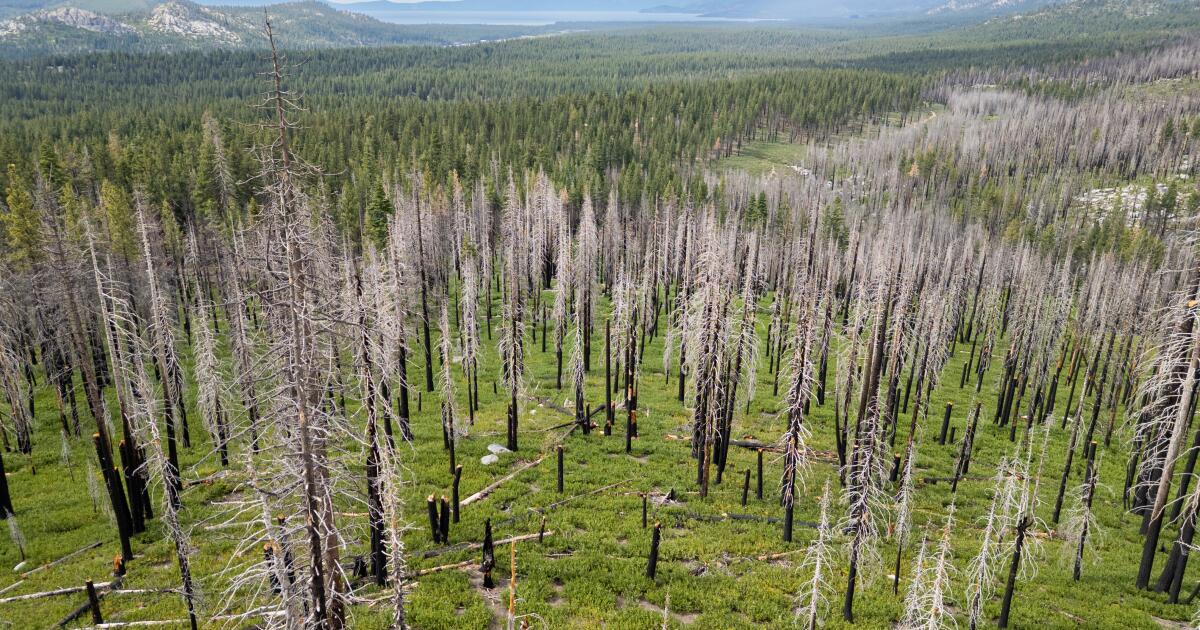
‘I’d rather my house burn down than get cancer’: Herbicide use upends California’s fight to save forests
-
 Sports8 minutes ago
Dodgers scheduled to visit White House in late July to celebrate 2025 World Series win
-

 World18 minutes ago
Former US Olympian pleads not guilty in DC reflecting pool vandalism case
-
 News45 minutes ago
Former Olympian pleads not guilty in reflecting pool vandalism charges
-

 Los Angeles, Ca2 hours ago
Heat advisory, beach hazards in effect as Southern California sizzles
-

 Detroit, MI2 hours ago
Teen on moped hit by car after cruising through stop sign in Detroit
-

 San Francisco, CA3 hours ago
Flight of fancy: San Francisco moves to build private luxury airport terminal
-

 Dallas, TX3 hours ago
Dallas’ digital creator economy is booming. Burnout is too.

