Arkansas
Three dead, 11 injured in mass shooting at south Arkansas grocery • Arkansas Advocate


A Friday morning shooting at a Fordyce, Arkansas, grocery store left three people dead and 11 wounded, including the suspect and two law enforcement officers, according to Arkansas State Police.
The suspect and the law enforcement officers are not considered to have life-threatening injuries, ASP Director Mike Hagar said at an afternoon press conference near the scene of the shooting.
The condition of the remaining victims range from non-life-threatening to “extremely critical,” Hagar said.
State Police later identified the suspected shooter as Travis “Joey” Posey. A booking record on the Ouachita County Sheriff’s jail website shows Travis Posey, 44, as being held for another county. Posey is charged with three counts of first-degree murder, according to inmate search site VINELink. ASP later confirmed that information in a press release.
A LinkedIn page lists Posey as the owner of Posey Tree Service in Kingsland in Cleveland County.
The shooting occurred about 11:30 a.m. at the Mad Butcher, part of a regional grocery chain, located at 920 W. 4th Street in a small shopping center. Fordyce (population 3,238 in 2022) is about an hour’s drive south of Little Rock in Dallas County.
Hagar did not release the identities of any of the dead or wounded nor of the shooter at the his 4 p.m. press conference, but said there was no continued threat to the community.
“It’s tragic, our hearts are broken,” he said.
KARK 4 News reporter Caitrin Assaf said she spoke to the parents of one of the victims who died. They told her their 23-year-old daughter, a nurse, was off work on Friday and likely was shopping when she was shot.
A video posted on Facebook by Casey D. Rodriguez from the vantage of a nearby gas station convenience store shows a person lying on the ground behind a vehicle; 11 shots can be heard along with sirens. Other online video and photos show storefront windows with dozens of bullet holes.
Another video shot from inside a store on X posted by user @LRHNcash shows a man with a long gun shooting methodically in different directions.
The Arkansas Democrat-Gazette interviewed Ronald Clayton, who said he and his wife were pulling into the Mad Butcher parking lot when something hit the windshield of his Nissan Sentra. He thought at first that it was a rock, then realized it as bullets, he told the newspaper. A photo accompanying the report show a car with about a dozen bullet holes in the right front fender and door.
In a post on X early Friday afternoon, Gov. Sarah Huckabee Sanders said she was thankful for the “heroic actions” of law enforcement and other first responders and said her prayers were with the victims.
I have been briefed on the tragic shooting in Fordyce, and I’m in constant contact with State Police at the scene. I am thankful to law enforcement and first responders for their quick and heroic action to save lives. My prayers are with the victims and all those impacted by this…
— Sarah Huckabee Sanders (@SarahHuckabee) June 21, 2024
Data on the Gun Violence Archive shows Friday’s mass shooting was the second this month in Arkansas and the sixth this year. A mass shooting, per the site, is one with a minimum of four victims, either wounded or killed, and excluding the shooter or shooters.
Anna Morshedi of Greater Little Rock Moms Demand Action and Insherah Qazi, a member of the Students Demand Action National Organizing Board from Arkansas, both issued statements about the shooting Friday afternoon, calling for action to stem the rash of gun violence in the United States.
“Our hearts are with those who were wounded and their families after today’s shooting — where yet another trip to the grocery store ended in tragedy because of America’s gun violence crisis,” Morshedi said. “We’re fed up with having to live in fear every day because our lawmakers refuse to put our safety first.”
“It’s heartbreaking to see such senseless violence continue to cycle throughout our communities. But this is what happens when our state lacks basic gun safety laws,” Qazi said. “Arkansas has the weakest gun laws in the country and our gun violence rates show for it. Going to the grocery store shouldn’t be a death sentence. The answer to solving this crisis is clear, it’s just a matter of whether lawmakers have the courage to act.”
The Arkansas chapters of Moms Demand Action and Students Demand Action are part of Everytown for Gun Safety.
Arkansas has the weakest gun laws of any state in the country, ranking 50th in the Everytown Gun Law Rankings.
Lawmakers in 2021 repealed an Arkansas law requiring a permit to carry a concealed weapon in public and in 2023 amended the law to clarify that concealed carry licensing is solely to allow reciprocity for licensees who travel to other states that require a permit to carry a concealed handgun. Act 777 also specifies that a person is not required to obtain a license to carry a concealed handgun in Arkansas.
According to Everytown, Arkansas has the 9th-highest rate of gun deaths in the US. In an average year, 638 people die by guns and another 1,247 people are wounded in Arkansas.
GET THE MORNING HEADLINES DELIVERED TO YOUR INBOX



Temperatures will climb to the upper 90s today and heat index values will get close to 105° this afternoon. There are heat advisories today for part of west and southwest Arkansas.
Today will bring a slight chance of showers or thunderstorms late in the day in Central Arkansas.
Friday will also bring a slight chance of showers and thunderstorms with very hot weather.
Rain chances increase and temperatures drop this weekend when a cold front moves through Arkansas.


Arkansas
ARKANSAS SIGHTSEEING: Randolph County can claim many firsts in Arkansas | Northwest Arkansas Democrat-Gazette

Copyright © 2026, Northwest Arkansas Newspapers LLC. (NWA Media)
All rights reserved.
This document may not be reprinted without the express written permission of Northwest Arkansas Newspapers LLC
Material from the Associated Press is Copyright © 2026, Associated Press and may not be published, broadcast, rewritten, or redistributed. Associated Press text, photo, graphic, audio and/or video material shall not be published, broadcast, rewritten for broadcast or publication or redistributed directly or indirectly in any medium. Neither these AP materials nor any portion thereof may be stored in a computer except for personal and noncommercial use. The AP will not be held liable for any delays, inaccuracies, errors or omissions therefrom or in the transmission or delivery of all or any part thereof or for any damages arising from any of the foregoing. All rights reserved.


Fort Smith Historic Site: Law, conflict and the West
Explore Fort Smith Historic Site, where westward expansion, federal justice and Native American history shaped life on the American frontier.
A former Arkansas Tech University graduate and commander of the U.S. Army Intelligence and Security Command is being remembered with two posthumous honors recognizing his lasting influence on the nation’s military intelligence operations.
The late Maj. Gen. Gary W. Johnston, a 1987 Arkansas Tech graduate and Russellville native, was honored during a dedication ceremony June 25 at Fort Huachuca, Arizona, where the Army officially named a newly consolidated military intelligence complex the Major General Gary W. Johnston Consolidated Mission Facility.
Johnston also was posthumously inducted into the Military Intelligence Hall of Fame for helping reshape Army intelligence through the integration of emerging technologies, including big data analytics, artificial intelligence and machine learning.
The new facility serves as a central hub for U.S. Army Intelligence and Security Command (INSCOM) operations at Fort Huachuca, known as the “Home of Army Intelligence.” It houses some of the Army’s most critical intelligence personnel and brings together units that had previously operated from aging buildings spread across the installation.
Army officials said the previous arrangement created operational challenges, including limited secure workspaces, outdated infrastructure and additional security requirements. Beginning in 2018, INSCOM launched an effort to consolidate those missions by renovating two existing buildings into a 16,300-square-foot intelligence operations center designed to improve collaboration and security.
The facility now houses INSCOM G3’s Detachment 52, elements of the U.S. Army Counterintelligence Command, representatives from the Ground Intelligence Support Activity, an emerging Foundry program element and other intelligence organizations.
Among those attending the dedication were Johnston’s wife, Brig. Gen. Amy Johnston, daughter Lauren Woodworth and granddaughter Arabella Woodworth.
Maj. Gen. Rhett R. Cox, commanding general of U.S. Army Intelligence and Security Command, said the building represents more than a new workplace.
“As we dedicate the U.S. Army INSCOM Major General Gary W. Johnston Consolidated Mission Facility, we do more than just open a new facility… we consecrate a tribute to his indelible legacy,” Cox said. “This facility will stand as a constant reminder of his service, his vision and his unwavering commitment to our nation and to the soldiers he led. It will inspire future generations of intelligence professionals to emulate his example of leadership and selfless service.”
Retired Chief Warrant Officer 5 Kevin Boughton, former INSCOM command chief warrant officer, said Johnston envisioned closer collaboration between the Army’s intelligence training and operational communities.
Boughton said Johnston believed the distance between the Intelligence Center of Excellence and INSCOM’s operational units “shouldn’t be measured in miles,” but instead by “a seamless flow of data, doctrine, and talent” where operational experience and institutional knowledge move freely between soldiers in the field and those training the next generation.
Johnston graduated from Russellville High School in 1983 before earning a Bachelor of Science in Business Administration from Arkansas Tech in 1987. Through the university’s Reserve Officers’ Training Corps program, he received his commission as a U.S. Army officer.
During a military career spanning more than 34 years, Johnston served in command and staff assignments ranging from platoon level to senior leadership within the Army and Department of Defense. He deployed in support of Operation Desert Shield, Operation Desert Storm, Operation Joint Endeavor, Operation Enduring Freedom and Operation Freedom’s Sentinel.
In 2015, Johnston became the seventh graduate of Arkansas Tech’s Army ROTC program to attain the rank of general officer. He was promoted to major general in 2017.
He concluded his military career as commanding general of U.S. Army Intelligence and Security Command, overseeing approximately 17,500 personnel operating in more than 40 countries.
Army leaders credited Johnston with helping modernize military intelligence by laying the groundwork for the establishment of the U.S. Army Counterintelligence Command, which was formally created in 2022 after his retirement. He also led development of what became the Army Intelligence Data Platform, designed to incorporate advanced data analytics, artificial intelligence and machine learning into intelligence operations while supporting future large-scale combat operations.
Johnston also promoted data science education within the military intelligence community by partnering with George Mason University to provide specialized training for Army warrant officers.
Colleagues remembered Johnston not only for his strategic vision but also for his leadership style. Despite working in one of the Army’s most demanding operational environments, they described him as a source of humor, kindness and encouragement whose focus remained on the soldiers, civilians and contractors carrying out the intelligence mission.
Johnston retired from active duty in 2021 and died in January 2022.
His latest recognitions add to previous honors from his alma mater. Johnston was a member of the inaugural Arkansas Tech Army ROTC Hall of Honor in 2017 and was inducted into the university’s Hall of Distinction in 2019.
-

 South Dakota5 minutes ago
Petition to clarify South Dakota proof of citizenship law shot down over technicality
-

 Tennessee8 minutes ago
Tennessee State men’s hockey cancels 2026-27 inaugural season for second straight year
-

 Texas13 minutes ago
Ted Cruz warns Talarico has ‘real chance’ to flip Texas’ U.S. Senate seat
-

 Utah20 minutes ago
Man suspected in 2006 Utah murder left suicide note in Las Vegas jail cell: police
-
 Vermont23 minutes ago
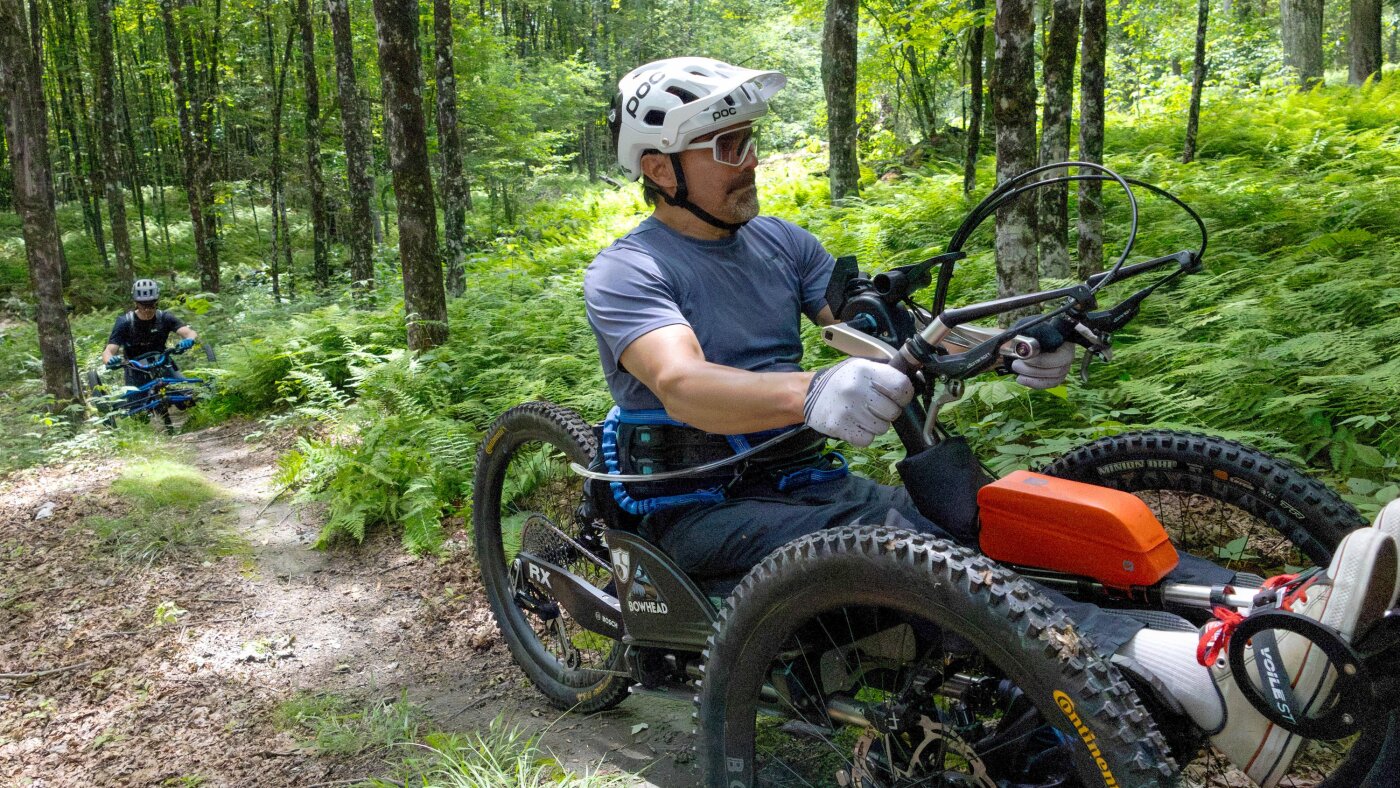
OUTDOOR ACCESS FOR DISABLED IN VERMONT
-
 Virginia28 minutes ago
4 indicted in Virginia double homicide; second victim ID’d as grandmother of 6
-

 Washington35 minutes ago
Washington Commanders are retiring Hall of Famer John Riggins’ No. 44
-

 Wisconsin38 minutes ago
Wisconsin State Patrol rides with truck and bus drivers to spot violations in five areas

