Arkansas
Arkansas school districts pushing forward with implementing phone-free campuses


RUSSELLVILLE, Ark. – A new effort by the office of Gov. Sarah Huckabee Sanders and the Arkansas Department of Education is aiming to create phone-free campuses.
According to the ADE, more than 200 districts expressed interest in the phone-free pilot program. Officials said the number of districts using this new tool is expected to fluctuate, as some agreed to participate, some said no and some districts are checking with their local boards about participation.
Arkansas Gov. Sarah Huckabee Sanders encourages schools to join phone-free mental health pilot program
Amid this effort, the Russellville School District voted Tuesday to use a new tool to keep their campuses phone-free.
Russellville Junior High assistant principal Sara Walker said they’re on board to do what they can to keep their students safe.
“Our current policy is that students aren’t allowed to have their cell phone unless it’s for an educational purpose, however, we all know it’s a temptation,” Walker said. “If you have it near you to get on it, it’s kind of hard to enforce, even though teachers and administrators do their best to do that.”
The board voted to purchase new pouches for phones for grades 5 through 12 that will stay locked away so students can focus on their class work. Officials said the district will be reimbursed for the purchase by the state.
The governor’s plan to keep cell phones out of students’ hands is by putting them into a pouch they’ll have with them throughout the day, but this pouch made by Yondr doesn’t simply just zip up.
“There is a locking mechanism at the very top, it’s got a pin and a magnetic closure and so when the students close it, it will automatically lock and they cannot open it without an unlocking mechanism,” Walker said.
CDC and Arkansas health professionals report rise in youths struggling with mental health
Unlocking stations will be throughout the school but will only be available at the end of the day, there will also be some handheld unlocking devices. Teachers and administrators will be the only ones with the mechanism to unlock the pouches.
The school board said it will not pass out the pouches until they have a better-written policy for everyone to see and understand first.
Walker said they had meetings with stakeholders and concerns were brought up like how to contact kids throughout the day, which Walker said will be through the front office.
Another concern was what if someone accidentally takes home their pouch without unlocking it. This is something they’re working through.
Parents were present at the meeting on Tuesday night who wanted to speak but didn’t follow the proper policies to address the board, so they weren’t allowed to speak on this.
According to the school district, the total cost to purchase is more than $124,000, which they said will be reimbursed by the state.
Grant helps University of Central Arkansas graduate program fill need for more school psychologists
District officials said the pouches will not be in by the time school starts on Monday.
Copyright 2024 Nexstar Media, Inc. All rights reserved. This material may not be published, broadcast, rewritten, or redistributed.
For the latest news, weather, sports, and streaming video, head to KLRT – FOX16.com.



Temperatures will climb to the upper 90s today and heat index values will get close to 105° this afternoon. There are heat advisories today for part of west and southwest Arkansas.
Today will bring a slight chance of showers or thunderstorms late in the day in Central Arkansas.
Friday will also bring a slight chance of showers and thunderstorms with very hot weather.
Rain chances increase and temperatures drop this weekend when a cold front moves through Arkansas.


Arkansas
ARKANSAS SIGHTSEEING: Randolph County can claim many firsts in Arkansas | Northwest Arkansas Democrat-Gazette

Copyright © 2026, Northwest Arkansas Newspapers LLC. (NWA Media)
All rights reserved.
This document may not be reprinted without the express written permission of Northwest Arkansas Newspapers LLC
Material from the Associated Press is Copyright © 2026, Associated Press and may not be published, broadcast, rewritten, or redistributed. Associated Press text, photo, graphic, audio and/or video material shall not be published, broadcast, rewritten for broadcast or publication or redistributed directly or indirectly in any medium. Neither these AP materials nor any portion thereof may be stored in a computer except for personal and noncommercial use. The AP will not be held liable for any delays, inaccuracies, errors or omissions therefrom or in the transmission or delivery of all or any part thereof or for any damages arising from any of the foregoing. All rights reserved.


Fort Smith Historic Site: Law, conflict and the West
Explore Fort Smith Historic Site, where westward expansion, federal justice and Native American history shaped life on the American frontier.
A former Arkansas Tech University graduate and commander of the U.S. Army Intelligence and Security Command is being remembered with two posthumous honors recognizing his lasting influence on the nation’s military intelligence operations.
The late Maj. Gen. Gary W. Johnston, a 1987 Arkansas Tech graduate and Russellville native, was honored during a dedication ceremony June 25 at Fort Huachuca, Arizona, where the Army officially named a newly consolidated military intelligence complex the Major General Gary W. Johnston Consolidated Mission Facility.
Johnston also was posthumously inducted into the Military Intelligence Hall of Fame for helping reshape Army intelligence through the integration of emerging technologies, including big data analytics, artificial intelligence and machine learning.
The new facility serves as a central hub for U.S. Army Intelligence and Security Command (INSCOM) operations at Fort Huachuca, known as the “Home of Army Intelligence.” It houses some of the Army’s most critical intelligence personnel and brings together units that had previously operated from aging buildings spread across the installation.
Army officials said the previous arrangement created operational challenges, including limited secure workspaces, outdated infrastructure and additional security requirements. Beginning in 2018, INSCOM launched an effort to consolidate those missions by renovating two existing buildings into a 16,300-square-foot intelligence operations center designed to improve collaboration and security.
The facility now houses INSCOM G3’s Detachment 52, elements of the U.S. Army Counterintelligence Command, representatives from the Ground Intelligence Support Activity, an emerging Foundry program element and other intelligence organizations.
Among those attending the dedication were Johnston’s wife, Brig. Gen. Amy Johnston, daughter Lauren Woodworth and granddaughter Arabella Woodworth.
Maj. Gen. Rhett R. Cox, commanding general of U.S. Army Intelligence and Security Command, said the building represents more than a new workplace.
“As we dedicate the U.S. Army INSCOM Major General Gary W. Johnston Consolidated Mission Facility, we do more than just open a new facility… we consecrate a tribute to his indelible legacy,” Cox said. “This facility will stand as a constant reminder of his service, his vision and his unwavering commitment to our nation and to the soldiers he led. It will inspire future generations of intelligence professionals to emulate his example of leadership and selfless service.”
Retired Chief Warrant Officer 5 Kevin Boughton, former INSCOM command chief warrant officer, said Johnston envisioned closer collaboration between the Army’s intelligence training and operational communities.
Boughton said Johnston believed the distance between the Intelligence Center of Excellence and INSCOM’s operational units “shouldn’t be measured in miles,” but instead by “a seamless flow of data, doctrine, and talent” where operational experience and institutional knowledge move freely between soldiers in the field and those training the next generation.
Johnston graduated from Russellville High School in 1983 before earning a Bachelor of Science in Business Administration from Arkansas Tech in 1987. Through the university’s Reserve Officers’ Training Corps program, he received his commission as a U.S. Army officer.
During a military career spanning more than 34 years, Johnston served in command and staff assignments ranging from platoon level to senior leadership within the Army and Department of Defense. He deployed in support of Operation Desert Shield, Operation Desert Storm, Operation Joint Endeavor, Operation Enduring Freedom and Operation Freedom’s Sentinel.
In 2015, Johnston became the seventh graduate of Arkansas Tech’s Army ROTC program to attain the rank of general officer. He was promoted to major general in 2017.
He concluded his military career as commanding general of U.S. Army Intelligence and Security Command, overseeing approximately 17,500 personnel operating in more than 40 countries.
Army leaders credited Johnston with helping modernize military intelligence by laying the groundwork for the establishment of the U.S. Army Counterintelligence Command, which was formally created in 2022 after his retirement. He also led development of what became the Army Intelligence Data Platform, designed to incorporate advanced data analytics, artificial intelligence and machine learning into intelligence operations while supporting future large-scale combat operations.
Johnston also promoted data science education within the military intelligence community by partnering with George Mason University to provide specialized training for Army warrant officers.
Colleagues remembered Johnston not only for his strategic vision but also for his leadership style. Despite working in one of the Army’s most demanding operational environments, they described him as a source of humor, kindness and encouragement whose focus remained on the soldiers, civilians and contractors carrying out the intelligence mission.
Johnston retired from active duty in 2021 and died in January 2022.
His latest recognitions add to previous honors from his alma mater. Johnston was a member of the inaugural Arkansas Tech Army ROTC Hall of Honor in 2017 and was inducted into the university’s Hall of Distinction in 2019.
-

 Utah2 minutes ago
Man suspected in 2006 Utah murder left suicide note in Las Vegas jail cell: police
-
 Vermont5 minutes ago
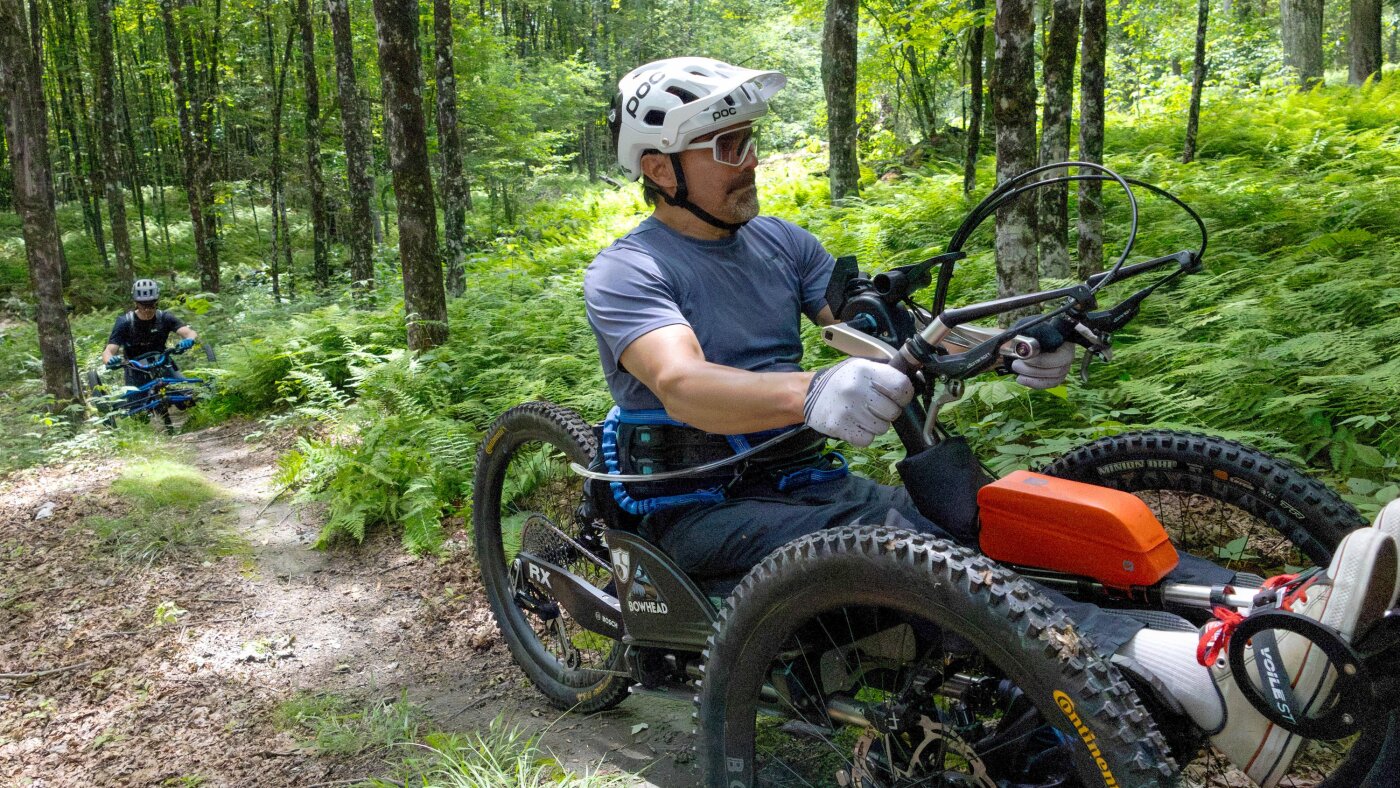
OUTDOOR ACCESS FOR DISABLED IN VERMONT
-
 Virginia10 minutes ago
4 indicted in Virginia double homicide; second victim ID’d as grandmother of 6
-

 Washington17 minutes ago
Washington Commanders are retiring Hall of Famer John Riggins’ No. 44
-

 Wisconsin20 minutes ago
Wisconsin State Patrol rides with truck and bus drivers to spot violations in five areas
-

 West Virginia25 minutes ago
West Virginia town fires entire police force after chief resigns, sergeant alleges evidence room break-in
-

 Wyoming32 minutes ago
WHP: July 5 single-vehicle rollover north of Riverton resulted in one death, one injury
-

 Crypto35 minutes ago
British Airline Jet2 Shares Jump 9% After $536M Fuel Hedge Gain Offsets Middle East Travel Fears

