Alabama
Activists claim Alabama embryo ruling violates separation of church-state


When the Alabama Supreme Court ruled that frozen embryos are considered children under state law, its chief justice had a higher authority in mind.
By citing verses from the Bible and Christian theologians in his concurring opinion, Chief Justice Tom Parker alarmed advocates for church-state separation, while delighting religious conservatives who oppose abortion.
Human life, Parker wrote, “cannot be wrongfully destroyed without incurring the wrath of a holy God, who views the destruction of His image as an affront to Himself.”
ALABAMA PROVIDERS SUSPEND IVF TREATMENTS AFTER STATE COURT’S RULING AS FERTILITY EXPERTS WEIGH IN
The Alabama court’s ruling last week stemmed from wrongful death lawsuits brought by couples whose frozen embryos were accidentally destroyed.
The most immediate impact of the ruling was to leave in vitro fertilization clinics in Alabama potentially vulnerable to more lawsuits and reluctant to administer treatment. But not far behind were mounting worries about Parker’s explicit references to Christian theology.
While Parker’s concurring opinion does not carry the force of precedent, advocates for church-state separation fear he could inspire judges in other states to push the envelope.
The exterior of the Alabama Supreme Court building in Montgomery, Ala., is seen on Feb. 20, 2024. The Alabama Supreme Court ruled that frozen embryos can be considered children under state law. Critics said this could restrict access to fertility treatments. (AP Photo/Kim Chandler)
“Now we’re in a place where government officials feel emboldened to say the quiet part out loud, and directly challenge the separation of church and state, a foundational part of our democracy,” said Rachel Laser, CEO of Americans United for Separation of Church and State.
She said Parker’s opinion was just the latest example – and a brazen one at that – of government officials advocating for Christian nationalism, a movement that seeks to privilege Christianity and fuse Christian and American identity.
Other instances she cited include Missouri lawmakers citing Catholic and biblical teachings for restricting abortion and U.S. House Speaker Mike Johnson saying the notion of church-state separation in the U.S. was a “misnomer.”
Parker argued in his opinion that the court was merely enforcing the Alabama state constitution, which was amended in 2018 to recognize “the sanctity of unborn life.” That principle has “deep roots that reach back to the creation of man ‘in the image of God,’” Parker said, quoting the Book of Genesis.
Parker sprinkled his opinion with a litany of religious sources, from classic Christian theologians like St. Thomas Aquinas and John Calvin, to a modern conservative Christian manifesto, the Manhattan Declaration, that opposes “anti-life” measures.
He also quoted a Bible verse that is legendary within the anti-abortion movement, in which God told the prophet Jeremiah, “Before I formed you in the womb, I knew you.”
THE ROOTS OF A RULING
The Alabama court’s ruling that frozen embryos are children is an extension of the ideology that undergirds the anti-abortion movement, said Mary Ziegler, a historian of the abortion debate and a law professor at the University of California, Davis.
And it points to the influence of the conservative Christian legal movement, she said. Namely, its position “that the U.S. has an intrinsically Christian Constitution” — a notion that Ziegler and many historians reject.
“The point, I think, for the movement was never just getting rid of Roe,” Ziegler said. “It was always to achieve fetal personhood,” the idea that human rights are conferred at conception.
The Alabama ruling could influence decisions in other state courts and legislatures, particularly in the 11 states that already have fetal personhood language in their laws, Ziegler said. But because it’s about the interpretation of a state law, she said the case is unlikely to make its way to the Supreme Court.
‘VICTORY FOR LIFE’
Some anti-abortion activists rejoiced at the ruling.
It’s “a tremendous victory for life,” said the powerful Christian legal firm Alliance Defending Freedom. “A beautiful defense of life,” said Tony Perkins, head of the Family Research Council.
The Liberty Counsel filed a notice with the Florida Supreme Court, saying the Alabama decision — including Parker’s concurrence — should be factored into a pending decision about a proposed amendment to the state constitution that would protect abortion rights.
“Unborn life must be protected at every stage,” Mat Staver, Liberty Counsel’s chairman, said in a statement.
Still, Christian perspectives on IVF are mixed, and in some cases, undecided.
While the Catholic Church condemns such reproductive technology as immoral, many Protestant churches and denominations do not have a firm stance against the practice.
Kellyanne Conway, the political consultant who worked for former President Donald Trump, lobbied GOP lawmakers in December to advocate for contraception and fertility treatments. She cited her firm’s finding that even anti-abortion evangelicals overwhelmingly support access to IVF.
JUSTICE PARKER’S MISSION
Parker is no stranger to church-state debates.
He served as former Alabama Chief Justice Roy Moore’s spokesperson during fights over a Ten Commandments monument Moore erected inside the building housing the Supreme Court.
Parker is a member of Frazer Church, a Montgomery megachurch that until 2022 was part of the United Methodist Church. The congregation, which left amid a UMC schism over the denomination not upholding its LGBTQ clergy and marriage bans, is now part of the Free Methodist Church, a more conservative denomination.
Neither United Methodists nor Free Methodists specifically condemn IVF in their church doctrines. The Free Methodist Book of Discipline emphasizes the value of human life at all stages. It notes that reproductive technologies raise many “ethical, medical, legal and theological questions even as they offer hope.”
Parker was the founding executive director of what is now called the Alabama Policy Institute, which is associated with the evangelical ministry Focus on the Family. On its website, Focus on the Family recommends that married couples not freeze or discard embryos created during IVF.
Fertility experts say IVF without the option of frozen embryos would likely increase the costs of fertility treatments and reduce the chances for patients trying to have a baby.
A SETBACK FOR THE SECULAR STATE?
Because religious groups have different opinions about when life begins, “it’s quite problematic to see a judge essentially embedding a Christian view into state law,” said Greer Donley, an associate professor of law at the University of Pittsburgh who specializes in bioethics and health.
She said that other judges might increasingly apply religious thinking to their decisions.
“It’s particularly notable that (Parker) is not trying to hide that, but even if judges were careful in their language, the result is essentially the same,” Donley said.
Laser, of Americans United, said that even the Alabama court’s majority decision — which does not explicitly reference religion — is problematic; it states that all participants in the case “agree that an unborn child is a genetically unique human being whose life begins at fertilization and ends at death.”
“That is not taking into account everyone this policy is going to be imposed upon, including religious minorities, the nonreligious, Christians who have a different belief system,” Laser said. “It undermines true religious freedom.”



Barbecue, cookout foods you shouldn’t feed your dog
There are so many delicious foods to enjoy at a summer cookout, but not all of them are dog-friendly.
Ribs kissed by hickory smoke, tender pulled pork and a sauce recipe passed down for generations have helped Archibald & Woodrow’s Barbeque become one of Alabama’s most celebrated barbeque destinations.
Tasting Table named the family-run restaurant the best barbecue spot in the state.
Here’s what to know about the Alabama restaurant worth adding to your must-try list.
Best barbecue in Alabama
Since Archibald & Woodrow’s Barbeque opened its doors in 1962, three generations have carried on the tradition of slow-cooked barbecue, turning a small mom-and-pop operation into a nationally recognized name.
Tasting Table says that while Alabama is known for its white Alabama BBQ sauce, there’s no sauce required for the pork ribs served up at Archibald’s.
Archibald’s has gained attention from Good Morning America, Southern Living and The New York Times.
What’s on the menu?
The restaurant’s menu centers on classic Alabama barbecue, with hickory-smoked ribs and pulled pork leading the way.
Diners can order everything from full slabs of ribs and pork sandwiches to half chickens, jumbo hot wings and barbecue platters all served with sauce and bread.
The restaurant offers Southern comfort food beyond barbecue, including fried catfish, whiting, chicken tenders and country dinners featuring dishes like country-fried steak and pork chops.
There are plenty of side dish options, including macaroni and cheese and fried green tomatoes, to liven up any meal. To finish the meal, guests can choose from banana pudding or pound cake.
A legendary Alabama connection
Over the decades, Archibald & Woodrow’s Barbeque has attracted plenty of devoted fans, including one of Alabama’s most iconic figures.
Local lore says legendary Crimson Tide football coach Paul “Bear” Bryant was among the restaurant’s early customers, with stories of him stopping by for a taste of the barbecue and hot wings while wearing his trademark houndstooth hat.
Location and hours
- Where:
- Northport- 1211 Martin Luther King Jr Blvd
- Tuscaloosa- 4215 Greensboro Ave
- Hours:
- Northport: Monday- Saturday 10 a.m. to 8 p.m., closed on Sunday
- Tuscaloosa: Monday-Thursday 10 a.m. to 8:30 p.m., Friday-Saturday 10 a.m. to 9 p.m., Sunday 11 a.m. to 6 p.m.
Jennifer Lindahl is a Breaking and Trending Reporter in Alabama for USA TODAY’s Deep South Connect Team. Connect with her on X @jenn_lindahl and email at jlindahl@usatodayco.com.

PENSACOLA, Fla. — A 70-year-old Robertsdale, Alabama, man was found guilty by a federal jury in Pensacola after prosecutors said he tried to entice a child online and then traveled to meet the child for sex in Pensacola.
David A. Girard was convicted in federal court of attempted enticement of a minor, traveling in interstate commerce for the purpose of illicit sexual conduct, and committing a felony involving a minor while being a registered sex offender, according to the release.
The release states that Evidence at trial showed that in October 2025, the Florida Department of Law Enforcement and other law enforcement partners conducted an undercover operation aimed at identifying people soliciting minors online for sex.
On Oct. 17, 2025, Girard began communicating with someone he believed was a 14-year-old child, according to trial evidence.
Prosecutors said he described sexual acts he wanted to perform and arranged a meeting location in Pensacola.
When Girard traveled to the agreed-upon location to meet the purported child, he was arrested, according to the release.
Electronic evidence seized under a search warrant confirmed Girard had communicated with the person he believed was a child and traveled to meet him, according to trial evidence.
Girard faces a mandatory minimum sentence of 10 years in prison and up to life in prison on Count 1, and up to 30 years in prison on Count 2.
He also faces a mandatory 10-year prison term on Count 3, consecutive to any sentence imposed on Count 1.
The investigation involved the Florida Department of Law Enforcement, Homeland Security Investigations, Florida Highway Patrol, and the U.S. Marshals Service.

DAUPHIN ISLAND, Ala. (WALA) – The Alabama Deep Sea Fishing Rodeo begins Friday morning on Dauphin Island, following a kickoff party Thursday night that featured the Captain T-Bone’s Liar’s Contest.
Rodeo contestants, their families and others attended the event, where participants competed to tell their best fish tales.
Cody Ward, vice president of publicity for the Alabama Deep Sea Fishing Rodeo, said the stories are always a highlight.
“I don’t like to speculate too much on the lies, there are a lot of them, they come and go, and they are great all the time,” Ward said. “Make sure you’re out here, check them out, support these people, they love to do this and we love to hear their fish tales.”
Mike Eubanks has been fishing in the rodeo since 1982. He’s been to the liars contest many times and says he’s heard some great ones over the years.
“They can come up with some good ones. I don’t know which one was the craziest but the winner every year deserves it I promise you. Those judges have a hard time because they are some good ones,” Eubanks said.
The rodeo gets underway Friday with a cannon blast at 5 a.m. and runs through the weekend.
Copyright 2026 WALA. All rights reserved.
-

 Alaska19 seconds ago
Deciphering the habits of lynx living near the Haul Road
-

 Arizona6 minutes ago
Arizona Cardinals training camp roster preview: LB Mack Wilson
-

 Arkansas12 minutes ago
FYI Calendar: The Arkansas Air and Military Museum screens ‘Top Gun’ sequel in the hangar | Northwest Arkansas Democrat-Gazette
-
 California18 minutes ago
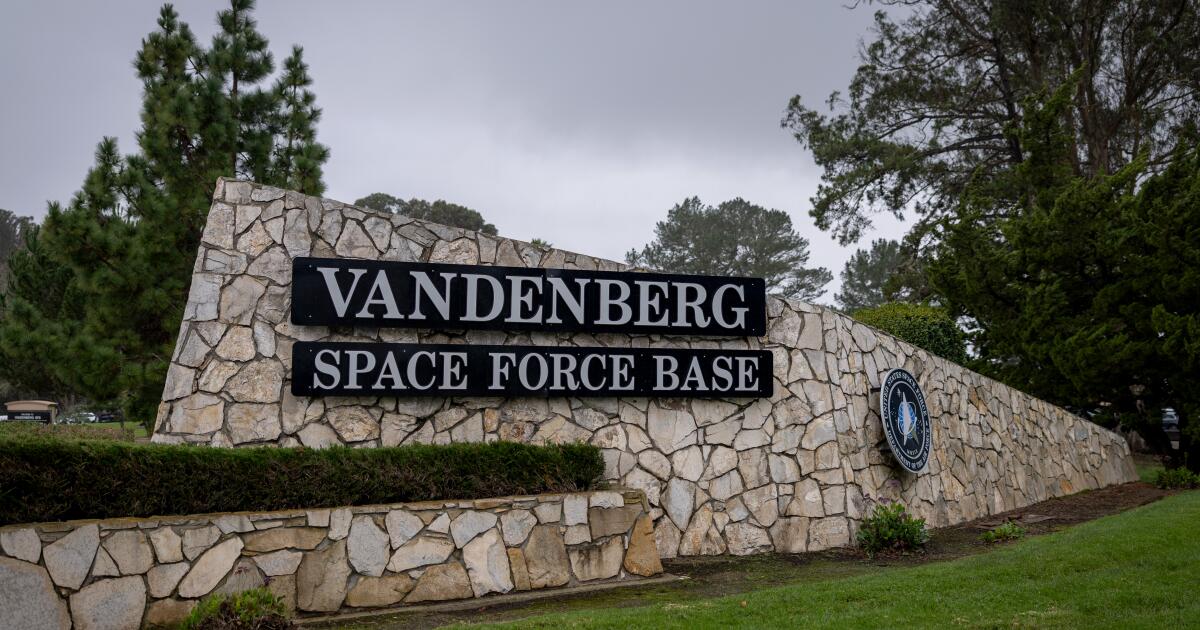
Airman at Vandenberg Space Force Base dies in heavy machinery incident, officials say
-

 Colorado24 minutes ago
Urban Grocer opens in downtown Colorado Springs
-
Connecticut30 minutes ago
Connecticut woman charged with sexual coercion of 13-year-old Long Island boy
-

 Delaware36 minutes ago
Delaware Cancels After Fourth Race July 18 Due to Heat
-

 Florida42 minutes ago
Florida Lotto numbers for Saturday, July 18, $2.75 million jackpot

