Science
Star USC scientist faces scrutiny — retracted papers and a paused drug trial

Late last year, a group of whistleblowers submitted a report to the National Institutes of Health that questioned the integrity of a celebrated USC neuroscientist’s research and the safety of an experimental stroke treatment his company was developing.
NIH has since paused clinical trials for 3K3A-APC, a stroke drug sponsored by ZZ Biotech, a Houston-based company co-founded by Berislav V. Zlokovic, professor and chair of the department of physiology and neuroscience at the Keck School of Medicine of USC.
Three of Zlokovic’s research papers have been retracted by the journal that published them because of problems with their data or images. Journals have issued corrections for seven more papers in which Zlokovic is the only common author, with one receiving a second correction after the new supplied data were found to have problems as well.
For an 11th paper co-authored by Zlokovic the journal Nature Medicine issued an expression of concern, a note journals append to articles when they have reason to believe there may be a problem with the paper but have not conclusively proven so. Since Zlokovic and his co-authors no longer had the original data for one of the questioned figures, the editors wrote, “[r]eaders are therefore alerted to interpret these results with caution.”
“It’s quite unusual to see this volume of retractions, corrections and expressions of concern, especially in high-tier influential papers,” said Dr. Matthew Schrag, an assistant professor of neurology at Vanderbilt who co-authored the whistleblower report independently of his work at the university.
Both Zlokovic and representatives for USC declined to comment, citing an ongoing review initiated in the wake of the allegations, which were first reported in the journal Science.
“USC takes any allegations of research integrity very seriously,” the university said in a statement. “Consistent with federal regulations and USC policies, this review must be kept confidential.”
Zlokovic “remains committed to cooperating with and respecting that process, although it is unfortunately required due to allegations that are based on incorrect information and faulty premises,” his attorney Alfredo X. Jarrin wrote in an email.
Regarding the articles, “corrections and retractions are a normal and necessary part of the scientific post-publication process,” Jarrin wrote.
Authors of the whistleblower report and academic integrity experts challenged that assertion.
“If these are honest errors, then the authors should be able to show the actual original data,” said Elisabeth Bik, a microbiologist and scientific integrity consultant who co-wrote the whistleblower report. “It is totally human to make errors, but there are a lot of errors found in these papers. And some of the findings are suggestive of image manipulation.”
Given the staid pace of academic publishing, publishing this many corrections and retractions only a few months after the initial concerns were raised “is, bizarrely, pretty quick,” said Ivan Oransky, co-founder of Retraction Watch.
The whistleblower report submitted to NIH identified allegedly doctored images and data in 35 research papers in which Zlokovic was the sole common author.
“There had been rumblings about things not being reproducible [in Zlokovic’s research] for quite some time,” Schrag said. “The real motivation to speak publicly is that some of his work reached a stage where it was being used to justify clinical trials. And I think that when you have data that may be unreliable as the foundation for that kind of an experiment, the stakes are just so much higher. You’re talking about patients who are often at the most vulnerable medical moment of their life.”
Over the years, Zlokovic has created several biotech companies aimed at commercializing his scientific work. In 2007, he co-founded ZZ Biotech, which has been working to gain federal approval of 3K3A-APC.
The drug is intended to minimize the bleeding and subsequent brain damage that can occur after an ischemic stroke, in which a blood clot forms in an artery leading to the brain.
In 2022, USC’s Keck School of Medicine received from NIH the first $4 million of a planned $30-million grant to conduct Phase III trials of the experimental stroke treatment on 1,400 people.
In Phase II of the trial, which was published in 2018 and called Rhapsody, six of the 66 patients who received 3K3A-APC died in the first week after their stroke, compared to one person among the 44 patients who got a placebo. Patients who received the drug also tended to report more disability 90 days after their stroke than those who got the placebo. The differences between the two groups were not statistically significant and could have been due to chance, and the death rate for patients in both groups evened out one month after the initial stroke.
“The statements that there is a risk in this trial is false,” said Patrick Lyden, a USC neurologist and stroke expert who was employed by Cedars-Sinai at the time of the trial. Zlokovic worked with Lyden as a co-investigator on the study.
One correction has been issued to the paper describing the Phase II results, fixing an extra line in a data table that shifted some numbers to the wrong columns. “This mistake is mine. It’s not anybody else’s. I didn’t catch it in multiple readings,” Lyden said, adding that he noticed the error and was already working on the correction when the journal contacted him about it.
He disputed that the trial represented any undue risk to patients.
“I believe it’s safe, especially when you consider that the purpose of Rhapsody was to find a dose — the maximum dose — that was tolerated by the patients without risk, and the Rhapsody trial succeeded in doing that. We did not find any dose that was too high to limit proceeding to Phase III. It’s time to proceed with Phase III.”
Schrag stressed that the whistleblowers did not find evidence of manipulated data in the report from the Phase II trial. But given the errors and alleged data manipulation in Zlokovic’s earlier work, he said, it’s appropriate to scrutinize a clinical trial that would administer the product of his research to people in life-threatening situations.
In the Phase II data, “there’s a coherent pattern of [patient] outcomes trending in the wrong direction. There’s a signal in early mortality … there’s a trend toward worse disability numbers” for patients who received the drug instead of a placebo, he said.
None are “conclusive proof of harm,” he said. But “when you’re seeing a red flag or a trend in the clinical trial, I would tend to give that more weight in the setting of serious ethical concerns around the pre-clinical data.”
The NIH paused the clinical trial in November, and it remains on hold, said Dr. Pooja Khatr, principal investigator of the NIH StrokeNet National Coordinating Center. Khatr declined to comment on the pause or the trial’s future, referring further questions to USC and NIH.
The NIH Office of Extramural Research declined to discuss Rhapsody or Zlokovic, citing confidentiality regarding grant deliberations.
ZZ Biotech Chief Executive Kent Pryor, who in 2022 called the drug “a potential game-changer,” said he had no comment or information on the halted trial.
Zlokovic is a leading researcher on the blood-brain barrier, with particular interest in its role in stroke and dementia. He received his medical degree and doctorate in physiology at the University of Belgrade and joined the faculty at USC’s Keck School of Medicine after several fellowships in London. A polyglot and amateur opera singer, Zlokovic left USC and spent 11 years at the University of Rochester before returning in 2011. He was appointed director of USC’s Zilkha Neurogenetic Institute the following year.
A USC spokesperson confirmed that Zlokovic has retained his titles as department chair and director of the Zilkha institute.





For decades, the American Academy of Pediatrics and the U.S. Centers for Disease Control and Prevention spoke with a single voice when advising the nation’s families on when to vaccinate their children.
Since 1995, the two organizations worked together to publish a single vaccine schedule for parents and healthcare providers that clearly laid out which vaccines children should get and exactly when they should get them.
Today, that united front has fractured. This month, the Department of Health and Human Services announced drastic changes to the CDC’s vaccine schedule, slashing the number of diseases that it recommends U.S. children be routinely vaccinated against to 11 from 17. That follows the CDC’s decision last year to reverse its recommendation that all kids get the COVID-19 vaccine.
On Monday, the AAP released its own immunization guidelines, which now look very different from the federal government’s. The organization, which represents most of the nation’s primary care and specialty doctors for children, recommends that children continue to be routinely vaccinated against 18 diseases, just as the CDC did before Robert F. Kennedy Jr. took over the nation’s health agencies.
Endorsed by a dozen medical groups, the AAP schedule is far and away the preferred version for most healthcare practitioners. California’s public health department recommends that families and physicians follow the AAP schedule.
“As there is a lot of confusion going on with the constant new recommendations coming out of the federal government, it is important that we have a stable, trusted, evidence-based immunization schedule to follow and that’s the AAP schedule,” said Dr. Pia Pannaraj, a member of AAP’s infectious disease committee and professor of pediatrics at UC San Diego.
Both schedules recommend that all children be vaccinated against measles, mumps, rubella, polio, pertussis, tetanus, diphtheria, Haemophilus influenzae type B (Hib), pneumococcal disease, human papillomavirus (HPV) and varicella (better known as chickenpox).
AAP urges families to also routinely vaccinate their kids against hepatitis A and B, COVID-19, rotavirus, flu, meningococcal disease and respiratory syncytial virus (RSV).
The CDC, on the other hand, now says these shots are optional for most kids, though it still recommends them for those in certain high-risk groups.
The schedules also vary in the recommended timing of certain shots. AAP advises that children get two doses of HPV vaccine starting at ages 9 to12, while the CDC recommends one dose at age 11 or 12. The AAP advocates starting the vaccine sooner, as younger immune systems produce more antibodies. While several recent studies found that a single dose of the vaccine confers as much protection as two, there is no single-dose HPV vaccine licensed in the U.S. yet.
The pediatricians’ group also continues to recommend the long-standing practice of a single shot combining the measles, mumps and rubella (MMR) and varicella vaccines in order to limit the number of jabs children get. In September, a key CDC advisory panel stocked with hand-picked Kennedy appointees recommended that the MMR and varicella vaccines be given as separate shots, a move that confounded public health experts for its seeming lack of scientific basis.
The AAP is one of several medical groups suing HHS. The AAP’s suit describes as “arbitrary and capricious” Kennedy’s alterations to the nation’s vaccine policy, most of which have been made without the thorough scientific review that previously preceded changes.
Days before AAP released its new guidelines, it was hit with a lawsuit from Children’s Health Defense, the anti-vaccine group Kennedy founded and previously led, alleging that its vaccine guidance over the years amounted to a form of racketeering.
The CDC’s efforts to collect the data that typically inform public health policy have noticeably slowed under Kennedy’s leadership at HHS. A review published Monday found that of 82 CDC databases previously updated at least once a month, 38 had unexplained interruptions, with most of those pauses lasting six months or longer. Nearly 90% of the paused databases included vaccination information.
“The evidence is damning: The administration’s anti-vaccine stance has interrupted the reliable flow of the data we need to keep Americans safe from preventable infections,” Dr. Jeanne Marrazzo wrote in an editorial for Annals of Internal Medicine, a scientific journal. Marrazzo, an infectious disease specialist, was fired last year as head of the National Institute of Allergy and Infectious Diseases after speaking out against the administration’s public health policies.
Science
‘We’re not going away’: Rob Caughlan, fierce defender of the coastline and Surfrider leader, dies at the age of 82
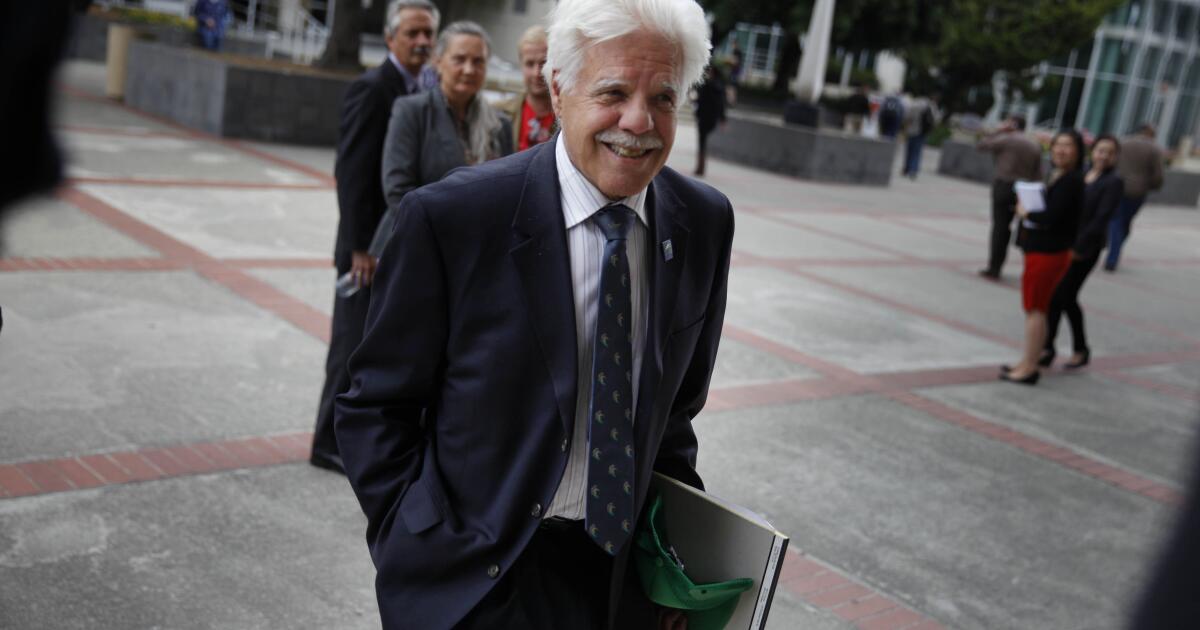
Known by friends and colleagues as a “planetary patriot,” a “happy warrior” and the “Golden State Eco-Warrior,” Rob Caughlan, a political operative, savvy public relations specialist and one of the early leaders of the Surfrider Foundation, died at his home in San Mateo, on Jan. 17. He was 82.
His wife of nearly 62 years, Diana, died four days earlier, from lung cancer.
Environmentalists, political operatives and friends responded to his death with grief but also joy as they recalled his passion, talent and sense of humor — and his drive not only to make the world a better place, but to have fun doing it.
“He’d always say that the real winner in a surfing contest was the guy who had the most fun,” said Lennie Roberts, a conservationist in San Mateo County and longtime friend of Caughlan’s. “He was true to that. It’s the way he lived.”
“When he walked into a room, he’d have a big smile on his face. He was a great — a gifted — people person,” said Dan Young, one of the original five founders of the Surfrider Foundation. The organization was cobbled together in the early 1980s by a group of Southern California surfers who felt called to protect the coastline — and their waves.
They also wanted to dispel the stereotype that surfers are lackadaisical stoners — and show the world that surfers could get organized and fight for just causes, said Roberts, citing Caughlan’s 2020 memoir, “The Surfer in the White House and Other Salty Yarns.”
Before joining Surfrider in 1986, Caughlan was a political operative who worked as an environmental adviser in the Carter administration. According to Warner Chabot, an old friend and recently retired executive director of the an Francisco Estuary Institute, Caughlan got his start during the early 1970s when he and his friend, David Oke, formed the Sam Ervin Fan Club, which supported the Southern senator’s efforts to lead the Watergate investigation of President Nixon.
According to Chabot, Caughlan organized the printing of T-shirts with Ervin’s face on them, underneath the text “I Trust Uncle Sam.”
“He was an early social influencer — par extraordinaire,” he said.
Glenn Hening, a surfer, former Jet Propulsion Laboratory space software engineer and another original founder of the Surfrider Foundation, said one of the group’s initial fights was against the city of Malibu, which in the early 1980s was periodically digging up sand in the lagoon right offshore and destroying the waves at one of their favorite surf spots.
According to Hening, it was Caughlin’s unique ability to persuade and charm politicians and donors that put Surfrider’s efforts on the map.
Caughlan served as the foundation’s president from 1986 to 1992.
The foundation grabbed the national spotlight in 1989 when it went after two large paper mills in Humboldt Bay that were discharging toxic wastewater into an excellent surfspot in Northern California. The foundation took aim and in 1991 filed suit alongside the U.S. Environmental Protection Agency; the paper mills settled for $5.8 million.
Hening said the victory would never have happened without Caughlan.
The mills had tried to brush off the suit by offering a donation to the foundation, Hening said. But Caughlan and Mark Massara — an environmental lawyer with the organization — rebuffed the gesture.
“The paper mill guys said, ‘Well, what can we do here? How can we make this go away?’” said Hening, recalling the conversation. “And Rob said, ‘It’s not going to go away. We’re not going away. We’re surfers.”
Roberts said Caughlan’s legacy can be felt by anyone who has ever spent time on the San Mateo County coastline. In the 1980s, the two spearheaded a successful ballot measure still protects the coast from non-agricultural development and ensured access to the beaches and bluffs. It also prohibits onshore oil facilities for off-shore facilities.
The two also worked on a county measure that led to the development of the Devil’s Slide tunnels on Highway 1 between Pacifica and Montara, designed to make that formerly treacherous path safer for travelers.
The state had wanted to build a six-lane highway over the steep hills in the area. “It would have been dangerous because of the steep slopes, and it would be going up into the fog bank and then back down out of the fog. So it was inherently dangerous,” Roberts said.
Chad Nelsen, the current president of the Surfrider Foundation, said he was first drawn into Caughlan’s orbit in 2010 when Surfrider got involved with a lawsuit pertaining to a beach in San Mateo County. Silicon Valley venture capitalist Vinod Khosla purchased 53 acres of Northern California coastline for $32.5 million and closed off access to the public — including a popular stretch known as Martin’s Beach — so Surfrider sued.
Nelsen said that although Caughlan had left the organization about 20 years before, he reappeared with a “sort of unbridled enthusiasm and commitment to the cause,” and the organization ultimately prevailed — the public can once again access the beach “thanks to ‘Birdlegs.’”
Birdlegs was Caughlan’s nickname, and according to Nelsen, it was probably coined in the 1970s by his fellow surfers.
“He had notoriously spindly legs, I guess,” Nelsen said.
Robert Willis Caughlan was born in Alliance, Ohio, on Feb. 27, 1943. His father, who was a parachute instructor with the U.S. Army, died when Caughlan was 4. In 1950, Caughlan moved with his mother and younger brother to San Mateo, where he saw the ocean for the first time.
He rode his his first wave in 1959, at the age of 16, from the breakwater at Half Moon Bay.
Science
LAUSD says Pali High is safe for students to return to after fire. Some parents and experts have concerns

The Los Angeles Unified School District released a litany of test results for the fire-damaged Palisades Charter High School ahead of the planned return of students next week, showing the district’s remediation efforts have removed much of the post-fire contamination.
However, some parents remain concerned with a perceived rush to repopulate the campus. And while experts commended the efforts as one of the most comprehensive post-fire school remediations in modern history, they warned the district failed to test for a key family of air contaminants that can increase cancer risk and cause illness.
“I think they jumped the gun,” said a parent of one Pali High sophomore, who asked not to be named because she feared backlash for her child. “I’m quite angry, and I’m very scared. My kid wants to go back. … I don’t want to give him too much information because he has a lot of anxiety around all of these changes.”
Nevertheless, she still plans to send her child back to school on Tuesday, because she doesn’t want to create yet another disruption to the student’s life. “These are kids that also lived through COVID,” she said.
The 2025 Palisades fire destroyed multiple buildings on Pali High’s campus and deposited soot and ash in others. Following the fire, the school operated virtually for several months and, in mid-April of 2025, moved into a former Sears department store in Santa Monica.
Meanwhile, on campus, the U.S. Environmental Protection Agency and the U.S. Army Corps of Engineers cleared debris from the destroyed structures, and LAUSD hired certified environmental remediation and testing companies to restore the still-standing buildings to a safe condition.
LAUSD serves as the charter school’s landlord and took on post-fire remediation and testing for the school. The decision to move back to the campus was ultimately up to the charter school’s independent leadership.
The Los Angeles Department of Water and Power tested the drinking water for a slew of contaminants, and environmental consultants tested the soil, HVAC systems, indoor air and surfaces including floors, desks and lockers.
They tested for asbestos, toxic metals such as lead and potentially hazardous organic compounds often unleashed through combustion, called volatile organic compounds, or VOCs.
“The school is ready to occupy,” said Carlos Torres, director of LAUSD’s office of environmental health and safety. “This is really the most thorough testing that’s ever been done that I can recall — definitely after a fire.”
Construction workers rebuild the Palisades Charter High School swimming pool.
(Allen J. Schaben / Los Angeles Times)
A handful of soil samples had metal concentrations slightly above typical post-fire cleanup standards, which are designed to protect at-risk individuals over many years of direct exposure to the soil — such as through yard work or playing sports. An analysis by the environmental consultants found the metals did not pose a health risk to students or staff.
On indoor surfaces, the consultants found two areas with lead and one with arsenic, spaces they recleaned and retested to make sure those metals were no longer present.
The testing for contamination in the air, however, has become a matter of debate.
Some experts cautioned that LAUSD’s consultants tested the air for only a handful of mostly non-hazardous VOCs that are typically used to detect smoke from a wildfire that primarily burned plants. While those tests found no contamination, the consultants did not test for a more comprehensive panel of VOCs, including many hazardous contaminants commonly found in the smoke of urban fires that consume homes, cars, paints, detergents and plastics.
The most notorious of the group is benzene, a known carcinogen.
At a Wednesday webinar for parents and students, LAUSD’s consultants defended the decision, arguing their goal was only to determine whether smoke lingered in the air after remediation, not to complete more open-ended testing of hazardous chemicals that may or may not have come from the fire.
Andrew Whelton, a Purdue University professor who researches environmental disasters, didn’t find the explanation sufficient.
“Benzene is known to be released from fire. It is known to be present in air. It is known to be released from ceilings and furniture and other things over time, after the fire is out,” Whelton said. “So, I do not understand why testing for benzene and some of the other fire-related chemicals was not done.”
For Whelton, it’s representative of a larger problem in the burn areas: With no decisive guidance on how to remediate indoor spaces after wildland-urban fires, different consultants are making significantly different decisions about what to test for.
LAUSD released the testing results and remediation reports in lengthy PDFs less than two weeks before students plan to return to campus, while the charter school’s leadership decided on a Jan. 27 return date before testing was completed.
At the webinar, school officials said two buildings near the outdoor pool have not yet been cleared through environmental testing and will remain closed. Four water fixtures are also awaiting final clearance from the Los Angeles Department of Water and Power, and the school’s food services are still awaiting certification from the L.A. County Department of Public Health.
For some parents — even those who are eager to ditch the department store campus — it amounts to a flurried rush to repopulate Pali High’s campus that is straining their decisions about how to keep their kids safe.
Torres stressed that his team acted cautiously in the decision to authorize the school for occupancy, and that promising preliminary testing helped school administrators plan ahead. He also noted that the slow, cautious approach was a point of contention for other parents who hoped their students could return to the campus as quickly as possible.
Experts largely praised LAUSD’s efforts as thorough and comprehensive — with the exception of the VOC air testing.
Remediation personnel power washed the exterior of buildings, wiped down all surfaces and completed thorough vacuuming with filters to remove dangerous substances. Any soft objects such as carpet or clothing that could absorb and hold onto contamination were discarded. The school’s labyrinth of ducts and pipes making up the HVAC system was also thoroughly cleaned.
Crews tested throughout the process to confirm their remediation work was successful and isolated sections of buildings once the work was complete. They then completed another full round of testing to ensure isolated areas were not recontaminated by other work.
Environmental consultants even determined a few smaller buildings could not be effectively decontaminated and consequently had them demolished.
Torres said LAUSD plans to conduct periodic testing to monitor air in the school, and that the district is open to parents’ suggestions.
For Whelton, the good news is that the school could easily complete comprehensive VOC testing within a week, if it wanted to.
“They are very close at giving the school a clean bill of health,” he said. “Going back and conducting this thorough VOC testing … would be the last action that they would need to take to determine whether or not health risks remain for the students, faculty and visitors.”
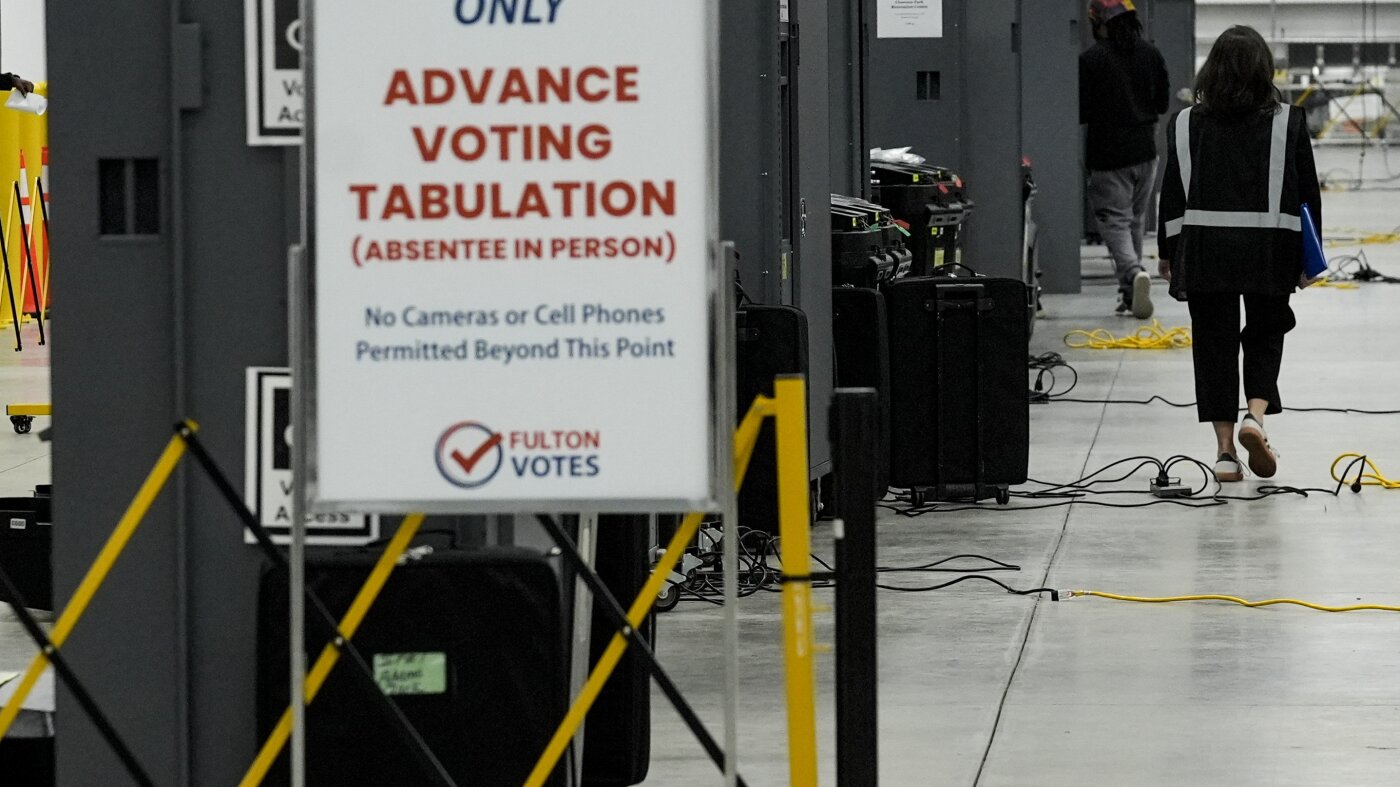
The FBI conducts a search at the Fulton County election office in Georgia

Knife-wielding nut allegedly asked Christian his religion – then stabbed him and dog before police shot him

House Republicans blast Noem impeachment resolution as ‘partisan stunt,’ as Dems fail to reach across aisle

Brother killed after teen becomes ‘enraged’ over video game, stabs sibling: police

Rep Maxwell Frost allegedly assaulted at Sundance Film Festival in racially charged incident

Florida High School Football Rankings: Top 25 teams – Oct. 21

Cleary's 21 help Le Moyne down Central Connecticut State 69-64 in OT

How old is Bo Nix? What to know about Oregon quarterback ahead of 2024 NFL Draft

99th annual Pony Swim held in Virginia

Indiana Members Credit Union announced as new anchor tenant at Bottleworks District
The FBI conducts a search at the Fulton County election office in Georgia

Graham pushes back on Tillis’ criticism of Noem, Miller for labeling man killed by Border Patrol a ‘terrorist’

North Korea’s Kim to outline plans to boost nuclear arsenal

Rep. Ilhan Omar rushed by man on stage and sprayed with liquid at town hall event

Video: F.A.A. Ignored Safety Concerns Prior to Collision Over Potomac, N.T.S.B. Says
-

 Illinois6 days ago
Illinois school closings tomorrow: How to check if your school is closed due to extreme cold
-

 Pittsburg, PA1 week ago
Sean McDermott Should Be Steelers Next Head Coach
-

 Pennsylvania2 days ago
Rare ‘avalanche’ blocks Pennsylvania road during major snowstorm
-

 Lifestyle1 week ago
Nick Fuentes & Andrew Tate Party to Kanye’s Banned ‘Heil Hitler’
-

 Sports1 week ago
Miami star throws punch at Indiana player after national championship loss
-

 Cleveland, OH1 week ago
Northeast Ohio cities dealing with rock salt shortage during peak of winter season
-

 Technology6 days ago
Ring claims it’s not giving ICE access to its cameras
-
 Science1 week ago
Contributor: New food pyramid is a recipe for health disasters