Politics
Zelenskyy extends Trump an offer to visit Ukraine’s front lines: 'If Mr. Trump will come I am ready'


Ukrainian President Volodymyr Zelenskyy extended an offer to Former President Trump to visit Ukraine and even take him to the front lines, during his appearance Saturday at the Munich Security Conference.
“If Mr. Trump will come, I am ready even to go with him to the front line,” Zelenskkyy said on Saturday, followed by applause from the audience.
“I think if we are in dialogue how to finish the war, we have to demonstrate people who are decision-makers, what does it mean — the real war. Not on Instagram — the real war,” he continued.
UKRAINE MAKES MAJOR TROOP WITHDRAWAL IN KEY WIN FOR PUTIN AND RUSSIA
Zelenskyy noted that he had extended this same offer to Trump before, but that the visit ultimately depended on Trump.
“I invited him publicly but it depends on his wishes,” Zelenskyy stated.
Ukrainian President Volodymyr Zelenskyy delivers his speech at the 60th Munich Security Conference (MSC) at the Bayerischer Hof hotel in Munich, southern Germany, on Feb. 17, 2024. (TOBIAS SCHWARZ/AFP via Getty Images)
Zelenskyy also commented that the invitation was open to candidates and officials in both parties, stating he was a proponent of bipartisan support.
Trump, the current GOP frontrunner, has been vocal in his stance against sending additional aid to Ukraine. Just this past week, Trump called on Republicans to block a $95 billion package that would provide aid to both Ukraine and Israel.
ZELENSKYY’S RETURN TO DC FOR MORE CASH IN UKRAINE WAR A ‘MOST DISGRACEFUL CHARADE’: JD VANCE
The White House recently criticized the former President’s remarks after a campaign speech in Conway, South Carolina where Trump encouraged Russia to do “whatever the hell they want” to NATO members that did not meet spending guidelines on defense, calling them “appalling and unhinged.”
Trump, the current GOP frontrunner, has been vocal in his stance against sending additional aid to Ukraine. Just this past week, Trump called on Republicans to block a $95 billion package that would provide aid to both Ukraine and Israel. (Photo by Scott Olson/Getty Images)
“NATO was busted until I came along,” Trump said during the speech. “I said, ‘Everybody’s gonna pay.’ They said, ‘Well, if we don’t pay, are you still going to protect us?’ I said, ‘Absolutely not.’ They couldn’t believe the answer.”
ZELENSKYY TURNS TO EUROPE FOR AID AS TRUMP BASHES US FUNDING PACKAGE
Zelenskky’s appearance at the Munich Security Conference comes as Russia’s war on Ukraine nears its second anniversary this month. Zelenskyy spoke on an “artificial deficit” in ammunition as well as continued support from the international community.
Ukrainian President Volodymyr Zelenskyy and U.S. Vice President Kamala Harris smile at the end of a press conference at the Munich Security Conference (MSC) in Munich, southern Germany on Feb. 17, 2024. (WOLFGANG RATTAY/POOL/AFP via Getty Images)
Zelenskyy also stood alongside Vice President Kamala Harris during a joint press conference where the Vice President pledged continued U.S. support of Ukraine.
Fox News’ Anders Hagstrom and Landon Mion contributed to this report.

Politics
Abbott orders probe after Texas hospital advertises ‘birth packages’ in Mexico: ‘Citizenship is not for sale’

NEWYou can now listen to Fox News articles!
Texas Gov. Greg Abbott ordered an investigation into a Texas hospital Tuesday after it confirmed to Fox News that it advertised Spanish-language “Birth Packages in South Texas” on billboards in Mexico promoting childbirth services to pregnant foreign nationals near the U.S.-Mexico border.
Mission Regional Medical Center confirmed to Fox News that it was responsible for the advertising campaign, which promoted deliveries starting at $3,950 for a natural birth and $5,525 for a C-section and directed viewers to a website, havemybabyinTEXAS.com, that has since been taken offline.
The billboards also displayed a telephone number beginning with “001,” the country code used to place calls to the United States from Mexico.
‘WEAPONS OF MASS REPRODUCTION’: WATCHDOG UNVEILS ACTION PLAN TO CURB BIRTH TOURISM AFTER SUPREME COURT RULING
Gov. Greg Abbott speaks during a bill signing in the State Capitol on April 23, 2025, in Austin, Texas. (Brandon Bell/Getty Images)
“The marketing materials regarding maternity services are no longer in use due to any unintended misunderstanding,” a hospital spokesperson said in a statement to Fox News. “We do not support or facilitate any unlawful activity and work to comply with all applicable federal and state laws and regulations.”
The spokesperson said the campaign included two billboards located within approximately five miles of the hospital near a U.S.-Mexico border crossing. The hospital said both billboards and the website were removed Monday after images began circulating on social media. The spokesperson also said the campaign began in 2021 but did not specify when the billboards were installed.
Abbott on Tuesday directed Texas Health and Human Services Commission Executive Commissioner Stephanie Muth to investigate Mission Regional Medical Center for potential violations of state law and contractual obligations.
REPUBLICAN ACCUSES SCOTUS OF BETRAYING US, PUSHES BILL RESTRICTING BIRTHRIGHT CITIZENSHIP, PREGNANT VISITORS
A Spanish-language billboard promotes birth packages at Mission Regional Medical Center, advertising pricing for natural deliveries and C-sections in South Texas. (Right Angle News)
Images of the billboard circulated on social media before the hospital said it removed the advertisements Monday.
“Birth tourism’ is an illegal practice that exploits the extraordinary hospitality that the United States and Texas offer to millions of foreign travelers each year,” Abbott wrote in a July 7 letter obtained by Fox News. “Unfortunately, thousands of foreign travelers come to the United States under false pretenses to give birth and secure citizenship for their children.”
TRUMP SUFFERS MAJOR SUPREME COURT DEFEAT AS JUSTICES UPHOLD BIRTHRIGHT CITIZENSHIP
An English-language billboard promotes birth packages at Mission Regional Medical Center, advertising pricing for natural deliveries and C-sections in South Texas. (Right Angle News)
Abbott directed HHSC to “immediately and thoroughly investigate” the hospital and said any violations should be referred to the Texas Attorney General for civil enforcement and to the appropriate district or county attorney for potential criminal prosecution.
“American citizenship is not for sale and Texas will not permit our healthcare system to be used as a magnet for birth tourism,” Abbott wrote.
The governor also said he plans to work with the Texas Legislature during its next session “to strengthen state law and eliminate birth tourism in Texas.”
“Unfortunately, birth tourism operations are not a new phenomenon,” General Counsel of the Oversight Project Kyle Brosnan said to Fox News Digital in a statement. “The Supreme Court’s egregiously wrong decision in the birthright citizenship case is going to open the floodgates to the birth tourism industry. Our country is much more than a pile of magic dirt. The only answer to these type of practices are criminal investigations and the mass deportation of illegal aliens.”
Mission Regional Medical Center also said it intends to cooperate with state officials.
CLICK HERE TO DOWNLOAD THE FOX NEWS APP
“We intend to work cooperatively and transparently with local and state officials,” the hospital said in a statement obtained by Fox News. “Our focus remains on delivering safe, high-quality care to every patient who seeks our services.”
The investigation comes as President Donald Trump’s executive order seeking to limit automatic birthright citizenship for some children born in the United States remains the subject of ongoing legal challenges.
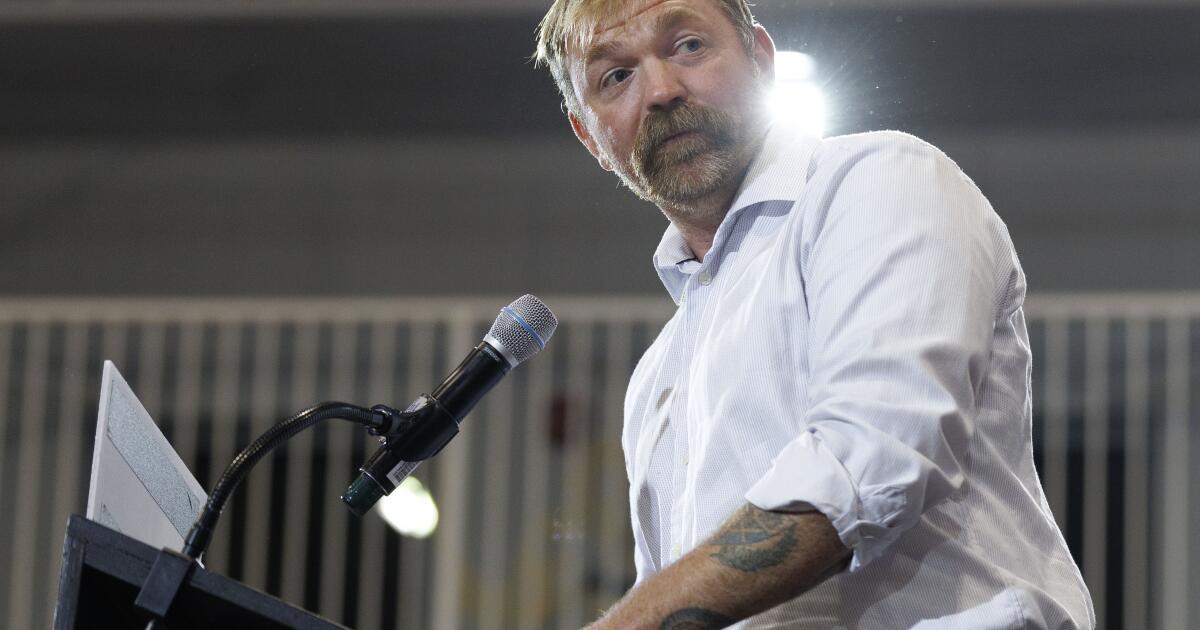
WASHINGTON — The campaign of U.S. Senate nominee Graham Platner was buckling in Maine on Tuesday after he was accused of rape, injecting uncertainty into a contest that is central to determining which party wins Senate control in November’s midterms.
The situation set off swift debate about how state Democrats would choose Platner’s replacement if he were to withdraw, and which Maine figures might be best positioned to play off the progressive messaging he used to win over voters.
With Maine viewed by Democrats as a key seat to win in their long-shot bid for a Senate majority, the decision would be high stakes, analysts said. In the meantime, with uncertainty clouding the race, the shake-up could put additional pressure on the party to win Senate races in states seen as more difficult to flip.
Platner has denied the rape allegation, which came in a Politico report Monday from a woman who said Platner forced her to have sex with him when he was intoxicated. Platner said Monday that he would “reflect” on his candidacy but has not withdrawn.
“The calculation that almost everyone on the Democratic side is making is that with Platner in it, it is an unwinnable race,” said John Cluverius, director of survey research for the Center for Public Opinion at UMass Lowell, “and without Platner in it, they have a much better chance.”
An oyster farmer and Marine veteran, Platner had entered the race to challenge Republican Sen. Susan Collins as an outsider and was seen as riding an anti-establishment wave of support.
His candidacy highlighted the split within his party between progressives and establishment Democrats and represented a matchup between an older incumbent and a younger outsider candidate.
By Tuesday afternoon, Platner’s financial backing was disintegrating and prominent Democrats had withdrawn their support — including Sen. Bernie Sanders (I-Vt.), a key endorser of Platner’s, who said Tuesday afternoon that he had told Platner to withdraw.
A spokesperson for Platner’s campaign did not immediately respond to a request for comment Tuesday.
Rep. Ro Khanna (D-Fremont), who had been one of Platner’s most visible backers, quickly withdrew his endorsement Monday.
“I’ve been very clear that sexual assault or violence against women is a red line. These allegations are very serious and credible,” Khanna, who has been a prominent supporter of victims of the late sex offender Jeffrey Epstein, wrote on X.
The California congressman had been among progressives, including Sanders and Sen. Elizabeth Warren (D-Mass.), who previously stood by Platner. Khanna had rallied for Platner at a pre-primary event in June after a set of allegations about the candidate’s “unsettling” conduct from his exes reported by the New York Times and the revelation that he had sent sexually explicit messages to women outside his marriage.
Platner’s collapse comes after the fall of former California Rep. Eric Swalwell, whose ascendant campaign for governor was ended in April after he was accused of sexual assault.
As in Swalwell’s case, Platner’s support has unraveled quickly, leaving him with little path forward.
The Democrats’ formal Senate campaign arm and the Senate Majority PAC, which is aligned with Senate Minority Leader Chuck Schumer, both pulled investment from the race, their leaders said in statements. Swing Left, an organization working to flip seats for Democrats, removed Maine from its target Senate races for now.
“We continue to believe this seat is winnable if Platner is not on the ballot,” said Senate Majority PAC spokesperson Lauren French.
Under state law, Platner has until Monday to withdraw in order for the Maine Democratic Party to be able to nominate a replacement. The committee would have until July 27 to do so.
For Collins, facing a new candidate could make for a harder race than going up against Platner, analysts said.
The fifth-term senator has survived reelection repeatedly, including in 2020, when the state went blue in the presidential election, but drawn ire from some moderate and left-leaning voters who want her to push back more forcefully against President Trump.
Without Maine, Democrats would have to pick up an additional race in a state that went for Trump in 2024 in order to flip the four seats required to win a majority.
To get to four, the party needs to win some mix of Maine, North Carolina, Ohio, Texas and Iowa and must also retain its seats in Michigan, Georgia and New Hampshire.
That scenario could be within reach for Democrats but they face a steep climb, a New York Times/Siena poll released last week found.
“This does put enormous pressure on Democrats across the country with every viable race,” said David Niven, who teaches American politics at the University of Cincinnati. “The margin of error was already slim, and it’s approaching none.”
In Texas, a heated and expensive race has shaped up between Democrat James Talarico, a state representative who is facing Republican Ken Paxton, the state attorney general.
“I would suspect that Democrats are going to be relatively all-in on Texas simply because they can no longer rely on Maine in the way they thought they were going to be able to,” said Mark Jones, a political science professor at Rice University.
The Politico report came after a string of other controversies for Platner, who had successfully batted them away ahead of the state’s June primary.
His quick rise in the campaign excited Democrats looking for younger, non-establishment leaders. His primary opponent, Maine Gov. Janet Mills, suspended her campaign in late April, clearing his path.
But questions about the rushed vetting of Platner soon arose.
He faced scrutiny over a tattoo on his chest that was widely recognized as a Nazi symbol, which he then said he had covered up, and a tranche of deleted Reddit posts that he said were “stupid” comments from a time when he had post-traumatic stress disorder.
Ahead of the primary, the report of his extramarital texts and the allegations by exes about volatile behavior revived questions about his candidacy; Platner described them as politically motivated and privately assured Democratic leaders that nothing else was coming.
The situation “reinforce[s] the need for more careful vetting [of] first-time outsider candidates,” said Dan Schnur, who teaches political communications at USC, UC Berkeley and Pepperdine.
“Every political professional knows that the most important type of candidate research is not opposition research — it’s research on your own candidate,” Schnur said.
Progressive leaders on Monday sought to validate the success of Platner’s campaign in energizing Maine voters while disavowing Platner. They urged Democratic leaders to stick with a candidate who shares Platner’s working-class image if he withdraws — something Platner may hope to influence, the New York Times reported.
“To the Democratic establishment: this is not your opening,” Joseph Geevarghese, executive director of the progressive organization Our Revolution, said in a statement. “Whoever leads this movement forward must be someone who has actually lived the fight Graham Platner ran on.”
Some Democrats were already looking to the party’s gubernatorial primary candidates as possible replacements, including Maine Secretary of State Shenna Bellows, former state Sen. Troy Jackson and former state health official Nirav D. Shah.
The July deadlines would leave enough time before November for Democrats to persuade voters of a new candidate, said Mark Brewer, a political science professor at the University of Maine, but how the party chose to select a replacement would probably be as important as whom it chose.
“Having a 100-person executive committee select it on their own would probably not sit well with Platner’s supporters,” Brewer said. “A caucus they could pull off; if they want to be as open and inclusive as possible, that’s probably their best option.”
McDaniel reported from Washington and Kwok from Los Angeles.

NEWYou can now listen to Fox News articles!
President Donald Trump said Tuesday he plans to lift U.S. sanctions on Turkey and signaled he is prepared to move forward with the long-stalled sale of F-35 stealth fighter jets, marking a dramatic reversal in U.S. policy toward the NATO ally years after Ankara was expelled from the program for its purchase of a Russian missile defense system.
Speaking alongside Turkish President Recep Tayyip Erdoğan during a bilateral meeting at the NATO summit in Ankara, Turkey, Tuesday, Trump said his administration would remove sanctions imposed on Turkey’s defense sector.
“I can tell you we’re going to be taking the sanctions off, OK?” Trump said. “I don’t want him to waste his time answering that question. It’s time. We don’t sanction friends.”
TRUMP BETS ON FORMER NATO TROUBLEMAKER AS TURKEY’S STRATEGIC VALUE SURGES
Turkish President Recep Tayyip Erdogan welcomes US President Donald Trump at Ankara Airport, who is paying an official visit to Turkey ahead of the 36th NATO Heads of State and Government Summit in Ankara, Turkey, on July 07, 2026. (Dogukan Keskinkilic/Pool via REUTERS)
Asked whether he would sell F-35 fighter jets to Turkey despite existing legal restrictions tied to Ankara’s purchase of the Russian-made S-400 air defense system, Trump indicated he was open to doing so.
“Many people, including the people sitting right here thinks why wouldn’t we do that?” Trump said. “Turkey has been in many ways much more loyal than other countries that we think would be loyal.”
Pressed on concerns about Turkey’s continued possession of the S-400, Trump dismissed them.
“I have no concerns about anything.”
The remarks represent Trump’s clearest indication yet that he intends to restore defense ties with Turkey, building on months of efforts to revive military cooperation with one of NATO’s largest armed forces after years of strained relations.
Turkey was removed from the multinational F-35 program in 2019 after taking delivery of the Russian-made S-400 air defense system, prompting Washington to argue that operating the Kremlin-built system alongside America’s most advanced stealth fighter could expose sensitive U.S. technology. Congress subsequently imposed sanctions under the Countering America’s Adversaries Through Sanctions Act, or CAATSA.
‘WRITTEN IN OUR DNA’: POLISH PILOTS WHO REMEMBER SOVIET RULE PREPARE FOR AMERICA’S MOST LETHAL FIGHTER JET
Congress long has been one of the biggest obstacles to restoring Turkey’s access to the F-35, with bipartisan lawmakers arguing that Ankara should not receive America’s most advanced fighter aircraft while it continues to possess the Russian-made S-400 air defense system and pursues policies they say run counter to U.S. interests.
A U.S. airmen watches an Air Force F-35 Lightning II joint strike fighter aircraft approach for the first time on July 14, 2011 at Eglin Air Force Base in Florida. (Samuel King Jr./U.S. Air Force)
Beyond political opposition, the Trump administration also faces legal hurdles.
While the president has authority over sanctions policy, Congress enacted additional restrictions after Turkey’s purchase of the S-400. Section 1245 of the fiscal year 2020 National Defense Authorization Act bars the transfer of F-35 aircraft to Turkey unless the executive branch certifies that Ankara has met statutory requirements related to the Russian missile system.
In recent days, a bipartisan group of House lawmakers urged Trump not to move forward with an F-35 sale, arguing that doing so without satisfying those legal requirements would violate U.S. law and undermine national security.
Lawmakers also have warned that Turkey’s continued possession of the S-400, support for Hamas and tensions with fellow NATO allies Greece and Cyprus raise broader concerns about restoring Ankara’s access to the stealth fighter.
Russian S-400 missile air defence systems are seen before the military parade to commemorate the 75th anniversary of the battle of Stalingrad in World War Two, in the city of Volgograd, Russia February 2, 2018. REUTERS/Tatyana Maleyeva – UP1EE220T3A2B
CLICK HERE TO DOWNLOAD THE FOX NEWS APP
The Pentagon has maintained that the S-400’s sophisticated radar could collect data on the F-35’s radar signature and electronic profile during routine operations, potentially allowing Russia to better detect and defeat the aircraft in a future conflict if that information were shared with Moscow.
When the Trump administration removed Turkey from the F-35 program in 2019, the White House said “the F-35 cannot coexist with a Russian intelligence collection platform that will be used to learn about its advanced capabilities.”
Pentagon acquisition chief Ellen Lord similarly warned at the time that allowing Turkey to operate both systems would jeopardize the long-term security of the F-35 program because “much of the F-35’s strength lies in its stealth capabilities.”
-
Missouri4 minutes ago
Missouri Lottery Mega Millions, Pick 3 winning numbers for July 7, 2026
-
Montana11 minutes ago
Montana Lottery Mega Millions, Big Sky Bonus results for July 7, 2026
-

 Nebraska14 minutes ago
Nebraska Rep. Mike Flood faces frustrated constituents at second town hall of year
-

 Nevada19 minutes ago
The Best Summer County Fairs In Nevada
-

 New Hampshire26 minutes ago
Dozens Arrested During Fourth Of July Holiday Weekend Enforcement: New Hampshire State Police Roundup
-

 New Jersey29 minutes ago
Water rescue in the ocean off Wildwood, New Jersey caught on video
-

 New Mexico34 minutes ago
What will it take to get the Rio Grande flowing again?
-

 North Carolina41 minutes ago
North Carolina man accused of shooting and killing another tourist inside of a Broward Airbnb, police say

