Politics
We were there: Hearing gunfire and ducking for cover at the D.C. dinner shooting


WASHINGTON — Directly outside the Washington Hilton ballroom, as the yearly White House Correspondents’ Assn. dinner got underway Saturday, a Times reporter had just entered the men’s room when he heard a handful of loud pops ring out.
“Shooter!” someone shouted. “Get down! Shots fired!”
Inside the ballroom, thousands of journalists and politicians began to duck for cover as the event devolved from a celebration of free speech to a scene of fear.
The Times had six reporters at the dinner, seated at a table near the right side of the stage.
The Times reporter in the restroom, Gavin Quinton, heard the gunfire around 8:30 p.m. He had left The Times’ table minutes earlier, moving past the TV cameras and up toward the raised terrace near the ballroom’s security entrance. He crossed paths with CNN anchor Wolf Blitzer.
Outside the restroom, Cole Tomas Allen, 31, had broken into a sprint through the metal detectors, security footage would later show, getting within feet of the ballroom entrance.
Five or six shots fired by Secret Service agents missed Allen before agents brought him down near a staircase leading to the main floor, where Trump sat prominently in view.
A federal agent was hit in the chest in the exchange of gunfire but was wearing a bullet-proof vest and not seriously injured.
Inside the restroom, Quinton crouched near a corner. Others rushed into the room, including three hotel security guards who flung themselves in so quickly their backs slammed against the tiled wall. Within moments, a Secret Service agent positioned himself at the bathroom entrance, his pistol drawn.
“Head count?” he asked.
“A dozen — no, 15!” someone shouted back.
People stayed locked in bathroom stalls. Some tried to overcome the poor cellphone service to call loved ones. Confused, the mix of tuxedo-clad attendees, uniformed hotel guards and waitstaff tried to piece together what had happened.
“He had a gun,” one of the hotel guards said.
Another witness told Quinton that he initially thought Blitzer had been the shooter’s target.
“I look around and I hear shots as I’m opening the door. And I turn and I see him,” the man said of the gunman. “I look again and I’m like, ‘Oh, they just shot someone.’ ”
Blitzer, who was tackled to the floor by officers during the incident, would later say that “the first thing that went through my mind was whether he was going to shoot me.”
As the group speculated over whether the shooter had died in the volley, one man wondered aloud whether the event would continue. Initially thinking the gunman must have been killed, Quinton replied no.
“Why not?” the man asked. “It’s a bad guy who’s dead. It was a good f— ending. Seriously.”
The Washington Hilton has hosted the annual correspondents’ dinner for decades. The event, referred to locally as “Nerd Prom,” now comes with a slate of pre-parties and after-parties.
This was the president’s first appearance at the dinner since 2015; he had skipped it during his entire first term.
Questions now surround the security protocols. Guests faced little screening to enter the hotel on Saturday — a quick flash of a paper ticket — before heading down escalators to the only area with magnetometers, where bags were also searched.
Trump had entered the ballroom at 8:15 p.m. as the Marine band played “Hail to the Chief.”
Twenty minutes later, videos show, Secret Service officers with ballistic vests and long guns barked instructions to clear a path as they rushed into the ballroom and onto the stage.
One agent pulled Vice President JD Vance away. Another escorted Trump, who appeared to trip, but later explained he had been urged to drop to the floor.
Other officials — Secretary of State Marco Rubio, Defense Secretary Pete Hegseth, FBI Director Kash Patel, Homeland Security advisor Stephen Miller — were quickly whisked away too.
At The Times’ table in the ballroom, nothing appeared amiss at first.
Waiters had just begun to clear plates of spring pea and burrata salad. The reporters did not hear the gunshots, but watched as the room fell silent and others began to drop from their seats and duck under the floor-length white tablecloths.
One reporter lost a shoe in the process and then feared a gunman would spot it. She dragged it under the table.
They stayed in place for several minutes, texting loved ones and waiting for an all-clear, but none came.
From under the tablecloth, reporters heard someone yell out, “God bless America! USA!” They feared that was the shooter.
It turned out to be Dan Scavino, White House deputy chief of staff. The chant did not catch on.
Eventually, others could be heard speaking loudly and dishes clanking. Guests began to peek out from under their tables and warily stand up. Uneasy laughter flickered about the ballroom.
Cellphone service inside the ballroom was spotty. There was confusion at first about whether a shooting had occurred or whether plates dropping to the floor had been mistaken for gunshots.
“I thought it was a tray going down,” Trump said later.
Just before 9 p.m., Weijia Jiang, a senior White House correspondent for CBS News who is president of the White House Correspondents’ Assn., told guests the program would “resume momentarily.”
A half hour later, Jiang returned to the stage and announced that law enforcement had requested guests leave the premises. She said Trump had told her no one was hurt and that he, the first lady and members of the Cabinet were safe.
In closing remarks, Jiang said journalism is a public service “because when there is an emergency, we run to the crisis — not away from it.”
“And on a night when we are thinking about the freedoms of the 1st Amendment, we must also think about how fragile they are,” she said. “I saw all of you reporting, and that’s what we do.”
Law enforcement and media leaders offered conflicting guidance. Quinton was among the first to evacuate the building, though the vast majority of guests waited inside for longer.
On his way out, he noticed a metal detector had already partially been dismantled when the shooter ran through.
Quinton passed the grounded shooter, restrained on his stomach, near the staircase just 20 or so feet from the bathroom entrance. He lifted his phone and recorded a brief, shaky video of the scene before security forced him out of the hotel and onto the street.
The entire spectrum of emotion was on display when security finally ordered everyone to evacuate. Women in gowns ran in fear. One man sobbed into the sleeves of his evening jacket.
Photos on social media showed others stopping to take selfies. Some drank wine straight form the bottle.
Quinton spotted the presidential motorcade outside of the hotel lobby at about 8:45 p.m. Around the same time, an ambulance arrived as about 100 event attendees were escorted out of the secured event perimeter.
More law enforcement was inside the hotel as guests exited the building, including agents from the Secret Service, ATF, FBI and the Department of Homeland Security. National Guard soldiers replaced celebrities and politicians at the red carpet entrance.
Outside, Metropolitan police ushered people north on Columbia Road NW. Hungry guests in tuxedos filed into a nearby 7-Eleven. The dinner’s main course — prime beef and Maine lobster — had not been served.
At the White House afterward, Trump said the event would be rescheduled.
“We’re not going to let anybody take over our society,” he told reporters who had rushed to the news conference still dressed in gowns and black tie. “We’re not going to cancel things out because we can’t do that.”
Meanwhile, the night’s after-parties continued, though organizers attempted a more somber tone. MS NOW, for instance, told those who had RSVP’d that their “Democracy After Hours” party would be a “space for friends and colleagues to be together.”
Independent journalist Tara Palmeri posted a photo on the social media site X of a full party with blue mood lighting.
“People were still partying, still hitting WHCD afterparties last night,” she wrote. “Epstein corruption, an escalating Iran conflict, and an active shooter— and Washington just… kept going. The cognitive dissonance is the system.”
On Sunday morning, the Washington Hilton appeared back to normal, except for the presence of journalists using the hotel as a backdrop for their live shots.


NEWYou can now listen to Fox News articles!
Democratic Gov. Wes Moore of Maryland, whom pundits consider a potential 2028 presidential contender, is one step closer to winning re-election this year.
Moore on Tuesday captured the Democratic gubernatorial nomination in the solidly blue Mid-Atlantic state, the Associated Press reports.
Moore and his running mate, Lt. Gov. Aruna Miller, easily dispatched a primary challenge from Eric Felber and his running mate, LaTrece Hawkins Lytes. Felber, a physician, unsuccessfully challenged Democratic Rep. Jamie Raskin in the 2024 primary in the state’s 8th Congressional District.
DEMOCRACY ’26: STAY UP TO DATE WITH THE FOX NEWS ELECTION HUB
Maryland Gov. Wes Moore speaks during an announcement at the South Court Auditorium of the Eisenhower Executive Office Building at the White House in Washington, D.C., on Jan. 16, 2026. (Valerie Plesch/Bloomberg via Getty Images)
Candidates for governor and lieutenant governor run on the same ticket in Maryland.
The Democratic ticket will face the winners of a nine-way Republican primary field.
Moore is running for re-election this year amid speculation that he also is eyeing a run for the White House in 2028, in the race to succeed term-limited President Donald Trump. Democrats are expected to field a large and competitive field in the race for their party’s presidential nomination.
The governor has consistently ruled out running for the White House in 2028, saying that his political focus is on his home state and his 2026 re-election.
But regardless, Moore remains a top Democratic Party surrogate in national politics. And Moore, a 47-year-old Army veteran, who is also a Rhodes Scholar and was CEO of the charitable organization the Robin Hood Foundation during the coronavirus pandemic, is viewed as a rising star in the party.
Maryland Gov. Wes Moore and President Donald Trump are pictured together in a split image. (Nathan Howard/Getty Images; Anna Moneymaker/Getty Images)
Moore, the nation’s only Black governor, has had a combustible relationship with Trump, which has included very public feuds and verbal sparring, and clashes over policy.
CLICK HERE TO DOWNLOAD THE FOX NEWS APP
Earlier this year, Trump initially excluded Moore from a National Governors Association dinner at the White House, charging that the governor was “not worthy” of attending.
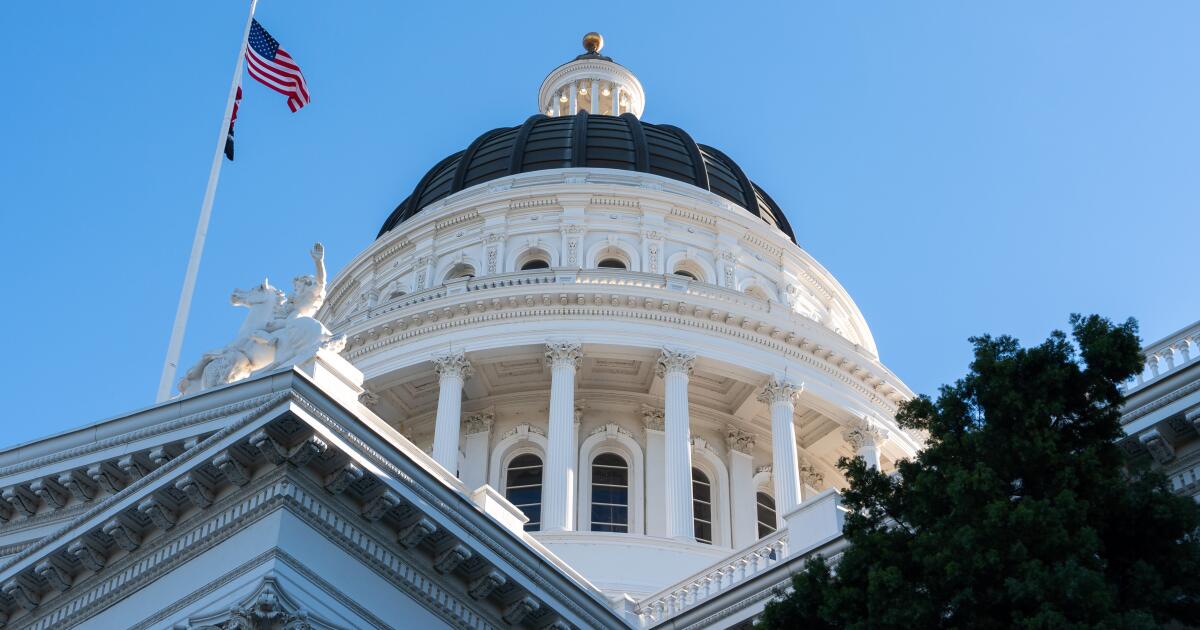
SACRAMENTO — Gov. Gavin Newsom and Democratic leaders of the California Legislature plan to approve a proposed constitutional amendment this week that would ask voters to give them more flexibility over state spending and allow them to save money that could otherwise go back to taxpayers.
The proposal seeks to exempt deposits into state savings accounts from a spending limit that voters adopted through a series of ballot measures dating back to the late 1970s and to increase the share of tax revenue that can be put into the rainy day fund.
“Putting money aside to protect ourselves from future uncertainties isn’t just good government; it’s common sense,” Newsom said in a statement. “California is strong and resilient, but we’re not immune to economic headwinds. At a time when our essential services are under pressure, we have a responsibility to safeguard the programs and investments that Californians rely on.”
Assembly Constitutional Amendment 20, which Democrats are calling the “Save for California’s Future Act,” could receive push back from taxpayer advocates.
Under an existing state appropriations restraint, also known as the Gann limit, lawmakers cannot spend more than an amount determined by a formula that takes into consideration annual tax proceeds and changes to the population and cost of living. Tax revenue above the limit must be divided between schools and refunds to taxpayers.
With few exceptions, the limit applies to most appropriations of tax revenue, including money that lawmakers tuck away into the rainy day fund and other reserves. California voters have also capped the amount of money lawmakers can set aside in the rainy day fund to 10% of general fund proceeds in a given year.
Since taking office, Newsom has argued that it doesn’t make sense for savings to count as spending under state law.
State budget revenue is subject to dramatic swings from year to year based on stock market activity. The law, Newsom has said, prevents the state from saving more money in good years to stave off cuts to programs in bad years.
The proposed changes would exempt deposits into the rainy day fund and a short term reserve, called the “Projected Surplus Temporary Holding Account,” from the state appropriations limit. The cap on the rainy day fund would grow from 10% of general fund tax revenue to 20%.
“Californians live by a simple, bipartisan truth: set money aside when times are good so you’re ready when they’re not,” Assembly Speaker Robert Rivas (D-Hollister) said in a statement. “The Save For California’s Future Act is what responsible leadership looks like — and future taxpayers will thank us for it.”
The measure could incentivize Democrats to save more money because funds tucked away in the rainy day fund would no longer be considered expenditures counted toward the spending limit. By allowing lawmakers to set aside more money that is not subjected to state spending limits, it could also allow them to hold onto money that would be returned to taxpayers under current law.
The measure is slated for a vote Thursday. If approved by two-thirds of lawmakers, voters will consider the proposal on the November ballot.
Politics
Social media erupts over Mamdani’s silence after Brooklyn coffee shop bans Jewish congressman

Socialists push progressive agenda in NYC primaries
Fox News national correspondent Bryan Llenas reports on the New York City primary, highlighting the influence of socialists. Candidates backed by Zohran Mamdani advocate for abolishing ICE and all deportations, even for convicted murderers.
NEWYou can now listen to Fox News articles!
New York City Mayor Zohran Mamdani is facing swift backlash after declining to condemn a local coffee chain that told a Jewish congressman with pro-Israel views that he was not welcome.
Mamdani has remained silent after the Williamsburg, Brooklyn-based Poetica coffee shop posted — and later deleted — a message on social media telling Rep. Dan Goldman, D-N.Y., not to return after he stopped by the shop with his daughter Monday. The mayor declined to comment through a spokesman when contacted by The New York Times on Monday.
“Shameful,” Fox News Radio analyst Josh Kraushaar wrote on social media in response to a section of The Times story detailing that Mamdani declined to comment.
“Well folks, we’ve reached the stage of antisemitism where Jews are being publicly barred from businesses,” the CEO and co-founder of the antisemitism-focused nonprofit Boundless Israel said on X. “A coffee shop in Mamdani’s New York City told Jewish Congressman Dan Goldman he wasn’t welcome in their store.”
Zohran Mamdani announces new members of his team at the Brooklyn Public Library Greenpoint Branch in Brooklyn on Dec. 17, 2025. (Shawn Inglima/New York Daily News/Tribune News Service via Getty Images)
MAMDANI SKIPS ISRAEL DAY PARADE DESPITE JOINING OTHER CULTURAL CELEBRATIONS
“The café is implementing Mamdani’s wishes,” journalist Melissa Braunstein said.
Fox News Digital reached out to Mamdani’s office for comment but did not immediately hear back.
In a since-deleted social media post, Poetica Coffee said it would have declined to serve Goldman had staff recognized him in the store. Goldman has notably declined to characterize Israel’s war in Gaza as a genocide and has received financial contributions from the pro-Israel lobby AIPAC, drawing criticism from some on the progressive left.
“Hey Congressman Dan Goldman, we see that you stopped by our shop today for a coffee. Do you see how it doesn’t taste like genocide juice? Or are you still having a hard time telling the difference?” the post said.
“See, here at Poetica, we don’t serve racists, fascists, homophobes, genocide enablers, or anyone in between,” the post continued. “Too bad we didn’t recognize you right away, or we would have turned you away. We issued you a refund—we don’t need your money (it’s probably coming from AIPAC anyways). Enjoy your loss on Tuesday. Don’t ever come to Poetica.”
The coffee chain has since deleted its Instagram page amid social media backlash.
Mamdani’s silence comes as he is working to unseat Goldman, despite the incumbent lawmaker being a leading Trump critic and embracing an array of leftist legislative proposals. Goldman notably did not endorse Mamdani’s mayoral campaign, citing concerns about how his administration would approach Jewish New Yorkers.
A Brooklyn, N.Y., coffee shop refunded a purchase made by Rep. Dan Goldman, D-N.Y., over the weekend over his support for Israel, saying the company doesn’t serve “genocide enablers.” (Getty Images; Google Maps)
The mayor publicly backed former New York City Comptroller Brad Lander to represent Goldman’s district, which spans Lower Manhattan and deep-blue, wealthy pockets of Brooklyn.
Democratic voters will decide whether to hand Goldman a third House term during the Empire State’s primary elections on Tuesday.
NY DEM WOULDN’T BACK MAMDANI FOR MAYOR — NOW MAMDANI IS BACKING HIS CHALLENGER
Since both men largely hold the same policy stances, the bruising primary battle has revolved around support for Israel — with Lander vowing to elevate the Palestinian cause if elected to the House.
Goldman has notably supported military aid to Israel following Hamas’ Oct. 7, 2023, attacks and distanced himself from inflammatory rhetoric used by some on the left to criticize Israel.
Goldman offered a tempered response after the coffee chain effectively banned him from their storefronts.
“I’m sorry to see this post,” he said. “The barista could not have been nicer to my 7-year-old daughter and me—allowing her to use the bathroom even though we had not purchased anything. I made sure to buy a coffee in return for her kindness. I hope you at least make sure she gets the tip that she deserved.”
New York City Mayor Zohran Mamdani speaks in support of Brad Lander, Democratic candidate for Congress in New York’s 10th Congressional District, in Carroll Park in the Carroll Gardens neighborhood of Brooklyn on June 14, 2026. (Shuran Huang/For The Washington Post via Getty Images)
CLICK HERE TO DOWNLOAD THE FOX NEWS APP
Assistant Attorney General for Civil Rights Harmeet Dhillon said Tuesday her office has opened an investigation into the matter.
“Federal law prohibits public accommodations such as coffee shops from discriminating against patrons based on their race, religion, or national origin,” Dhillon wrote. “These actions are not only reprehensible, they’re potentially illegal.”
-

 Detroit, MI18 minutes ago
Trailblaze Detroit: Blazing New Trails while Backpacking Metro Detroit | Visit Detroit | Visit Detroit
-

 San Francisco, CA28 minutes ago
Giants open to moving big names before Trade Deadline
-

 Dallas, TX33 minutes ago
Reports: Mavericks acquire Sergio De Larrea in four-team Draft night trade
-

 Miami, FL40 minutes ago
Miami Gardens police make arrest in cold case murder from 2019
-

 Boston, MA43 minutes ago
Woman killed in Mattapan carjacking crash honored at vigil
-

 Denver, CO48 minutes ago
Nuggets trade 26th pick in NBA Draft to Spurs, moving out of first round
-

 Seattle, WA55 minutes ago
NBA Commissioner says Las Vegas, Seattle remain expansion targets for 2028-29 season
-

 San Diego, CA58 minutes ago
Padres cap wild game against Braves with extra-innings win

