Politics
Opinion: Trump's 'lost cause,' a kind of gangster cult, won't go away

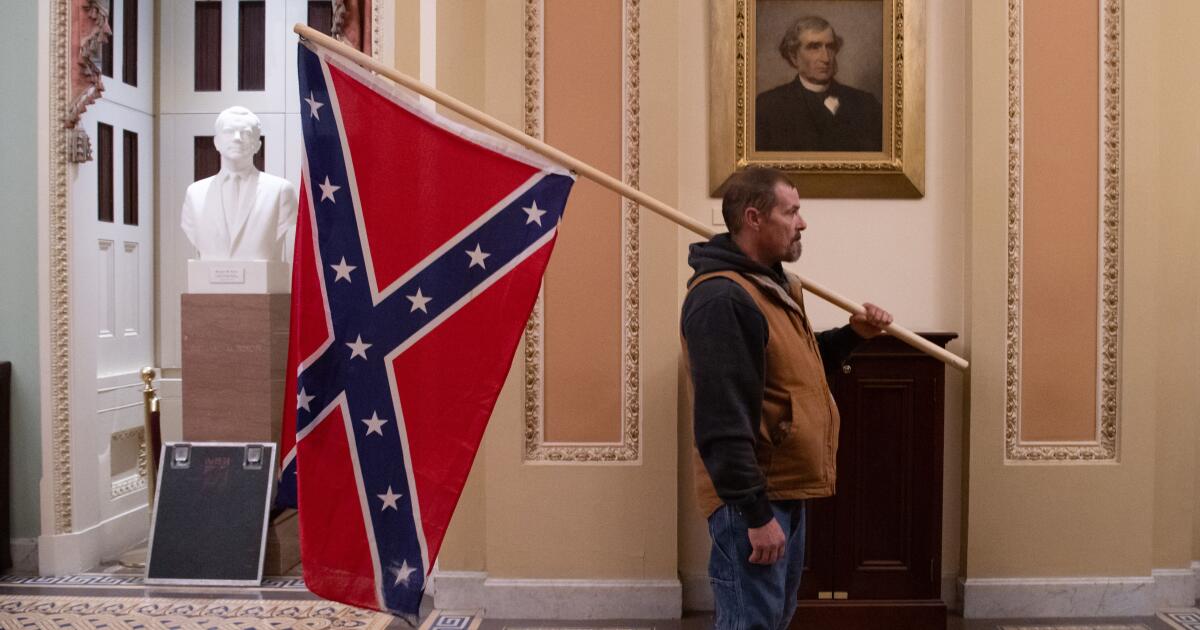
On Jan. 6, 2021, former President Trump, the loser of the 2020 election, famously addressed a gathering of followers who then joined the mob that attacked the U.S. Capitol. While rambling and incoherent, Trump’s speech nonetheless made a few things clear: Leftists had conspired to steal the election by fraud, and the mobs summoned to Washington on his behalf would need to “stand strong.” The implication was that violence might be necessary, because “you’ll never take back our country with weakness.”
Trump then made former Vice President Mike Pence the target of collective scorn for refusing to send the electoral college process back to the states. If “weak Republicans” would not step up and participate in overturning the results, Trump vowed, “we will … never ever forget.” For the next four to five hours, in the most recorded event in American history, the world watched as a new “lost cause” was born in violence and spectacular lies.
There have been numerous lost causes in modern history, usually following defeats in war, where the vanquished glorify their loss as a source of pride and shared animosity toward the victors. Three big lost causes have plagued world and American history. Following their bloody defeat in the Franco-Prussian War of 1870-71, the French exhibited an intergenerational cultural need to avenge the loss. Then, following Germany’s defeat in World War I, the Nazis gained traction by blaming Jews and leftists, who were depicted as “poisons” in the blood of the body politic. And then, of course, there was the American South after the Civil War, when the narrative of the Confederate “lost cause” yielded a potent brew of twisted history and white supremacist ideology.
Lost cause narratives sometimes have been powerful enough to build or destroy political regimes, shape national and ethnic identities, and fill landscapes with monuments. They work primarily as powerful new founding myths, always advancing a politics of grievance that turns into retribution, and sometimes victory. Immediately after the military surrender in 1865, forms of the Confederate “lost cause” took root in a Southern society marked by physical destruction, the psychological trauma of defeat, resistance to the victors’ policy of Reconstruction, racial violence and — with time — carefully constructed sentimentalism.
Specifically, the Confederate “lost cause” claimed that Southern soldiers had shown unfailing valor, and that the South hadn’t really lost, but merely succumbed to superior numbers and resources. Southern white women allegedly supported the cause to the bitter end and helped preserve the “truthful” memory; the Confederacy’s enslaved Black population supposedly remained loyal to their owners; and, finally, the Confederates had never really fought for slavery but rather for “home,” national sovereignty and states’ rights.
To be sustained as public propaganda, lost causes need a pure narrative with clearly identified villains and heroes. Sometimes, they are havens of sick souls; other times, they are the means to power for a disciplined political movement. Trump’s “lost cause,” now newly virulent as he campaigns for a second term despite multiple indictments, draws on a menu of grievances among the disaffected, energizing those who believe that a “diversity”-obsessed multicultural America has veered out of control, especially in relation to immigration at the Mexican border.
Some are also staunch believers in conspiracy theories about “fraud” allegedly committed in the 2020 election as well as other dark notions of leftist machinations in American universities, on school boards, and in the Democratic Party. Unlike the Confederate Lost Cause, the Trump version is a kind of gangster cult, full of rituals of loyalty to a single man and his plans to fashion an authoritarian U.S. government that will use executive power to achieve his followers’ preferences.
Trump’s “lost cause” also has its martyrs, including the hundreds of convicted insurrectionists — known in the movement, and by Republican politicians such as Elise Stefanik (R-N.Y.), as “hostages” — who are now in prison. Above all, it peddles a model of politics and society according to which facts and evidence are irrelevant. At Trump rallies, constitutionalism is for losers, history is little more than a useful weapon, and American civics is deployed as entertainment to indulge hatred of liberalism, representative democracy and — in many cases — nonwhite America. The Trump “lost cause” is thus a platform, one that the Republican Party has adopted to convert these stories and lies into votes. Win or lose, it will not die.
In the Confederate “lost cause,” white Southerners truly had to endure colossal mourning: Nearly 300,000 people lay in graves across their landscape, and much of their society lay in ruins. Trumpian mourning seems rooted in social-media-driven nostalgia for an ideal past that almost no one experienced. The movement’s supporters long for a vanished racial order, for a world of secure social identities preserved from unknown but hated elites, and for communities that have not been drained of cohesion by the internet, the pandemic and economic displacement. They need their story to be great again.
Lost causes can turn lies into common coin and forge deep and lasting myths. We are a long way from knowing how much staying power the Trumpian “lost cause” will have, regardless of whether he survives his criminal charges and the election campaign. What we do know is that we have already witnessed its formative years.
David W. Blight is Sterling Professor of History at Yale University and author of the Pulitzer Prize-winning ”Frederick Douglass: Prophet of Freedom.”


Happy Birthday, America!
You turned 250 on Saturday and, honestly, you don’t look a day over 249. (Ha ha.)
Seriously, it’s perfectly understandable why there’s more gray on your scalp and deeper worry lines on your face. This last year has been another challenging one, to say the least. (And we thought the one cataloged 12 months ago in this space was rough.)
The country is caught up in an unpopular, on-again, off-again war with Iran that was recklessly launched by President Trump with far more swagger than foresight. In an utterly predictable move, Iran choked off the the Strait of Hormuz, a vital passageway for the world’s oil, sending gasoline prices skyrocketing. Though they’ve fallen since the announcement of a shaky ceasefire agreement, the cost of filling up is still significantly higher than a year ago.
Of course, costlier oil means virtually everything else has become more expensive. Trump was reelected in good part because he vowed to tame inflation on his very first day in office. Instead, it’s reached a three-year high.
The ground beef served up at many July 4 cookouts costs 75 cents a pound more than it did a year ago. A package of hamburger buns is up 15 cents. The price of hot dogs and other picnic staples have also increased, along with just about every other item at the grocery store.
Chew that over with your corn on the cob. (Up roughly 2.5% from July 2025.)
Meanwhile, Trump enriched himself to the tune of $2.2 billion during his first year in office alone. Treating the U.S. treasury like his personal cash cow, the president has lavished hundreds of millions of taxpayer dollars on vanity projects such as a personally kitted out Air Force One — a “gift” from Qatar that Trump plans to keep after retirement — and a gilded White House ballroom, rising where the demolished East Wing used to stand. Plans are underway for a grand, marble arch in Washington celebrating, well, you know who.
At the same time, Trump has squandered money and resources pursuing political vendettas, persecution of his enemies and fruitless investigations like the one probing “theft” of the 2020 election and “vandalism” at the algae-clogged Reflecting Pool he promised and failed to rehab.
All this while millions of Americans have lost healthcare coverage and/or federal food assistance, all thanks to the One Big Billionaire Bounty bill that Trump signed into law a year ago.
It’s all a bit unnerving isn’t it, America? You’re on edge in a way you haven’t been in at least a generation.
In Minnesota, in the dead of winter, two of your citizens were gunned down by federal officers as they engaged in that most American of exercises, registering dissent against the policies of their government. From sea to shining sea, innocent Americans have been arrested — and sometimes shipped abroad — and immigrant communities cower in fear of federal agents who often seem bent more on meeting deportation quotas than meting out justice.
You’re divided, America, in ways no one alive has ever seen.
It starts at the very top. Trump acts as though he’s president of a favored rump group — his political supporters — rather than the nation as a whole. He’s used your 250th birthday not to celebrate those many grand and glorious things that hold us together as Americans but to bask in the tanning-bed glow of his immeasurable self-regard.
But, heck, if it’s any consolation on this star-spangled holiday weekend, the country has been through worse. Much worse. And you, America, have not only survived but in many ways grown stronger by surmounting obstacles, facing down your flaws and overcoming some knee-buckling, soul-crushing challenges.
Slavery. Civil war. Racist exclusionary laws. Genocide against indigenous peoples. Two worldwide conflicts. Depression. Financial crises. And too many deadly natural disasters — fire, floods, earthquakes, hurricanes — to enumerate.
Your treatment of some Americans, it should be said, hasn’t always been fair and just. It still isn’t.
People are despairing over the Supreme Court and its genuflecting deference to the president. The justices of its conservative majority have done just about everything short of handing Trump a crown and scepter to reign as a virtually untouchable, imperial president.
But it’s worth noting that earlier court majorities held that Black Americans — “beings of an inferior order,” in the words of the wretched Dred Scott decision — could be denied citizenship, that racial segregation was constitutional and that compulsory sterilization based on eugenics was perfectly fine from a legal standpoint.
That ugly, sordid history won’t necessarily make anyone feel better about the current state of affairs, nor should it. But it does offer some perspective and, with it, hope.
This weekend is best celebrated honoring the country’s many good things and the bright, shining place that America aspires to be, with liberty and justice for all. So chin up! Have another slice of birthday cake, America, and don’t worry about the calories — you really do look terrific for 250!
Going forward it’s up to us, your citizens, to keep working toward that more perfect union mentioned in the preamble to the Constitution. Whatever ails you, America, the remedy resides with we the people and the power we hold, particularly at the ballot box.
Unhappy with the wrecking crew that’s heedlessly chain-sawed federal programs and allowed Trump to money-grub with both fists, defile the White House and undermine our rule of law? Send a message and vote ‘em out, starting in November’s midterm election. And bear in mind the damage that’s been wrought come the 2028 presidential race.
Don’t stop believing that, as dark and difficult as things may seem right now, better days lie ahead.
That undimmed and abiding faith is what makes America great.

NEWYou can now listen to Fox News articles!
President Donald Trump is set to deliver what the White House is calling a “historic” speech Saturday night before a massive fireworks display celebrating America’s 250th anniversary.
Trump is still expected to take the stage at 10 p.m. at the conclusion of the Salute to America celebration on the National Mall, though timing of events may fluctuate due to adverse weather, per a senior White House official.
The president’s address is expected to look back on America’s history since its founding 250 years ago, a senior White House official told Fox News.
THE LESSON WE CAN LEARN FROM BICENTENNIAL HISTORY IS TO PARTY LIKE IT’S 1976
President Donald Trump speaks during a rally at Mount Rushmore National Memorial on July 3, 2026 in Keystone, South Dakota. (Chip Somodevilla/Getty Images)
Trump will deliver a “unique” speech featuring the stories of American heroes.
“It will be a unique speech unlike any other he’s given before,” the official added.
Earlier Saturday, Trump celebrated what he described as a “stronger than ever” America in a Truth Social post, praising the “incredible” crowds gathered in Washington despite the heat and storms.
FOURTH OF JULY APP GUIDES SPECTATORS THROUGH NINE-HOUR AIR SHOW FROM NASA JETS TO B-1 BOMBERS
The grand finale lasted over two minutes to cap a 23-minute light and fireworks display over Mount Rushmore after President Donald Trump’s 28-minute speech, brief by his lengthy standards. (Matt Gade)
The president also highlighted the air shows over the nation’s capital, saying the pilots and aircraft were “at a level never seen before.”
Trump also addressed recent vandalism at the Reflecting Pool, calling those responsible “Vandal Thugs” and promising the pool would be drained and repaired after the holiday weekend.
The president’s remarks come one day after he delivered a patriotic speech at Mount Rushmore, where he called the United States the “most exceptional nation ever to exist” and warned that communism posed the nation’s greatest threat.
TRUMP HAILS AMERICA AS ‘MOST EXCEPTIONAL NATION EVER TO EXIST’ IN MOUNT RUSHMORE SPEECH
The U.S. Air Force Thunderbirds perform a flyover during “Salute to America 250” Fourth of July celebrations on the National Mall on July 4, 2026, in Washington, DC. (Finn Gomez/Getty Images)
“Communism is the exact opposite of life, liberty and the pursuit of happiness — it is death, tyranny and the pursuit of evil.
A severe thunderstorm swept through Washington on Saturday evening, prompting emergency officials to urge people on the National Mall to seek shelter.
CLICK HERE TO DOWNLOAD THE FOX NEWS APP
Freedom 250, the event organizer, said it would provide updates on the evening’s schedule as weather conditions developed.

As CNN prepares for change under a new owner, the network’s chief legal affairs correspondent, Paula Reid, is heading for the exit and expected to jump to MS NOW.
The Washington-based Reid’s contract with CNN is up in several months and she has told the network she does not plan to renew. She is expected to sign on with CNN competitor MS NOW, according to people familiar with her plans who were not authorized to comment publicly.
A representative for MS NOW said the network does not comment on personnel matters but added, “as everyone in Washington knows, Paula Reid is an exceptional reporter, and any news organization would be fortunate to showcase her journalism.”
Reid‘s planned departure comes ahead of the impending merger of CNN parent Warner Bros. Discovery and Paramount. The combination has led to speculation over who will run CNN, and the uncertainty is said to have played a factor in Reid’s decision.
Reid joined CNN from CBS News in 2021.
CNN and Paramount’s CBS News will be combined after the merger, but the management structure is still under discussion. Paramount put Bari Weiss, founder of the heterodox digital news site the Free Press, in charge of CBS News in October, with a mandate to move the network’s coverage more to the political center. Based on the chaos that has ensued at CBS News under her watch, many CNN insiders are concerned over her possible stewardship of an even larger and more complex organization.
CBS News executives and on-air talent have pushed back at Weiss’ efforts to make changes at the division, which many insiders have viewed as an attempt to placate the Trump White House while Paramount seeks regulatory approvals needed ahead of closing the $111-billion Warner Bros. Discovery deal.
Internal resistance to Weiss has been strongest at the venerable news magazine “60 Minutes.” The program’s star correspondent Scott Pelley was fired last month after he confronted management over the dismissals of executive producer Tanya Simon and his on-air colleagues Sharyn Alfonsi and Cecilia Vega.
Weiss’ overhaul of the “CBS Evening News” with her handpicked anchor Tony Dokoupil has failed to improve the third-place program’s competitive position in the ratings. The program has also been criticized for some of its editorial decisions and logistical snafus.
CNN anchor Anderson Cooper has reportedly told colleagues he does not want to work for Weiss if the cable network is put under her purview. He already rejected an offer from Weiss to anchor the “CBS Evening News” and declined to renew his deal as a “60 Minutes” contributor after nearly two decades with the program.
The chaos at CBS has given pause to people at CNN. Larry Ellison, the tech billionaire and father of Paramount Chief Executive David Ellison, has reportedly promised Trump there will be sweeping changes to CNN after the merger.
Reid, 43, is among the many TV news correspondents and anchors that Trump has disparaged over the years, claiming they are unfair in their coverage. As White House correspondent for CBS News, Reid was known for asking tough questions of Trump during his White House briefings on the coronavirus.
Reid was a lawyer before becoming a journalist at CBS News in 2010. In addition to serving as White House correspondent for the network, she covered the Justice Department and the Supreme Court.
Reid would be another significant hire for MS NOW, the progressive-leaning channel that is rebuilding its roster after separating from NBC News and its parent, Comcast. The network formerly known as MSNBC is now part of Versant, a company with a stable of cable networks spun off by Comcast.
Peter Alexander, former chief White House correspondent for NBC News, is joining MS NOW as a morning anchor later this year. The network also hired former “CBS Mornings” executive producer Shauna Thomas as political director.
-
 Business1 minute ago
China-backed AI tool behind fake Brad Pitt fight making Hollywood inroads
-
 Entertainment4 minutes ago
Don Was produced the Rolling Stones, Bob Dylan and Ozzy. At 73, he found his voice in Detroit — and the Dead
-
Politics16 minutes ago
Commentary: Happy Birthday, America! You’ve weathered another rough year
-
 Sports24 minutes ago
Dodgers’ Eliezer Alfonzo praying his sister and stepmother will be found in Venezuela
-

 World34 minutes ago
Reform UK’s Farage failed to disclose funds from convicted criminal: Report
-
 News1 hour ago
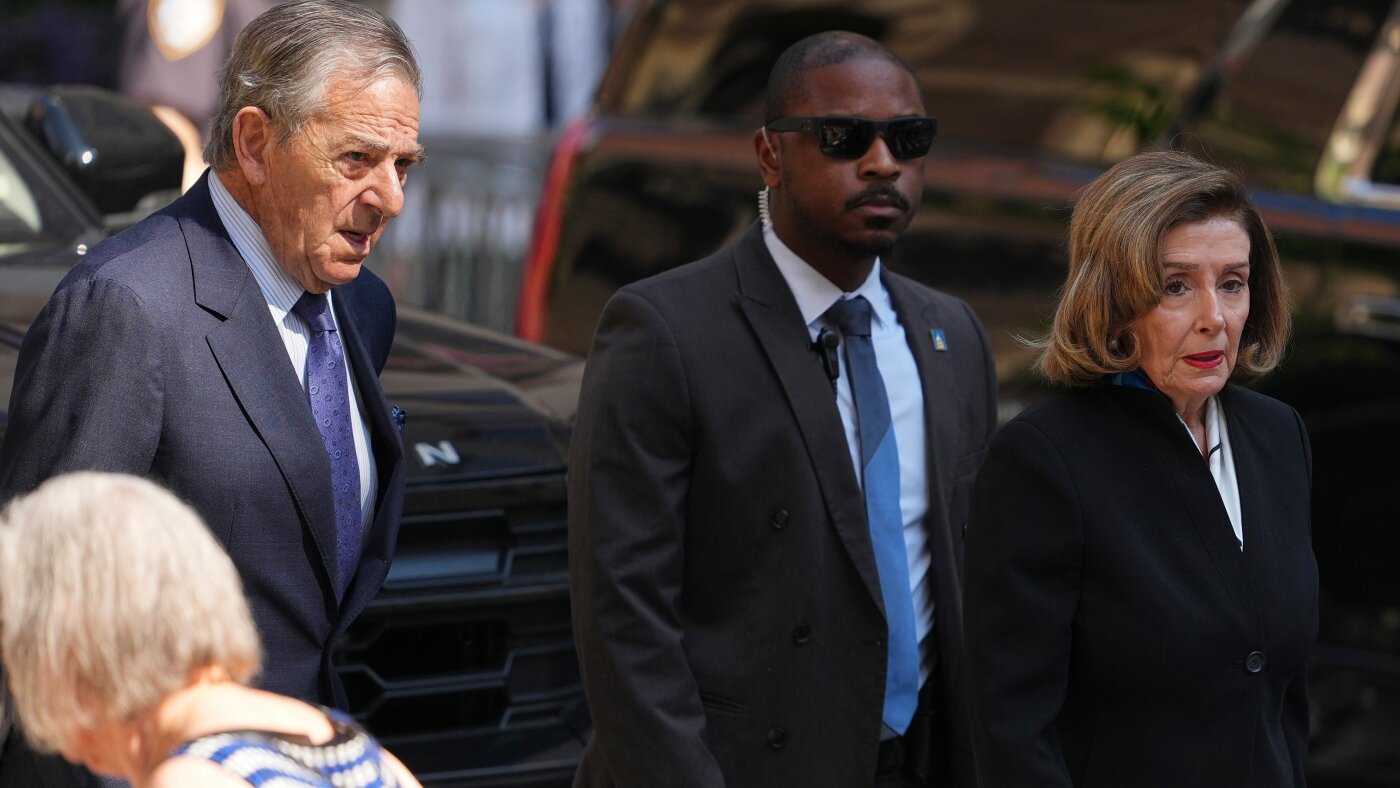
Paul Pelosi in hit-and-run in California, car left with major damage, authorities say
-

 Los Angeles, Ca2 hours ago
Firefighters battle Fourth of July blazes around Los Angeles
-

 Detroit, MI3 hours ago
Storm chances linger into the start of the week across Metro Detroit

