Politics
In 2024, PA Gov. Shapiro will face demanding school funding challenges, prepare for presidential election


- In 2024, Democratic Gov. Josh Shapiro faces challenges in his second year leading Pennsylvania.
- Shapiro is pressured to address a court ruling declaring Pennsylvania’s public school funding system unconstitutional.
- His administration must also oversee a presidential election.
In 2024, Democratic Gov. Josh Shapiro could face a more complicated sophomore year in charge of Pennsylvania after his first year brought a highway collapse, a budget stalemate and friction with allies and adversaries as he navigated the battleground state’s political divides.
He is under pressure to respond to a court ruling that Pennsylvania’s system of public school funding unconstitutionally discriminates against poorer districts.
His administration must also oversee a presidential election that, four years ago, was marred by a barrage of right-wing conspiracy theories, Donald Trump-allied efforts in court to overturn it and threats against election administrators.
PA GOV. SHAPIRO SIGNS OFF ON BILL EXPANDING DISCLOSURE REQUIREMENTS FOR STATE-FUNDED UNIVERSITIES
And Shapiro, viewed nationally as a rising political star, must navigate the nation’s only politically divided legislature in which allies and adversaries alike are wary of him.
Pennsylvania Gov. Josh Shapiro speaks during an interview with the Associated Press in his office in the state Capitol in Harrisburg, Pa., on Dec. 20, 2023. In response to calls for increased funding for poor public schools, Shapiro may need to compromise, potentially accepting a new $100 million taxpayer-paid voucher program for private and religious schools. (AP Photo/Daniel Shanken)
In his first year in office, Shapiro showed himself to be a low-key operator who took a hands-off approach in the statehouse and attempted to avoid political fights he might not win.
He often emphasized the need to gain approval from both the Democratic-controlled House and the Republican-controlled Senate, and focused more on what his administration accomplished — what he called a “get stuff done” administration — rather than farther-reaching agenda items that are stuck in partisan stalemate.
In 2024, Shapiro will have little runway to show how he’ll handle calls from public school advocates to propose billions of new dollars for the poorest public schools.
DEM GOVERNOR CALLS OUT PENN PRESIDENT COMMENTS ON ANTISEMITISM: ‘FAILED LEADERSHIP’
“I’m very mindful of the Commonwealth Court decision and that we need to have more equity in our system. I’m also very mindful that someone has to pay for that,” Shapiro told The Associated Press in a recent interview in his office.
A compromise deal may require Democrats to accept something they just defeated: a new $100 million taxpayer-paid voucher program to subsidize tuition at private and religious schools.
Republican lawmakers are wary of ramping up public-school spending by billions of dollars. But they are in step with Shapiro in pushing for a voucher program — a position that made Shapiro unique among Democratic governors in the U.S.
In the fall, Shapiro’s administration will be nationally watched for how it runs the presidential election, when Pennsylvania is yet again expected to be pivotal to the White House stakes.
The state remains in Trump’s crosshairs after he and Republican allies tried to overturn Biden’s 2020 victory there and Trump declared that ” bad things ” happen in Philadelphia.
Last month in Iowa, Trump told supporters to “guard the vote” and to “go into” Detroit, Philadelphia and Atlanta to “watch those votes when they come in.”
Shapiro — who as attorney general played a central role in defending Pennsylvania’s 2020 election against Republican efforts in court to overturn it — said administration officials have been meeting for months.
They are preparing on legal, law enforcement and election administration fronts “to administer an election that everyone, regardless of your choice of candidate, can have faith in,” Shapiro told AP. “That is one of our most serious responsibilities.”
The election is likely to be close.
Complicating it is a state law that prohibits counties from processing mail-in ballots before Election Day — raising the specter of another drawn-out count in Pennsylvania like the one in 2020 that gave a window to Trump-inspired conspiracy theories and false claims.
Nearly every other state allows mail-in ballots to be processed before Election Day. In Pennsylvania, Republican lawmakers have refused to allow it without attaching other election-related changes that Democrats oppose.
For his part, Shapiro’s administration ably responded to the collapse of a critical section of Interstate 95 in Philadelphia and the derailment of tanker cars carrying toxic chemicals just over the Ohio-Pennsylvania state border.
Still, getting deals in the statehouse wasn’t necessarily Shapiro’s strong suit.
A budget deal Shapiro struck with Republican lawmakers ran into solid opposition from Democrats. Shapiro then angered Republicans when he backed off it, precipitating a stalemate over spending that normally gets done in June.
Lawmakers and Shapiro last month wrapped up the last loose ends by greatly expanding subsidies for child care and private schools, among other things.
But Shapiro’s hands-off approach in the statehouse drew complaints from both sides. Shapiro chalks up such complaints to finger-pointing over partisan food fights.
“I don’t run the Legislature, right?” Shapiro told reporters at a news conference last month. “I mean, we are separate branches of this government. … Our Legislature has to figure out how to show up to work and then they’ve got to figure out how to work together.”
DEM PENNSYLVANIA GOV. SHAPIRO BLASTED OVER HANDLING OF SEXUAL HARASSMENT ALLEGATIONS
He will enter 2024 as the only governor in the U.S. with a politically divided Legislature after a Democratic victory in Virginia’s House.
Even so, for Shapiro, it may be a benefit: House Democrats block Republican bills that Shapiro might otherwise veto, while Senate Republicans block Democratic bills that are too progressive for Shapiro’s political instincts.
Shapiro brushes off that suggestion.
“I’m kind of dealing with the cards I’ve been dealt,” Shapiro told the AP. “I’ve just really focused on finding those areas where I can find common ground between the two leaders, right, in the Senate and the House, and see where we can find those points of intersection that allow me to put something forward that we can accomplish.”



NEWYou can now listen to Fox News articles!
While discussing the mystery surrounding UFOs, Vice President JD Vance, who is Catholic, said he believes what people think of as aliens are actually “demons.”
While interviewing Vance, conservative commentator Benny Johnson asked the vice president, “You gonna release all the UFO files?”
“Ah, we’re workin’ on it,” Vance said.
He explained that when he took office he “was obsessed with the UFO files” but ended up being busy with other issues.
Vance asserted that he will “get to the bottom” of the matter.
JD VANCE SAYS UFOS, ALIENS COULD BE ‘SPIRITUAL FORCES’ AS VP VOWS TO ‘GET TO THE BOTTOM’ OF MYSTERY IN SKIES
Vice President JD Vance boards Air Force Two on March 18, 2026, at Joint Base Andrews, Md. (Elizabeth Frantz-Pool/Getty Images)
“I don’t think they’re aliens. I think they’re demons anyway,” Vance noted.
Prompted by Johnson, Vance later elaborated on his view.
“Well, look, I, I think that celestial beings who fly around, who do weird things to people — I think that the desire to describe everything celestial… to describe it as aliens — I mean every great world religion, including Christianity, the one that I believe in, has understood that there are weird things out there, and there are things that are very difficult to explain,” he said.
“And I naturally go — when I hear about, sort of, extra-natural phenomenon — that’s where I go to is the Christian understanding that, you know, there’s a lotta good out there, but there’s also some evil out there,” he continued.
UFO SECRET FILES, DRONE SWARMS AND NUCLEAR-LINKED SIGHTINGS STUN EXPERTS IN 2025
Vice President JD Vance and President Donald Trump attend the inaugural meeting of the Board of Peace at the Donald J. Trump Institute of Peace on Feb. 19, 2026, in Washington, D.C. (Chip Somodevilla/Getty Images)
He added that he believes that among “the devil’s great tricks is to convince people he never existed.”
Last month, President Donald Trump said he would order the release of files pertaining to the issue of aliens and UFOs.
EXPLOSIVE NEW DOCUMENTARY PROBES ‘80-YEAR GLOBAL COVERUP’ OF UFO SECRETS
Vice President JD Vance speaks onstage at Engineering Design Services, Inc. on March 18, 2026, in Auburn Hills, Mich. (Bill Pugliano/Getty Images)
CLICK HERE TO DOWNLOAD THE FOX NEWS APP
“Based on the tremendous interest shown, I will be directing the Secretary of War, and other relevant Departments and Agencies, to begin the process of identifying and releasing Government files related to alien and extraterrestrial life, unidentified aerial phenomena (UAP), and unidentified flying objects (UFOs), and any and all other information connected to these highly complex, but extremely interesting and important, matters. GOD BLESS AMERICA!” the president declared in a February Truth Social post.
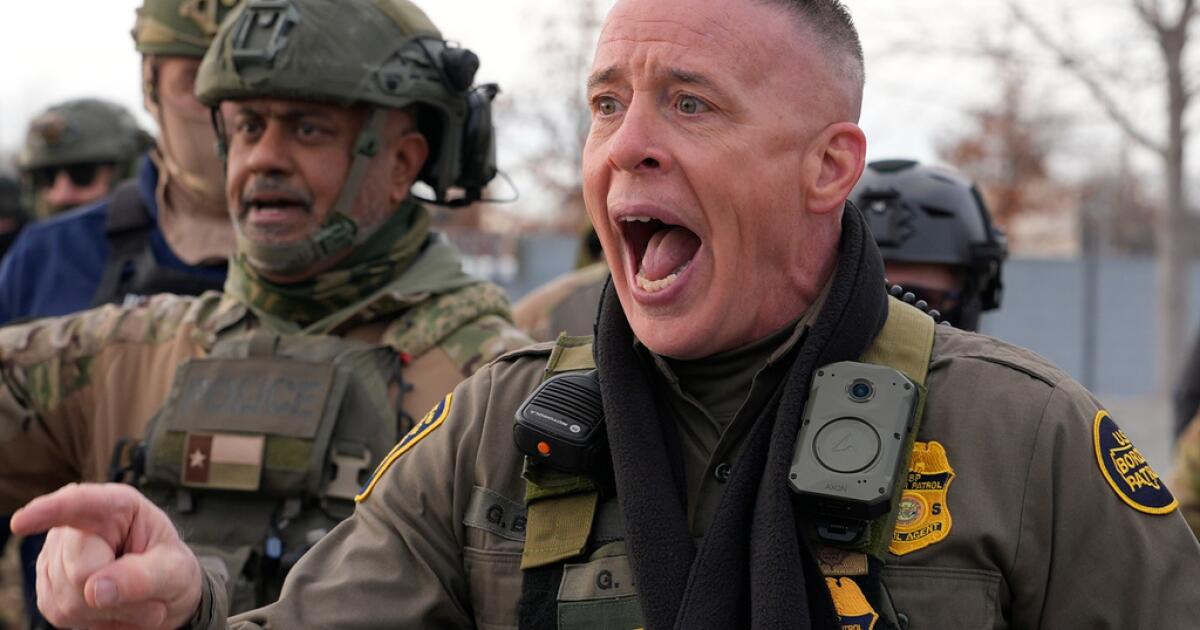
How would you feel about getting a dream gig only to see it end in disgrace because of, well, you?
That’s what Gregory Bovino gets to think about for the rest of his life. Friday is the Border Patrol lifer’s last day on the job after 30 years — and he ain’t leaving because he wants to.
For the last year, the self-described “hillbilly” was the personification of the Trump administration’s xenophobic deportation deluge. Helicopter invasions of apartment complexes, tear gas canisters thrown into large crowds, defying court orders, glamorous photo shoots: There was no municipality too big, no tactic too crazy, no quote too incendiary for Bovino to take on while he treated immigrant neighborhoods like the shores of Normandy.
The North Carolina native’s caravan of cruelty quickly earned him a promotion from El Centro sector chief to Border Patrol commander at large, a new position crafted just for him. He embraced the role of migra bogeyman like a tween boy scarfing down a bowl of Warheads, always promising more deportations, more chaos, more more.
Not anymore.
In January, Border Patrol agents shot and killed ICU nurse Alex Pretti during a protest against them a few weeks after an Immigration and Customs Enforcement officer did the same to Renée Good, a mother of three. Bovino threw napalm on the matter by claiming Pretti wanted to “massacre law enforcement” without offering any evidence. The incidents so soured the public on immigration agents that a Public Religion Research Institute poll released this week showed only 35% of Americans surveyed approved of how Trump is handling immigration, compared with 48% a year ago.
Bovino was sent back down to El Centro and lost his privileges on social media, where he had long posted cringe-inducing videos about what a swell guy he was. Even Trump turned on his migra man, telling Fox News that Bovino was “a pretty out-there kind of a guy … and in some cases that’s good. Maybe it wasn’t good [in Minneapolis].”
I should’ve warned Bovino the one time we met that failure was his fate.
The setting: the Fox 11 Los Angeles studios in July. Bovino and I were in to do separate interviews with the station’s former anchor Elex Michaelson. Bovino was in the middle of his Los Angeles invasion, which saw immigration agents lay siege to MacArthur Park, storm Home Depots and car washes and show up outside the Japanese American National Museum while politicians inside were decrying Trump.
Dressed in full Border Patrol uniform, complete with a clipped-on walkie-talkie on his shoulder, the guy was billing himself as a modern-day Charles Martel defending the homeland from invading infidels. The nasal-voiced Bovino rambled to Michaelson about how “Ma and Pa America” deserved a country free from undocumented immigrants and vowed to remain in Los Angeles “until the operation is over.”
Then-U.S. Border Patrol commander at large Gregory Bovino, center, marches with Border Patrol agents toward the Edward R. Roybal Federal Building in downtown Los Angeles after a show of force outside the Japanese American National Museum on Aug. 14.
(Carlin Stiehl / Los Angeles Times)
After his interview, Bovino and three Border Patrol agents strolled into the greenroom to grab some homemade cookies while I sat on a couch. He looked me in the eye while bending down to sign Michaelson’s guest book, as if he expected me to not only recognize him but say something.
It was like staring at someone doing an impersonation that was one part Lt. Col. Kilgore from “Apocalypse Now” and two parts Henery Hawk, the short, brash Looney Tunes character that was always trying to capture the much larger Foghorn Leghorn. He really thought that his scorched-earth assault on L.A. would defeat the city and persuade other communities to offer no pushback once Bovino’s self-titled “Green Machine” trolled into town.
The opposite happened.
People who had never bothered with politics — even some who voted for Trump or at least agreed with deporting immigrants with criminal convictions — rose up to resist. Everywhere became a front — social media, the streets, courtrooms — and activists across Southern California began to share notes among themselves and with communities nationwide to prepare them for la migra. Bovino flailed back at every affront instead of focusing on his mission, not realizing his recklessness was eroding public support for his cause and threatening it altogether.
Really, Bovino lost the day he has long claimed as a victory: the Battle of MacArthur Park.
That’s when he persuaded the Trump administration to send a skeptical National Guard alongside his men to surround the historic L.A. green space in the ludicrously named Operation Excalibur. Armed vehicles parked on Wilshire Boulevard. A grinning Bovino strutted around with media in tow. A wannabe cavalry unit, anchored in the center by an agent on a white horse, swept through a soccer field where children were attending day camp just minutes before.
No one was arrested or detained that day. Instead, Bovino left to a chorus of cuss words and boo birds. The exercise allowed Americans to see the folly of burning millions of taxpayer dollars just so someone could star in a TikTok reel. It also broke the spell Bovino had cast over many critics — myself included — who had feared he truly was an unstoppable Punisher.
Nah, he was just a spiky-haired pendejo.
If Bovino was as smart as he thinks he is, he would’ve followed the longtime strategy of another longtime immigration enforcer. Trump border czar Tom Homan executed a years-long roundup under the Obama administration with numbers Trump has yet to reach and with nowhere near as much public rancor. Homan, who loves the camera almost as much as Bovino, knew then and now that an issue as explosive as deportations must be approached quietly if it’s to be done successfully.
Instead, not only does he have to clean up Bovino’s mess, there’s now a real chance that the Republicans will lose the midterms because Latinos who voted for Trump in 2024 are now furious at his administration. That’s why even Trump is now telling Republicans to tone down their anti-immigrant rhetoric, stat.
Gracias, Bovino!
You thought you would go down in U.S. history as a domestic Patton, a borderlands Sherman. Instead, your last week coincided with the publication of a New York Times profile of you railing at enemies while downing coffee at a burger bar in El Centro.
You called Customs and Border Protection Commissioner Rodney Scott “weak-kneed,” mocked Homan and said you could’ve deported 100 million people — a radically racist number considering that even the Center for Immigration Studies, which has long pushed for reduced immigration of all kinds, estimated a record 15.4 million illegal immigrants were in this country at the start of Trump’s second term.
Instead, you’re heading off to the Tar Heel State to spend your days hunting … coyotes.
“Maybe I get me some dogs and we go hard,” you told the New York Times. “I’ll take it in my own hands.”
Which reminds me of another hapless cartoon character who thought himself a genius but who kept screwing things up in ceaseless pursuit of his quarry: Wile E. Coyote.

As anyone who has ever seen his buildings knows, Donald Trump has always liked to see his name displayed prominently. It’s become a hallmark of his presidency, to the point that the Treasury Department announced on Thursday that President Trump’s signature will appear on U.S. dollars later this year, a first for a sitting U.S. president.
The move is the latest reflecting a push to imprint his personal brand on Washington and the nation in ways that could outlast his presidency.
In total, since the start of Mr. Trump’s second term, there have been more than a dozen instances of his name, image or signature emblazoned on a variety of American initiatives and institutions. Some changes seem as if they could be lasting, some are caught up in the courts, and others may never get off the ground.
Here is a look at that ever-growing list.
Already approved uses
Joseph Eid/AFP via Getty Images, Stephen Crowley/The New York Times

U.S. Treasury
Eric Lee/The New York Times
Eric Lee/The New York Times
Trump Card
TrumpRX
Dr. Mehmet Oz, who runs Medicare and Medicaid, has said that Mr. Trump was not involved in picking the name. “We thought it had a catchy element to it,” he said.
Trump Accounts
Department of Interior, via Center for Biological Diversity
U.S. Navy
U.S. Air Force
Proposed uses
Johnny Milano/The New York Times
Todd Heisler/The New York Times
Shawn Thew/EPA, via Shutterstock
Washington Commanders
Ruth Fremson/The New York Times
Joseph Eid/AFP via Getty Images
Chip Somodevilla/Getty Images

‘The Comeback’ is back. That’s something to Cherish

The best deals we’ve found from Amazon’s Big Spring Sale (so far)

Zelenskyy offers cutting-edge drone defense to Gulf allies as Ukraine seeks missile support

JD Vance says he was ‘obsessed’ with UFOs, believes aliens are actually ‘demons’

Hormone therapy boosts weight loss drug results by 35% in women, study finds

Florida High School Football Rankings: Top 25 teams – Oct. 21

How old is Bo Nix? What to know about Oregon quarterback ahead of 2024 NFL Draft

Cleary's 21 help Le Moyne down Central Connecticut State 69-64 in OT

99th annual Pony Swim held in Virginia

Indiana Members Credit Union announced as new anchor tenant at Bottleworks District
JD Vance says he was ‘obsessed’ with UFOs, believes aliens are actually ‘demons’
The EU's recipe for trade deals : easy on beef, tough on wine
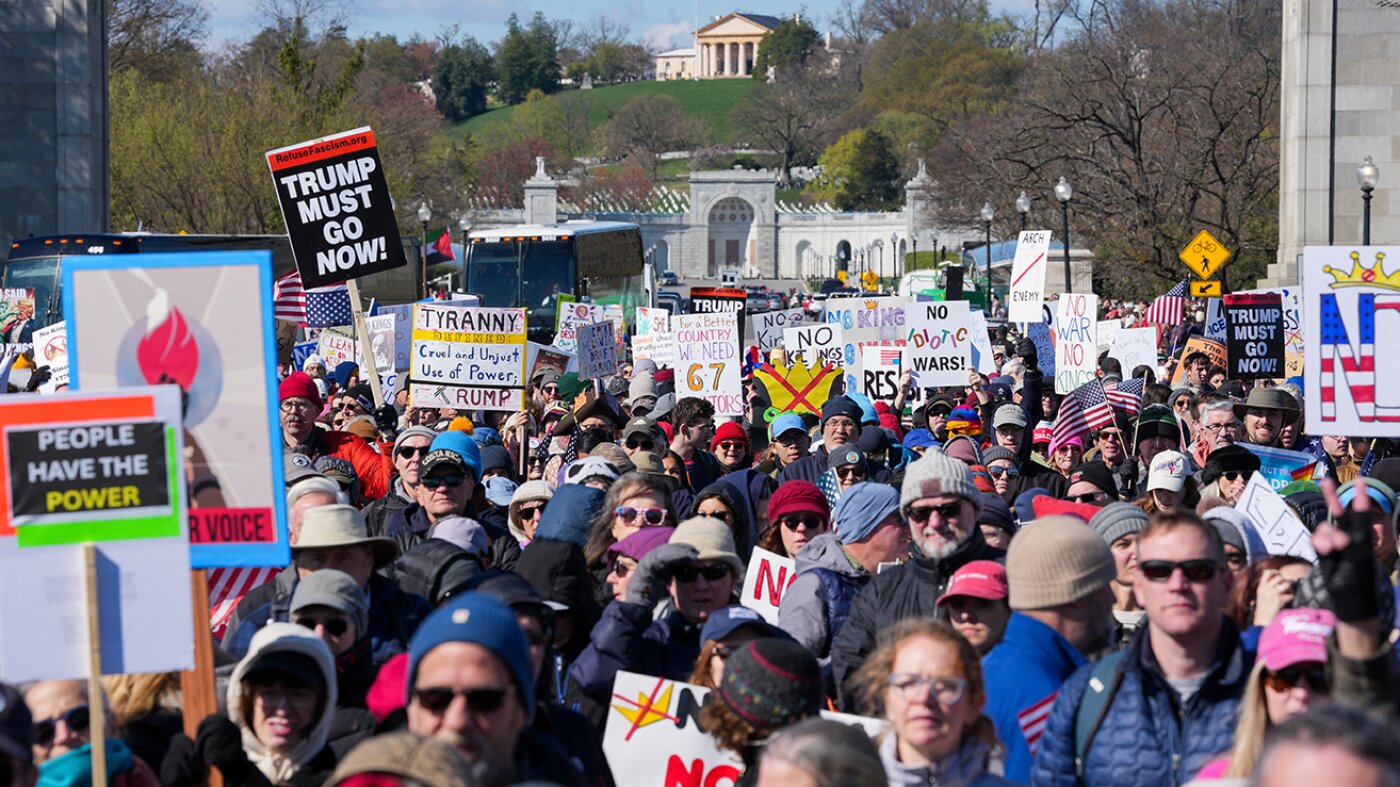
Photos: ‘No Kings’ protests across the country

Jeffries declines to break with indicted Democrat after ethics panel’s guilty verdict

Hundreds of thousands march through London in stand against the far right
-

 Sports1 week ago
IOC addresses execution of 19-year-old Iranian wrestler Saleh Mohammadi
-

 New Mexico6 days ago
Clovis shooting leaves one dead, four injured
-

 Tennessee5 days ago
Tennessee Police Investigating Alleged Assault Involving ‘Reacher’ Star Alan Ritchson
-

 Technology7 days ago
YouTube job scam text: How to spot it fast
-

 Minneapolis, MN3 days ago
Boy who shielded classmate during school shooting receives Medal of Honor
-

 Texas1 week ago
How to buy Houston vs. Texas A&M 2026 March Madness tickets
-

 Science1 week ago
Record Heat Meets a Major Snow Drought Across the West
-

 Politics1 week ago
Schumer gambit fails as DHS shutdown hits 36 days and airport lines grow