Northeast
Watchdog group hits Letitia James with bar complaint after federal judge tosses case

NEWYou can now listen to Fox News articles!
A conservative-aligned watchdog group has filed a bar complaint accusing New York Attorney General Letitia James of professional misconduct tied to her Norfolk, Virginia, mortgage, allegations that were also at the center of her recently dismissed federal charges.
The Center to Advance Security in America (CASA) filed the complaint with the state’s Attorney Grievance Committee, accusing James of engaging in “illegal and dishonest conduct” in connection with the mortgage she took out on the property, according to the New York Post.
According to the complaint and related public statements, the group alleges that James’ actions raise concerns under the state’s Rules of Professional Conduct, the ethical standards that govern lawyers in New York.
“Fraud, misrepresentation, honesty and trustworthiness are all factors that the Rules of Professional Conduct expressly consider when weighing whether to discipline an attorney,” Curtis Schube, the group’s director of research and policy, wrote in the four-page complaint, according to the outlet.
A TALE OF TWO INDICTMENTS: TOP DEMS SAY ‘NO ONE IS ABOVE THE LAW’ ON TRUMP, BUT DECRY COMEY CASE
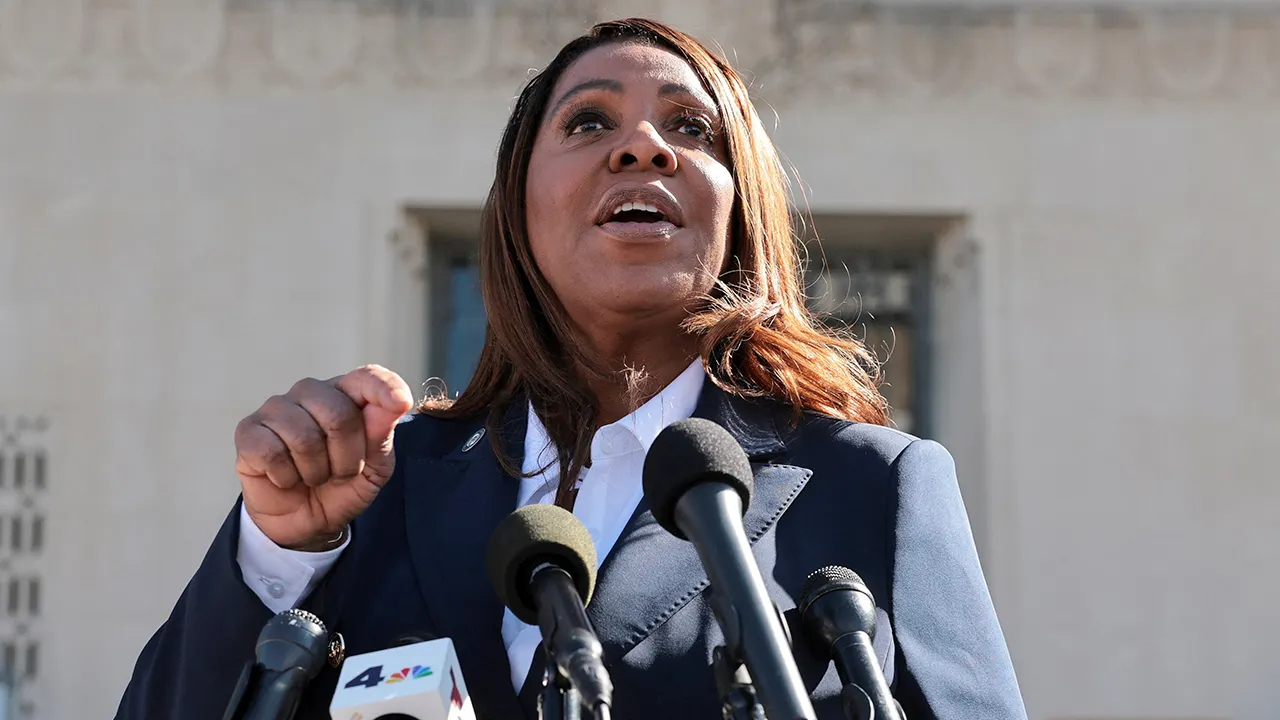
New York Attorney General Letitia James attends a press conference in New York. (Michael M. Santiago/Getty Images)
“The Committee, therefore, should immediately investigate the allegations against James and, if by ‘preponderance of the evidence’ the allegations are substantiated, she should be disciplined accordingly.”
A federal judge threw out the indictments against James and former FBI Director James Comey on Monday, finding they were illegitimate because they had been brought by an unqualified U.S. attorney.
Judge Cameron Currie dismissed the bank fraud charges against James and the false statements charges against Comey without prejudice, meaning the charges could be brought again.
White House press secretary Karoline Leavitt told Fox News’ Martha MacCallum that the Department of Justice plans to appeal.
“We believe the attorney in this case, Lindsey Halligan, is not only extremely qualified for this position, but she was in fact legally appointed,” Leavitt said. “And I know the Department of Justice will be appealing this in very short order.”
Lindsey Halligan, special assistant to the president, speaks with a reporter outside the White House, Wednesday, Aug. 20, 2025, in Washington. (Jacquelyn Martin/AP)
LETITIA JAMES VOWS TO CONTINUE TARGETING TRUMP AFTER YEARS IN THE COURTROOM: ‘TRUMP DERANGEMENT SYNDROME’
Currie, a Clinton appointee based in South Carolina, was brought in from out of state to preside over proceedings about the question of Halligan’s authority because it presented a conflict for the Virginia judges. Comey’s and James’ challenges to Halligan’s appointment were consolidated because of their similarity.
Halligan acted alone in presenting charges to the grand juries shortly after Trump ousted the prior interim U.S. attorney, Erik Siebert, and urged Attorney General Pam Bondi to replace him with Halligan, a former White House aide and insurance lawyer. Bondi complied, but Currie found the interim U.S. attorney term had already expired under Siebert and that the Virginia judges were now responsible for appointing a temporary U.S. attorney to serve until Trump could get one confirmed in the Senate.
James was indicted on Oct. 9 for allegedly falsifying mortgage documents to secure a $109,600 loan on the property. She was also charged with making false statements to a financial institution.
White House press secretary Karoline Leavitt said that the Department of Justice plans to appeal the dismissal of the case against James. (Andrew Harnik/Getty Images)
CLICK HERE TO DOWNLOAD THE FOX NEWS APP
James, a second-term Democrat, was accused of claiming the property as her principal residence in 2023 despite being a public office holder in New York at that same time.
She has denied wrongdoing. She previously said she made an error while filling out a form related to the home purchase but fixed it. She noted that she had never tried to deceive the lender.
Fox News Digital reached out to both the New York attorney general’s office and CASA but did not immediately receive a response.
Fox News’ Ashley Oliver and Louis Casiano contributed to this report.
Read the full article from Here



Pennsylvania
Man arrested over alleged antisemitic threats to Gov. Josh Shapiro | The Jerusalem Post

Richard John Franklin, 65, had reportedly visited the district office to seek assistance with paying outstanding taxes.
While being helped by a staff member, he began using antisemitic slurs directed at Governor Shapiro and threatened to commit arson at the governor’s mansion, police stated.
After making these threats, state troopers from the Political Violence Threat Unit met with Franklin at his home later that day, where he provided inconsistent accounts of the incident at the district office, CBS News reported.
According to the police report, Franklin admitted to using an antisemitic slur and claimed that his statements about burning the governor’s mansion were ‘sympathetic’ and ‘positive in nature’ because the Governor and his family had previously survived an arson attack.
Franklin was taken into custody and charged with terrorist threats, ethnic intimidation, harassment, and disorderly conduct.
He was taken to Pennsylvania’s Delaware County Prison after he was unable to post $100,000 bail, and scheduled for a preliminary hearing next week, according to CBS News.
Shapiro and his family had previously survived an arson attack last year while celebrating Passover.
Their residence was set on fire overnight, prompting the family’s evacuation.
This previous attack was reportedly motivated by Shapiro’s perceived stance on Palestine.
The attacker, Cody Balmer, called 911 shortly after the incident occurred early on a Sunday morning, identifying himself and telling the operators that Shapiro needed to know he “will not take part in his plans for what he wants to do to the Palestinian people,” according to the police search warrant.
Reuters and the Jerusalem Post Staff contributed to this report.

“Temporary water use advisories will be posted where applicable and nearby residents and visitors should keep pets from drinking from these waters for at least three days,” the release said
The herbicide treatments target specific invasive aquatic plants, including variable water milfoil, fanwort, water chestnut, sacred lotus, and various algae species, according to the release.
Powerball, Mega Millions jackpots: What to know in case you win
Here’s what to know in case you win the Powerball or Mega Millions jackpot.
Just the FAQs, USA TODAY
The Vermont Lottery offers several draw games for those willing to make a bet to win big.
Those who want to play can enter the MegaBucks and Lucky for Life games as well as the national Powerball and Mega Millions games. Vermont also partners with New Hampshire and Maine for the Tri-State Lottery, which includes the Mega Bucks, Gimme 5 as well as the Pick 3 and Pick 4.
Drawings are held at regular days and times, check the end of this story to see the schedule.
Here’s a look at July 9, 2026, results for each game:
Winning Gimme 5 numbers from July 9 drawing
08-15-26-27-30
Check Gimme 5 payouts and previous drawings here.
Winning Pick 3 numbers from July 9 drawing
Day: 1-5-4
Evening: 6-2-8
Check Pick 3 payouts and previous drawings here.
Winning Pick 4 numbers from July 9 drawing
Day: 5-0-2-1
Evening: 2-6-7-6
Check Pick 4 payouts and previous drawings here.
Winning Millionaire for Life numbers from July 9 drawing
02-15-22-54-58, Bonus: 04
Check Millionaire for Life payouts and previous drawings here.
Feeling lucky? Explore the latest lottery news & results
Are you a winner? Here’s how to claim your lottery prize
For Vermont Lottery prizes up to $499, winners can claim their prize at any authorized Vermont Lottery retailer or at the Vermont Lottery Headquarters by presenting the signed winning ticket for validation. Prizes between $500 and $5,000 can be claimed at any M&T Bank location in Vermont during the Vermont Lottery Office’s business hours, which are 8a.m.-4p.m. Monday through Friday, except state holidays.
For prizes over $5,000, claims must be made in person at the Vermont Lottery headquarters. In addition to signing your ticket, you will need to bring a government-issued photo ID, and a completed claim form.
All prize claims must be submitted within one year of the drawing date. For more information on prize claims or to download a Vermont Lottery Claim Form, visit the Vermont Lottery’s FAQ page or contact their customer service line at (802) 479-5686.
Vermont Lottery Headquarters
1311 US Route 302, Suite 100
Barre, VT
05641
When are the Vermont Lottery drawings held?
- Powerball: 10:59 p.m. Monday, Wednesday, and Saturday.
- Mega Millions: 11 p.m. Tuesday and Friday.
- Gimme 5: 6:55 p.m. Monday through Friday.
- Lucky for Life: 10:38 p.m. daily.
- Pick 3 Day: 1:10 p.m. daily.
- Pick 4 Day: 1:10 p.m. daily.
- Pick 3 Evening: 6:55 p.m. daily.
- Pick 4 Evening: 6:55 p.m. daily.
- Megabucks: 7:59 p.m. Monday, Wednesday and Saturday.
- Millionaire for Life: 11:15 p.m. daily
What is Vermont Lottery Second Chance?
Vermont’s 2nd Chance lottery lets players enter eligible non-winning instant scratch tickets into a drawing to win cash and/or other prizes. Players must register through the state’s official Lottery website or app. The drawings are held quarterly or are part of an additional promotion, and are done at Pollard Banknote Limited in Winnipeg, MB, Canada.
This results page was generated automatically using information from TinBu and a template written and reviewed by a Vermont editor. You can send feedback using this form.
-

 Ohio4 minutes ago
Ohio reports nearly 200 cases of ‘explosive diarrhea’ illness
-

 Oklahoma7 minutes ago
Every Oklahoma State Cowboys’ College Football 27 Preseason Player Rating
-

 Oregon12 minutes ago
Illicit massage businesses shut down in Washington County
-
Pennsylvania19 minutes ago
Man arrested over alleged antisemitic threats to Gov. Josh Shapiro | The Jerusalem Post
-

 Rhode Island22 minutes ago
Aquatic Weed Treatments Planned for 2 RI Ponds, 1 Lake
-

 South-Carolina27 minutes ago
South Carolina Lottery Pick 3, Pick 4 results for July 9, 2026
-

 South Dakota34 minutes ago
Iverson Ford Welcomes the 2027 Ford Expedition to Drivers Across Eastern South Dakota
-

 Tennessee37 minutes ago
Tennessee Highway Patrol holds open house at Jackson district office


