Vermont
Vermont’s rate of homelessness now ranks 4th in the nation – VTDigger


This story, by Report for America corps member Carly Berlin, was produced through a partnership between VTDigger and Vermont Public.
As the number of people experiencing homelessness in Vermont continues to rise to record levels, the Green Mountain State’s per-capita rate of homelessness remains among the highest in the nation.
That’s according to a new analysis of the 2024 point-in-time count, a coordinated, federally-mandated tally of unhoused people taken each January. The annual report on the count, which took place nearly a year ago, was released by the U.S. Department of Housing and Urban Development late last week.
The department found that about 53 out of every 10,000 Vermonters were unhoused when the count took place, putting Vermont fourth on the state-by-state list. In 2022 and 2023, it had the second-highest rate in the nation, a distinction that turned heads as Vermont’s homelessness crisis has grown more visible.
But Vermont’s shift in this oft-cited nationwide comparison shouldn’t necessarily be read as an indication of improvement locally, said Anne Sosin, a public health researcher at Dartmouth College who studies homelessness.
“I wouldn’t take it as a hopeful sign that it’s fourth instead of second,” Sosin said.
While Vermont’s homeless population rose 5% last year, to a record 3,458 people in January 2024, other states saw much more dramatic increases.
Catastrophic wildfires in Maui displaced thousands of people from their homes, the HUD report notes, with many sleeping in disaster emergency shelters when the count took place in January. Hawaii saw an 87% rise in homelessness year-over-year, with 81 people per 10,000 residents recorded as unhoused — the highest rate in the nation. New York shared the same rate, which increased this year, in part, due to an influx of asylum seekers to New York City’s shelter system, according to the report.
Across the country, the annual tally registered the highest number of people experiencing homelessness ever recorded since the point-in-time count began in 2007. Over 771,000 people nationwide were unhoused at the time of the count: a 18% rise from the 2023 count.
The “worsening national affordable housing crisis,” inflation, stagnating wages, and “the persisting effects of systemic racism have stretched homelessness services systems to their limits,” the report notes. And the end of pandemic-era supports, like the expanded child tax credit, have also likely contributed to the national rise in homelessness, it says.
The point-in-time count figure is generally considered to be an undercount. HUD does not tally people who are doubling up with relatives or couch-surfing, and people who are unsheltered are often more difficult to find.
Even as the number of people experiencing homelessness has ticked up, the HUD analysis reflects that Vermont has done a better job than most other states at keeping unhoused people indoors. Over 95% of Vermont’s homeless population was in some form of shelter as of January — either a traditional shelter, or a hotel or motel covered by an emergency housing voucher. Only neighboring New York had a higher rate of people in shelter, according to the report.
Still, the January tally recorded a jump in the number of people living unsheltered in Vermont from a year earlier. And observers expect the 2025 count, which will take place in a few weeks, will capture an even larger number of people sleeping outdoors or in their vehicles.
That’s because over 1,500 people were pushed out of the state’s motel voucher program this fall, after a series of cost-cutting measures went into effect. The program’s rules have since loosened for the winter, allowing some people to re-enter, though cold-weather access is more limited now than in previous years and both shelter space and motel rooms are scarce.
Already this winter, Burlington officials have observed more people living outside than this time last year, said Sarah Russell, the city’s special assistant to end homelessness. When the city opened an extreme cold-weather shelter for the weekend before Christmas — in part because the opening of its regular seasonal shelter has been delayed until the new year — “the number of folks that we saw there was huge,” Russell said. About 50 people showed up the first night, and 80 the next.
“It’s just too cold for people to be living outside,” Russell said.
The HUD report does show signs of progress. Nationally, homelessness among veterans dropped 8% last year — to the lowest number on record, according to a HUD press release. That success can be chalked up to specific housing programs targeted at veterans, the report says, and is often lauded by homelessness advocates as a model for how to tackle homelessness among other groups.
“When there are more resources that are poured into, you know, housing supports for specific sub-populations of folks — the result of that is that it actually drives the numbers down,” Russell said.
The press release also notes several places that saw decreases in homelessness over the past year. Dallas saw its homelessness numbers drop after launching a new program to connect unsheltered people to long-term housing while closing encampments. Chester County, Penn., has seen a nearly 60% drop in homelessness since 2019, after putting in place eviction prevention programs, expanding “housing first” training initiatives, increasing affordable housing groups, and providing fair housing education for migrant workers, according to the release.
When Vermont lawmakers kick off the 2025 legislative session next week, they will get their next chance to tackle the state’s homelessness problem. Their return comes after several deaths of people living outside that have captured the public’s attention in recent weeks.
“My question to Vermont legislators is: how are we going to keep the population experiencing homelessness alive while we make progress on solving homelessness as a state?” said Sosin, the Dartmouth researcher.



Powerball, Mega Millions jackpots: What to know in case you win
Here’s what to know in case you win the Powerball or Mega Millions jackpot.
Just the FAQs, USA TODAY
The Vermont Lottery offers several draw games for those willing to make a bet to win big.
Those who want to play can enter the MegaBucks and Lucky for Life games as well as the national Powerball and Mega Millions games. Vermont also partners with New Hampshire and Maine for the Tri-State Lottery, which includes the Mega Bucks, Gimme 5 as well as the Pick 3 and Pick 4.
Drawings are held at regular days and times, check the end of this story to see the schedule.
Here’s a look at July 9, 2026, results for each game:
Winning Gimme 5 numbers from July 9 drawing
08-15-26-27-30
Check Gimme 5 payouts and previous drawings here.
Winning Pick 3 numbers from July 9 drawing
Day: 1-5-4
Evening: 6-2-8
Check Pick 3 payouts and previous drawings here.
Winning Pick 4 numbers from July 9 drawing
Day: 5-0-2-1
Evening: 2-6-7-6
Check Pick 4 payouts and previous drawings here.
Winning Millionaire for Life numbers from July 9 drawing
02-15-22-54-58, Bonus: 04
Check Millionaire for Life payouts and previous drawings here.
Feeling lucky? Explore the latest lottery news & results
Are you a winner? Here’s how to claim your lottery prize
For Vermont Lottery prizes up to $499, winners can claim their prize at any authorized Vermont Lottery retailer or at the Vermont Lottery Headquarters by presenting the signed winning ticket for validation. Prizes between $500 and $5,000 can be claimed at any M&T Bank location in Vermont during the Vermont Lottery Office’s business hours, which are 8a.m.-4p.m. Monday through Friday, except state holidays.
For prizes over $5,000, claims must be made in person at the Vermont Lottery headquarters. In addition to signing your ticket, you will need to bring a government-issued photo ID, and a completed claim form.
All prize claims must be submitted within one year of the drawing date. For more information on prize claims or to download a Vermont Lottery Claim Form, visit the Vermont Lottery’s FAQ page or contact their customer service line at (802) 479-5686.
Vermont Lottery Headquarters
1311 US Route 302, Suite 100
Barre, VT
05641
When are the Vermont Lottery drawings held?
- Powerball: 10:59 p.m. Monday, Wednesday, and Saturday.
- Mega Millions: 11 p.m. Tuesday and Friday.
- Gimme 5: 6:55 p.m. Monday through Friday.
- Lucky for Life: 10:38 p.m. daily.
- Pick 3 Day: 1:10 p.m. daily.
- Pick 4 Day: 1:10 p.m. daily.
- Pick 3 Evening: 6:55 p.m. daily.
- Pick 4 Evening: 6:55 p.m. daily.
- Megabucks: 7:59 p.m. Monday, Wednesday and Saturday.
- Millionaire for Life: 11:15 p.m. daily
What is Vermont Lottery Second Chance?
Vermont’s 2nd Chance lottery lets players enter eligible non-winning instant scratch tickets into a drawing to win cash and/or other prizes. Players must register through the state’s official Lottery website or app. The drawings are held quarterly or are part of an additional promotion, and are done at Pollard Banknote Limited in Winnipeg, MB, Canada.
This results page was generated automatically using information from TinBu and a template written and reviewed by a Vermont editor. You can send feedback using this form.
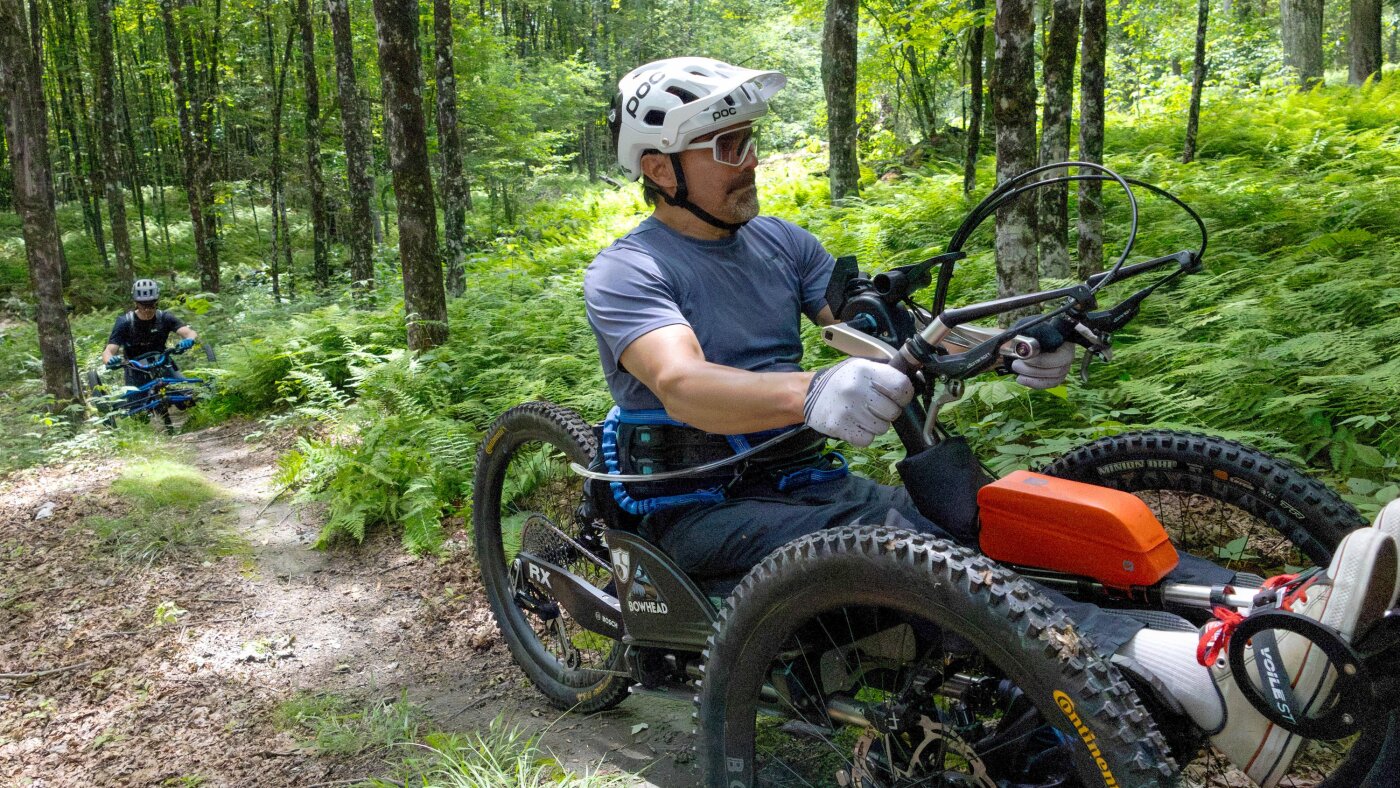
Louis Arevalo rides his adaptive mountain bike through the trails at Randolph Town Forest during an adaptive assessment on Thursday, June 25. Nick Bennette, with the Vermont Mountain Bike Association, rides behind.
Zoe McDonald/Vermont Public
hide caption
toggle caption
Zoe McDonald/Vermont Public
Mountain bike enthusiasts have been working for years on an ambitious 485-mile, multi-use trail called The Velomont that will span the length of the state.
When finished, the collaborative project will knit together existing trail networks, connect 27 communities and include huts and hostels for overnight stays.
New trail construction is finally ramping up after years spent on permits, plans and public input. And organizers say they want to make it as user-friendly as possible.
“For us, it’s not a huge lift to just be mindful when we’re trying to build trail or improve trail to think about the adaptive rider,” said Angus McCusker, the Velomont trail director with the nonprofit Vermont Huts and Trails.
McCusker is referring to the growing number of disabled athletes who mountain bike with specially designed equipment.
“The challenge,” said McCusker, “is we’re connecting to existing trail networks that were never intended for adaptive bikes. So, where we can, we’re trying to do adaptive assessments.”
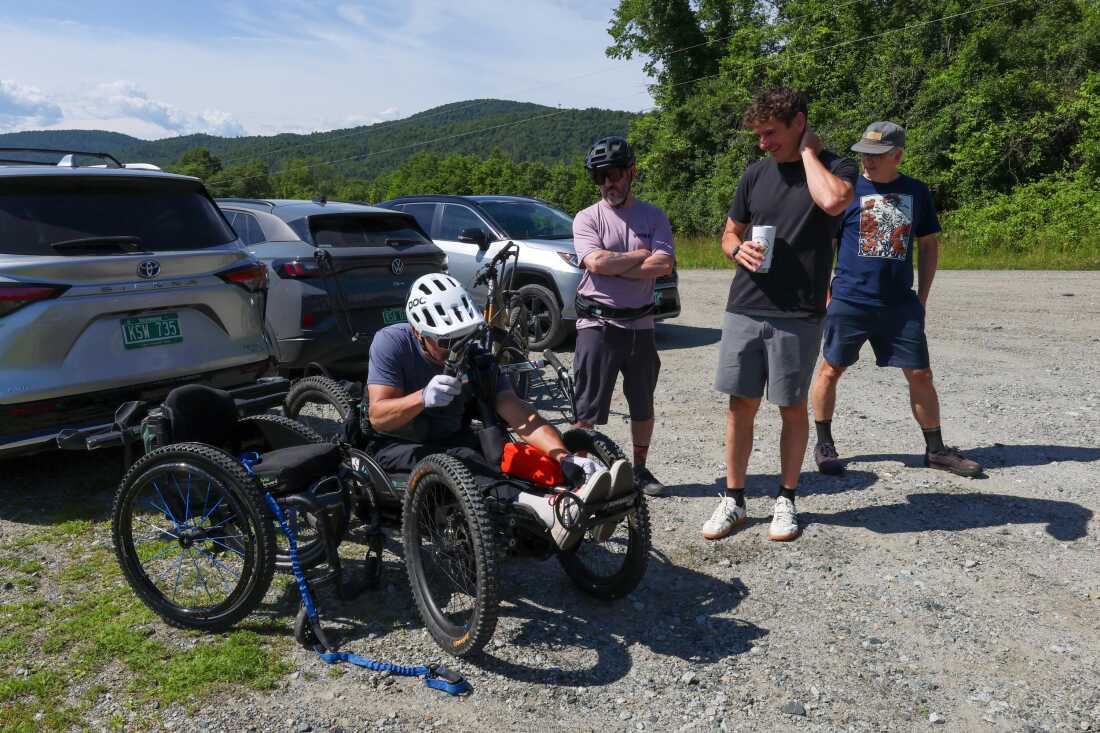
Louis Arevalo, left, straps into his adaptive mountain bike and chats with Jeff Dickson of the Vermont Mountain Bike Association, Angus McCusker with Vermont Huts and Trails, and volunteer Thatcher Hinman (all from left) ahead of a trail accessibility assessment in Randolph, Vermont, on Thursday, June 25, 2026.
Zoe McDonald/Vermont Public
hide caption
toggle caption
Zoe McDonald/Vermont Public
Louis Arevalo of Essex Junction is one of several adaptive athletes helping with that, most recently on some slightly overgrown single track trails in Randolph, a central Vermont town nestled along the eastern edge of the Green Mountains.
Arevalo pedals with his hands. He rides an electric powered recumbent-style three-wheeler that sits low to the ground. His service dog Azul chases along nearby.
“Once you realize what these bikes are capable (of) or this equipment actually opens up, it kind of blows your mind,” he said.
Arevalo was paralyzed in a skiing accident six years ago. Being able to get back on the trails has been a game changer, he said smiling.
“There’s a reason we live in the Green Mountain state. It’s because we like to get outside…you know, seeing the squirrels and chipmunks and birds… I mean, it’s life.”
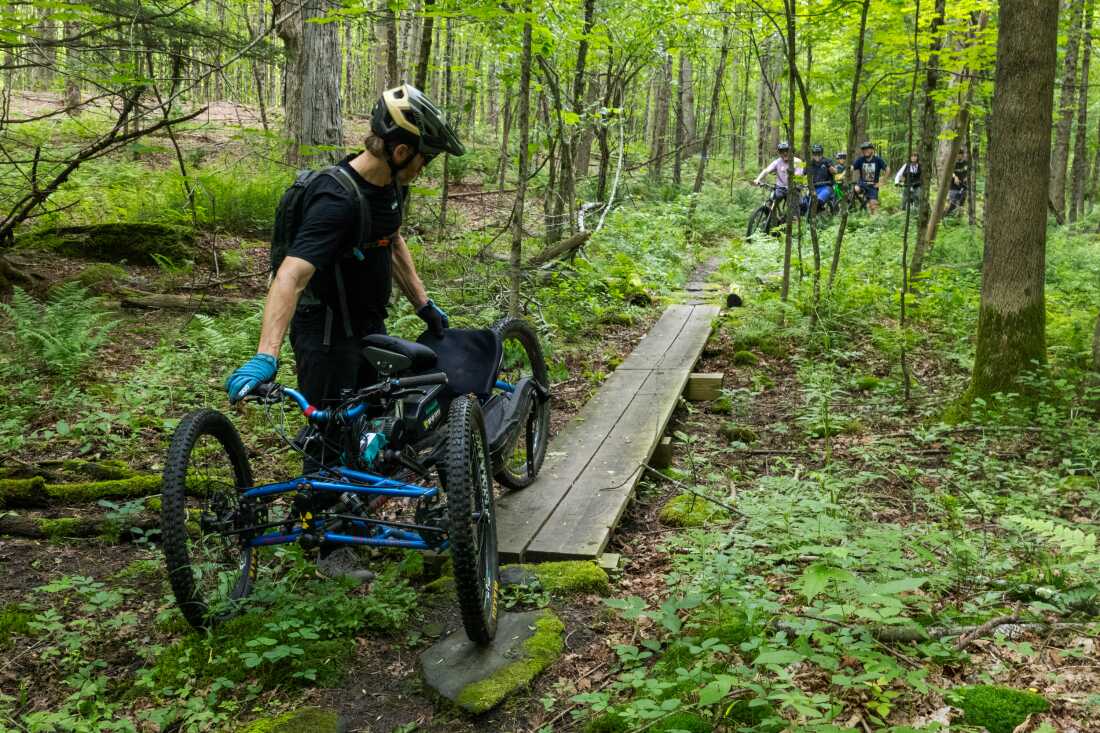
Nick Bennette, of the Vermont Mountain Biking Association, guides an adaptive bike over a narrow bridge, pointing out that other adaptive riders may have trouble getting across.
Zoe McDonald/Vermont Public
hide caption
toggle caption
Zoe McDonald/Vermont Public
But adaptive rigs like Arevalo’s are wider and heavier than regular mountain bikes, and not all trails are user-friendly.
Nick Bennette, who was testing a different type of adaptive bike, got hung up on several tight turns.
“It’s helpful to have different kinds of adaptive bikes on these tests because they all handle a little differently,” he said.
Bennette is executive director of the Vermont Mountain Bike Association, another nonprofit spearheading efforts around the Velomont. He and others involved in the assessment are taking detailed photos and notes on ways to make the trails more accessible.
“Just scalloping out a bit of material on the outside of that corner,” said Bennette, pointing to the area the bike got caught. “That will allow adaptive bikes to make that corner without really changing the way the trail rides.”
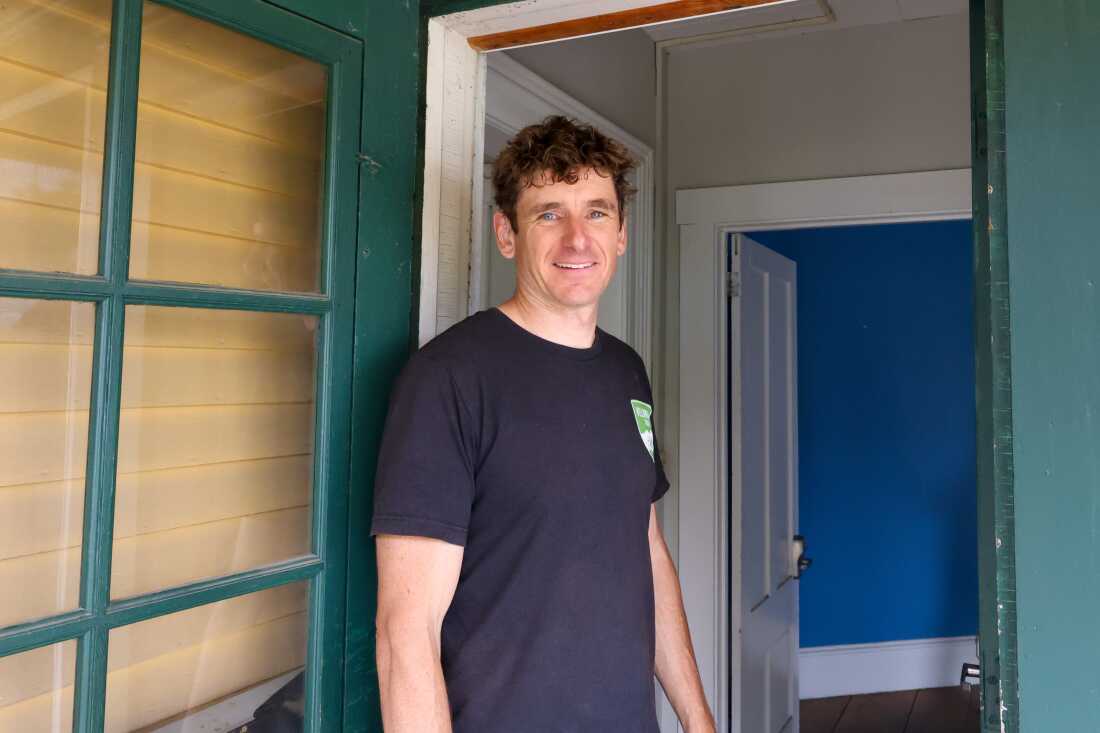
Angus McCusker with Vermont Huts and Trails is working to create accessible accommodations along the Velomont Trail, including a multi-group space in Randolph and a hut in Chittenden that has been outfitted with accessibility in mind.
Zoe McDonald/Vermont Public
hide caption
toggle caption
Zoe McDonald/Vermont Public
Contractors are also trying to reduce barriers at the trail’s overnight accommodations. This summer, contractors are building a new ADA accessible hostel in downtown Randolph.
And two remote huts along the trail will have locked sheds with off-road wheelchairs so bikers don’t have to haul their own.
At the Chittenden Brook Hut, McCusker highlighted a new ramp and wider driveway.
“So if you’re an adaptive rider, you can imagine rolling right up here and you can transfer to your chair that’s available here, and then roll down the ramp and go down to the fireplace, to the privy, to make your meal,” he said.
Louis Arevalo stayed at the hut last summer with other adaptive riders — his first camping trip since his accident.
“There was a babbling brook right there…and it was really refreshing to have easy access to a beautifully built hut that was easy to navigate, and then have these world-class trails right out the door,” he said. “And with these Velomont trails, I can actually plan a hut-to-hut trip with other people.”
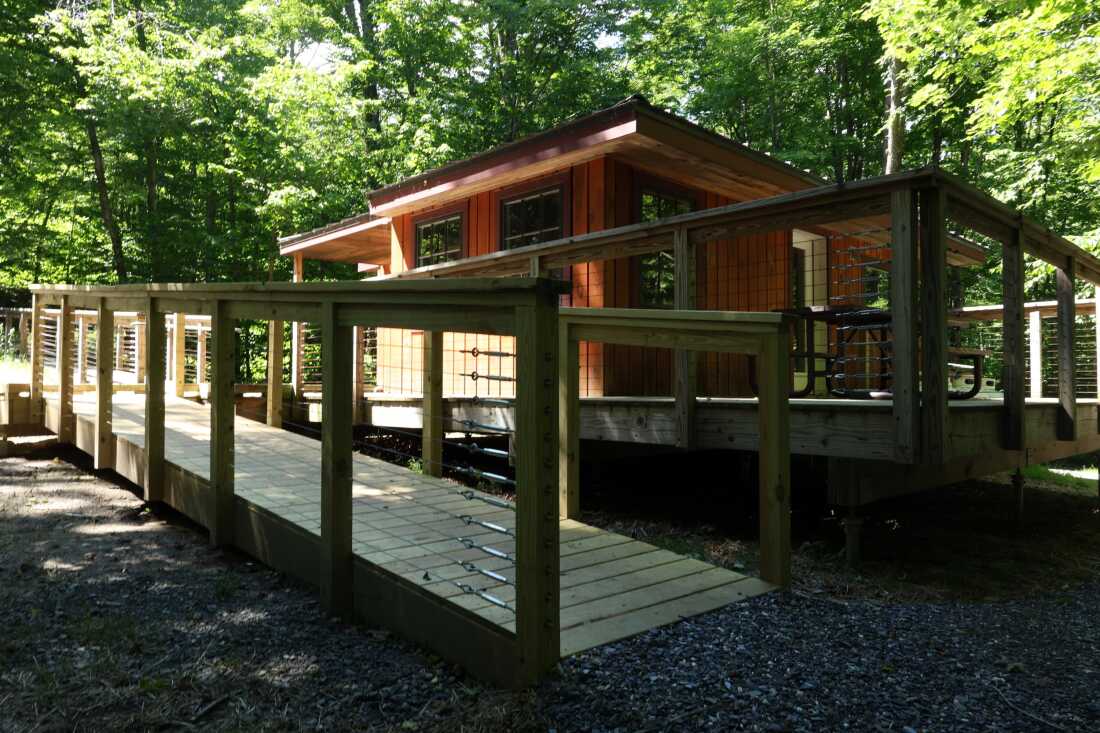
The Chittenden Brook Hut includes accessible ramps, storage for adaptive bikes and specialized off-road wheelchairs for visitors.
Zoe McDonald/Vermont Public
hide caption
toggle caption
Zoe McDonald/Vermont Public
Jeff Alexander is counting on it. He’s director of strategic partnerships with Vermont Adaptive Ski and Sports, a nonprofit that helps people with disabilities access outdoor recreation.
An economic impact analysis the group commissioned estimates their programming generated more than $10 million last year.
“So the adaptive community has money, they travel, they want to travel and they want to play with everybody,” Alexander said. “We just need to level the playing field so that everyone can play together.”
Powerball, Mega Millions jackpots: What to know in case you win
Here’s what to know in case you win the Powerball or Mega Millions jackpot.
Just the FAQs, USA TODAY
The Vermont Lottery offers several draw games for those willing to make a bet to win big.
Those who want to play can enter the MegaBucks and Lucky for Life games as well as the national Powerball and Mega Millions games. Vermont also partners with New Hampshire and Maine for the Tri-State Lottery, which includes the Mega Bucks, Gimme 5 as well as the Pick 3 and Pick 4.
Drawings are held at regular days and times, check the end of this story to see the schedule.
Here’s a look at July 8, 2026, results for each game:
Winning Powerball numbers from July 8 drawing
12-29-37-43-55, Powerball: 18, Power Play: 4
Check Powerball payouts and previous drawings here.
Winning Gimme 5 numbers from July 8 drawing
01-05-23-36-38
Check Gimme 5 payouts and previous drawings here.
Winning Pick 3 numbers from July 8 drawing
Day: 0-1-3
Evening: 2-4-0
Check Pick 3 payouts and previous drawings here.
Winning Pick 4 numbers from July 8 drawing
Day: 3-9-5-9
Evening: 9-2-0-9
Check Pick 4 payouts and previous drawings here.
Winning Megabucks Plus numbers from July 8 drawing
12-15-23-27-40, Megaball: 03
Check Megabucks Plus payouts and previous drawings here.
Winning Millionaire for Life numbers from July 8 drawing
16-18-43-48-50, Bonus: 01
Check Millionaire for Life payouts and previous drawings here.
Feeling lucky? Explore the latest lottery news & results
Are you a winner? Here’s how to claim your lottery prize
For Vermont Lottery prizes up to $499, winners can claim their prize at any authorized Vermont Lottery retailer or at the Vermont Lottery Headquarters by presenting the signed winning ticket for validation. Prizes between $500 and $5,000 can be claimed at any M&T Bank location in Vermont during the Vermont Lottery Office’s business hours, which are 8a.m.-4p.m. Monday through Friday, except state holidays.
For prizes over $5,000, claims must be made in person at the Vermont Lottery headquarters. In addition to signing your ticket, you will need to bring a government-issued photo ID, and a completed claim form.
All prize claims must be submitted within one year of the drawing date. For more information on prize claims or to download a Vermont Lottery Claim Form, visit the Vermont Lottery’s FAQ page or contact their customer service line at (802) 479-5686.
Vermont Lottery Headquarters
1311 US Route 302, Suite 100
Barre, VT
05641
When are the Vermont Lottery drawings held?
- Powerball: 10:59 p.m. Monday, Wednesday, and Saturday.
- Mega Millions: 11 p.m. Tuesday and Friday.
- Gimme 5: 6:55 p.m. Monday through Friday.
- Lucky for Life: 10:38 p.m. daily.
- Pick 3 Day: 1:10 p.m. daily.
- Pick 4 Day: 1:10 p.m. daily.
- Pick 3 Evening: 6:55 p.m. daily.
- Pick 4 Evening: 6:55 p.m. daily.
- Megabucks: 7:59 p.m. Monday, Wednesday and Saturday.
- Millionaire for Life: 11:15 p.m. daily
What is Vermont Lottery Second Chance?
Vermont’s 2nd Chance lottery lets players enter eligible non-winning instant scratch tickets into a drawing to win cash and/or other prizes. Players must register through the state’s official Lottery website or app. The drawings are held quarterly or are part of an additional promotion, and are done at Pollard Banknote Limited in Winnipeg, MB, Canada.
This results page was generated automatically using information from TinBu and a template written and reviewed by a Vermont editor. You can send feedback using this form.
-

 Colorado19 seconds ago
Colorado reports 90 cases of Cyclospora this year: Here’s what health officials want you to know
-

 Connecticut7 minutes ago
Marian Katz Obituary
-

 Delaware10 minutes ago
DE health officials ‘on pins and needles’ after measles cases in PA
-

 Florida15 minutes ago
Florida man accused of driving drunk, causing head-on crash and seriously injuring 2
-

 Georgia22 minutes ago
Georgia cops’ alleged misuse of Flock license plate tracking data fuels privacy concerns
-

 Hawaii25 minutes ago
3 candidates to be considered for District 18 seat
-
 Idaho30 minutes ago
“We won’t insure you”: Robie Creek homeowners struggle to get home insurance due to wildfire risks
-

 Illinois37 minutes ago
After recent Illinois lightning strikes, officials share safety tips

