Sign up for the Today newsletter
Get everything you need to know to start your day, delivered right to your inbox every morning.

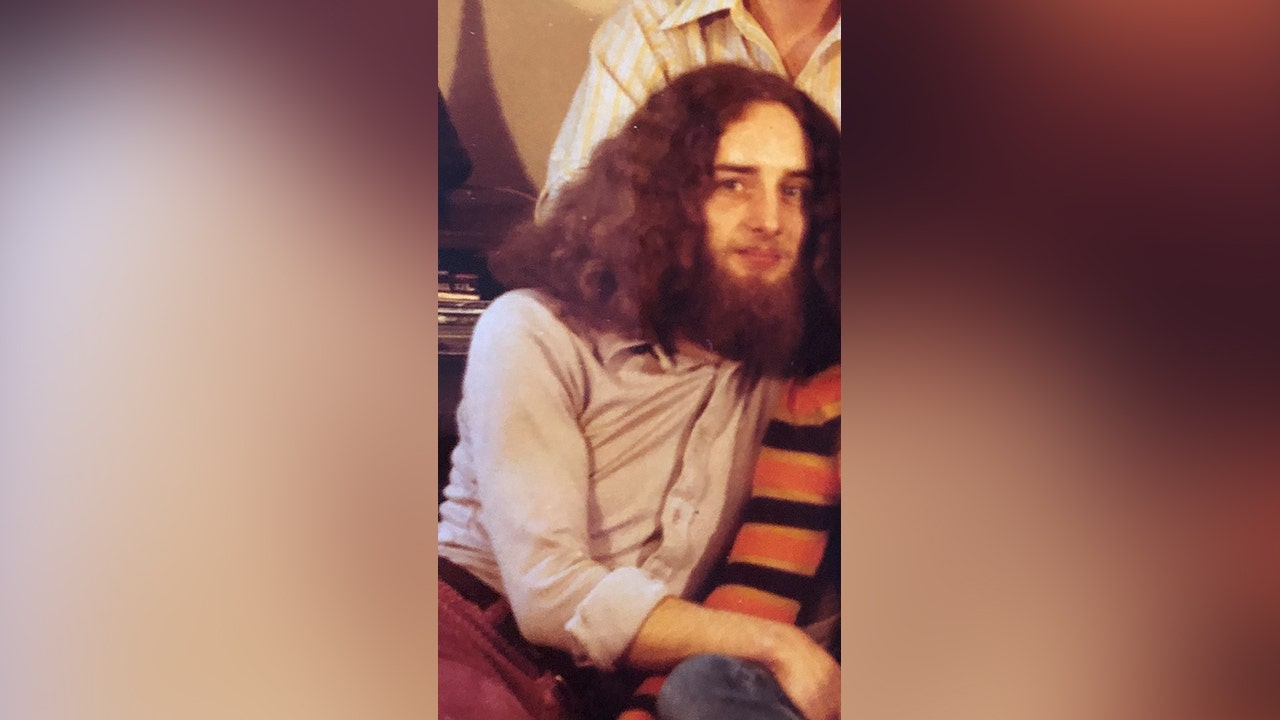
Officials in Berks County, Pennsylvania have identified human remains found in a cave used by hikers on the Appalachian Trail nearly 50 years ago.
Berks County Coroner John A. Fielding III told reporters during a press conference that hikers discovered the remains of a man in a cave near The Pinnacle, who disappeared on the Appalachian Trail on Jan. 16, 1977.
“For 47 years, this man remained unidentified, a nameless figure in a long-forgotten case,” Fielding said. “But today, I am honored to announce that through the unyielding determination of federal, state, and local agencies, the Berks County Coroner’s Office has confirmed the identity of this individual. His name is Nicolas Paul Grubb, a 27-year-old man from Fort Washington, Pennsylvania.”
FOX 29 in Philadelphia reported that investigators believe Grubb took his own life, adding it was determined he overdosed on Phenobarbital and Pentobarbital.
SERIAL KILLER CONFESSES TO 1986 MURDER OF TEEN MOM IN SOUTHERN CALIFORNIA
The Berks County Coroners Office in Pennsylvania identified remains found nearly 50 years ago on the Appalachian Trail as Nicolas Paul Grubb. (Berks County Coroners Office)
According to Drugbank.com, Pentobarbital is a barbiturate used to treat short-term insomnia, while Phenobarbital is a barbiturate used to treat all types of seizures, except for absent seizures.
Investigators, over the past 15 years, compared Grubb’s remains to 10 people, using fingerprints and dental x-rays.
In 2019, Grubb’s remains were exhumed from a cemetery in Berks County to conduct genealogical analysis, but four years later, investigators were still unable to identify him.
NORTH CAROLINA INMATE CONFESSES TO FATAL 1989 HIT-AND-RUN WHILE HE WAS ON PRISON WORK RELEASE
The FBI matched a fingerprint card to Nicolas Paul Grubb within an hour of receiving the evidence. (Kurt “CyberGuy” Knutsson)
Investigators also attempted to perform facial approximations, but the facial bones were broken or missing pieces from the exhumation process.
After submitting the original fingerprint card to the national database for missing unidentified and unclaimed remains, the coroner’s office said, an FBI expert determined a match within an hour.
“This identification brings a long-awaited resolution to his family, who have been notified and expressed their deep appreciation for the collective efforts that made it possible,” Fielding said. “It is moments like these that remind us of the importance of our work to provide answers, to bring closure, and to give the unidentified a name and a story.”
Fielding also said every day since Grubb was identified, his team continues to learn more about the young man.
“Nicky, as he was known to his family, served our nation as a member of the Pennsylvania Army National Guard in the early 1970s,” the coroner said. “He was also known to have lived in Colorado for a short time.”
Read the full article from Here


Local News
Boston Mayor Michelle Wu announced Wednesday that the city is suing social media companies — including Meta, TikTok, Snapchat and YouTube — over their alleged deliberate targeting of minors with addictive features.
The lawsuit, filed on behalf of Boston Public Schools in federal court in California, will be consolidated with more than 1,500 similar complaints from school districts around the country, Wu’s office said.
The lawsuit seeks to force the companies to remove addictive features and compensate the city for the mental health support needed by students. It alleges the companies designed addictive features specifically to keep young people engaged. These features include endless scrolling, frequent notifications, and personalized algorithms, city officials said.
In a statement, Wu said that these companies have evidence of the harm they are causing to children.
“Boston is taking legal action to protect children and youth and hold these companies accountable. Today, we are making it clear that social media companies must end exploitative practices and be accountable to standards of basic protection for children,” she said.
The move comes as more Massachusetts politicians look to rein in social media companies. The state’s House of Representatives passed a bill in April that would implement a phone ban in schools and prohibit children 14 and younger from using social media. Gov. Maura Healey followed that up by introducing legislation that would require social media companies to verify users’ ages and limit the ways in which minors are exposed to potentially addictive design features.
Just last week, the state Senate unveiled legislation that would require social media companies to automatically disable these types of features for minors.
BPS officials say that they have seen a “significant increase” in social media-fueled mental health needs over the past decade. They cited data from the Boston Public Health Commission that shows the impact on high school students. In 2015, just 26.7% of Boston public high school students reported “persistent sadness.” By 2021, that figure had risen to 43.9%.
The district says it has responded by “exponentially” expanding mental health resources. In 2007, there were six social workers and 48 school psychologists employed in the BPS system. The district now has 240 social workers and 105 school psychologists, officials said.
“We work hard to set our students on the best course for success through rigorous academics and whole-student supports, and the research is clear that social media has had a negative impact on students’ well-being while benefiting companies. We all need to do what is right for our students,” Superintendent Mary Skipper said in a statement.
In March, a jury in California found that Meta and YouTube are liable for intentionally designing addictive features and that executives failed to protect young users.
In May, Meta and other social media companies settled a lawsuit brought by a Kentucky school district in a bellwether case.
Get everything you need to know to start your day, delivered right to your inbox every morning.

Several Connecticut swimming areas are closed due to the potential of bacteria in the water.
The heavy rain over the past few days is the reason for the concern.
Swimming is prohibited at the West Beach at Rocky Neck State Park, Sherwood Island State Park, Silver Sands State Park in Milford, and Chatfield Hollow State Park in Killingworth.
Water testing at those state parks will be redone on Wednesday with results back on Thursday.
Clinton has also suspended swimming and other water activities at its town beach until further notice. The beach remains open and all other amenities are available, according to the town.
There is no swimming allowed at all Stratford beaches until Friday, according to the Stratford Health Department.
The East Shore Health Department says beaches in East Haven, as well as Clark/Johnson Beach, Stony Creek, and Branford Point in Branford are also closed to swimming. Water samples are being taken on Wednesday and the results are expected on Thursday.

What’s the deal with … coffee enemas?

LAPD weighs canceling academy classes to get more cops on streets for Olympics


Trump ordered to pay E Jean Carroll $5.8m after failed appeal
Supreme Court financial disclosures reveal how their books add to their income


Waymo video could determine charges after teens’ bizarre California ride

DPD investigating after human remains found in home on Detroit’s west side


Bay Area Teen Waymo Riders Nabbed For Allegedly Shooting Projectiles From Robotaxi


Role Call: Tyrus Wheat looking to make most of second stint with Cowboys


