A Pennsylvania man who uses drones to try to locate wounded deer shot by hunters so they can retrieve their carcasses has been convicted of violating state hunting laws.
Joshua Wingenroth, 35, of Downingtown, plans to appeal the verdicts handed down Thursday by Lancaster County District Judge Raymond Sheller. The case apparently marked the first time anyone has been cited and tried in Pennsylvania for using a drone to recover a dead game animal and it hinged on whether Wingenroth was involved in hunting as defined by state law.
“The Legislature needs to address this,” Sheller said as he delivered his verdict. “Everyone is playing catchup to science.”
WISCONSIN ASSEMBLY APPROVES BILL TO HIKE HUNTING AND FISHING LICENSE FEES FOR OUT-OF-STATE RESIDENTS
Wingenroth, who openly advertised his business in area publications, was told by state game wardens last year that such an activity was illegal, authorities said. Wingeroth, though, told them his lawyer “has a different interpretation” of the law.
Advertisement
On Dec. 6, an undercover game commission officer contacted Wingenroth and asked him to meet and help him find a deer he shot in the Welsh Mountain Nature Preserve. Wingenroth met the officer there within the hour and had the officer sign a waiver stating he wanted to recover the deer carcass but, if the deer was found to still be alive, he agreed to “hunt the deer another day.”
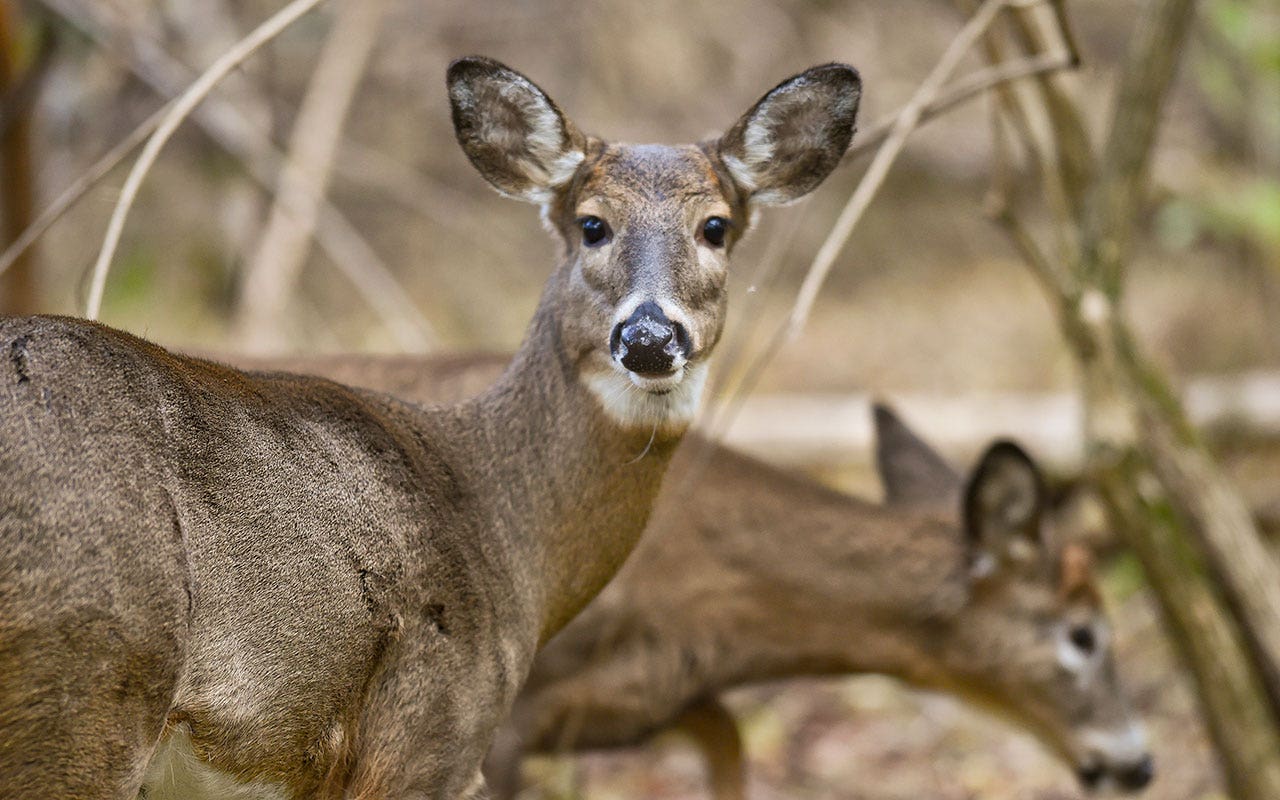
Two whitetail deer look for food in the woods in the Wyomissing Parklands on Nov. 19, 2020.(Ben Hasty/MediaNews Group/Reading Eagle via Getty Images)
Wingenroth, who did not know the shot deer story was a fabrication and part of a sting operation, soon launched a drone and piloted it around remotely while using a thermal camera setting to show the scenery in black and white. He soon caught view of a live deer, and turned on the camera’s infrared setting to show it on a heat map.
He later turned that setting off and activated a spotlight to view the deer normally. However, he and the officer were soon approached by a game warden who confiscated the drone and cited Wingenroth for two counts of using illegal electronic devices during hunting and single counts of disturbing game or wildlife and violating regulations on recreational spotlighting.
Since the legal definition of hunting includes tracking, hunting, and recovery, authorities said Wingenroth technically used the drone to “hunt” game. He was convicted on all four counts and fined $1,500.
Advertisement
Wingenroth’s attorney, Michael Siddons, said his client planned to appeal the verdict. Siddons argued at trial that the state laws concerning the use of devices while hunting are “archaic,” saying they have been patched over time to cover new technologies but do not yet address the use of drones.
Siddons said if Wingenroth used the drone to locate an animal before shooting it that would have been illegal poaching, but Wingenroth instead believed there was a dead deer. He also only used a drone after hunting hours had ended and was never intending to hunt.
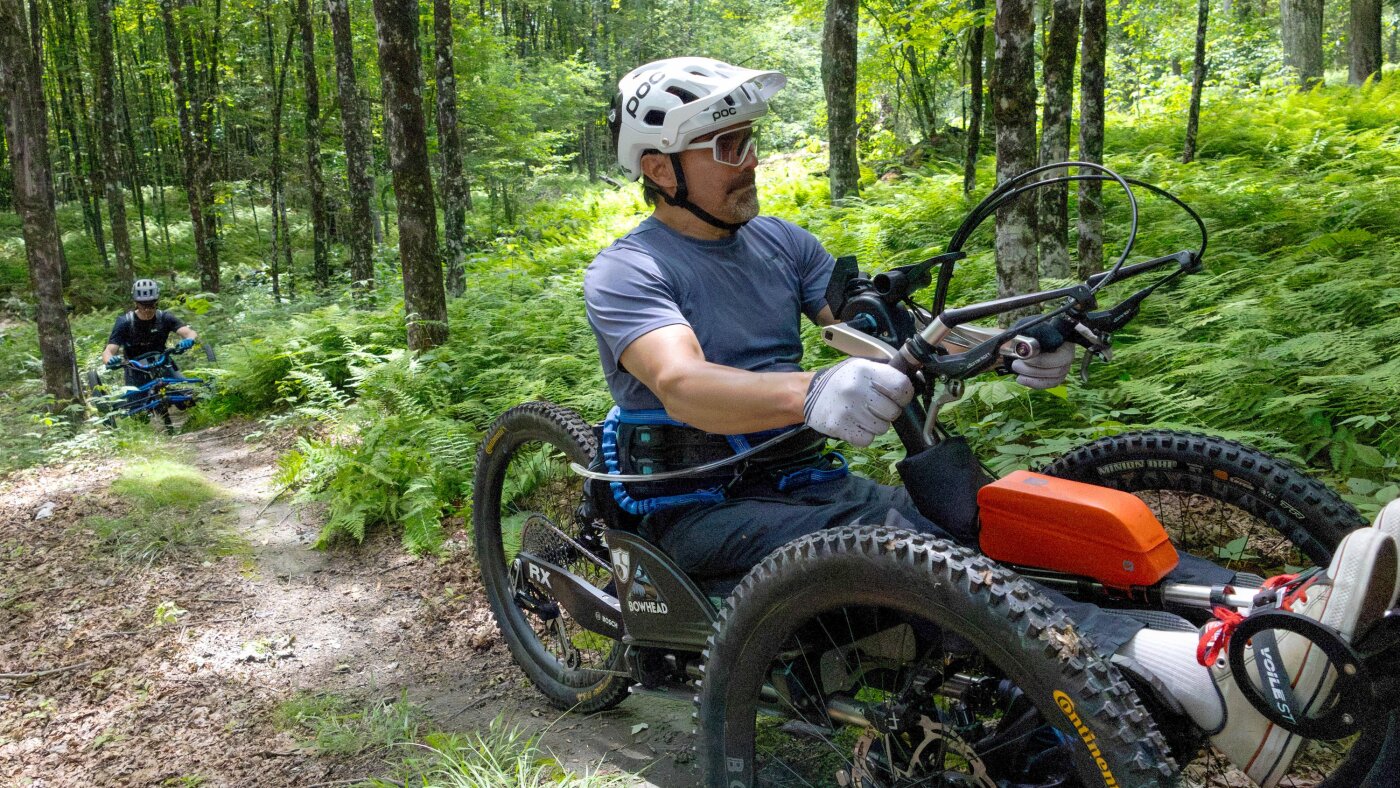
Louis Arevalo rides his adaptive mountain bike through the trails at Randolph Town Forest during an adaptive assessment on Thursday, June 25. Nick Bennette, with the Vermont Mountain Bike Association, rides behind.
Zoe McDonald/Vermont Public
hide caption
Advertisement
toggle caption
Zoe McDonald/Vermont Public
Mountain bike enthusiasts have been working for years on an ambitious 485-mile, multi-use trail called The Velomont that will span the length of the state.
When finished, the collaborative project will knit together existing trail networks, connect 27 communities and include huts and hostels for overnight stays.
Advertisement
New trail construction is finally ramping up after years spent on permits, plans and public input. And organizers say they want to make it as user-friendly as possible.
“For us, it’s not a huge lift to just be mindful when we’re trying to build trail or improve trail to think about the adaptive rider,” said Angus McCusker, the Velomont trail director with the nonprofit Vermont Huts and Trails.
McCusker is referring to the growing number of disabled athletes who mountain bike with specially designed equipment.
“The challenge,” said McCusker, “is we’re connecting to existing trail networks that were never intended for adaptive bikes. So, where we can, we’re trying to do adaptive assessments.”
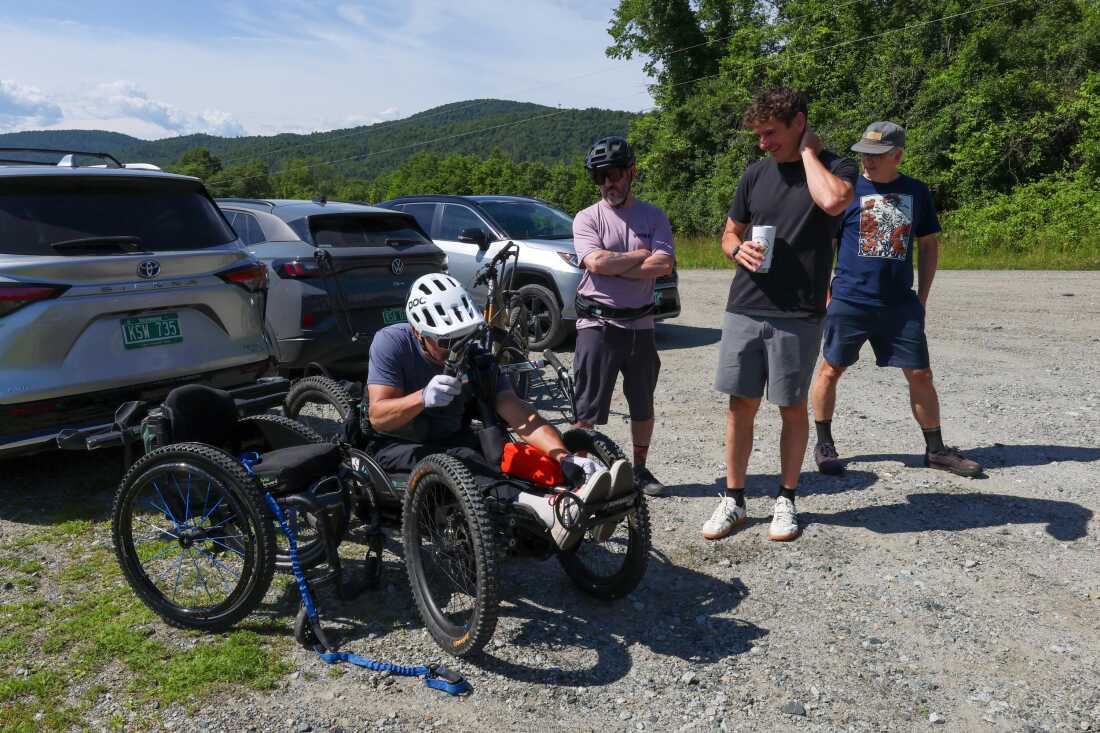
Louis Arevalo, left, straps into his adaptive mountain bike and chats with Jeff Dickson of the Vermont Mountain Bike Association, Angus McCusker with Vermont Huts and Trails, and volunteer Thatcher Hinman (all from left) ahead of a trail accessibility assessment in Randolph, Vermont, on Thursday, June 25, 2026.
Zoe McDonald/Vermont Public
Advertisement
hide caption
toggle caption
Zoe McDonald/Vermont Public
Advertisement
Louis Arevalo of Essex Junction is one of several adaptive athletes helping with that, most recently on some slightly overgrown single track trails in Randolph, a central Vermont town nestled along the eastern edge of the Green Mountains.
Arevalo pedals with his hands. He rides an electric powered recumbent-style three-wheeler that sits low to the ground. His service dog Azul chases along nearby.
“Once you realize what these bikes are capable (of) or this equipment actually opens up, it kind of blows your mind,” he said.
Arevalo was paralyzed in a skiing accident six years ago. Being able to get back on the trails has been a game changer, he said smiling.
“There’s a reason we live in the Green Mountain state. It’s because we like to get outside…you know, seeing the squirrels and chipmunks and birds… I mean, it’s life.”
Advertisement
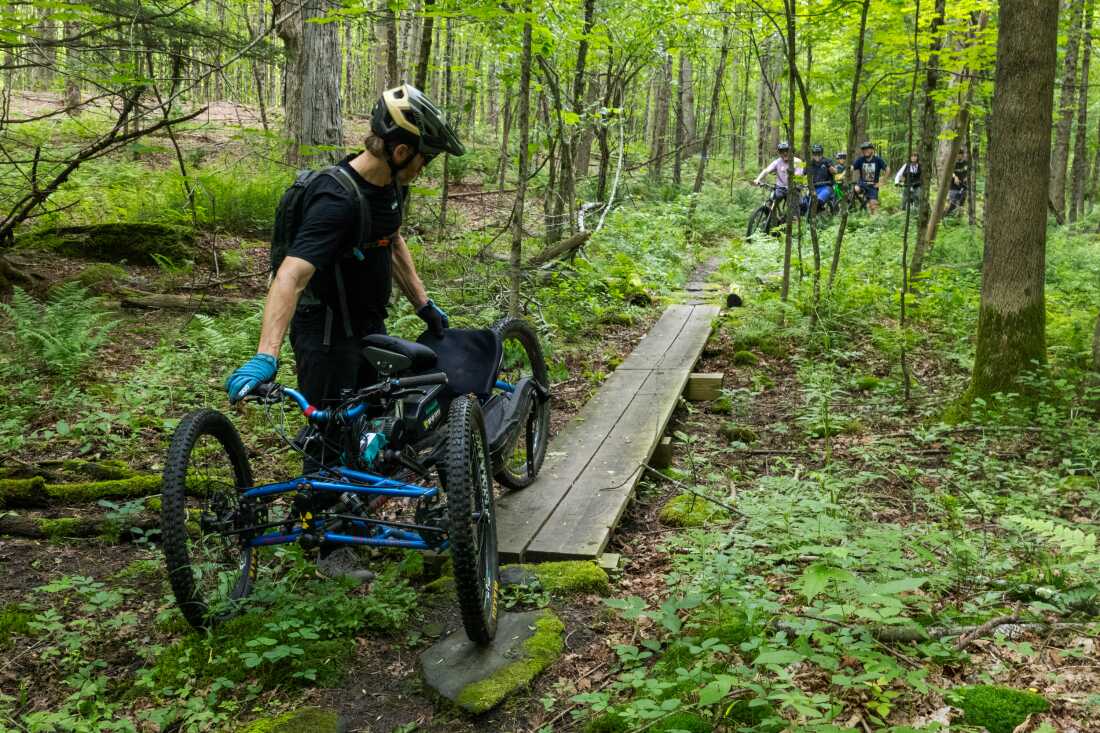
Nick Bennette, of the Vermont Mountain Biking Association, guides an adaptive bike over a narrow bridge, pointing out that other adaptive riders may have trouble getting across.
Zoe McDonald/Vermont Public
hide caption
toggle caption
Zoe McDonald/Vermont Public
Advertisement
But adaptive rigs like Arevalo’s are wider and heavier than regular mountain bikes, and not all trails are user-friendly.
Nick Bennette, who was testing a different type of adaptive bike, got hung up on several tight turns.
“It’s helpful to have different kinds of adaptive bikes on these tests because they all handle a little differently,” he said.
Advertisement
Bennette is executive director of the Vermont Mountain Bike Association, another nonprofit spearheading efforts around the Velomont. He and others involved in the assessment are taking detailed photos and notes on ways to make the trails more accessible.
“Just scalloping out a bit of material on the outside of that corner,” said Bennette, pointing to the area the bike got caught. “That will allow adaptive bikes to make that corner without really changing the way the trail rides.”
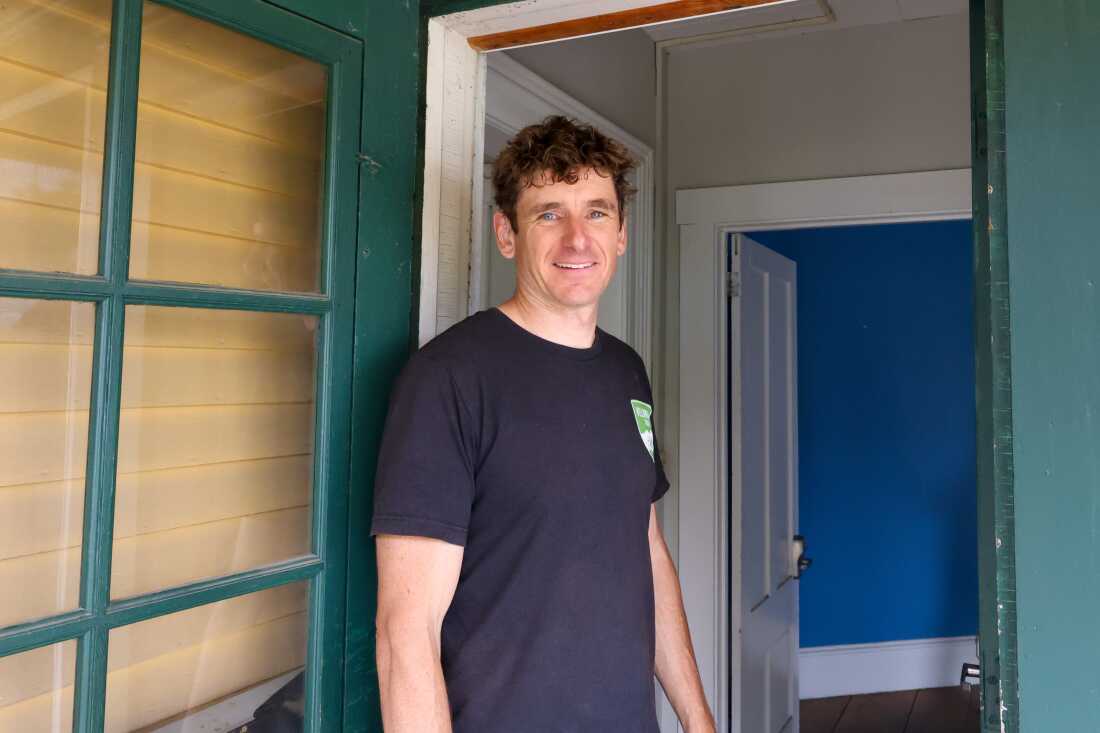
Angus McCusker with Vermont Huts and Trails is working to create accessible accommodations along the Velomont Trail, including a multi-group space in Randolph and a hut in Chittenden that has been outfitted with accessibility in mind.
Zoe McDonald/Vermont Public
hide caption
Advertisement
toggle caption
Zoe McDonald/Vermont Public
Contractors are also trying to reduce barriers at the trail’s overnight accommodations. This summer, contractors are building a new ADA accessible hostel in downtown Randolph.
And two remote huts along the trail will have locked sheds with off-road wheelchairs so bikers don’t have to haul their own.
Advertisement
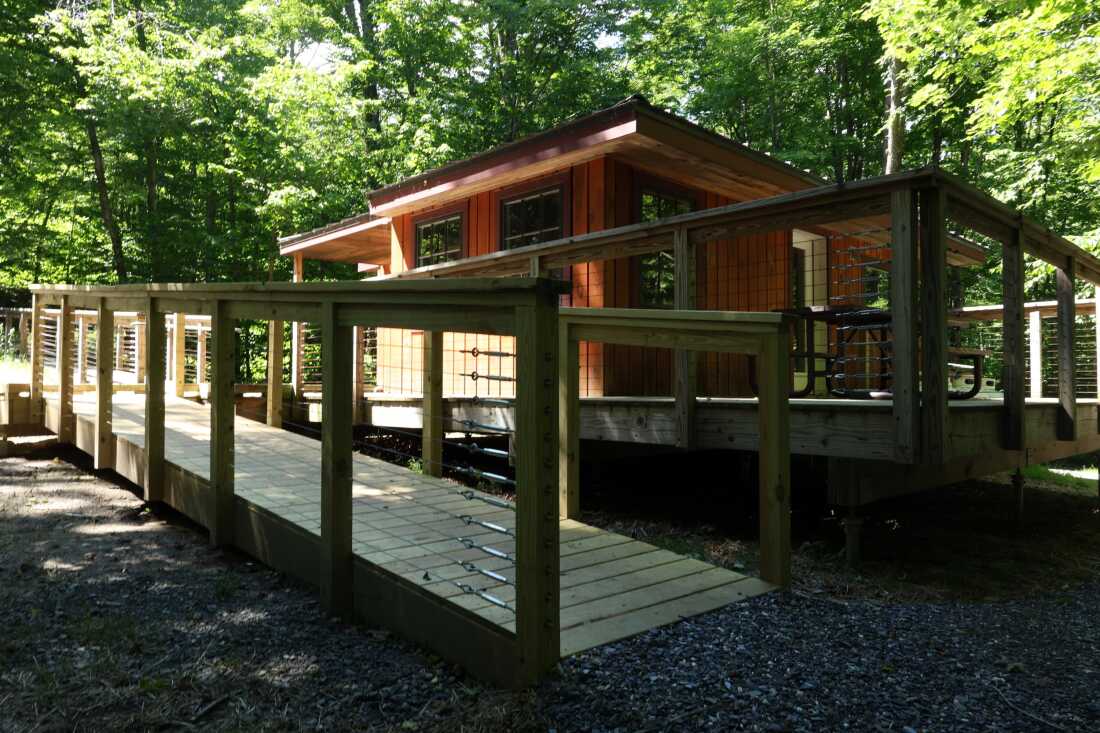
At the Chittenden Brook Hut, McCusker highlighted a new ramp and wider driveway.
“So if you’re an adaptive rider, you can imagine rolling right up here and you can transfer to your chair that’s available here, and then roll down the ramp and go down to the fireplace, to the privy, to make your meal,” he said.
Louis Arevalo stayed at the hut last summer with other adaptive riders — his first camping trip since his accident.
“There was a babbling brook right there…and it was really refreshing to have easy access to a beautifully built hut that was easy to navigate, and then have these world-class trails right out the door,” he said. “And with these Velomont trails, I can actually plan a hut-to-hut trip with other people.”
The Chittenden Brook Hut includes accessible ramps, storage for adaptive bikes and specialized off-road wheelchairs for visitors.
Zoe McDonald/Vermont Public
Advertisement
hide caption
toggle caption
Zoe McDonald/Vermont Public
Advertisement
Jeff Alexander is counting on it. He’s director of strategic partnerships with Vermont Adaptive Ski and Sports, a nonprofit that helps people with disabilities access outdoor recreation.
An economic impact analysis the group commissioned estimates their programming generated more than $10 million last year.
“So the adaptive community has money, they travel, they want to travel and they want to play with everybody,” Alexander said. “We just need to level the playing field so that everyone can play together.”