New Hampshire
DAY 4 Now, What To Do About Taxes in NH?


Our readers – you folks – have really come through in sharing your ideas on what to do about taxes in New Hampshire. I am so grateful!
Now what to do. I will post this DAY 4 group of reader ideas here including a link that has the other three days worth of opinions. And will have a DAY 5 Friday because the tax ideas keep coming. Send to nancywestnews@gmail.com
This link contains links to DAYS 1, 2, 3
RON RAYNER, Concord, NH
The current system is badly broken and over-reliant on property taxes by years of neglect and the presence of Free Staters within our Legislature; the “balance” that could be achieved and should be sought for is now WAY out of control. Like the “fulcrum” on the see-saw, now badly broken.
Tax Remedies — Framework
1) Business Profits Tax — Slowly, incrementally increase the Business Profits Tax back to where it was before Sununu mucked up the works; it’s still lower than the surrounding states.
2) Dividends & Interest Tax —Reinstitute. Make adjustments such that it allows a higher base amount to be tax free; simply increase that base and return the same % tax on interest (as prior) up to, say, $50K; then increase the % tax on interest higher than $50K such that it effectively becomes a graduated tax on interest.
3) Broad-based Tax — is critical. I vote for a sales tax; Why? Because it spreads it out over a much wider base, including ALL of our tourists who utilize our infrastructure just as we residents do. The lowest sales tax in all states in New England is ME at 5.5%. If we imposed one at 5.0%, yes, that would cut into and hurt our gross sales $$. No doubt. BUT, limit it to something much lower, like 1.5% to 2.0% as a cap. Then the key becomes, just like other states have struggled with, what does it apply to? There should be wide exemptions for food and housing; clothes should have a $ limit like, say, up to $750 or even $1K is exempt; anything over is subject to the 1.5% tax. These exemptions, if done right, make it fair, even to the poorest amongst us.
4) 3-3 Tax Plan by Andru V. — Yes, I do believe it would remedy MUCH of what is broken and would overall be fair. BUT, guess what? I maintain that an income tax, no matter how it’s structured, will FAIL. A low % sales tax will have a better (slightly) chance of passage because of A) the exemptions carved out, and B) it spreads it among MANY (i.e., out of staters).
5) Gas Tax — Leave it alone because we are already 42 years behind on maintaining our roads and the number of red-listed bridges.
6) Highway Toll Taxes — Increase all tolls for everyone to $1. Wow! A 30-cent increase for those of us with EZ-Pass; that’s a no-brainer! Is it “legal” to increase the highway toll on just out of staters? I support that, but also question that, although, admittedly, I’m not an attorney.
7) Not for Profits 501(c)(3) Organizations — They proliferate everywhere, especially in a “Capital City” like Concord. They need to contribute somehow, like some small % of their gross revenue. I can imagine the criticism, but we need to start somewhere.
RON RAYNER, Concord, NH
JENNIFER SIEGRIST
Below are my tax thoughts…
Because I read your articles and those of Garry Rayno’s, I feel I am well informed and, as such — mostly pissed off!
Thank you for all the tireless efforts you and your entire newsroom put into InDepthNH. I truly value the coverage you provide and know you deserve every award you have all received and many more.
JENNIFER SIEGRIST, Milford, NH
CHUCK RHOADES, Dover, NH
We recently received our property tax bill in the mail. While I don’t begrudge paying taxes for services, even those I may not use, I am alarmed at the ever-increasing property taxes and the inequality of our tax structure that it represents.
While not absolving municipal officials from their responsibility for prudent management, the fault for these increases seems clearly to lie with our elected state and federal officials. At the state level, the extremist Republican Free Staters control the state legislatures and apparently the governor too. They have eliminated the interest and dividend tax, which mostly wealthy people paid. They continue passing exorbitant subsidies for private schools, directly competing with our public school system. Our schools are fed by our property taxes to a degree greater than any other state in the country since we are dead last in state funding for education.
Less attention is paid to the effect that federal action (or inaction) has on our property taxes. Carleigh Beriont, candidate for the Congressional District 1 nomination, brings a fresh perspective to this problem. In her platform, viewable at CarleighBeriont.com, she notes that a key factor in our increasing property taxes is the federal government’s failure to fully fund the Individuals with Disabilities Education Act. Special education costs drive increases in local school budgets and this law promised to provide 40% of these mandated expenses. The actual allocations have never come close to fulfilling that promise.
Carleigh Beriont’s analysis of this federal obligation and her willingness to pursue this issue if elected demonstrates her thoughtful grasp of the problem. She has similarly thoughtful perspectives on other issues as well. I encourage property owners and all other voters to give her website a look.
CHUCK RHOADES, Dover, NH
BURT COHEN
I’ve long wondered if we’ll finally come to our senses and pass an income tax in my lifetime. Chances are dwindling the older I get.
BURT COHEN
CORNELIA SCHNEIDER
New Hampshire’s Fiscal Mirage
While some New Hampshire legislators wear buttons proclaiming “Taxation is Theft,” most of us believe that smart and fair taxation is the necessary price for a civilized society. Unfortunately, our current tax system is neither smart nor fair. The so-called “New Hampshire Advantage” has become a windfall for the wealthy and large corporations, leaving middle-income families, lower-income households, and small businesses behind.
To restore balance, we should reinstate the Interest and Dividends (I&D) tax, provided we include protections for seniors who rely on that income for retirement. Simultaneously, we must address the school voucher program, which is currently draining the general fund and should be repealed.
The state’s fiscal health is more precarious than leadership admits. For the first time since the Great Recession of 2008, the government has been forced to tap into the “Rainy Day Fund” to balance the budget. Without a natural disaster or pandemic to blame, the state withdrew over $67 million — roughly 25% of the fund — to cover revenue shortfalls and fund school vouchers.
The only thing preventing a deeper dip into our “Rainy Day Fund” was a one-time infusion from a tax amnesty program. We are facing significant financial trouble, yet the Governor and Concord continue to “fiddle while Rome burns.”
CORNELIA SCHNEIDER, Moultonborough, NH
ADAM FINKEL
I appreciate everyone who has mentioned the folly of eliminating the 5% Interest/Dividends tax. I would willingly continue paying it if it was reinstated. And, simply by exempting all payments under $1,000 (not dividend income of $1,000 — payments of $1,000, or 5% of at least $20,000 in dividends), the state could raise about $150 million annually (a bit less than the $160 million that was formerly collected including the small payments). Someone paying between $1,000 and $10,000 per year in passive income would have assets in the $1-2 million range or higher; surely, they can easily afford 5% of this passive income, leaving the other 95% to accumulate.
But as regressive as our overall tax system is in NH, there is one aspect that is even more slanted toward the rich: the “Current Use” rates. I support lower taxes on large open space lots, so that owners won’t have an incentive to subdivide and sell. But I had no idea (until I looked!) at just how big a subsidy a 10-acre (or more) plot gets over a smaller one. I gladly pay about $3,600/acre in tax for a small parcel next to my cabin — but if it was 10 acres or more, the tax would be about $6/acre! Not $600, not $60, but $6.
SURELY there is a price point between $6 and $3,600 — let’s call it $60/acre — where an owner would still have no reason to sell, but where the state could reap some revenue for education, infrastructure, environmental protection, etc.
ADAM FINKEL, Dalton, NH
RICH DiPENTIMA
The NH tax system is one of the most unfair in the nation. Almost every tax that individuals pay, either directly or indirectly, are very regressive and have little relationship to one’s income. For example, property taxes, rooms and meals tax, gasoline tax, and tobacco taxes have no relationship to income. Those who pay rent pay the property owner’s property taxes through their rent, which has no relationship to income. The only tax that NH has that was related somewhat to income was the interest and dividends tax, which has now been repealed.
As a result, low and middle-income people pay a much larger percentage of their income on taxes than the wealthy (see below). This is what the Republicans call the “NH advantage.” Yes, a huge advantage for the rich. And as a result, we do not get the services provided by other states, or they must be provided by the cities and towns through property taxes.
Tax Burden by Income Level (2026 Context)
- Lowest 20%: Pay the highest effective state and local tax rate, often over 3 times higher than top earners, due to high property taxes (including those in rent) and consumer taxes.
- Middle 20% ($62,300–$104,100): Face an effective tax rate roughly 2.4 times higher than the top 1%.
- Top 1% (>$721,000): Pay the lowest effective state and local tax rate, estimated at around 2.8% of their income. [1] RICH DiPENTIMA
JUDY ULLMAN
I think an income tax is the only thing that makes sense.
JUDY ULLMAN
THOMAS MAINVILLE
Here is one way to bring a lot of extra money into the state: legalize recreational cannabis and tax it. There’s so much money going to MA, VT, and ME, and it’s all taxed. There’s a lot of money to be made off it that’s just being spent in other states. If it was made recreational and was taxed, many people wouldn’t mind paying a tax since they already are.
THOMAS MAINVILLE
OWEN MCISAAC
Thank you for this opportunity to share perspectives on taxes in New Hampshire.
Our family goes back four generations in the state. We came from Canada to build roads, staff mills, and be part of the economy. None of us has been rich, but our work supported the wealthy. We thought that if we worked hard and saved money, we would be alright.
Year after year, the tax rate rises disproportionately to what used to be a middle-class income. Now, the unthinkable has happened — we will have to leave the state and find another way to survive.
We watch at town meeting and in fora all over the state, the downshifting of state expense falling on municipalities and schools. We watch as terrified people attack them. I imagine those in the State House watching it all with glee. The sleight of hand worked!
I wish that there was more empathy among lawmakers. I wish that they understood that people like us who live in one-bathroom houses with no luxuries (none of us have ever had a dishwasher) do not buy alcohol, go out to movies, dine out, or do anything other than try to survive.
Thank you for this opportunity.
OWEN MCISAAC, Webster, NH


A federal judge has dismissed a lawsuit by the Justice Department aimed at compelling New Hampshire to turn over its voter rolls, dealing the Trump administration another setback in its quest for detailed information about the nation’s voters.
The ruling from U.S. District Judge Joseph LaPlante found that the request to provide the state’s voter registration list did not comply with a section of the Civil Rights Act of 1960 pertaining to federal election records. His ruling, issued Monday, also found that the Justice Department failed to allege any violation under the Help America Vote Act of 2002, which established standards for states’ voting systems and voter registration lists.
That prevents “allowing the Attorney General unrestricted access to New Hampshire’s (voter list) to conduct a line-by-line audit to assess a ‘possible’ violation of a federal statute,” wrote LaPlante, an appointee of former President George W. Bush.
New Hampshire Secretary of State David Scanlan, a Republican, welcomed the ruling.
“I am committed to protecting the private information of New Hampshire voters to the fullest extent required by law,” he said in a statement.
The dismissal in New Hampshire brings to 10 the number of states where the Justice Department has lost similar cases. The department has sued to force release of detailed state voter data — which includes dates of birth, addresses, driver’s license numbers and partial Social Security numbers — in 30 states and the District of Columbia.
In addition to New Hampshire, judges have rejected those attempts in Arizona, California, Maine, Massachusetts, Maryland, Michigan, Oregon, Rhode Island and Wisconsin. In Georgia, a judge dismissed a Justice Department lawsuit because it had been filed in the wrong city, prompting the government to refile elsewhere.
In explaining their push for the records, federal officials have said they need the voter data to ensure that states are complying with federal election laws related to maintaining voter registration lists, even though states already have detailed processes to do that. In the case out of Rhode Island, a Justice Department attorney acknowledged that the department was seeking unredacted voter roll information so it could be shared with the Department of Homeland Security to check citizenship status.
Democratic and some Republican officials have objected to the Justice Department requests for detailed voter data and said such a demand violates state and federal privacy laws.
At least 13 states have either provided or promised to provide their voter registration lists to the department, according to the Brennan Center for Justice and Associated Press reporting: Alaska, Arkansas, Indiana, Louisiana, Mississippi, Nebraska, Ohio, Oklahoma, South Carolina, South Dakota, Tennessee, Texas and Wyoming.

The Pentagon released over a hundred newly declassified files related to UFOs (now officially referred to as Unidentified Anomalous Phenomena, or UAP) last month, including a handful of pages and memos about mysterious, flaming metal fragments that landed in a field in West Rindge, New Hampshire, in 1947, and the classified investigation that followed.
This is the story NHPR has pieced together from the incident summary sheet and official communications and memos from the Boston FBI Field Office to the director of the FBI.
A porchside discovery
At 3 p.m. on July 7, 1947, retiree Charles. N. Tasker was sitting on Earl Whitehead’s porch in West Rindge when he observed “little curls of smoke, which on inspection disclosed small burned spots about one and one half inches in diameter on the green lawn,” according to a now-declassified report from the FBI.
Nearby, on Route 202, “several little blazes had started” in the long dry grass on both sides of the road, creating a circle about 200 feet in diameter that seemed to be caused by small metallic fragments.
Tasker called the local fire department to extinguish the small fires while a fellow observer, a “Mr. Appel,” gave the metallic fragments to researchers at the Massachusetts Institute of Technology to study, where Dr. John W. Bunker, dean of the graduate school, led the research team and reported the findings to the Boston FBI field office.
The examination
The first step in studying the metallic fragments was to identify what they were made of. Using a spectrograph, which studies light waves to determine the material composition of objects, scientists at MIT found the metallic fragments were ordinary iron that had been “subjected to terrific heat,” which caused scales to form and thus created cast iron.
Where did the iron fragments come from?
Given that Tasker found the metal pieces in the grass about 700 feet from a railroad track, the researchers hypothesized that the fragments could be from the liner in a smoke stack or some other part of a steam engine. However, further testing ruled out that theory.
If not a train . . . then a plane?
One metallurgist at MIT speculated that the fragments could be the lining from a jet turbo plane.
But another scientist was unsure that the fragments were from an airplane, because if the fragments came from something at high altitude, most of the heat would have left by the time they reached the ground, meaning they wouldn’t be able to start the fires in the grass that Tasker observed.
And yet, if the iron fragments had originally been part of a larger object that fell a great height, this large iron object could have retained enough heat to start a fire, and probably would have smashed into smaller pieces upon striking the ground.
The scientists attempted to reconstruct this hypothetical larger object from the metallic fragments, finding they had most likely been part of one hollow cylinder that was 8 inches in diameter, 3/16th inches thick, and made using machinery.
Professor J. Francis Reintjes, an assistant professor in electrical engineering at MIT, (referred to as “Rentges” in the reports), thought the metallic fragments looked similar to the lining of V-2 missiles he had observed in New Mexico.
In the late 1940s, the U.S. had been adapting and testing the V-2 missiles designed by Nazi Germany in World War II to study space and the Earth’s atmosphere. The MIT scientists thought that cast iron cylinders of that size had been used during that research. However, the theory wasn’t definitive enough to “conclude to the exclusion of all other possibilities,” according to the final memo written to the director of the FBI.
A point for intelligent life beyond Earth?
Even 80 years ago, extraterrestrial theories floated around.
The American UFO craze had begun on June 24, 1947, when the first “flying saucer” observation was made in the Pacific Northwest. By June 25, the press had picked up an amateur pilot’s report of some “unidentified flying object” that was then referred to as both a “flying saucer” and “flying disk.”
The incident report in West Rindge is from just a few weeks later in July, with the memos to the director of the FBI from later that month. In those memos, there are several handwritten notes, with “FLYING DISCS” written on both of them.


But how does this theory hold up today?
“I think it’s great that these documents came out; I don’t know if they are the smoking gun that we wanted them to be,” said Michael Panicello, the New England regional director of the Mutual UFO Network.
Panicello, like the scientist Reintjes at MIT, wondered if the metal was space debris from the V-2 rocket research happening in New Mexico.
But Panicello said this doesn’t make him rule out that the fragments could be a sign of extraterrestrial life.
“I’m not trying to be a debunker. I’m definitely not. I believe in aliens,” Panicello said. “But . . . it’s kind of hard to jump right to the UFO alien connection when you can’t truly rule out man-made objects.”
Fragments of a rocket?
At least one scientist thinks it is unlikely the fragments came from man-made rockets or objects launched into space, simply because of the material of which they are made.
“There would be very little reason to make any sort of space object out of iron because its strength to weight ratio just is not as good as something like aluminum, which is practically what all spacecraft are primarily made out of these days,” said James Clemmons, professor of physics and astronomy at the University of New Hampshire.
Clemmons also found it peculiar that these metal fragments were made of cast iron, as it is not considered very strong.
“To me, cast iron is a very crude thing, and the idea that crude things go into space purposefully is also kind of odd,” Clemmons said.
The V-2 launches took place at the White Sands Missile Range in New Mexico. Jenn Jett, a Museum Specialist at the White Sands Missile Range Museum in New Mexico, said via email that “V-2s being launched at White Sands typically landed within the White Sands boundary within a distance of 100 miles,” with the rare exception of landings in other parts of New Mexico and Juarez, Mexico.
Considering New Hampshire is over 2,000 miles from New Mexico, it would appear there is no way for any rocket debris to get anywhere close.
Furthermore, V-2 rockets were made primarily of steel. While steel’s main ingredient is in fact iron, the initial scientists determined the metal to be made of cast iron, which Clemmons said is very different.
“I would expect that the MIT scientists could distinguish between steel and iron,” Clemmons said.
So if these metal fragments are not from the classified V-2 rockets, nor from the nearby railroad, what could they be?
Might it be a meteorite?
According to NASA, more than 50,000 meteorites have been found on Earth. While most meteorites are stony, metal meteorites made of iron do make it down to the ground on occasion.
However, Richard Binzel, a professor of planetary science at MIT, said the written accounts were “not consistent with meteorites.”
“[Meteorites] do not arrive ‘hot’ when they land and would not spark a fire,” Binzel said. “While there are iron meteorites, their metal composition is distinctive, and the early analysis would have immediately declared the fragments as meteorites.”


Where are the fragments now?
The final memo to the director of the FBI in the recently released files stated that “unless advised to the contrary by August 15, 1947, the Boston Office will destroy these specimens. In the interim they will be transmitted to the Bureau on specific Bureau instructions.”
NHPR contacted the Boston Field Office of the FBI to confirm whether the metal fragments had been destroyed. In response, the Boston Field Office said, “At this point in time, we haven’t been able to locate any records responsive to your request.”
This isn’t New Hampshire’s only potential counter with extraterrestrials. In 1961, Portsmouth residents Betty and Barney Hill famously had one of the first alleged UFO abduction encounters in the country, and Exeter has an annual UFO festival revolving around a famed 1965 incident nearby.
As for the mystery metal from West Rindge, theories about rocket debris and meteorites have come up short of solid evidence. For now, no one can conclusively determine the origins of the cast-iron fragments near Route 202. This unidentified anomalous phenomenon remains a mystery left unsolved.
This story is a production of the New England News Collaborative. It was originally published by New Hampshire Public Radio.
New Hampshire
Nashua Man Indicted On 8 Child First-Degree Assault Charges: Hillsborough County Superior Court Indictments

Matthew Mann, 40, of no fixed address in Nashua, on felon in possession and two controlled drug acts; acts prohibited-intent to sell, fentanyl and cocaine charges, all felonies. He was accused of possessing a switchblade knife, more than half an ounce of cocaine, and three baggies of fentanyl. Mann is a felon due to a possession of a controlled substance with intent to distribute conviction in Middlesex County Superior Court in October 2007.
Adam Money, 37, of Cathedral Lane in Hudson, on a felony controlled drug act; acts prohibited-methamphetamine charge on Jan. 5, 2024, in Nashua. Previously, according to the indictment, he was convicted of possession in January 2019 in Rockingham County Superior Court.
Antwaun Roach-Baptiste, 37, of Park Street in West Haven, Connecticut, on a felony theft by unauthorized taking charge. He acted in concert with Tyler Paolini to steal more than $1,500 worth of merchandise from Home Depot in Nashua, according to the indictment.
Marques Stanford, 37, of no fixed address in Nashua, on two felony counts of controlled drug act; acts prohibited-cocaine and fentanyl, and a felony count of controlled drug act; acts prohibited-buprenorphine-with intent to sell on Feb. 9 in Nashua. Previously, according to the indictment, he was convicted on a possession charge in January 2018 in Hills South.
Do you have a news tip? Email it to tony.schinella@patch.com. View videos on Tony Schinella’s YouTube or Rumble channels. Patch in New Hampshire is now in 227 communities and neighborhoods — and expanding every day. Also, follow Patch on Google Discover.
-
 Sports1 minute ago
Walter Alston, Dave Roberts and everyone in between: The 10 managers in L.A. Dodgers history
-

 World11 minutes ago
World’s oceans experience hottest June ever, scientists say more heat ahead
-
 News38 minutes ago
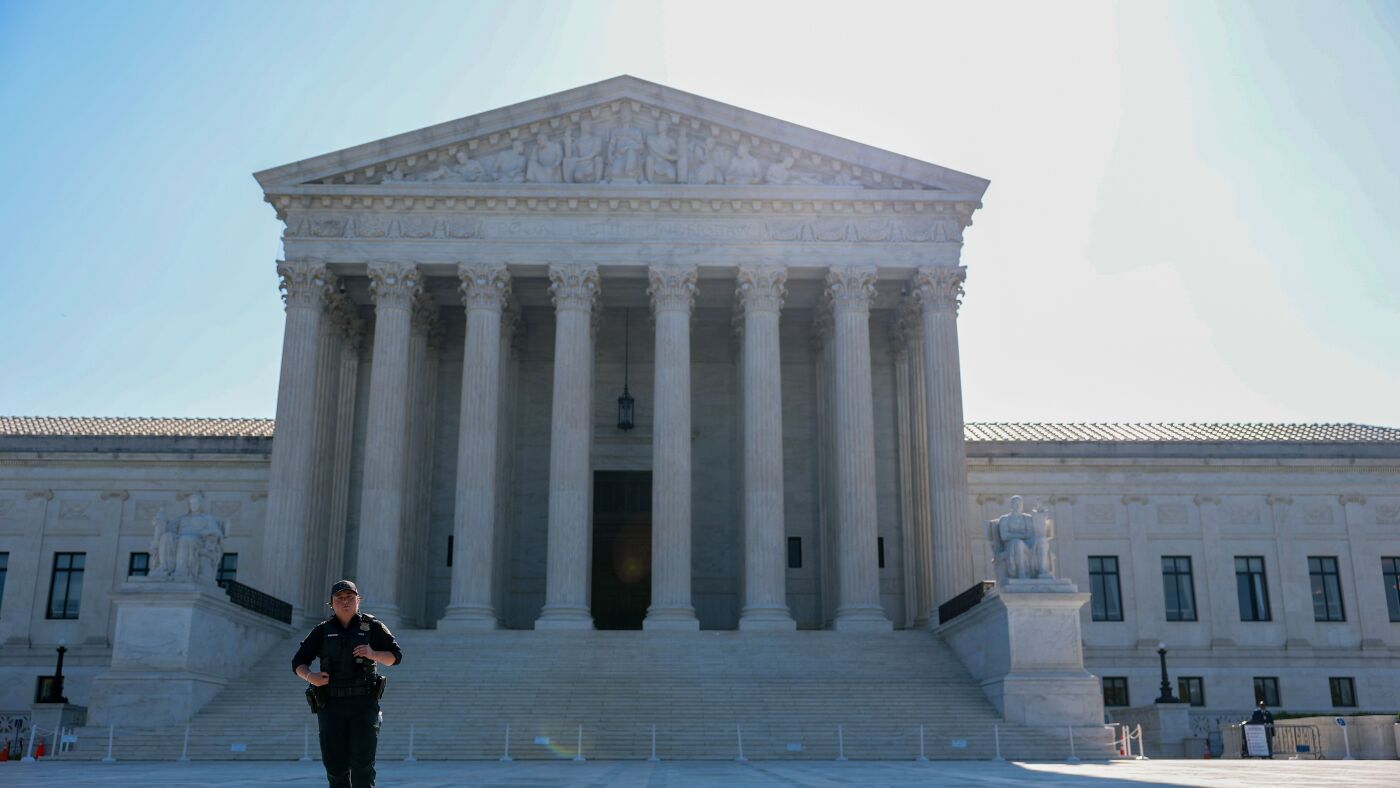
What the Supreme Court did on the final day of its term
-

 Los Angeles, Ca2 hours ago
Los Angeles County man convicted of sex trafficking, abusing woman he was dating
-

 Detroit, MI2 hours ago
Detroit Tigers tee off on New York Yankees with 5 homers in win
-

 San Francisco, CA2 hours ago
Popular brewery shutters San Francisco location amid industry woes
-

 Dallas, TX3 hours ago
Eight arrested after repeated attempts to enter World Cup matches without tickets
-

 Miami, FL3 hours ago
Reports: Heat add potent bench scorer in Tim Hardaway Jr.

