More than five dozen winter adventurers had an experience recently that likely wasn’t on their agenda.
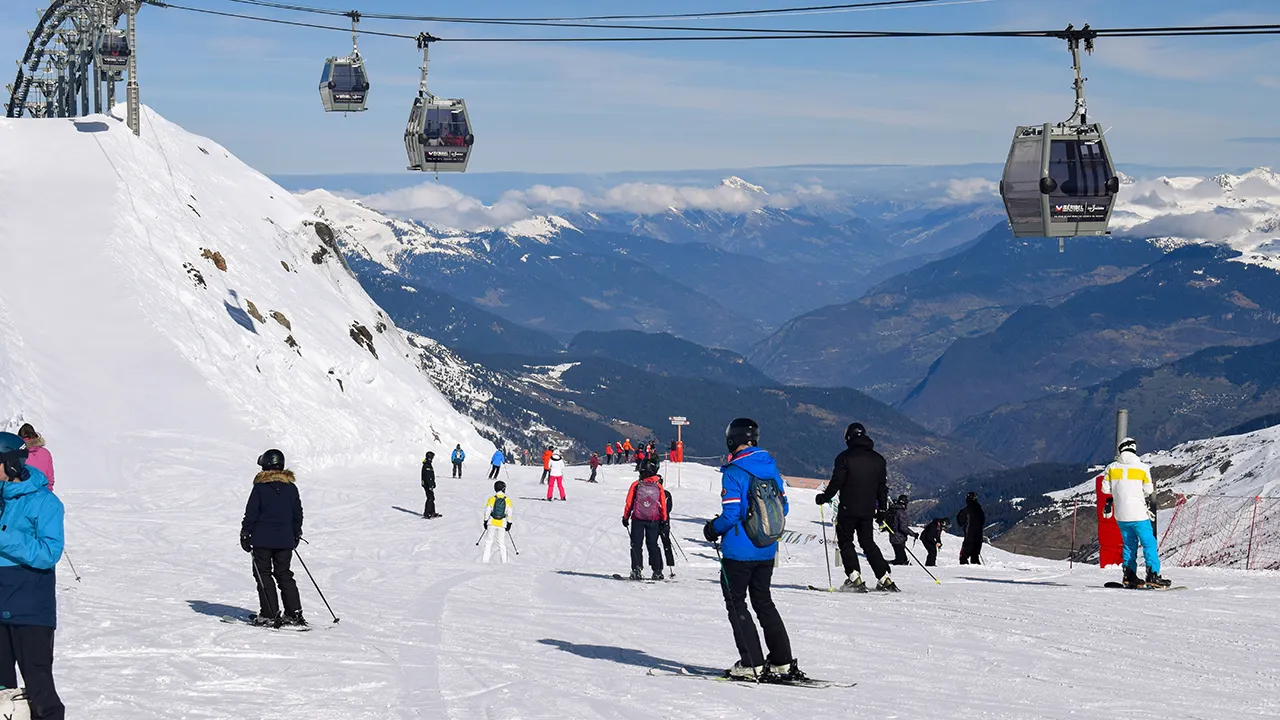
A gondola malfunction left nearly 70 skiers stuck in midair for hours at a New York ski resort. The incident occurred Wednesday morning at Gore Mountain in North Creek.
Resort officials said the gondola stopped due to a mechanical alignment issue that triggered a safety sensor — bringing the lift to an automatic stop, Olympic Regional Development Authority and Gore Mountain said in a statement to Fox News Digital.
TWO RIDERS TRAPPED MORE THAN 100 FEET IN AIR AFTER TEXAS ROLLER COASTER MALFUNCTIONS
Advertisement
A standard evacuation was immediately launched — with trained mountain operations and ski patrol teams assisting passengers.
Some 67 guests were riding in roughly 20 cabins at the time.
A recent gondola breakdown stranded nearly 70 skiers for hours at Gore Mountain (not pictured) in New York.(iStock)
ll were returned to the ground without injuries, the department noted.
The call for assistance was made shortly after 9 a.m. The evacuation was completed before 2 p.m., leaving skiers stranded for nearly five hours, New York State Department of Environmental Conservation said in a statement shared with Fox News Digital.
Advertisement
The gondola returned to normal operations Thursday morning, Gore Mountain said.
“We are grateful to our guests for their patience and cooperation.”
“Thanks to the hard work of our crew, the Northwoods Gondola has been repaired, all safety checks completed, and the lift returned to service this morning,” the resort said.
“We are grateful to our guests for their patience and cooperation.”
Advertisement
Officials said the evacuation (not pictured) lasted nearly five hours.(iStock)
Officials said some of the responding forest rangers had completed gondola evacuation training at Gore Mountain last fall, helping crews safely carry out the rescue.
CLICK HERE FOR MORE LIFESTYLE STORIES
“Safety remains our top priority, and our teams are fully trained and experienced in managing situations like this,” Olympic Regional Development Authority said.
The gondola (not pictured) was repaired and safely returned to service on Thursday morning.(Kerstin Joensson/AFP/Getty Images)
Advertisement
The incident also drew attention online, with some users on social media reacting to the evacuation as it unfolded.
TEST YOURSELF WITH OUR LATEST LIFESTYLE QUIZ
One user emphasized that he or she had no issues with keeping plans for skiing at Gore Mountain following the incident, though the person mentioned avoiding the gondola.
Others commented on the experience of being stranded at some height, noting that gondola cabins may feel safer than open chairlifts in similar situations.
CLICK HERE TO DOWNLOAD THE FOX NEWS APP
Advertisement
“Had it been a chair lift, that would have been very cold,” one user commented.
Gore Mountain in New York is one of the “most popular alpine skiing and snowboarding destinations in the Adirondacks, with an even mix of trails across levels and plenty of gorgeous glades, including the longest gladed trail in the Northeast,” according to the Visit the Adirondacks website.
“Had it been a chair lift, that would have been very cold.”
“Winter activities include downhill, cross-country skiing, snowboarding and snowshoeing. Special events range from non-competitive family-oriented fun to regional and Northeastern ski races.”
The site also notes that “Gore has an incredible gondola ride that warms guests while offering stunning views of the snowy slopes before it’s time to zip down again.”
Advertisement
Kelly McGreal is a production assistant with the lifestyle team at Fox News Digital.
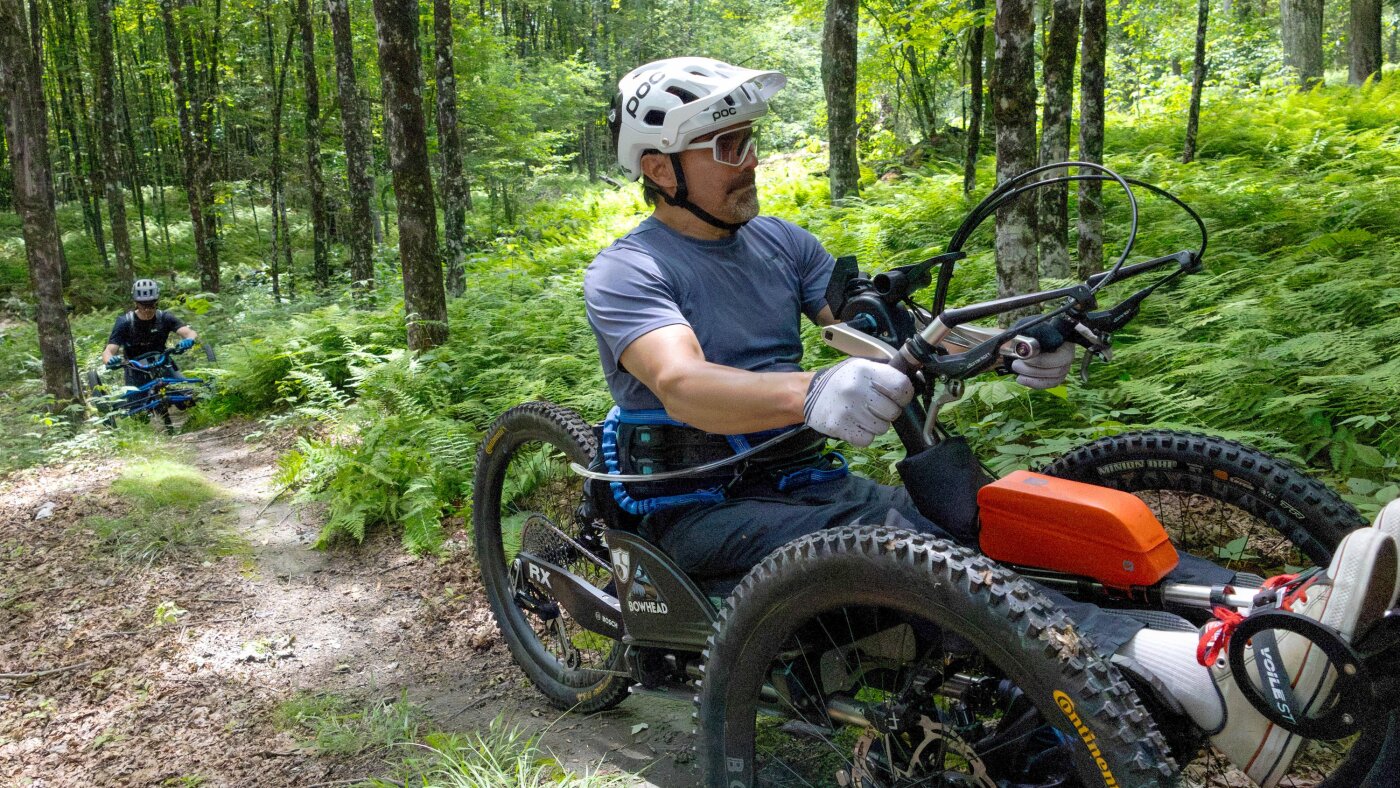
Louis Arevalo rides his adaptive mountain bike through the trails at Randolph Town Forest during an adaptive assessment on Thursday, June 25. Nick Bennette, with the Vermont Mountain Bike Association, rides behind.
Zoe McDonald/Vermont Public
hide caption
Advertisement
toggle caption
Zoe McDonald/Vermont Public
Mountain bike enthusiasts have been working for years on an ambitious 485-mile, multi-use trail called The Velomont that will span the length of the state.
When finished, the collaborative project will knit together existing trail networks, connect 27 communities and include huts and hostels for overnight stays.
Advertisement
New trail construction is finally ramping up after years spent on permits, plans and public input. And organizers say they want to make it as user-friendly as possible.
“For us, it’s not a huge lift to just be mindful when we’re trying to build trail or improve trail to think about the adaptive rider,” said Angus McCusker, the Velomont trail director with the nonprofit Vermont Huts and Trails.
McCusker is referring to the growing number of disabled athletes who mountain bike with specially designed equipment.
“The challenge,” said McCusker, “is we’re connecting to existing trail networks that were never intended for adaptive bikes. So, where we can, we’re trying to do adaptive assessments.”
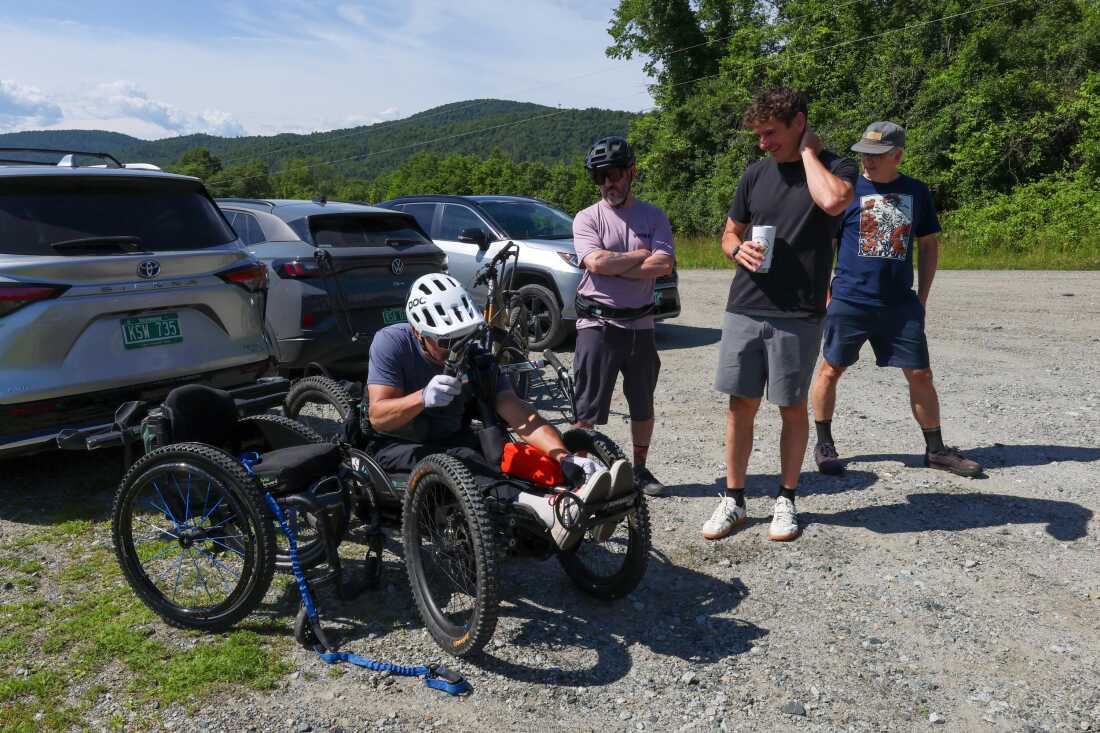
Louis Arevalo, left, straps into his adaptive mountain bike and chats with Jeff Dickson of the Vermont Mountain Bike Association, Angus McCusker with Vermont Huts and Trails, and volunteer Thatcher Hinman (all from left) ahead of a trail accessibility assessment in Randolph, Vermont, on Thursday, June 25, 2026.
Zoe McDonald/Vermont Public
Advertisement
hide caption
toggle caption
Zoe McDonald/Vermont Public
Advertisement
Louis Arevalo of Essex Junction is one of several adaptive athletes helping with that, most recently on some slightly overgrown single track trails in Randolph, a central Vermont town nestled along the eastern edge of the Green Mountains.
Arevalo pedals with his hands. He rides an electric powered recumbent-style three-wheeler that sits low to the ground. His service dog Azul chases along nearby.
“Once you realize what these bikes are capable (of) or this equipment actually opens up, it kind of blows your mind,” he said.
Arevalo was paralyzed in a skiing accident six years ago. Being able to get back on the trails has been a game changer, he said smiling.
“There’s a reason we live in the Green Mountain state. It’s because we like to get outside…you know, seeing the squirrels and chipmunks and birds… I mean, it’s life.”
Advertisement
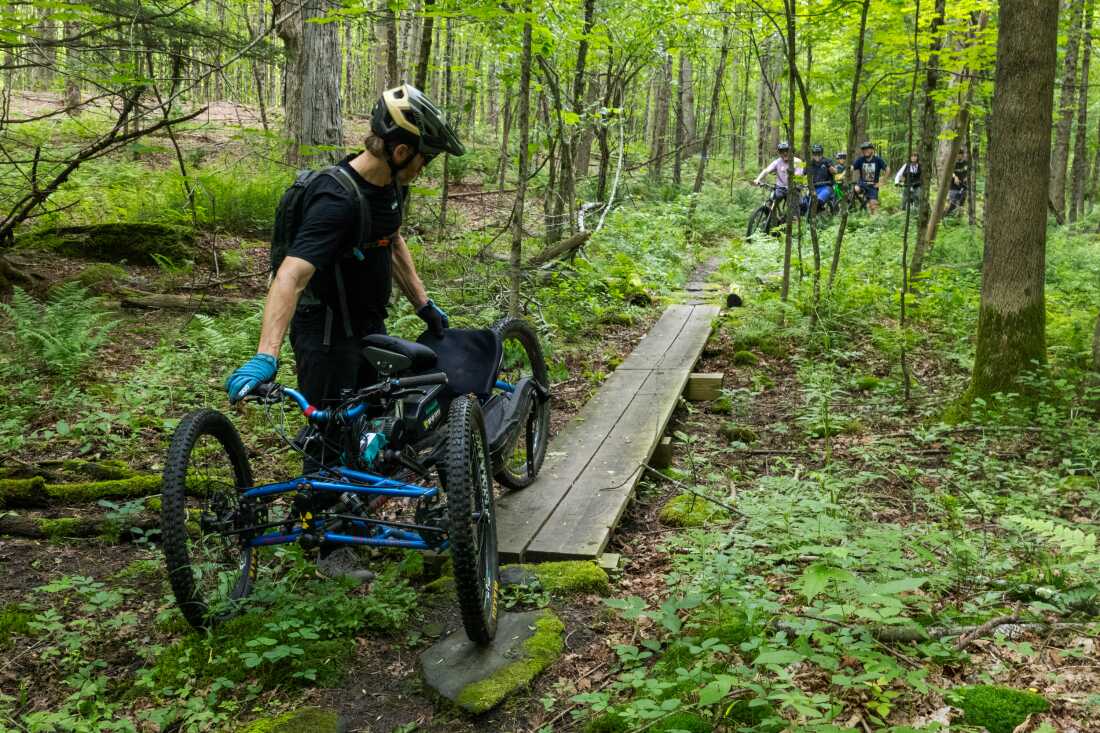
Nick Bennette, of the Vermont Mountain Biking Association, guides an adaptive bike over a narrow bridge, pointing out that other adaptive riders may have trouble getting across.
Zoe McDonald/Vermont Public
hide caption
toggle caption
Zoe McDonald/Vermont Public
Advertisement
But adaptive rigs like Arevalo’s are wider and heavier than regular mountain bikes, and not all trails are user-friendly.
Nick Bennette, who was testing a different type of adaptive bike, got hung up on several tight turns.
“It’s helpful to have different kinds of adaptive bikes on these tests because they all handle a little differently,” he said.
Advertisement
Bennette is executive director of the Vermont Mountain Bike Association, another nonprofit spearheading efforts around the Velomont. He and others involved in the assessment are taking detailed photos and notes on ways to make the trails more accessible.
“Just scalloping out a bit of material on the outside of that corner,” said Bennette, pointing to the area the bike got caught. “That will allow adaptive bikes to make that corner without really changing the way the trail rides.”
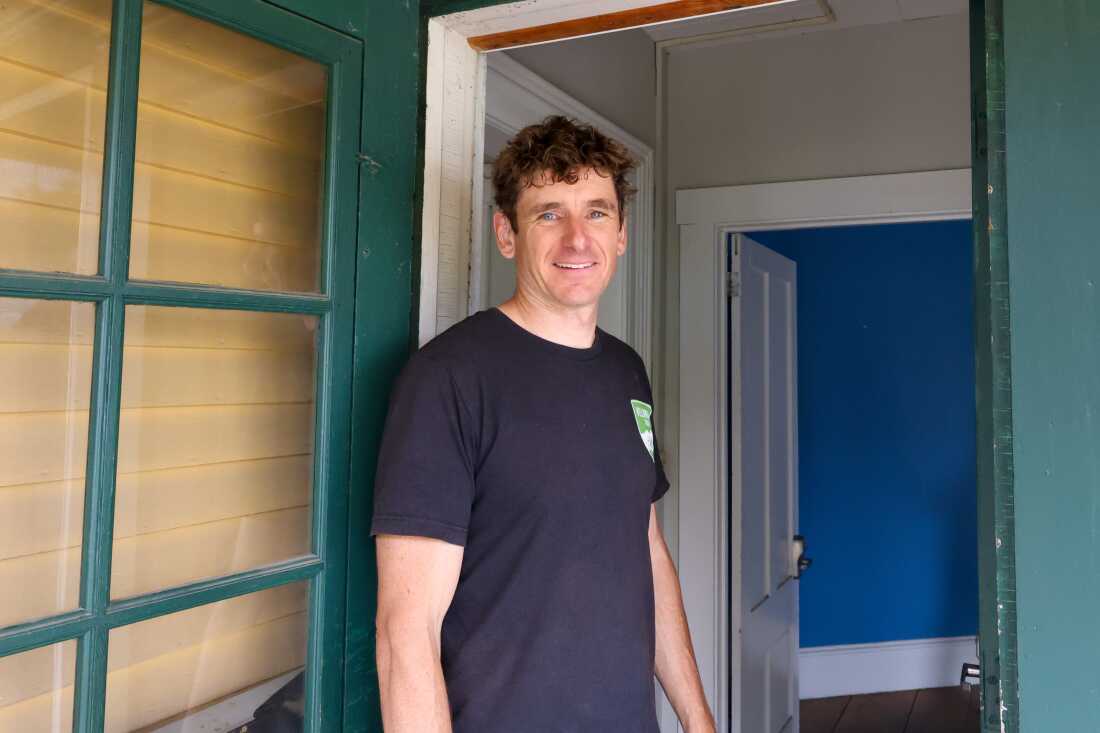
Angus McCusker with Vermont Huts and Trails is working to create accessible accommodations along the Velomont Trail, including a multi-group space in Randolph and a hut in Chittenden that has been outfitted with accessibility in mind.
Zoe McDonald/Vermont Public
hide caption
Advertisement
toggle caption
Zoe McDonald/Vermont Public
Contractors are also trying to reduce barriers at the trail’s overnight accommodations. This summer, contractors are building a new ADA accessible hostel in downtown Randolph.
And two remote huts along the trail will have locked sheds with off-road wheelchairs so bikers don’t have to haul their own.
Advertisement
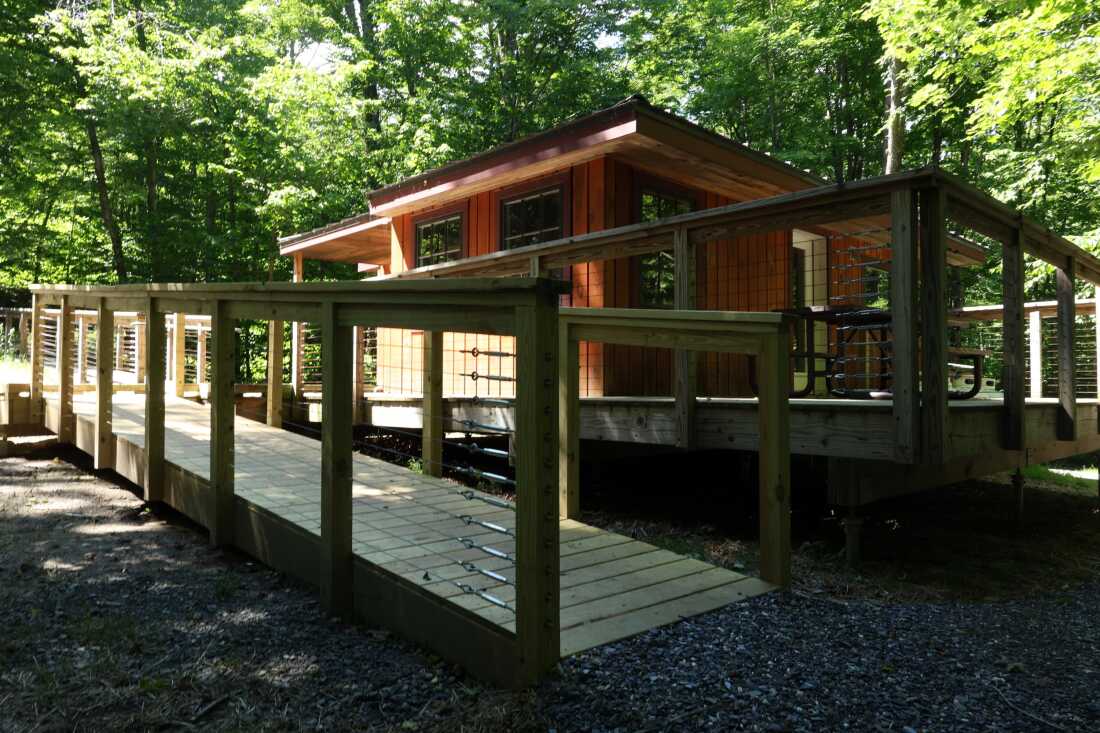
At the Chittenden Brook Hut, McCusker highlighted a new ramp and wider driveway.
“So if you’re an adaptive rider, you can imagine rolling right up here and you can transfer to your chair that’s available here, and then roll down the ramp and go down to the fireplace, to the privy, to make your meal,” he said.
Louis Arevalo stayed at the hut last summer with other adaptive riders — his first camping trip since his accident.
“There was a babbling brook right there…and it was really refreshing to have easy access to a beautifully built hut that was easy to navigate, and then have these world-class trails right out the door,” he said. “And with these Velomont trails, I can actually plan a hut-to-hut trip with other people.”
The Chittenden Brook Hut includes accessible ramps, storage for adaptive bikes and specialized off-road wheelchairs for visitors.
Zoe McDonald/Vermont Public
Advertisement
hide caption
toggle caption
Zoe McDonald/Vermont Public
Advertisement
Jeff Alexander is counting on it. He’s director of strategic partnerships with Vermont Adaptive Ski and Sports, a nonprofit that helps people with disabilities access outdoor recreation.
An economic impact analysis the group commissioned estimates their programming generated more than $10 million last year.
“So the adaptive community has money, they travel, they want to travel and they want to play with everybody,” Alexander said. “We just need to level the playing field so that everyone can play together.”