Massachusetts
I pay the millionaire’s tax in Massachusetts. I’ve thought about moving my family away, but I’m staying for my kids.

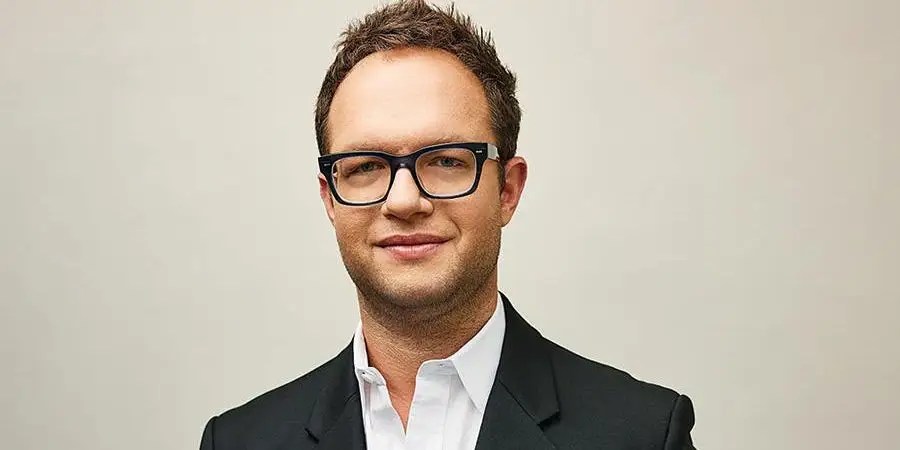
This as-told-to essay is based on a conversation with Sam Slater, a 41-year-old real estate developer based in Boston. It’s been edited for length and clarity.
I was born in South Florida, where my parents and uncle currently live, and I moved to Massachusetts when I was 10 years old.
I run our family office, which is based in both Boston and Palm Beach, Florida. We have business ventures across multiple industries, but my focus is on our real estate portfolio. From light industrial to agricultural to multifamily real estate, we’re well-diversified across many states in the US, as well as Canada.
It’s been interesting to see an increase in national interest in the Massachusetts millionaire’s tax as some initiatives in other states come up. I have friends in other markets who have been asking about it. Since its implementation in 2023, the obvious question to me is, why wouldn’t I move back to Florida?
The truth is, I often think about moving, but I feel strongly about why I’m staying. It’s all for my kids.

I’ve witnessed wealthy friends leave Massachusetts after the state tax
In addition to my focus on real estate, I also work in the sports and entertainment industry. I hold a minority ownership stake in the Seattle Kraken, an NHL team, and last year, I joined the ownership group of the Memphis Grizzlies. I’m very active in the world of sport, and it’s been a really enjoyable and successful venture. Over the past 15 years, I’ve also produced over 40 feature films.
With the progression of state taxes in the last few years, particularly the millionaire tax, I’ve seen many people, including friends in the hedge fund, private equity, and finance spaces, move or confirm their plans to do so. However, I’m in a slightly different situation.
I want my kids to grow up in Massachusetts
I have two younger children, a 7 and 10-year-old, and I would prefer them to grow up here with all that Massachusetts has to offer.
We live in a town with a wonderful public school system, and I don’t want to take that away from them. More broadly, eastern Massachusetts and Boston, in particular, are highly accessible areas and offer a lot. We’ve got everything from sports to culture, and all four seasons. I don’t want to pull my kids from that for my desire to pay less in taxes.
If my children weren’t young, maybe my answer would be different.
I’d consider moving if things keep trending in this direction
It’s difficult to say if any changes I’ve seen in Massachusetts are a direct result of this particular tax. The broader market conditions in the economy are, in certain areas, quite strong, while in other areas, they are not.
If you take condominium sales in downtown Boston, we’re at extraordinarily low points both for pricing and velocity, especially if we’re looking back on a 10 or 15-year horizon. I think it would probably be a stretch to say it’s solely because of this tax, but high earners leaving Massachusetts removes potential high-end condominium buyers from the market.
The wealth tax in Massachusetts hasn’t affected my lifestyle
Fortunately, I haven’t had to make any lifestyle changes because of the wealth tax, but I’m certainly aware of the taxes I pay in general, specifically as a result of this tax. My question is, what will come next after this?
What remains to be seen is how the additional revenue brought in to Massachusetts from this tax will trickle back to everyone in the Commonwealth.
If taxes continue to increase and no one can point to any substantial changes being made in the state, I think that’s when we’ll see a more meaningful exodus of people, even potentially myself, from Massachusetts.
My hope is that the government will make smart choices as to where the additional revenue goes
The Massachusetts Bay Transportation Authority, our public transit system, has struggled for a long time, and it needs huge investments in its infrastructure and operations. Will we see a boost there? I don’t know.
There are two bridges that connect mainland Massachusetts to Cape Cod, and they’re nearly 100 years old. They were going to be replaced at a multi-billion-dollar cost, but some of the funding was cut due to the Trump Administration. Will we see some help for those projects?
I’m wondering if there’s anything that will be done to truly help move us forward, rather than just keep us afloat with the existing programs we have at the state budget level. I think more people who are paying the millionaire’s tax would be on board if there were a more complete message about how the tax dollars would be used.
It’s certainly something that people are watching and aware of, with good reason.
Do you have a story to share about paying a wealth tax? If so, please reach out to the reporter at tmartinelli@businessinsider.com.


Several chains and local shops are marking the July 19 holiday with giveaways, rewards offers and limited-time discounts. Some offers require an app or loyalty account, and participation may vary by location.
Here are some deals for National Ice Cream Day in Massachusetts:
New City Microcreamery: The Massachusetts scoop shop is giving away a $25 gift card for National Ice Cream Day. To enter, customers must like the giveaway post, comment with a favorite New City flavor and follow the shop on Facebook and Instagram. You can find the post here.

Following similar legislature in his native Vermont, singer-songwriter supports “The Great Divide Act” combating speculative tickets, resale fees, and more
Noah Kahan has thrown his support behind a new Massachusetts bill aimed at capping ticket resale prices.
Like other states in recent weeks — including Washington, D.C. just a day earlier — Massachusetts Governor Maura Healey has announced “An Act Relative to Closing the Great Divide between Ticket Prices and Affordability” — or “The Great Divide Act,” named in part after Kahan’s latest LP — a bill that would limit ticket resales prices, bar speculative tiket sales, and cut down on some ticket fees.
Kahan, who previously backed a similar bill in his native Vermont and is fresh off four sold-out shows at Boston’s Fenway Stadium, appeared via video at Healey’s press conference Thursday.
“I heard about what you’re announcing today and I just wanted to let you know how excited I am about it,” Kahan said. “The artist community and fans will greatly benefit from limiting ticket scalping and the sales of speculative tickets. I love my fans and want to protect them however I can. Artists alone could not tackle the market manipulation of secondary resellers. So, thank you so much for making this a priority in Massachusetts.”
Under the proposed Great Divide Act, concert tickets on the secondary market would be capped at 110 percent of their original face value, and secondary ticket sites would similarly only be allowed to take a 10 percent cut of resold tickets.
In the aftermath of the World Cup games at Gillette Stadium, where “speculative tickets” — or sellers offering tickets they don’t actually have — resulted in hundreds of people getting turned away from the soccer games, the Great Divide Act will also aim at prohibiting the practice. “Far too many Massachusetts residents have experienced the pain of being excited to buy tickets to see their favorite singer or sports team, only to realize that resale prices and fees have driven up the cost to outrageous levels,” Healey said Thursday.

SPRINGFIELD, Mass. (WWLP) – Springfield bankruptcy attorney Andrea M. O’Connor has been named to the 2026 Massachusetts Super Lawyers list.
According to the firm, Andrea M. O’Connor of Shatz, Schwartz and Fentin, P.C., has been named to the 2026 Massachusetts Super Lawyers list in the Bankruptcy: Consumer practice area, marking the fourth consecutive year she has received the recognition.
O’Connor’s practice draws on experience representing both debtors and creditors, serving as a Chapter 7 trustee and clerking for the U.S. Bankruptcy Court for the District of Massachusetts. The firm said she develops legal strategies tailored to her clients’ individual needs and goals.
O’Connor graduated magna cum laude from Western New England University School of Law, where she served as editor-in-chief of the Western New England Law Review. She is admitted to practice law in Massachusetts and Connecticut, as well as before the U.S. District Courts for Massachusetts and Connecticut, the U.S. Court of Appeals for the First Circuit, and the U.S. Court of Appeals for the Second Circuit.
Beyond her legal practice, O’Connor serves as chair of the Bankruptcy Section of the Hampden County Bar Association and is co-chair of both the Western Massachusetts Bankruptcy Conference and the MCLE Bankruptcy Conference. She also serves on committees for the U.S. Bankruptcy Court for the District of Massachusetts.
Before earning placement on the Massachusetts Super Lawyers list from 2023 through 2026, O’Connor was recognized as a Super Lawyers Rising Star each year from 2019 through 2022.
Super Lawyers is a peer-reviewed attorney rating service that recognizes lawyers in more than 70 practice areas. The organization says its selection process includes attorney nominations, independent research and peer evaluations.
Local News Headlines
WWLP-22News, an NBC affiliate, began broadcasting in March 1953 to provide local news, network, syndicated, and local programming to western Massachusetts. Download the 22News Plus app on your TV to watch live-streaming newscasts and video on demand.
-
San Diego, CA14 seconds ago
San Diego’s 6-month streak of a falling jobless rate comes to an end
-

 Milwaukee, WI6 minutes ago
12-year-old injured in Milwaukee shooting, police seek information
-

 Atlanta, GA12 minutes ago
You can watch the Atlanta United vs Nashville MLS match live for free tonight – Here’s how
-

 Minneapolis, MN18 minutes ago
Minneapolis man charged for driving at 2 Washington County campground workers
-

 Indianapolis, IN24 minutes ago
Canada wildfire smoke leads to air quality alerts for Sunday, Monday
-

 Pittsburg, PA30 minutes ago
Abandoned mini golf course in Westmoreland County getting new life
-

 Augusta, GA36 minutes ago
Richmond County traffic stop attempt leads to chase, rollover crash
-

 Washington, D.C42 minutes ago
Wildfire smoke from Canada and Minnesota pushes farther into the US and engulfs DC in haze

