


Address Newsletter
Our weekly digest on buying, selling, and design, with expert advice and insider neighborhood knowledge.


If you watch a movie, send an email, or put your photos in the cloud, there is a data center involved. With the rise of AI, there is more need for data storage and that means more power and more water. So, more Massachusetts communities are saying they don’t want them.
Data centers are growing increasingly unpopular. How unpopular? Polling shows people would rather live near a nuclear power plant. A Gallup poll found 71% of Americans would oppose a data center being built near their home and 53% would oppose a nuclear reactor.
Communities across the country have been fighting to stop the construction of mega sized data centers used to power the future of artificial intelligence.
In Massachusetts, several projects have been put on hold. The city of Lowell recently passed a one-year moratorium to stop the building or expansion of data centers. Lowell is the site of the largest data center in the state.
The Markley data center is a mammoth building. It was built by Markley in 2015 on the site of an old Prince Spaghetti factory. Markley cleaned up the lot, painted the building black and set up a complex digital warehouse which stores data from more than a hundred customers ranging from hospitals to universities to police stations.
Like all things data center, this one comes with controversy. Jake Fortes lives in his childhood home where he takes care of his elderly parents. The data center, about 100 feet away, dwarfs his home.
Fortes says the building has nicknames including the “dungeon” and the “Death Star.”
“It’s nicknamed by a lot of residents in the neighborhood the dungeon,” Fortes said. “Because it seriously is just this black building that looms over us.”
Fortes said the rows of industrial air conditioners on the roof of the data center constantly hum and he claims exhaust from the four metal chimneys that rise from the data center’s emergency generators flow toward his bedroom windows.
“You will hear the A/C units. That’s a constant. And it’s worse in the summer,” Fortes said.
Markley has two data centers in Massachusetts. They built their first on top of Macy’s in downtown Boston in 2013.
From Lowell to Los Angeles, there are coast to coast concerns about what these data centers can do to the environment. From the massive amount of energy they use, to the incredible amount of water they need to keep the equipment from overheating. Some large data centers can use up to five million gallons of water every day. But the owners of the Lowell data center say it is not a drain on resources.
WBZ-TV’s David Wade asked Markley for tour of the data center, which they never do, and they agreed. They have grown frustrated with the negative narrative of data centers across the country and wanted to show they are different than the huge data centers built solely for AI companies.
Markley’s corporate VP Adam Burnham took him around the 350,000 square foot facility. The front entrance is teeming with a few dozen people, filled with colorful artwork and a TV monitor showing old video of a train that used to run through the property.
Beyond that there are long hallways with white tile floors and white walls that lead to rooms full of loud machines taking in, transforming and distributing large amounts of electricity throughout the building. How much electricity? Markley doesn’t say. Most data centers don’t. It’s why some lawmakers like Senator Elizabeth Warren are calling for more transparency from all data centers. But Markley’s Boston location boasts up to 30 megawatts of power, which is comparable to what tens of thousands of homes could use at any given time.
There is a constant hum from the air conditioning machinery that helps to cool down the racks of servers.
How many servers are in the building? “There must be thousands,” Burnham said. “From hundreds of different customers.”
And how much data is that? “It would be hard to even quantify it. To use technical terms, it would be petabytes,” Burnham said. “Many petabytes for many customers.”
You have heard of megabytes and gigabytes but what is a petabyte? Well, just one petabyte is equal to roughly 250 million high resolution photos or the storage capacity of 250,000 smartphones or 13 years’ worth of continuous high-definition movies.
Markley says it stores data from all different types of companies. Financial companies, life science companies, universities, public safety companies. All those servers need lots of water to feed the system that keeps them cool.
Some data centers use millions of gallons of water every single day. Markley says over the past year, they have used between 60,000 and 120,000 gallons of water per day. Those numbers match up with some of their water bills that WBZ was able to obtain.
Besides the effect on water and power, another criticism of data centers is once construction is done, they don’t create many jobs. Markley brought Lou Antonellis, a representative from the IBEW, an electrical workers union, to our shoot. Wade asked how many union workers he had working inside the building.
“Right now, it’s a little bit of a slow period. Probably about a dozen,” Antonellis said. That’s it. A dozen. Antonellis said there were also another dozen pipe fitters inside. He said there can be 80-100 workers when there’s a big project on site.
But Antonellis and the IBEW say they really want Markley to expand. New buildings mean new construction jobs. WBZ learned Markley has been buying more land nearby with hopes of expanding, including an old power plant up the road. But they have a problem. The city of Lowell recently voted for a one-year moratorium on data centers. It means no new building, and no expansion.
On the final stop on the tour, the Markley people wanted to show the emergency generators that neighbors have complained about.
An hour earlier, Jake Fortes, the neighbor who calls the building the Death Star, had predicted they would take David Wade to the generators, and it would be less noisy than usual.
“Usually when they detect that there’s a reporter coming, they will turn it off and it will go very quiet and you will hear the birds,” Fortes said.
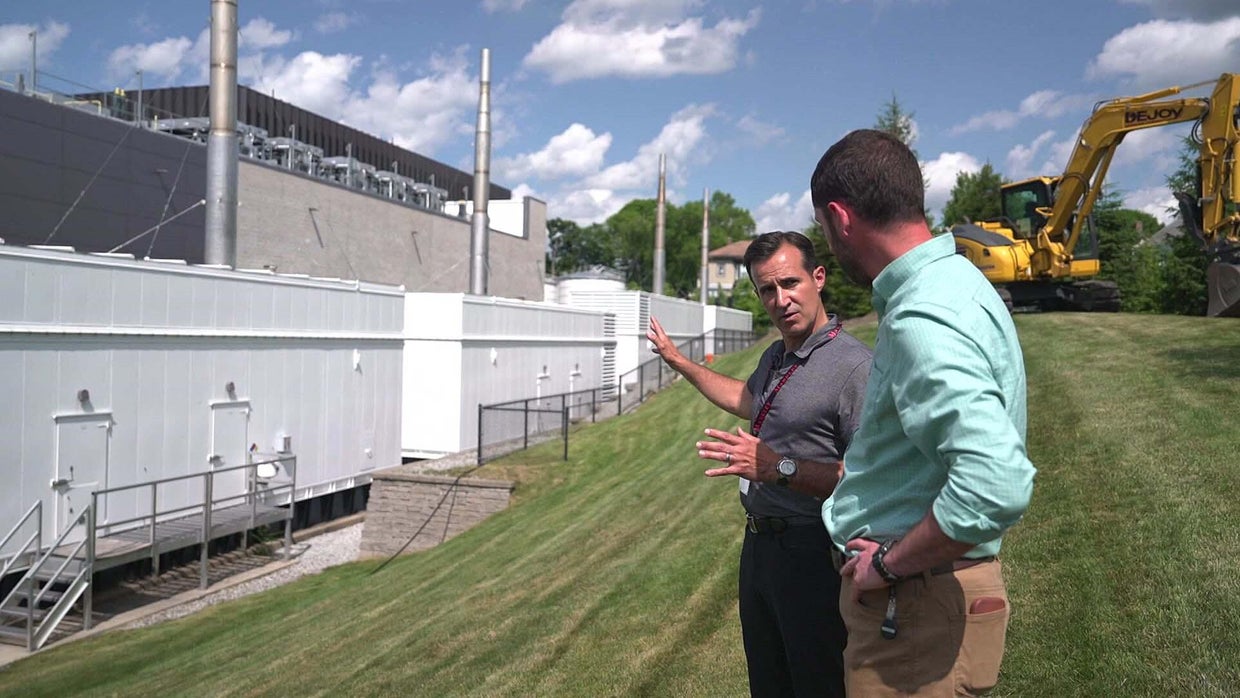
When they took David Wade to the emergency generators, which they fire up for a test every week for five minutes, you could barely hear the machines over the sounds of chirping birds.
“So, it’s not under a complete load, but this is the typical noise you’re going to get,” Burnham said.
Wade asked if the generators weren’t running at “full load” were they running at 20%, 50%, 80%? They couldn’t answer.
Then Wade asked if he thought neighbors had been exaggerating about the noise at the data center and the answer was clear. “I think they’re exaggerating, yes,” Burnham said.
If you have a question you’d like us to look into, please email questioneverything@cbsboston.com.


Home Buying
If you’re in the market for a new build, you may be attracted to the modern floor plans, state-of-the-art technology, and resort-style amenities many of them offer. But you might not realize that there are financial benefits to buying new construction.
A recent report from Realtor.com found that buyers of newly built homes save an average of $25,335 over the first 10 years of ownership compared to buyers of 20-year-old homes. Those savings are even greater in Massachusetts, which topped the state-by-state list at savings of $38,927 over 10 years, due to the state’s strict building codes and harsh winters. Neighboring New Hampshire, Maine, Rhode Island, and Vermont rounded out the top five.
But in Greater Boston, where much of the new-home inventory consists of luxury condominiums, buyers still have to balance those long-term savings with higher upfront purchase prices and steep condominium association assessments.
Ryan J. Glass, vice president of Gibson Sotheby’s International Realty in Boston, said that in the first quarter of 2026, luxury full-service buildings citywide averaged approximately $1,698 per square foot, while many of Boston’s historic brownstone neighborhoods generally landed in the $1,200- to $1,500-per-square-foot range. That means that a buyer with a $3 million budget may be looking at 1,750 to 1,800 square feet in a new luxury tower compared to 2,200 to 2,400 square feet in a comparable renovated brownstone, he said.
Ellyn Hartmayer, 60, and her husband, John Hartmayer, 58, looked at more than 75 properties — both new construction and existing — before purchasing a 2,875-square-foot Back Bay condominium for $3.25 million in May. The unit has three bedrooms, three bathrooms, and a private terrace with views of the Charles River Esplanade. It’s located in a 10-unit building that was constructed in 1950. While the couple initially considered buying a new unit in a luxury high-rise because of the modern amenities, they “became increasingly focused on where the best long-term value was,” Ellyn said Hartmayer. After a lengthy search, they found a unique property in the Back Bay that offered everything they wanted: single-level living, extra space for their children to visit, elevator access, garage parking, and private outdoor space.
“The combination of a prime location, square footage, value, and potential ultimately outweighed the appeal of a newer building,” said Ellyn Hartmayer.
In Massachusetts, the median price of a new-build is 46.7 percent more than the median price of an existing home, according to Joel Berner, Realtor.com’s senior economist.
“If you buy a new home in Massachusetts, you’ll recoup savings over time because of the harsh climate and building codes,” Berner said. “But you will have spent so much more upfront that it may or may not actually break even.”

Builder concessions can even the playing field. According to a recent survey by the National Association of Home Builders, 64 percent of builders offered sales incentives, and 37 percent actually cut new-construction prices. Many are offering buydowns on mortgage rates as well.
“If you can only afford a $500,000 existing home, maybe in the new construction space, with the 10-year savings, builder concessions, and a mortgage rate buydown, you can afford $575,000,” said Berner. “Don’t just look at the sticker price. Look at your long-term monthly cash flow, and potentially you might have more wiggle room in your budget for new construction than you thought.”
Glass tells his buyer clients the same thing. “Consider which property is the better value for your budget, as well as the location,” he said. “Sometimes a market is saturated with new construction, so you can get a better deal on it. Other times, new construction is hard to find, and you can’t get as good a deal as you could on existing construction. Keep your options open.”
Some buyers also feel that the higher price of new buildings is justified by things like a concierge, a fitness center, or valet parking, Glass added.
Indeed, a newly built home offers some advantages:
It’s move-in ready. It’s new and has never been lived in. You’ll have new fixtures, new appliances, and you’ll receive a builder’s warranty to protect you, and won’t need major repairs for several years. “Today’s new homes are built better than ever,” said Ryan O’Rourke, division president for luxury homebuilder Toll Brothers in Massachusetts.
It will be built to the latest building code and will be more energy-efficient than an older home.
The insurance will cost less, assuming you don’t purchase on Cape Cod or another coastal area. “New homes have brand-new roofs, electrical systems, plumbing, HVAC equipment, and other major components that are less likely to fail and generate claims,” said Loretta L. Worters, vice president of the Insurance Information Institute. “By contrast, older homes may have aging roofs, outdated wiring, older plumbing systems, or deferred maintenance issues that increase the likelihood of claims and can result in higher premiums.”
Newer homes come with modern floor plans. Older homes can be dark with small rooms, while new construction will reflect current design trends (like open floor plans and kitchens with large islands) and the way people live now.
You can make it your own. Builders usually give buyers the opportunity to customize their new homes, choosing everything from the model and lot it sits on to cabinets, countertops, flooring, and appliances.

Our weekly digest on buying, selling, and design, with expert advice and insider neighborhood knowledge.

Max McColgan of Nashawtuc CC and Joseph Lenane of George Wright GC shared the Harry B. McCracken Jr. medal after finishing a rain-suspended second round of stroke play at 3-under-par in the 118th Massachusetts Amateur at Winchester Country Club on Wednesday.
McColgan and Lenane advanced into match play as the top two seeds, but only one of them advanced past the Round of 32. McColgan beat Dylan Greenwald of The Haven CC, 2-and-1, but Lenane fell to No. 31 seed Ricky Stimets of Barnstable Golf on the 19th hole of their match. Stimets will face Zachary Georgantas of Foxborough CC in the Round of 16 after Georgantas needed 21 holes to beat Joey Monahan at his home course.
Patrick Kilcoyne, who was the runner-up last year at GreatHorse, finished stroke play tied for third with 2024 champion Matthew Naumec at 2-under. Kilcoyne scored a 1-up victory over Winchester CC’s Jake Peer in match play, while Naumec won a thriller over Kyle Tibbetts in 22 holes in the final match of the day.
Elsewhere in the round of 32, No. 27 seed Maxx Zides finished 1 up over No. 6 seed Sam Grindle, while No. 24 seed Ben Spitz held on to finish 1 up on No. 9 seed Conner Willett as well.
Match play will continue on Thursday, with McColgan teeing off against C.J. Winchenbaugh at 7:30 a.m. in the round of 16 to start a busy day of action on the course. A 36-hole final is scheduled for Friday.

Worcester’s reflecting pool faced criticism
Amid fanfare, reflecting pool was added to Worcester Common in 1971, a tribute to WWII veterans.
Looking for a way the kids can cool off after the Fourth of July heat wave?
In addition to numerous public beaches and pools, central Massachusetts has multiple splash pads open this time of year, offering the perfect way for children to enjoy being in the water without the hassle of a beach day. While some are ticketed, many of the region’s splash pads are free, with parks, playgrounds and other recreational areas attached.
Here are 10 splash pads where you can beat the heat in central Massachusetts this summer.
Decked out with umbrellas and chairs, green water buckets and a frog to run under, Tacoma Street Spray Park is one of Worcester’s newer spray parks, located on the 18.9-acre Tacoma Street Playground. The park also has a basketball court and picnic area.
Like all of Worcester’s splash pads, Tacoma Street Spray Park is open from noon to 7 p.m. daily through Sept. 7. Located at 345 Tacoma St. in Worcester.
This small splash pad in Fitchburg features rainbow rings to run through and a large sun design painted on the ground. The splash pad is part of Park Hill Park, which also has a skateboard park, two playgrounds, a basketball court, several baseball fields and restrooms.
Park Hill Splash Park is open from 11 a.m. to 6 p.m. daily from June through August. Lifeguards are always onsite, and parking is available off Pratt Road in Fitchburg.
Davis Farmland in Sterling is back for a second year with Cowabunga Splash Park, the largest zero-depth water spray park in New England. Built with a state-of-the-art, computer-controlled water filtration system, the park features every kind of mister and sprinkler imaginable, including horse cannons, a water tunnel, a water table, a toddler spray pad and more. The park also has a giant slip-and-slide, an inflatable water slide and a huge water tower.
Admission to Davis Farmland, which includes access to over 50 activities, costs $35.95 for adults or $32.95 for seniors over 60, though tickets cost more at the gate.
COWabunga Splash Park is open from 9:30 a.m. to 4:30 p.m. every day from now through Labor Day, with the water slide and slip-and-slide opening at 10:30 a.m. Davis Farmland is located at 145 Redstone Hill Road in Sterling.
Cristoforo Colombo Spray Park is a larger spray pad full of bright colors, water spouts and buckets dropping water from above. It is attached to Cristoforo Colombo Park, which also has a playground, fields, basketball courts and a baseball diamond.
The spray park is open from noon to 7 p.m. daily at 180 Shrewsbury St. in Worcester.
Located inside the Arthur A. Fournier Sr. Memorial Park, this splash pad spouts water from various flowers, a frog and even a dragon. The water must be turned on by pressing an orange button on the pavilion side of the splash pad, and it runs for 12 to 14 minutes at a time.
This splash pad is open daily from 10 a.m. to 8 p.m., starting Memorial Day weekend and lasting through Labor Day. Located at 525 Litchfield St. in Leominster.
Ghiloni Park in Marlborough also has a splash pad with flowers and frogs, located right next to the park’s playground. Water is activated by placing a hand on the sensor of the green activator pole.
The Ghiloni Park Splash Pad is open from June 2 through Sept. 7, with daily hours from 10 a.m. to 5 p.m. Located at 239 Concord Road in Marlborough.
Just opened last year, the splash pad at Worcester’s University Park features various tall water spouts for the kids to run through, surrounded by a playground, walking trails, pond views and plenty of umbrellas.
From now through Sept. 7, the spray park is open daily from noon to 7 p.m. Located at 965 Main St. in Worcester.
Clinton’s Philbin Memorial Park has a newly renovated splash pad that turns on by touching the top of the red fire hydrant. The water runs for four to five cycles and then rests for 10 to 15 minutes.
Philbin’s splash pad is open daily from Memorial Day to Labor Day, with hours from 9 a.m. to 7:30 p.m. Located at Berlin and Wilson streets in Clinton.
Located right next to the beach at Carbuncle Pond, this colorful splash pad is conveniently equipped with lifeguard staffing, concessions and indoor public restrooms. Resident and nonresident passes are sold online or at the gate.
The splash pad and the beach are open daily from 11 a.m. to 5 p.m. at 495 Main St. in Oxford.
Attached to a new playground, Greenwood Park’s splash pad has various sprinklers and buckets of water. The spray park usually has an attendant, and bathrooms are attached.
Worcester’s Greenwood Spray Park is open from noon to 7 p.m. daily through Sept. 7. Located at 14 Forsberg St. in Worcester.


Man suspected in 2006 Utah murder left suicide note in Las Vegas jail cell: police
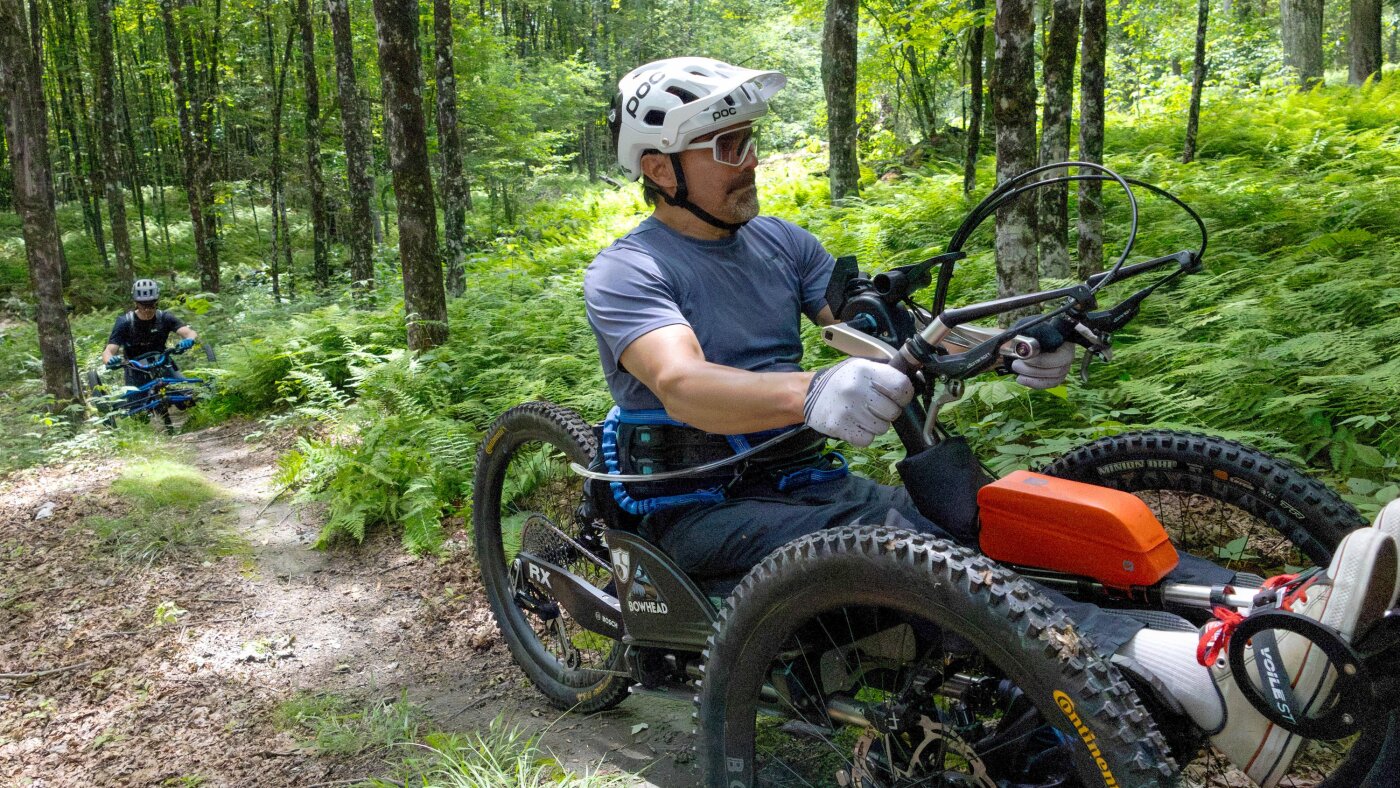
OUTDOOR ACCESS FOR DISABLED IN VERMONT

4 indicted in Virginia double homicide; second victim ID’d as grandmother of 6


Washington Commanders are retiring Hall of Famer John Riggins’ No. 44


Wisconsin State Patrol rides with truck and bus drivers to spot violations in five areas


West Virginia town fires entire police force after chief resigns, sergeant alleges evidence room break-in


WHP: July 5 single-vehicle rollover north of Riverton resulted in one death, one injury


British Airline Jet2 Shares Jump 9% After $536M Fuel Hedge Gain Offsets Middle East Travel Fears

