Northeast
Karen Read and John O'Keefe: Inside evolution of Boston murder mystery since July mistrial

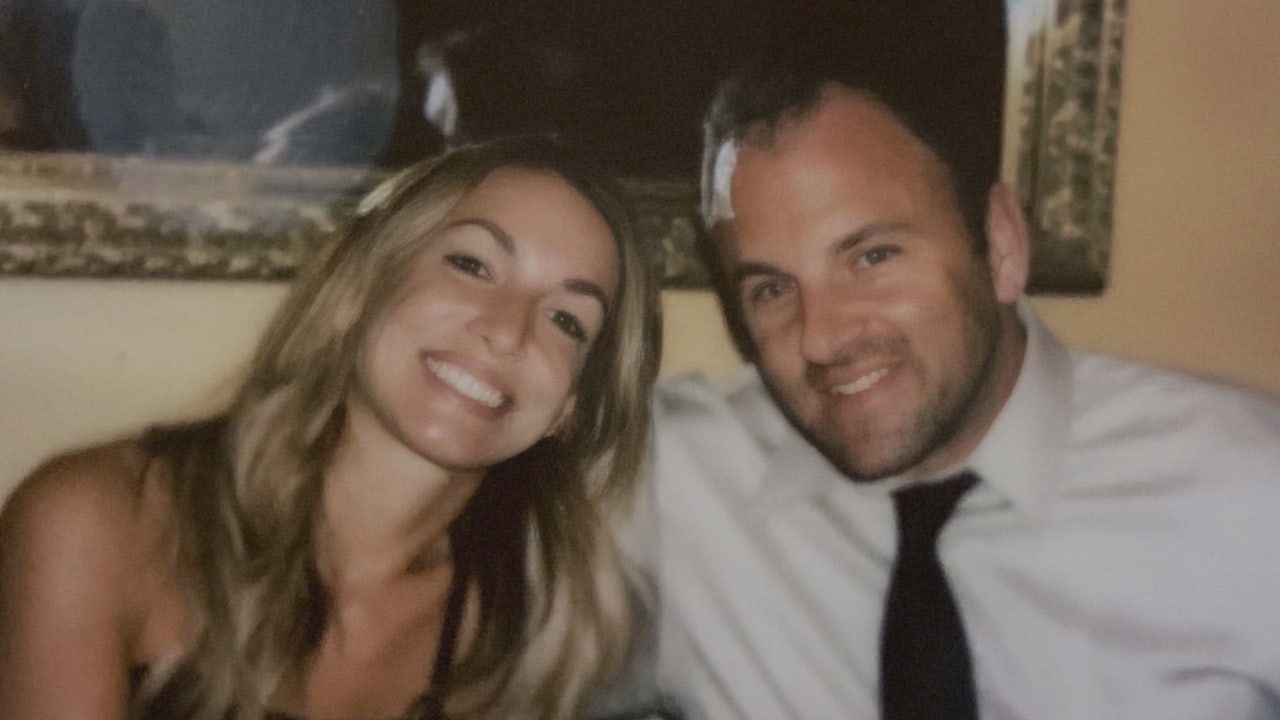
Karen Read, the woman accused of killing her Boston cop boyfriend during a January nor’easter, is set to go on trial for a second time this week after her first prosecution ended with a hung jury.
Read, 45, is charged with second-degree murder, manslaughter and leaving the scene of a deadly accident in connection with John O’Keefe’s death on Jan. 29, 2022. He was 46 and found in the snow outside another police officer’s house hours after a group of people went there for an after-party to cap off a night out drinking.
She was originally charged with manslaughter – typical in a deadly hit-and-run case – but authorities later tacked on the murder charge.
KAREN READ UPDATE: FIRED LEAD INVESTIGATOR ON WITNESS LIST FOR 2ND TRIAL IN BOSTON COP JOHN O’KEEFE’S DEATH
Karen Read and John O’Keefe are shown in an undated family photo. Read is accused of fatally striking him with her SUV after a night of drinking, but her defense has argued she is being framed by a group of his former police colleagues. (Courtesy of Karen Read)
Through her first trial and in multiple media interviews afterward, she maintained her innocence and claimed someone else killed O’Keefe.
HAVE A NEWS TIP? CLICK HERE
Joseph Giacalone, a former NYPD sergeant and a criminal justice professor at Penn State-Lehigh Valley, told Fox News Digital he thinks prosecutors will have a hard time getting a conviction after the first case fell apart.
The first trial saw allegations of a police cover-up, the arrest of an online blogger accused of intimidating witnesses, the firing of the lead investigator and lingering questions about how O’Keefe died.
The Waterfall Bar and Grille is shown in Canton, Mass., on March 29, 2025. This is where Karen Read, John O’Keefe, Jennifer McCabe and friends visited before O’Keefe’s death in January 2022. (Richard Beetham for Fox News Digital)
KAREN READ’S 2ND MURDER TRIAL SET TO START IN DEATH OF BOYFRIEND COP: WHAT TO KNOW
Prosecutors allege that Read backed into him with her Lexus SUV, then drove away, leaving him to die in the snowstorm.
An autopsy found the cause of his death to be blunt-force trauma to the head and hypothermia. O’Keefe had skull fractures, brain bleeding, swollen black eyes and cuts to his right arm, but the forensic pathologist held off on calling it a homicide, leaving the manner of death undetermined.
Dr. Daniel Wolfe, an expert witness, testified that the damage to the rear end of Read’s vehicle was not consistent with striking a human head or arm. Prosecutors are seeking to have his testimony precluded the second time around.
FOLLOW THE FOX TRUE CRIME TEAM ON X
Karen Read stands in the doorway as she waits to leave Norfolk Superior Court. (John Tlumacki/The Boston Globe via Getty Images)
His name remained on a 150-person witness list unveiled Monday, along with that of Michael Proctor, the former lead investigator who was fired from the Massachusetts State Police this month.
GO HERE FOR FULL COVERAGE OF THE 2ND KAREN READ TRIAL
Read the witness list: Mobile users click here
The following is a timeline of key events in the case:
Jan. 28, 2022
Read and O’Keefe went out in Canton, Massachusetts, a suburb of Boston about 15 miles from the city.
Although text messages introduced at trial show they had argued that morning, they went out together around 9 p.m. at C.F. McCarthy’s, an Irish bar. Around 11, they met friends and acquaintances at the Waterfall Bar and Grille. The bar closed at midnight.
JUROR IN KAREN MISTRIAL JOINS HER DEFENSE TEAM FOR RETRIAL
C.F. McCarthy’s in Canton, Mass. (Richard Beetham for Fox News Digital )
Jan. 29, 2022
Then-Boston Police Officer Brian Albert invited a group of people to his house on Fairview Road for an after-party when the bar wrapped up service. This could be the last time O’Keefe was seen alive in public.
JUROR IN KAREN MISTRIAL JOINS HER DEFENSE TEAM FOR RETRIAL
Early hours of Jan. 29
- 12 a.m.: O’Keefe and Read are invited over to Albert’s house and given directions. But witnesses have testified they never came inside.
- 12:37 a.m.: Read allegedly leaves a voicemail with an expletive for O’Keefe, saying, “John, I … hate you.” She was later accused of hitting him at about 24 mph after backing up 60 feet in her vehicle.
- 2:27 a.m.: Jennifer McCabe allegedly looks up on Google how long it takes to die in the cold. She later testified that she did the search at Read’s request.
- 6 a.m.: Read returns to the Alberts’ home with McCabe and another person, and they call 911 from outside, where O’Keefe was found dead, according to a synopsis from CourtTV, which streamed the first trial.
- 6:23 a.m.: McCabe uses her phone to search for information on dying in the cold for a second time.
SIGN UP TO GET TRUE CRIME NEWSLETTER
Karen Read appears in Norfolk County Superior Court for a pre-trial hearing. She is charged with fatally running over her boyfriend, John O’Keefe, whose arm is shown with scratches and cuts on a poster in court. (John Tlumacki/The Boston Globe via Getty Images)
Feb. 2, 2022
Read was arrested on hit-and-run and manslaughter charges.
June 9, 2022
A superseding indictment accused Read of second-degree murder.
GET REAL-TIME UPDATES DIRECTLY ON THE TRUE CRIME HUB
Judge Beverly Cannone presides over jury selection during the Karen Read trial at Norfolk County Superior Court, Thursday, April 18, 2024, in Dedham, Mass. (David McGlynn/New York Post via AP, Pool)
April 16, 2024 to July 1
Read’s first trial stretched on for weeks and ended with a hung jury. Judge Beverly Cannone declared a mistrial.
Prosecutors accused Read of a drunken hit-and-run. Her defense argued that O’Keefe had been attacked inside the home and suffered injuries to his arm caused by a dog before being carried outside and left in the storm.
Officer John O’Keefe (Boston Police Department)
March 19, 2025
After a months-long internal investigation into the lewd text messages he sent about Read in the initial investigation, Proctor was fired from the Massachusetts State Police after a 12-year career.
March 31
On the eve of jury selection for Read’s second trial, Cannone released several impactful rulings on the case.
She rejected the defense’s attempt to have a former FBI agent testify about failures to meet police protocol with the initial investigation and limited the scope of arguments the defense would be allowed to raise regarding potential third-party culprits, including Albert and ATF Agent Brian Higgins, both of whom were present at both the Waterfall bar and Albert’s house the night O’Keefe died.
ATF Agent Brian Higgins speaks at the Karen Read murder trial at Norfolk Superior Court, May 28, 2024, in Dedham, Mass. (Stuart Cahill/Boston Herald via AP/Pool)
The witness list also revealed Proctor would take the stand, even after his firing, and so would Aidan Kearney, a local blogger and prominent Read supporter who has been accused of witness intimidation.
April 1
Jury selection in Read’s second trial kicked off in Dedham, Massachusetts.
The Associated Press contributed to this report.
Read the full article from Here


When Americans think of the beverage that fueled the American Revolution, they usually picture black tea — but it turns out that green tea was just as popular.
The Founding Fathers and their contemporaries drank both types of tea, Bruce Richardson, the Kentucky-based founder of Elmwood Inn Fine Teas, told Fox News Digital.
British subjects “were as likely to be drinking green tea as black tea, whether you were in Jane Austen [era] England … or you were in colonial Boston,” he added.
“There were five teas, all from China, because that was the only country that was exporting tea,” Richardson said. “And of those five different teas, two of them were green and three of them were black.”
Richardson, a tea historian who works as the tea master at the Boston Tea Party Ships & Museum, said the five types of tea dumped into Boston Harbor in protest of the Tea Act of 1773 included three black varieties — Bohea, Souchong and Congou — as well as the green teas Hyson and Singlo.
Bohea, the most common and least expensive black tea of the era, was often made from older tea leaves harvested after the highest-quality leaves of the season had already been picked.
Most of the tea dumped into Boston Harbor was Bohea, Richardson said — and it was so ubiquitous that he compared it to the way Kleenex has become synonymous with tissues today.
“It was so common that often teapots at the time, or some that I’ve seen, would say Bohea on the side of the teapot,” he said. “If they wanted tea, they’d say, ‘I’ll have a cup of Bohea.’ It was that common.”
Not only did colonial Americans distinguish between green and black tea, they even stored them differently.
“They still wanted their tea time, but they didn’t want to support the British government.”
“The well-to-do people would have a tea caddy – a wooden, beautifully made tea caddy to store their tea in,” he said.
“It was kept under lock and key. And in that tea caddy, [there] would be two compartments, one for green tea and one for black tea.”

Merchants often favored black tea because it held up better during the long voyage from China to Europe and onward to the American colonies, Richardson said.
“The green tea was what China had always drunk,” he said.
“And so they were exporting that as well, but they found that the black tea actually made the voyage better than the green teas.”
Even after many colonists swore off British tea, they kept the ritual of drinking it — or at least a close substitute.
Many patriots brewed so-called “Liberty Teas” made from ingredients such as dried apples, blueberries, chamomile and herbs grown in their gardens.
“They still wanted their tea time, but they didn’t want to support the British government,” Richardson said.


-

 Los Angeles, Ca35 minutes ago
LeBron James informs Lakers he will play elsewhere next year
-

 Detroit, MI50 minutes ago
5 realistic cornerback trade targets for the Detroit Lions after Terrion Arnold’s release
-

 San Francisco, CA1 hour ago
Headlines, June 30 – Streetsblog San Francisco
-

 Dallas, TX1 hour ago
LIVE | Ivory Coast, Norway meet for World Cup knockout match at Dallas Stadium
-

 Miami, FL1 hour ago
Every Dolphins head coach’s start in Miami from worst to best
-

 Boston, MA1 hour ago
Historian clears up one of the biggest myths about the Boston Tea Party
-
Denver, CO1 hour ago
Nemanja Jokic, the older brother of\u00a0Denver …
-

 Seattle, WA1 hour ago
3 Seahawks Rookies Who Must Step Up Right Away

