Northeast
Judge gives Mahmoud Khalil legal team more time to review immigration case

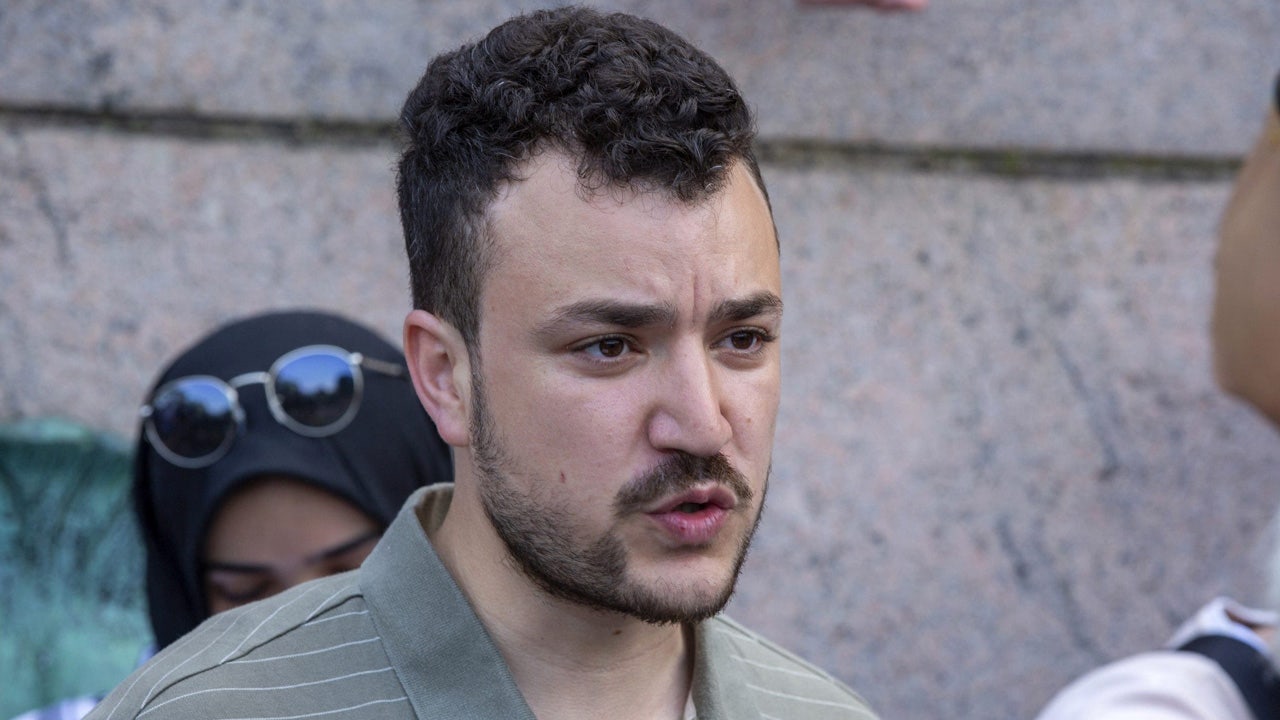
A judge granted Columbia University activist Mahmoud Khalil’s legal team more time to review his immigration case during a hearing Friday in Louisiana.
Khalil, a 30-year-old green card holder who is married to a U.S. citizen, was arrested by Immigration and Customs Enforcement officials on March 8. He is facing possible deportation over his alleged support for the Palestinian terrorist group Hamas, although he has not been charged with a crime.
The judge at Lasalle Immigration Court in Jena said she thinks Khalil “deserves more time” to prepare before a pleading and delayed further proceedings until April 8.
A lawyer representing the Department of Homeland Security originally objected to the matter, arguing that Khalil is being “held at the government’s expense.” However, Khalil’s attorney told the judge that “these are serious charges, we need time to review.”
VIDEO SHOWS ARREST OF COLUMBIA ANTI-ISRAEL RINGLEADER MAHMOUD KHALIL
Mahmoud Khalil allegedly played a major role in the protests against Israel at Columbia University. (Ted Shaffrey/AP)
Khalil looked calm throughout the hearing, which unfolded in a small, windowless courtroom. He spoke relatively quietly in his responses to the judge and seemed somewhat relaxed. The judge asked him what language he understood best and he said English and Arabic, and when she asked if they could proceed in English, he said yes.
Khalil played a major role in the anti-Israel protests at Columbia.
In a letter released by his attorneys on Tuesday, Khalil characterized his arrest as “indicative of anti-Palestinian racism.” He also blamed Columbia’s administration, including former university President Minouche Shafik, who was criticized for failing to adequately respond to allegations of antisemitic behavior from activists on campus before she ultimately stepped down.
“My unjust detention is indicative of the anti-Palestinian racism that both the Biden and Trump administrations have demonstrated over the past 16 months as the U.S. has continued to supply Israel with weapons to kill Palestinians and prevented international intervention,” Khalil wrote. “For decades, anti-Palestinian racism has driven efforts to expand U.S. laws and practices that are used to violently repress Palestinians, Arab Americans, and other communities. That is precisely why I am being targeted.”
COLUMBIA STUDENT CLAIMS CLASSMATE ARRESTED BY ICE ‘HATES AMERICA’
Mahmoud Khalil tells his wife to call his lawyer, Amy, when being arrested. (The Family of Mahmoud Khalil)
In one of the first legal victories for Khalil, a judge on Wednesday ordered his deportation case be heard in New Jersey, not Louisiana, where he is being held. The judge cited a law that required the case be held in the same jurisdiction where Khalil’s attorneys first filed a lawsuit to challenge his detention.
The Trump administration previously said there was a bedbug infestation at the detention facility in New Jersey, near Khalil’s arrest, leading them to have to ship him to Louisiana.
LaSalle Immigration Court in Jena, La., where Khalil appeared for a hearing on Friday, March 21. (Olivianna Calmes/Fox News)
“His unlawful and unjust detention cannot stand. We will not stop fighting until he is home with me,” Noor Abdalla, his wife, said in a statement released by the American Civil Liberties Union earlier this week.
Fox News’ Alec Schemmel contributed to this report.
Read the full article from Here


A federal judge has dismissed a lawsuit by the Justice Department aimed at compelling New Hampshire to turn over its voter rolls, dealing the Trump administration another setback in its quest for detailed information about the nation’s voters.
The ruling from U.S. District Judge Joseph LaPlante found that the request to provide the state’s voter registration list did not comply with a section of the Civil Rights Act of 1960 pertaining to federal election records. His ruling, issued Monday, also found that the Justice Department failed to allege any violation under the Help America Vote Act of 2002, which established standards for states’ voting systems and voter registration lists.
That prevents “allowing the Attorney General unrestricted access to New Hampshire’s (voter list) to conduct a line-by-line audit to assess a ‘possible’ violation of a federal statute,” wrote LaPlante, an appointee of former President George W. Bush.
New Hampshire Secretary of State David Scanlan, a Republican, welcomed the ruling.
“I am committed to protecting the private information of New Hampshire voters to the fullest extent required by law,” he said in a statement.
The dismissal in New Hampshire brings to 10 the number of states where the Justice Department has lost similar cases. The department has sued to force release of detailed state voter data — which includes dates of birth, addresses, driver’s license numbers and partial Social Security numbers — in 30 states and the District of Columbia.
In addition to New Hampshire, judges have rejected those attempts in Arizona, California, Maine, Massachusetts, Maryland, Michigan, Oregon, Rhode Island and Wisconsin. In Georgia, a judge dismissed a Justice Department lawsuit because it had been filed in the wrong city, prompting the government to refile elsewhere.
In explaining their push for the records, federal officials have said they need the voter data to ensure that states are complying with federal election laws related to maintaining voter registration lists, even though states already have detailed processes to do that. In the case out of Rhode Island, a Justice Department attorney acknowledged that the department was seeking unredacted voter roll information so it could be shared with the Department of Homeland Security to check citizenship status.
Democratic and some Republican officials have objected to the Justice Department requests for detailed voter data and said such a demand violates state and federal privacy laws.
At least 13 states have either provided or promised to provide their voter registration lists to the department, according to the Brennan Center for Justice and Associated Press reporting: Alaska, Arkansas, Indiana, Louisiana, Mississippi, Nebraska, Ohio, Oklahoma, South Carolina, South Dakota, Tennessee, Texas and Wyoming.
TRENTON – Today, Governor Mikie Sherrill signed three bills aimed at strengthening public safety, privacy, and trust across New Jersey’s diverse communities. The bills outline clear standards to increase transparency and accountability for law enforcement during operations, protect personal privacy, and ensure that all residents can access vital public and health care services without fear of deportation.
The “Law Enforcement Officer Protection Act,” or S-3114, sponsored by Senators Benjie E. Wimberly, Troy Singleton, and Nick Scutari, requires law enforcement officers, including federal agents, to reveal their facial identities when conducting official duties. The bill also requires officers to provide sufficient identification prior to arresting or detaining an individual, such as department-issued photo identification, a uniform bearing agency insignia, or a badge. The bill allows exceptions for officers to wear facial coverings, including during undercover assignments, use as protection against chemical agents, medical exemptions, or shielding during severe weather.
“The trust local police have worked hard to build in our towns and cities is being undermined by unidentifiable ICE agents who seek to intimidate our neighborhoods while avoiding accountability,” said Senator Wimberly (D-Passaic/Bergen). “Banning the use of masks, with limited exceptions, will help us protect the civil rights of all residents and will send a clear message that anonymous and unchecked immigration enforcement will not be tolerated in New Jersey.”
“When law enforcement hides behind masks and operates without visible identification, it erodes trust, sows fear, and encourages dangerous and irresponsible behavior from civil servants who should be held to the highest standard,” said Senator Singleton (D-Burlington). “Requiring all law enforcement to provide facial and material identification during their operations is a reasonable measure that is in the best interest of public safety and accountability for our communities and all levels of law enforcement.”
“In New Jersey, we respect the professionalism of our law enforcement agencies and the standards of accountability they follow. Federal immigration officers should adhere to the same standards. This is vital in maintaining the public’s trust in the rule of law and their confidence that our laws are being enforced fairly and humanely. Protecting the rights of all of our residents will serve the best interests of law enforcement and help to keep our communities safe for everyone,” said Senate President Scutari (D-Union/Somerset).
The “Privacy Protection Act,” or S-3522, sponsored by Senators M. Teresa Ruiz, Andrew Zwicker, and John McKeon, limits the collection and sharing of data by government and health care entities to ensure all New Jersey residents are not discouraged from seeking necessary services. The act prohibits government entities and health care facilities from requesting or collecting certain personal identifying information related to a person’s immigration status, place of birth, social security number, and individual taxpayer identification number unless it is strictly necessary to assess eligibility for, or to administer, a requested public service, benefit, or program. When collected, this information would remain confidential and not subject to public disclosure, with some exceptions.
“Across the country, the hostile climate this administration has created for immigrants and their families is making individuals hesitant to access essential services, regardless of their legal status,” said Senate Majority Leader Ruiz (D-Essex/Hudson). “No one should be afraid to seek health care or public services because of the personal information they are asked to provide. The ‘Privacy Protection Act’ limits the collection of private information when it is unnecessary to receive services and ensures confidentiality so all New Jerseyans can access the support they need without fear.”
“Protecting people’s personal information is fundamental to maintaining trust in government and ensuring access to necessary services,” said Senator Zwicker (D-Middlesex/Mercer/Somerset/Hunterdon). “As federal authorities use government records for their aggressive and mean-spirited immigration enforcement, New Jersey must strengthen our privacy protections to prevent harm.”
“This legislation will modernize our privacy protections to safeguard personal data collected by government agencies and health care providers,” said Senator McKeon (D-Essex/Passaic). “With the Trump Administration trying to access these records in order to identify and deport our law-abiding, undocumented neighbors, we must stand up to defend their right to privacy and protect them from undue harassment by federal agents.”
The third bill, S-3521, sponsored by Senators Britnee Timberlake, Gordon Johnson, and Raj Mukherji, would codify the Attorney General’s Directive, “Strengthening Trust Between Law Enforcement and Immigrant Communities,” also known as the “Immigrant Trust Directive.” The landmark Directive, first issued in 2018, has been upheld in State and federal court.
The Directive draws a clear distinction between state, county, and local law enforcement officers, who are responsible for enforcing state criminal law, and federal immigration authorities, including ICE, who enforce federal civil immigration law. It limits the voluntary assistance New Jersey law enforcement may provide to federal authorities, ensuring state resources remain fully dedicated to protecting the public, enforcing state law, and fostering trust within our communities.
Under the bill, law enforcement is prohibited from engaging in racially biased policing and may not stop, question, arrest, search, or detain anyone solely based on actual or suspected citizenship or immigration status.
“We must assert our constitutional authority under the anti‑commandeering doctrine, which prevents the federal government from forcing states to administer federal programs. These laws make New Jersey communities safer, safeguarding people— documented and undocumented—while protecting local police from being drawn into federal actions that could expose them to serious legal and moral consequences. Lessons of the Nuremberg trials remind us ‘just following orders’ is not an excuse to violate fundamental constitutional and human rights. Advancing this legislation shields individuals from unfair treatment, upholds constitutional protections, and reflects the inclusive values of a nation built by immigrants. When my future grandchildren read about this moment in history, they will know we used the law to protect people,” said Senator Timberlake (D-Essex).
“Our state and local law enforcement must focus on building trust among residents and keeping our communities safe—not carrying out a cruel, anti-immigrant agenda that instills fear among hardworking, everyday people,” said Senator Johnson (D-Bergen). “Codifying the Immigrant Trust Directive will help reaffirm New Jersey’s commitment to our immigrant neighbors, who are our friends and vital contributors to our state, and stand against escalating threats from Washington.”
“These bills advance public safety at a time when the federal government is acting lawlessly, sowing division, and inciting chaos,” said Senator Mukherji (D-Hudson). “When victims and witnesses are afraid to come forward, violent offenders remain on the streets. This legislation strengthens and maintains trust between our diverse communities and state and local law enforcement, and it allows police to do their jobs — focusing on real public safety threats, preventing violence, and solving crime — while ensuring taxpayer resources are not misused to enforce federal civil immigration violations at a time when ICE has repeatedly disregarded due process and civil rights across the country.”


PA Gov. Shapiro wants $4.7 billion from reserves to balance budget
Gov. Josh Shapiro’s rainy day-fund request to balance his 2026-27 budget proposal would be the largest in state history.
The Pennsylvania House of Representatives added two session days to its calendar this week while the Senate took off for an early holiday as another state budget will not be finalized on time.
House Speaker Joanna McClinton added voting sessions for 11 a.m. July 1 and 9:30 a.m. July 2. Senate Republicans voted to return at the call of President Pro Tempore Judy Ward, frustrating some Democrats.
Changes to the calendar throughout the year are routine, McClinton’s press secretary, Nicole Reigelman, told USA TODAY Network Pennsylvania. “Nothing specific led to it,” she said.
A late budget would mark the fifth time in as many years elected state officials missed the statutorily mandated June 30 deadline. Last year, it was not signed until Nov. 12.
“We’re walking out the door while the House is in session the next two days and the governor is in place to work with us here to get this done,” Sen. Vincent Hughes, a Democrat from Philadelphia, said on the Senate floor before voting against the recess that Republicans passed.
The Senate is not scheduled to return to session until Sept. 28. After July 2, the House’s next scheduled return is also Sept. 28. Both chambers could be called back at any time.
“I am highly confident we are well on track to deliver a responsible budget that will recognize our unique status as a divided government and deliver a responsible product to the people of Pennsylvania with no negative impacts,” Senate Majority Leader Joe Pittman, a Republican who represents Indiana County, said on the Senate floor. “There’s no reason we can’t conclude our work early next week.”
Minority Leader Jay Costa, a Democrat from Allegheny County, disagreed and said returning July 5 would be inappropriate.
“Some may characterize talks as hopeful and seem to be coming together,” Costa said from the floor. “Based on my recent conversations, that doesn’t seem to be the case.”
But a budget could be getting close, according to one Republican state representative who requested anonymity. “There’s going to be very little policy in the budget,” the representative told USA TODAY Network Pennsylvania. “I take it to mean that there aren’t going to be major policy changes and negotiations will center around dollars and cents.”
The House passed a $53.3 billion budget plan in April with a bipartisan vote, but the Republican-controlled Senate has not acted on it. It would cost roughly 5.6% more than the state spent in the fiscal year that ends June 30.
“The Senate hasn’t passed a budget,” Reigelman said. “We’re proud that we got them something more than two months ago.”
That budget was performative, according to Republican Senate Majority Caucus Chair Kristin Phillips-Hill, who represents York County.
“It was really cute,” Phillips-Hill told USA TODAY Network Pennsylvania. “There is not enough money from taxpayers to pay for the budget they sent us. To me, that’s completely unacceptable.”
Republican legislators have opposed Gov. Josh Shapiro’s proposal to use $4.7 billion of rainy day funds to balance the budget. GOP leaders in the House and Senate have said excessive spending could downgrade the state’s credit rating and lead to future tax increases.
Pennsylvania’s Independent Fiscal Office projects a worsening deficit for the state that could reach $8.3 billion in three years.
Pittman said in an interview earlier in June that this budget has a “much different feel” since it lacks a big issue hanging over lawmakers the way a debate over mass transit funding lingered in 2025.
“We have an opportunity to pay our bills and reduce the deficit we’re facing and hopefully not dip into reserves any more than is absolutely necessary,” Pittman said June 26 in an interview on Indiana County radio station WCCS 101.1FM.
Proposals in the budget include new revenue from legalizing recreational marijuana and skill games. The state Legislature has until mid-October to decide if Pennsylvania will allow skill games after the state Supreme Court ruled on June 15 that they are illegal.
“The question is, how, given the Supreme Court ruling where they said these are slot machines, how do you delineate that taxation approach?” Pittman asked during his interview. “If we don’t do anything, these machines are gone. Period.”
State oversight for skill games would include licensing and regulations through the state’s Gaming Control Board. Slot machines in a casino are taxed at 52%, Pittman said.
The Independent Fiscal Office maintains that Shapiro’s revenue estimates for recreational marijuana and skill games exceed their own estimates by $4.4 billion over the next three fiscal years.
Mark Walters is the USA TODAY Network Pennsylvania statehouse reporter. Reach him atmwalters@usatodayco.com.
-

 Mississippi4 minutes ago
Amy Carruth named director of Mississippi State Hospital – SuperTalk Mississippi
-

 Missouri11 minutes ago
Gov. Kehoe signs Missouri FY27 budget totaling $50.7B. What you need to know
-

 Montana13 minutes ago
New health care system director appointed at Montana VA
-

 Nebraska18 minutes ago
Hilgers says Nebraska, Colorado water dispute could take years, but Perkins County Canal should progress
-

 Nevada26 minutes ago
Deputies respond to stabbing at Nevada Cares Campus in Reno; one victim hospitalized
-

 New Hampshire28 minutes ago
Federal judge denies effort by Trump administration to get NH’s detailed voter data
-
New Jersey34 minutes ago
News Flash • New Jersey Legislative Senate Democrats, NJ
-

 New Mexico41 minutes ago
Las Vegas police and fire to enforce zero-tolerance illegal firework ban

