Northeast
Jeffrey Epstein's sex trafficking accomplice Ghislaine Maxwell asks court to overturn conviction

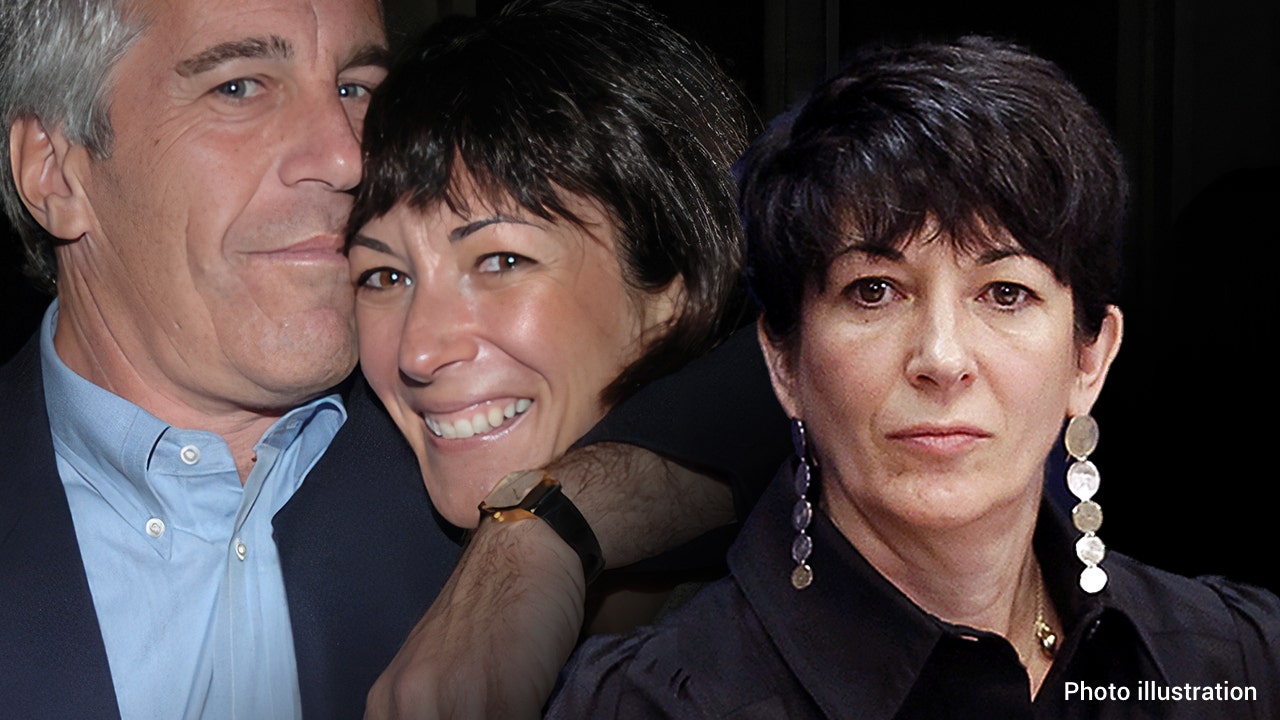
Lawyers for Ghislaine Maxwell, the 62-year-old accomplice and former lover of the late sex-trafficking financier Jeffrey Epstein, will ask a federal appeals court to throw out her convictions Tuesday.
Maxwell was convicted in federal court in 2021 for her role procuring teen girls as victims for Epstein between 1994 and 2004 and later sentenced to 20 years in prison.
Her appeal is being heard in the 2nd U.S. Circuit Court of Appeals in New York. In a brief filed last year, her attorneys asked the court to review the statute of limitations, whether Maxwell’s trial violated a prior non-prosecution agreement, an allegation of juror misconduct, and Maxwell’s sentencing.
JEFFREY EPSTEIN VICTIMS SUE FBI FOR ALLEGED FAILURE TO INVESTIGATE ‘SEX TRAFFICKING RING FOR THE ELITE’
Jeffrey Epstein and Ghislaine Maxwell attend an event on March 15, 2005, in New York City. (Joe Schildhorn/Patrick McMullan via Getty Images)
Epstein died in federal custody in 2019 while awaiting his own trial. He was 66. Both Maxwell and his brother, Mark Epstein, have publicly doubted the official finding that he hanged himself while alone in his cell.
Maxwell’s lawyers have argued that after Epstein’s death, she became a scapegoat due to outrage over his crimes and the lenient sentence he received in 2008 for a prior sex-trafficking conviction – 13 months with work-release.
Photo from 2001 that was included in court files shows Prince Andrew with his arm around the waist of 17-year-old Virginia Giuffre, who says Jeffrey Epstein paid her to have sex with the prince. Andrew denied the charges. In the background is Epstein’s girlfriend Ghislaine Maxwell. (U.S. Second Circuit Court of Appeals)
FLORIDA GOV RON DESANTIS SIGNS LAW WITH BIG POTENTIAL IMPACT ON EPSTEIN CASE
If her appeal fails, Maxwell isn’t eligible for release until July 2037 on multiple counts of child sex trafficking. She is an inmate at Federal Correctional Institute Tallahassee, a low-security prison in Florida.
Separately, the Epstein saga has received much attention so far in 2024 – with the unsealing of hundreds of documents as part of a civil lawsuit between Maxwell and accuser Virginia Giuffre, a civil lawsuit by a dozen other accusers against the FBI, and a new law in Florida designed to make previously sealed filings in Epstein’s criminal case public.
The unsealed documents cast renewed scrutiny on a number of figures in Epstein’s inner circle, including the United Kingdom’s Prince Andrew.
Ghislaine Maxwell and Jeffrey Epstein smile in an undated photograph that was among several unearthed during her sex trafficking trial in the Southern District of New York. (U.S. Department of Justice/Mega)
Epstein got a sweetheart plea deal on federal charges in 2008 in connection with that case and was only charged with more serious crimes in 2019 after a series of Miami Herald reports unveiled the lenient terms of his initial punishment.
The lenient deal also created the non-prosecution agreement cited in Maxwell’s appeal, which protected potential co-conspirators.
Federal prosecutors in New York, however, counter that they are not bound by that deal, which Epstein struck with a former U.S. attorney in Florida. Separately, attorneys for at least one of Epstein’s accusers have argued that the deal should be void because it violates the Crime Victims’ Rights Act.
The new Florida law, taking effect on July 1, will allow grand jury testimony from cases involving dead suspects and crimes against children to be made public.
Read the full article from Here


Almost 50 years ago, a Pennsylvania Lottery scandal rocked the commonwealth and captured the attention of the world. Now it’s going up for auction.
Television viewers on Thursday, April 24, 1980, thought they were watching another random lottery drawing when the numbers 666 were drawn. But weeks later, Nick Perry, a local Pittsburgh news reporter and host of the drawing, was charged and convicted of rigging the game. Investigators learned he made some balls heavier than others by adding extra paint to them, tipping the outcome.
That drawing, and the 666 lottery tickets, would go down in infamy. And now, a 46-year-old artifact at the center of the scandal is up for sale.
John Zenewicz likes to go to estate sales and has a side hustle selling finds on eBay. He said he was at an estate sale in Saxonburg when he saw a 666 ticket sitting on a dresser.
“I remember the style of ticket because my dad would buy them when I was a boy,” said John Zenewicz. “And I was like, ‘why would someone encase an old lottery ticket?’ and the only thing that could pop to my mind was that story that I remember. I was 10 years old.”
Zenewicz suspects the homeowners had no idea what they were selling.
“What I presume, it’s one of the tickets that was probably confiscated as evidence in Nick Perry, what the locals call the Triple Six Fix,” he said.
After a little more research, Zenewicz said he realized one of the previous owners of the home worked in law enforcement at the time of the scandal. He suspects he may have been part of the team prosecuting Nick Perry. Perry served two years in jail, was fined $3,000 and was ordered to pay $35,000.
Perry died in 2003, but at least one of the tickets at the center of it all remains. And now, Zenewicz says he is selling his 666 ticket on eBay, giving someone else a chance to own a piece of history.

(WJAR) — A Rhode Island couple took home a big surprise from their vacation in Florida: a newborn baby.
The two had just arrived in Tampa to go on a cruise, when the mom started having severe abdominal cramps.
She was rushed to the emergency room where doctors broke the news:she was pregnant and the baby was on it’s way.
Neither one even knew they were expecting.
But they said their new baby boy “Sebastian” is a more than welcome souvenir.
Powerball, Mega Millions jackpots: What to know in case you win
Here’s what to know in case you win the Powerball or Mega Millions jackpot.
Just the FAQs, USA TODAY
The Vermont Lottery offers several draw games for those willing to make a bet to win big.
Those who want to play can enter the MegaBucks and Lucky for Life games as well as the national Powerball and Mega Millions games. Vermont also partners with New Hampshire and Maine for the Tri-State Lottery, which includes the Mega Bucks, Gimme 5 as well as the Pick 3 and Pick 4.
Drawings are held at regular days and times, check the end of this story to see the schedule.
Here’s a look at July 17, 2026, results for each game:
Winning Vermont Mega Millions numbers from July 17 drawing
22-34-45-48-55, Mega Ball: 14
Check Vermont Mega Millions payouts and previous drawings here.
Winning Gimme 5 numbers from July 17 drawing
05-23-24-34-36
Check Gimme 5 payouts and previous drawings here.
Winning Pick 3 numbers from July 17 drawing
Day: 7-6-7
Evening: 6-6-6
Check Pick 3 payouts and previous drawings here.
Winning Pick 4 numbers from July 17 drawing
Day: 9-7-7-0
Evening: 9-8-0-0
Check Pick 4 payouts and previous drawings here.
Winning Millionaire for Life numbers from July 17 drawing
03-19-38-48-58, Bonus: 01
Check Millionaire for Life payouts and previous drawings here.
Feeling lucky? Explore the latest lottery news & results
Are you a winner? Here’s how to claim your lottery prize
For Vermont Lottery prizes up to $499, winners can claim their prize at any authorized Vermont Lottery retailer or at the Vermont Lottery Headquarters by presenting the signed winning ticket for validation. Prizes between $500 and $5,000 can be claimed at any M&T Bank location in Vermont during the Vermont Lottery Office’s business hours, which are 8a.m.-4p.m. Monday through Friday, except state holidays.
For prizes over $5,000, claims must be made in person at the Vermont Lottery headquarters. In addition to signing your ticket, you will need to bring a government-issued photo ID, and a completed claim form.
All prize claims must be submitted within one year of the drawing date. For more information on prize claims or to download a Vermont Lottery Claim Form, visit the Vermont Lottery’s FAQ page or contact their customer service line at (802) 479-5686.
Vermont Lottery Headquarters
1311 US Route 302, Suite 100
Barre, VT
05641
When are the Vermont Lottery drawings held?
- Powerball: 10:59 p.m. Monday, Wednesday, and Saturday.
- Mega Millions: 11 p.m. Tuesday and Friday.
- Gimme 5: 6:55 p.m. Monday through Friday.
- Lucky for Life: 10:38 p.m. daily.
- Pick 3 Day: 1:10 p.m. daily.
- Pick 4 Day: 1:10 p.m. daily.
- Pick 3 Evening: 6:55 p.m. daily.
- Pick 4 Evening: 6:55 p.m. daily.
- Megabucks: 7:59 p.m. Monday, Wednesday and Saturday.
- Millionaire for Life: 11:15 p.m. daily
What is Vermont Lottery Second Chance?
Vermont’s 2nd Chance lottery lets players enter eligible non-winning instant scratch tickets into a drawing to win cash and/or other prizes. Players must register through the state’s official Lottery website or app. The drawings are held quarterly or are part of an additional promotion, and are done at Pollard Banknote Limited in Winnipeg, MB, Canada.
This results page was generated automatically using information from TinBu and a template written and reviewed by a Vermont editor. You can send feedback using this form.
-

 Oklahoma3 minutes ago
Main Card Results | UFC Oklahoma City
-

 Oregon9 minutes ago
High heat, fire threat remains around Oregon
-

 Pennsylvania15 minutes ago
Ticket from Pennsylvania Lottery’s Triple Six Fix scandal going up for auction
-

 Rhode Island21 minutes ago
Rhode Island couple returns from Florida trip with with surprise newborn
-

 South-Carolina27 minutes ago
Non-native blue land crab sightings across the South Carolina coast
-
South Dakota33 minutes ago
SD Lottery Mega Millions, Millionaire for Life winning numbers for July 17, 2026
-

 Tennessee39 minutes ago
Tennessee woman arrested after allegedly trying to drown one of her children in backyard pool
-

 Texas45 minutes ago
How a man once ordered to pay libel damages helped launch an investigation into Islamic private schools

