Northeast
JD Vance claims Kamala Harris is running a 'copycat campaign' during stop in major swing state

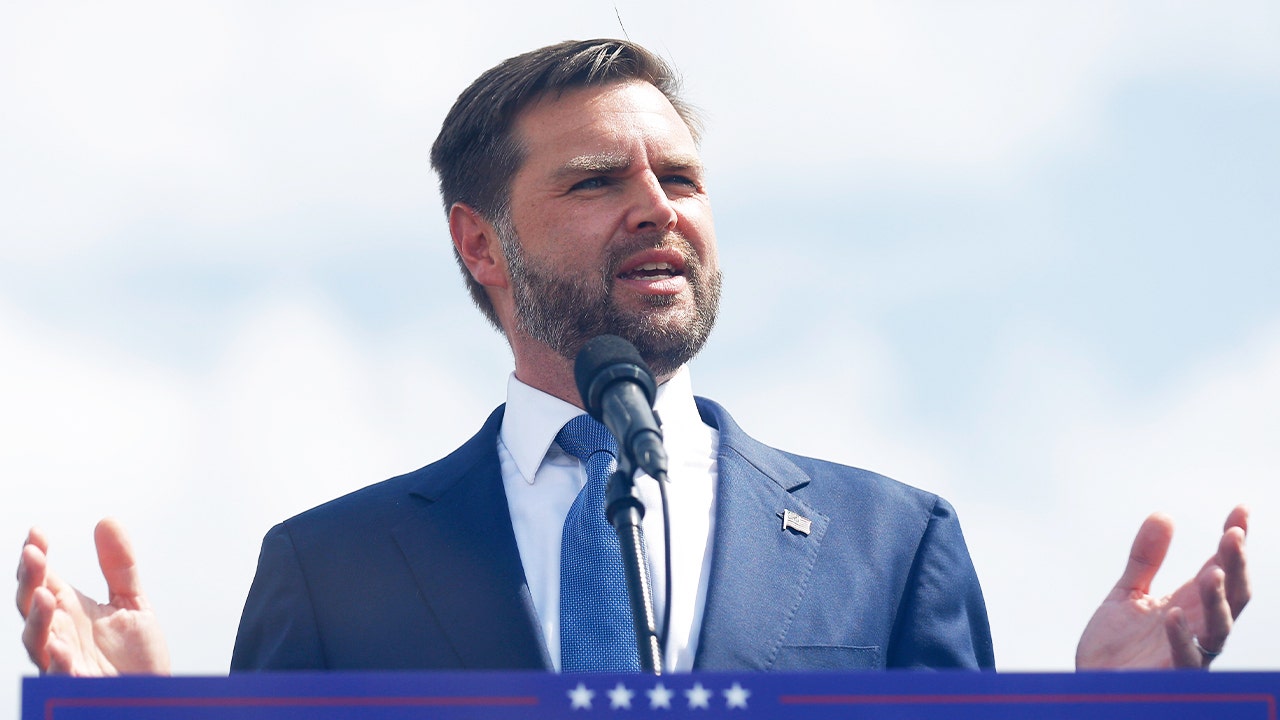
Ohio Sen. JD Vance told battleground state voters that Vice President Kamala Harris is running a “copycat campaign” after her staffers revealed the Democratic presidential nominee was shifting her stance on several key policies, including an electric vehicle mandate.
Vance held a campaign event in Erie, Pennsylvania, Wednesday to deliver remarks on the American trucking industry, energy policy and the economy.
The Republican criticized electric vehicle mandates and claimed Harris wants to “to raise the price of diesel, raise the price of gasoline and have every trucker in this country drive an electric vehicle.”
Harris led the Electric Vehicle Charging Action Plan in December 2021, an effort to ensure 50% of car sales were electric vehicles by 2030. Additionally, the Biden-Harris administration finalized one of its latest environmental regulations in 2024 to require half of all new car and truck sales to be electric.
HARRIS DODGING FLIP-FLOP ATTACKS AS FACELESS SURROGATES FLIP KEY POSITIONS: ‘PLAYING POLITICS’
Sen. JD Vance, R-Ohio, the Republican vice presidential nominee, speaks at a campaign event Aug. 27, 2024, in Big Rapids, Mich. (Al Goldis)
Ammar Moussa, the Harris campaign’s rapid response director, wrote in a “fact check email” Tuesday that the vice president “does not support an electric vehicle mandate” despite her past push for more EV sales.
“If you look at her campaign, the past week and half, she pretends that she agrees with Donald J. Trump on every issue. She is running a copycat campaign,” Vance told the attendees.
Staffers for Harris’ campaign announced over the past several weeks the vice president had changed her stance on several other key issues such as fracking, an automatic weapons buyback program, border wall construction and Medicare for all.
HARRIS CAMPAIGN SAYS DEM NOMINEE ‘DOES NOT SUPPORT’ ELECTRIC VEHICLE MANDATE IN ATTEMPT TO FLIP THE SCRIPT
“We have a vice president, Kamala Harris, who wants to be president, who thinks that our truckers, we ought to put them out of business, and that our truckers should all learn computer code,” Vance said in Pennsylvania.
“If you force all these great truckers to buy electric trucks instead of the trucks they’re currently using, you’re going to make this inflation crisis way worse than it currently is.”
Israeli citizens speak with Fox News Digital about their views on what a Harris presidency would mean for the people of Israel. (Kenny Holston)
The senator added that a Trump-Vance administration would “stop ridiculous job-killing regulations like the EV mandate.”
“We do not have an economy unless American truckers are able to do what they do so well,” he said.
In response to accusations of copying Trump’s policies, a spokesperson for the Harris campaign highlighted several key policy areas where the two campaigns distinctly differ.
Former President Trump, the Republican presidential nominee, speaks at a campaign rally at the Desert Diamond Arena Aug. 23, 2024, in Glendale, Ariz. (Evan Vucci)
“Unlike Donald Trump and JD Vance, Vice President Harris supports abortion rights instead of ripping them away, cutting middle-class taxes instead of raising them by nearly $4,000 and bringing Americans together instead of dividing them,” the spokesperson said in a statement to Fox News Digital. “Most importantly, she opposes Donald Trump and JD Vance’s dangerous Project 2025 agenda.”
Vance’s event in Pennsylvania marks the campaign’s latest battleground state stop, one day after he spoke to rural voters in Big Rapids, Mich.
Read the full article from Here



A nearly $7 million home on the coast of Kennebunk topped out as the most expensive home to sell in Maine last month.
We assembled a list of the top 10 most expensive residential properties in Maine that changed hands in June. The information comes from state transfer tax documents that are available to the public online.
While Maine’s most expensive residential property sales last month all surpassed $3 million and averaged nearly $5 million, they are not as pricey as some of the commercial real estate transactions from the same time frame.
The Press Hotel in downtown Portland, for example, sold for just under $58 million, making it the state’s most expansive property sale from last month.
— Scott Edmunds, Trustee of The Oyster Shell Real, bought 7 Shoreline Way in Kennebunk from Evergreen/Kennebunk Realty LLC for $6.9 million on June 30.
— Rebecca and Eric Deschambault bought 49 Rising Tide Lane in Freeport from Daniel and Lauren Mills for $6.7 million on June 1.
— Sea Rose Holdings LLC bought 488 Main St. in Ogunquit from John Brennan for $6.3 million on June 30.
— Set Family Investments LLC bought 9 Starboard Lane in York from The Richard Jackson Sr. 2023 Trust for $5.2 million on June 8.
— Suzanne and Christopher Hendriksen bought 904 Kings Highway in Kennebunkport from The Anchorage LLC for $4.5 million on June 15.
— The 149 Lighthouse Road Trust bought 149 Lighthouse Road in Bridgton from The William P. Boardman Irrevocable Trust for $4.2 million on June 30.
— Kevin Devaney and Melissa Croatti bought 7 Nubble Point in York from Jennifer and Andrew Amorosi for $3.5 million on June 18.
— Melanie and David Cox bought 909 Princes Point Road in Yarmouth from Thomas Harden for $3.4 million on June 18.
— The BH Family Trust bought 75 Scenic View Drive in Naples from the Denis R. Landrey and Cathleen Landry Revocable Trust for $3.4 million on June 26.
— April and Joshua Lafrance and Gail Marie Sasseville bought 93 Governors Point Road in Harpswell from Donna B. Barmore for $3.1 million on June 17.

A Holbrook, Massachusetts man who fell critically ill while sailing through the South Pacific has died, his family told WBZ-TV Tuesday evening.
Scott Winslow was in intensive care at a hospital in Fiji for weeks, as his family fought to get him back home so he could be treated for septic shock and a serious infection.
Winslow’s wife and two daughters had made the 8,000-mile trip to be with him and fight for his care when he died.
“We are at the hospital and just said goodbye to our father,” his daughters told WBZ-TV. “We are heartbroken.”
Winslow was traveling on his nephew’s sailboat in the South Pacific on what was supposed to be a three-month voyage when he noticed what appeared to be a bug bite.
His family isn’t sure exactly what the cause of the illness was, but his condition quickly deteriorated, and he could no longer walk once they diverted the boat to Fiji.
The family provided WBZ medical documents from doctors in Fiji, who said he needed to be evacuated to another hospital.
The family said his insurance company, Aetna, denied the transport and the medical flight to get Winslow home would have cost hundreds of thousands of dollars.
Winslow’s family said they had secured medical services with the Mass General Brigham group if he got back to Massachusetts.
“I don’t understand. My problem is, my parents pay for insurance, this is what insurance is for,” Lisa Babbin, Scott’s daughter told WBZ-TV earlier on Tuesday.
Before Winslow died, WBZ-TV reached out to Aetna. In a statement, a spokesperson said they were continuing to work with Winslow’s family “and his providers in Fiji to identify the best way to get him back safely to the United States for continued treatment.”
The Winslow family had also reached out the U.S. Embassy in Fiji for help securing an emergency loan.
-

 California16 seconds ago
California still hasn’t released Newsom’s Baby2Baby diaper contract as lawmakers weigh longer public records delays
-

 Colorado3 minutes ago
Colorado River, public lands reopen as Snyder Fire containment increases
-

 Connecticut8 minutes ago
Opinion: A lifeline in CT’s childcare desert
-

 Delaware15 minutes ago
Talk & Film Bring Delaware’s Revolutionary Story to Life at Archives’ First Saturday Program – State of Delaware News
-
 Florida18 minutes ago
Heat alerts expand across Florida as dangerous temperatures return
-

 Georgia23 minutes ago
Trooper injured in chain-reaction crash on Georgia 400
-

 Hawaii30 minutes ago
Redesigned Hawaii IDs begin rolling out statewide
-
 Idaho33 minutes ago
All lanes blocked on I-84 in Payette County due to multiple brush fires, officials say

