Northeast
ICE detains Tufts University student amid Trump admin's campus crackdown

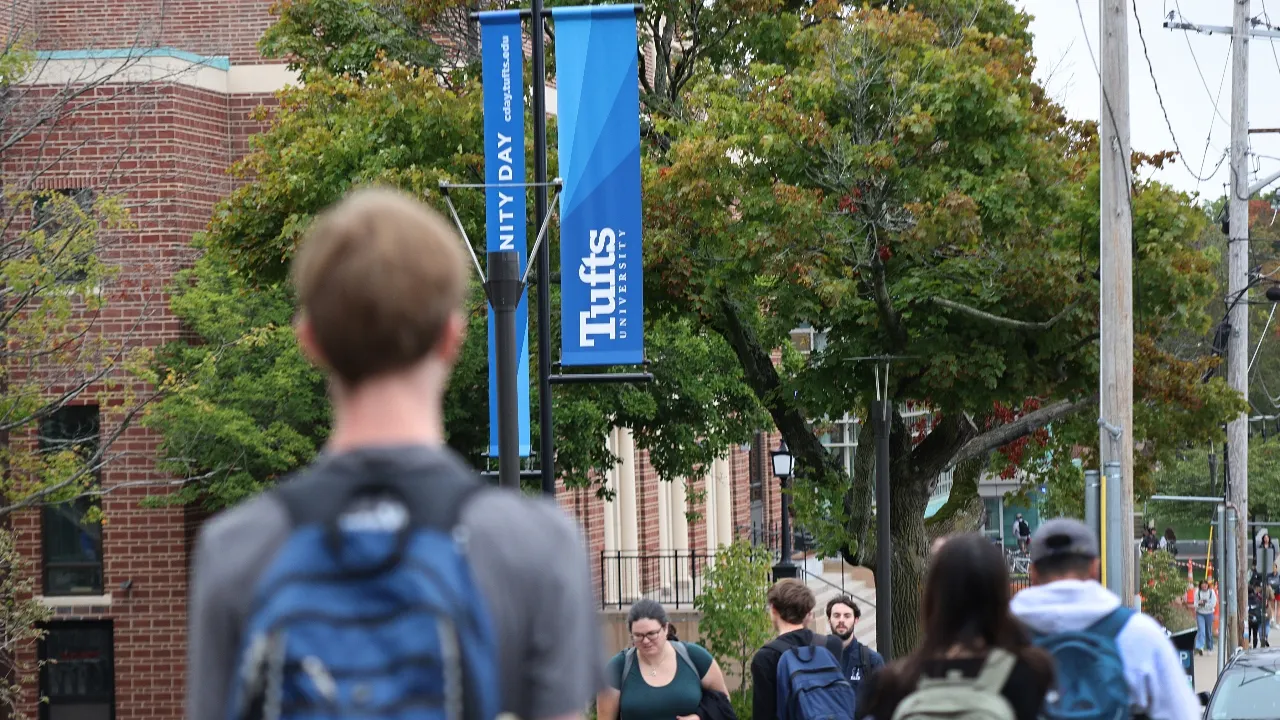
Immigration and Customs Enforcement (ICE) has detained a Tufts University student in Somerville, Massachusetts, according to the agency and a statement from university President Sunil Kumar.
ICE confirmed Rumeysa Ozturk’s detention to Fox News on Wednesday. She is originally from Turkey.
“We have received reports that an international graduate student was taken into custody this evening by federal authorities outside an off-campus apartment building in Somerville,” Kumar said in a statement. “The university had no pre-knowledge of this incident and did not share any information with federal authorities prior to the event, and the location where this took place is not affiliated with Tufts University.”
Kumar noted that the school was told Ozturk’s visa had been terminated, and the university is looking into “whether that information is true.”
COLUMBIA UNIVERSITY STUDENT PROTESTER SUES TRUMP ADMIN TO PREVENT DEPORTATION
Immigration and Customs Enforcement officials have arrested a Tufts University graduate student. (Suzanne Kreiter/The Boston Globe)
“The university has no additional information at this time about the cause or circumstances of the student’s apprehension and is attempting to learn more about the incident,” Kumar said. “Following university protocol, the Office of University Counsel will assist in connecting the student to external legal resources should the individual request our assistance.”
The legal team representing Ozturk told Fox News she had a valid F-1 visa status prior to her arrest. They also said no charges have been filed against their client and are demanding her release.
IVY LEAGUE ANTI-ISRAEL RINGLEADER MAHMOUD KHALIL WITHHELD DETAILS OF FOREIGN TIES FROM VISA APPLICATION: FEDS
“Rumeysa was heading to meet with friends to break her Ramadan fast on the evening of March 25th when she was detained near her home in Somerville, MA by DHS agents,” Khanbabai Immigration Law told Fox News in a statement. “We are unaware of her whereabouts and have not been able to contact her. No charges have been filed against Rumeysa to date that we are aware of.”
The legal team representing Rumeysa Ozturk told Fox News she had a valid F-1 visa status prior to her arrest. (Suzanne Kreiter/The Boston Globe)
On Tuesday night, U.S. District Court Judge Indira Talwani granted a habeas petition from Ozturk’s lawyers requesting she not be removed out of the District of Massachusetts.
The lawyers say no charges have been filed against her at this time and demand her release. The legal teams say Ozturk has not been disciplined for any involvement in campus protests but would not say if she has participated in pro-Palestinian campus protests.
VIDEO SHOWS ARREST OF COLUMBIA ANTI-ISRAEL RINGLEADER MAHMOUD KHALIL
“We hope Rumeysa will be released immediately. Those who wish to support Rumeysa are welcome to attend a rally this evening in Somerville,” the Wednesday statement continued.
A rally will be held for Rumeysa Ozturk on Wednesday night, according to her legal team. (Suzanne Kreiter/The Boston Globe)
In March of last year, Ozturk co-authored an op-ed in the Tufts Daily, a student newspaper, taking issue with the university’s response to several resolutions passed by the Tufts Community Union Senate on March 4, 2024, writing, “demanding that the University acknowledge the Palestinian genocide, apologize for University President Sunil Kumar’s statements, disclose its investments and divest from companies with direct or indirect ties to Israel.”
Ozturk was a medical graduate student at the Tufts University Eliot-Pearson Department of Child Study and Human Development.
President Donald Trump on Jan. 30 signed an executive order to cancel the student visas of Hamas sympathizers on college campuses.
President Donald Trump, right, and Israeli Prime Minister Benjamin Netanyahu meet at the White House in Washington, D.C., Feb. 4, 2025. (Anna Moneymaker/Getty Images)
Executive Order 13899 aims to combat the “unprecedented wave of vile anti-Semitic discrimination, vandalism, and violence against our citizens, especially in our schools and on our campuses,” since Oct. 7, 2023, when Hamas attacked Israel, sparking the beginning of a 15-month war that has left tens of thousands of people dead.
“To all the resident aliens who joined in the pro-jihadist protests, we put you on notice: come 2025, we will find you, and we will deport you,” the president said in a Jan. 30 fact sheet on the executive order. “I will also quickly cancel the student visas of all Hamas sympathizers on college campuses, which have been infested with radicalism like never before.”
Hamas is a designated terrorist organization that the Department of National Intelligence describes as “the largest and most capable militant group in the Palestinian territories and one of the territories’ two major political parties.”
Hamas terrorists watch as four hostages are released to the Red Cross as part of a ceasefire deal between Israel and Hamas. (TPS-IL)
The Trump administration has also rescinded federal grants from Columbia University over its alleged failure to address antisemitism on campus.
“We realize that tonight’s news will be distressing to some members of our community, particularly the members of our international community,” Kumar said in his statement. “We will continue to provide information, support, and resources in the days ahead as more details become available to us.”
The cost of attendance at Tufts, before financial aid, is listed as between $80,000 and $90,000 on the university’s website.
Tufts is receiving $115.2 million in funds from the National Institutes of Health as of fiscal year 2025, the university’s website says, including $88.3 million in direct costs and $26.9 million in facilities and administrative costs.
Fox News’ Andrew Fone contributed to this report.
Read the full article from Here


When Americans think of the beverage that fueled the American Revolution, they usually picture black tea — but it turns out that green tea was just as popular.
The Founding Fathers and their contemporaries drank both types of tea, Bruce Richardson, the Kentucky-based founder of Elmwood Inn Fine Teas, told Fox News Digital.
British subjects “were as likely to be drinking green tea as black tea, whether you were in Jane Austen [era] England … or you were in colonial Boston,” he added.
“There were five teas, all from China, because that was the only country that was exporting tea,” Richardson said. “And of those five different teas, two of them were green and three of them were black.”
Richardson, a tea historian who works as the tea master at the Boston Tea Party Ships & Museum, said the five types of tea dumped into Boston Harbor in protest of the Tea Act of 1773 included three black varieties — Bohea, Souchong and Congou — as well as the green teas Hyson and Singlo.
Bohea, the most common and least expensive black tea of the era, was often made from older tea leaves harvested after the highest-quality leaves of the season had already been picked.
Most of the tea dumped into Boston Harbor was Bohea, Richardson said — and it was so ubiquitous that he compared it to the way Kleenex has become synonymous with tissues today.
“It was so common that often teapots at the time, or some that I’ve seen, would say Bohea on the side of the teapot,” he said. “If they wanted tea, they’d say, ‘I’ll have a cup of Bohea.’ It was that common.”
Not only did colonial Americans distinguish between green and black tea, they even stored them differently.
“They still wanted their tea time, but they didn’t want to support the British government.”
“The well-to-do people would have a tea caddy – a wooden, beautifully made tea caddy to store their tea in,” he said.
“It was kept under lock and key. And in that tea caddy, [there] would be two compartments, one for green tea and one for black tea.”

Merchants often favored black tea because it held up better during the long voyage from China to Europe and onward to the American colonies, Richardson said.
“The green tea was what China had always drunk,” he said.
“And so they were exporting that as well, but they found that the black tea actually made the voyage better than the green teas.”
Even after many colonists swore off British tea, they kept the ritual of drinking it — or at least a close substitute.
Many patriots brewed so-called “Liberty Teas” made from ingredients such as dried apples, blueberries, chamomile and herbs grown in their gardens.
“They still wanted their tea time, but they didn’t want to support the British government,” Richardson said.


-

 Sports6 minutes ago
LeBron James Next Team Odds: Warriors, Cavaliers, Heat In Mix
-

 Technology9 minutes ago
The trick to smoother streaming at home and on the road
-
 Business14 minutes ago
Downtown L.A. World Trade Center to become affordable apartments
-
 Entertainment21 minutes ago
’47 Ronin’ director Carl Erik Rinsch sentenced to 30 months in prison for Netflix fraud case
-
 Lifestyle24 minutes ago
At Mindful Archery, L.A. women take aim at their exes, toxic jobs and Donald Trump
-
 Politics29 minutes ago
British regulator may challenge Paramount takeover of Warner Bros. Discovery
-
 Science36 minutes ago
Hospital visits for smoke inhalation spiked during Boyle Heights warehouse fire
-
 Sports39 minutes ago
Contributor: U.S.-born Brian Gutiérrez and Obed Vargas signal a new era for Mexico’s national team

