Connect with us

Northeast

Hunter Biden trial enters day 4 after wild testimony from exes on rampant drug use, trashed hotel rooms

Published

on

Hunter Biden trial enters day 4 after wild testimony from exes on rampant drug use, trashed hotel rooms

WILMINGTON, DEL. — Details about Hunter Biden’s relationship with a 24-year-old stripper, his need for crack cocaine every 20 minutes and how his spiraling addiction torpedoed his first marriage were on full display for the jury as it considers the first son’s three felony charges related to the purchase of a revolver in 2018.

“He would want to smoke the second he woke up,” Biden’s ex-girlfriend, Zoe Kestan, testified Wednesday. She met Biden when she worked at a gentleman’s club in New York City when she was 24 and he was 48.

The court heard continued testimony from FBI Special Agent Erika Jensen on Wednesday, as well as from Biden’s ex-wife Kathleen Buhle, Kestan and gun shop employee Gordon Cleveland, as prosecutors worked to prove to the jury Biden lied about his drug addiction when he filled out a federal form to buy a Colt revolver gun in 2018. 

Biden is facing charges of making a false statement in the purchase of a gun, making a false statement related to information required to be kept by a federally-licensed gun dealer and possession of a gun by a person who is an unlawful user of or addicted to a controlled substance. 

HUNTER BIDEN TRIAL ENTERS 3RD DAY WITH CROSS-EXAMINATION OF FBI AGENT

Advertisement

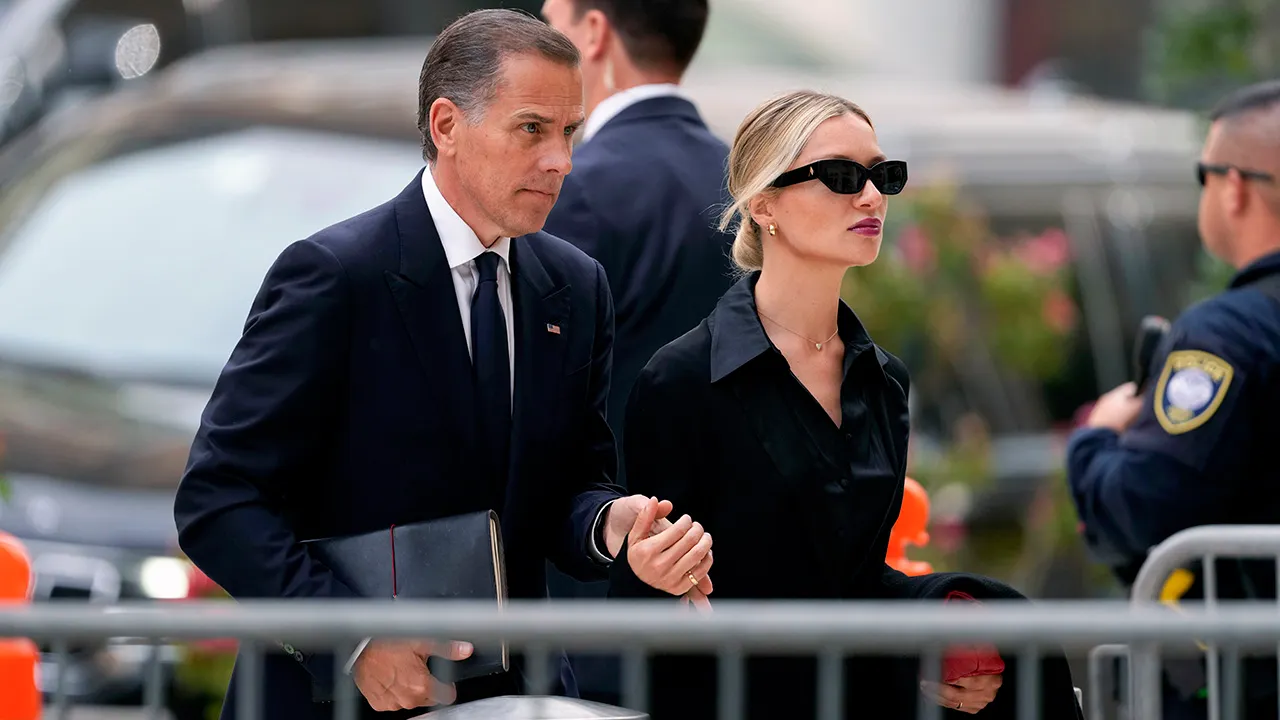
Hunter Biden arrives to federal court with his wife, Melissa Cohen Biden, on June 5, 2024, in Wilmington, Delaware. (AP Photo/Matt Slocum)

Biden pleaded not guilty in the case. 

The total maximum prison time for the three charges could be up to 25 years. Each count also carries a maximum fine of $250,000 and three years of supervised release. 

Kestan detailed in her testimony that she met Biden in December 2017 after he booked a private room for 30 minutes at the strip club where she worked, ultimately sparking a relationship with the man she described as “charming and charismatic.” Kestan, who testified under immunity, walked the jury through Biden’s rampant drug abuse throughout their relationship, including him smoking crack in hotel rooms, stealing away to public bathrooms to smoke crack and how she helped pick up drugs for him. She said the crack cocaine he purchased often was the size of a “ping pong ball,” which he broke into pieces and lit up in glass pipes. 

‘LIKE A SON’: FORMER TOP BIDEN ADVISER WITH DEEP BUSINESS TIES TO CHINA SPOTTED INSIDE HUNTER BIDEN GUN TRIAL

Advertisement

Kestan described that Biden was a “super charming” man when she first met him and that she was “confused” about how he was able to appear coherent and cognizant after smoking the hard drug. 

“I didn’t notice it. Sometimes I think that’s because I was catching feelings for him,” she told the court. 

Kestan said their whirlwind relationship was a “distraction” for Biden, as he allegedly smoked less when they were hidden away, sometimes for days at a time, in ritzy hotel rooms such as New York City’s Four Seasons or in a bungalow at Los Angeles’ Chateau Marmont. 

Kestan detailed the rise and fall of their relationship, including how he called on her to clean up one of the trashed hotel rooms that was littered with crack residue, pipes, snacks and alcohol. He also asked her to pick up his car after it was towed in Los Angeles in 2018. 

HUNTER BIDEN’S WIFE LASHES OUT AT FORMER TRUMP AIDE DURING COURT APPEARANCE: ‘PIECE OF S—‘

Advertisement

A court sketch depicts Hunter Biden’s ex-girlfriend, Zoe Kestan, in federal court in Wilmington, Delaware, on Wednesday, June 5, 2024. (William J. Hennessy Jr.)

Accompanying Kestan’s testimony were photos depicting crack pipes in hotel rooms often sitting next to bottles of liquor or beer, a photo of a bare-chested Biden in a bubble bath with Kestan and a screenshot of a FaceTime video showing Biden’s back tattoo that resembled claw marks. The jurors were told amid Kestan’s remarks that Biden learned how to cook crack cocaine, and they were shown a photo of baking soda in one hotel room used to cook cocaine into crack. 

Kestan said Biden often spoke about how he was an addict and wished to get sober, including his attempt to purge his body of drugs with frog venom called “kambo.” 

HUNTER BIDEN’S DRUG USE: WHAT THE PROSECUTION NEEDS TO PROVE AND WHAT WE ALREADY KNOW

Though Kestan knew Biden before and after purchasing the Colt revolver in October 2018, the pair did not speak the month of the purchase, rekindling their relationship in November 2018 before it officially ended. 

Advertisement

A court sketch depicts Hunter Biden’s trial in federal court in Wilmington, Delaware, on Wednesday, June 5, 2024. (William J. Hennessy Jr.)

Buhle, Biden’s ex-wife of more than 20 years with whom she shares three daughters, also took the stand Wednesday. Buhle and Biden divorced in 2017 after Buhle found a crack pipe on the side porch of their home in Washington, D.C., in 2015, she told the court. 

Buhle was soft-spoken and appeared emotional during her testimony as she detailed her suspicions of his rampant drug use after he was discharged from the Navy Reserves for testing positive for cocaine and the subsequent death of their marriage. “I was definitely worried, scared,” she said, describing how she would scour his car for drugs and drug paraphernalia to ensure their daughters would not drive the vehicle around with the substances. 

Buhle said following the discovery of a crack pipe at their home in 2015, they participated in couple’s therapy before the marriage ended. Buhle said she does not remember the date they officially terminated their marriage, only saying it occurred on Good Friday of 2017. 

HUNTER BIDEN TRIAL: 9 KEY FIGURES WHO MAY TESTIFY

Advertisement

Hunter Biden’s former wife, Kathleen Buhle, departs the federal courthouse after taking the stand during Biden’s trial on criminal gun charges in Wilmington, Delaware, June 5, 2024. (Reuters/Kevin Lamarque)

Buhle was on the stand the shortest amount of time among witnesses and deeply exhaled as she quickly left the courtroom Wednesday morning. 

Jurors were apparently rapt by Buhle’s presence in the court following relatively dry continued testimony from Special Agent Jensen, who discussed Wells Fargo bank records early Wednesday morning. Nearly all the jurors were jotting down notes or at least holding their notepads and pens when Buhle first took the stand. 

Following testimony from Hunter’s ex-wife and ex-girlfriend, prosecutors next called on Cleveland, the gun shop employee who sold Biden the revolver in October 2018. 

US V HUNTER BIDEN: OPENING STATEMENTS TO BEGIN IN FIRST SON’S FEDERAL GUN TRIAL AFTER JURY SEATED

Advertisement

Cleveland, who previously worked as a salesman at StarQuest Shooters & Survival Supply in Wilmington, detailed the sequence of events on Oct. 12, 2018, down to the detail of Biden driving a black Cadillac the day of the purchase. 

“I like guns, and I like cars,” Cleveland told the court when asked how he remembers what Biden was driving. The comment elicited chuckles among the jury, members of the media and others in the courtroom. 

Gordon Cleveland departs federal court Wednesday, June 5, 2024, in Wilmington, Delaware. (AP Photo/Matt Slocum)

Cleveland said Biden entered the store late in the afternoon in 2018 with the intention of buying a gun. Biden bought a Cobra Colt .38, a box of ammunition, a speed loader for the gun and a BB gun. 

Cleveland said he gave Biden a federal gun form to fill out, explaining he instructed him to take his time and answer the form “truthfully.” Cleveland said he was about two feet from Biden as he filled out the form, including question 11 E, which asked whether he was an unlawful user of or addicted to drugs. Biden checked the box that said he was not addicted to drugs. 

Advertisement

A court sketch depicts Hunter Biden’s trial in federal court in Wilmington, Delaware, on Wednesday, June 5, 2024. (William J. Hennessy Jr.)

Cleveland laughed when defense attorney Abbe Lowell asked if he was “familiar with the phrase whale hunter?”

“Yes,” he responded, chuckling before arguing that although he “didn’t do up-sales,” he was able to sell expensive guns to customers, such as two Desert Eagles, in a single day.

When asked if Cleveland often sold ammunition along with a gun sale, the court again broke into laughter over the former salesman’s response. 

HUNTER BIDEN’S CRIMINAL TRIAL ON FEDERAL GUN CHARGES BEGINS WITH JURY SELECTION

Advertisement

​​”What are you gonna do? Throw [a gun] at somebody?” he quipped, noting ammo was often sold alongside a gun. 

In opening statements on Tuesday, the defense team argued Biden’s gun purchase was hurried by gun shop employees seeking to make a sale. Cleveland, however, was confident in his responses to Lowell on Wednesday that Biden was the one to ultimately choose the Colt revolver, the ammo and speed loader. The purchase of the BB gun, he said, was a decision solely made by Biden. The BB gun is one that had the appearance of an actual handgun, lacking the traditional orange tip found on most other BB guns. 

Jurors were shown the gun, box of ammunition and speed loader in court Wednesday. 

Biden was joined by stepmother Jill Biden for the third day. She again took a front-row seat behind the first son. She wore a bright pink suit and matching heels, casually chatting with family members and allies throughout the day, but she sat quietly with her legs crossed and hands clasped over her knees. She was again seated next to Biden’s second wife, Melissa Cohen Biden. 

Hunter Biden, left, departs federal court with his wife, Melissa Cohen Biden, on Wednesday, June 5, 2024, in Wilmington, Delaware. (AP Photo/Matt Slocum)

Advertisement

Court resumes Thursday at 9 a.m. with continued cross-examination of Cleveland. Prosecutors announced late Wednesday they have six additional witnesses who will take the stand and could rest their case as soon as Thursday afternoon. 

Biden’s former romantic partner and sister-in-law, Hallie Biden, Beau Biden’s widow, could be among witnesses who take the stand Thursday. 

The defense team’s witnesses will take the stand after prosecutors rest their case. 

Read the full article from Here

Advertisement
Continue Reading
Click to comment

Leave a Reply

Your email address will not be published. Required fields are marked *

This site uses Akismet to reduce spam. Learn how your comment data is processed.

New Jersey

There’s One Right Conservatives and Liberals Alike Don’t Want Me to Have. I Tried to Find Out Why.

Published

on

There’s One Right Conservatives and Liberals Alike Don’t Want Me to Have. I Tried to Find Out Why.


Sign up for the Slatest to get the most insightful analysis, criticism, and advice out there, delivered to your inbox daily.

I don’t think I actually wanted a gun. I grew up in Newark, New Jersey, where there was this saying: People with knives get stabbed. People with guns get shot. The conventional wisdom was that it was safer to be unarmed. If someone mugged you, just give them what you’ve got.

But things changed as I got older. I’m Arab. Muslim. Like many Muslim families after 9/11, I internalized the idea that being inviting and performatively friendly was more essential for survival than anything else. At my mosque growing up, the imam bought a box of American flags of all sizes and handed them out to worshippers. He hung one outside the mosque, and people stuck them in their car windows. Anything to not seem like a threat.

Now that I’m an adult, I’ve grown a bit bored of reassuring others I’m safe to be around. And if I’m honest, there’s something fun about poking a stereotype in the eye. Before, I never thought of myself as someone who could be a gun guy. True, I didn’t really think a gun would make me or my family safer. But as I wrote about gun culture for Slate and thought about my own relationship with guns, I became curious to own one of my own.

Advertisement

So in 2020, I applied for a Firearm Purchaser Identification, a permit to purchase a firearm that is required in New Jersey. After fingerprints, references, application fees, and months of waiting, I was told over the phone that I had no choice but to withdraw my application. The issue was a misdemeanor trespassing charge in New York from my street-photographer days. Under New Jersey law, that should not have disqualified me from owning a gun. I had never been convicted of a felony. No domestic violence charges. No mental health issues. It didn’t matter. The Newark Police Department’s firearm permitting office told me my application was being withdrawn. They insisted they were doing me a favor, and that a denial would bar me from reapplying if I got my record expunged.

Again, I wasn’t even sure I wanted a gun. But the interaction was curious. It didn’t matter that I pointed out I met the legal requirements. Again and again, I was unsuccessful. It had me thinking about who is presumed “safe” to own a gun, and who isn’t. I began speaking with Black and brown gun owners across northern New Jersey, particularly in cities where violence, policing, and race overlap in complicated ways. An Afro-Cuban neighborhood friend I went to high school with in Newark told me he had applied for his own permit and received it in just two weeks. When I explained that I tried multiple times and was still waiting months after my latest application, he looked genuinely confused. Then he asked what race I’d listed on the paperwork. “Other,” I told him. He burst out laughing. “You idiot,” he said. “You’re supposed to put white.”

The more people I spoke to, the more I learned I was far from alone in making that “mistake.” The greater question of who gets to, and should, own a gun turned out to far more complicated than I knew. Few people—on the left or the right—want to talk about it. The ending of my own story helps explain why.

In Paterson, New Jersey, Fanny, a nurse, applied for her permit more than six months ago—far longer than the legal limit of 30 days. She was bubbly, almost nervous, when talking about guns. “I just want to protect myself,” she told me. She had grown up without guns and found them scary and intimidating. Her interest only developed after she worked as a probation officer around sheriff’s officers and court staff. At first, she tried taking lessons with a white male instructor, but left discouraged and uncomfortable. “They’ve already been doing it for years,” she said. “Sometimes they’re not the most patient.”

Years later, when she was living alone in Paterson after buying her own home, her interest grew again. Crime in the city felt worse to her than it had when she was younger, and she felt increasingly uneasy about the world around her. “What if, God forbid, something happens and I can’t get to the phone right away? The cops may not come for 10 or 15 minutes,” she said. She summoned the courage to try again after she found a Black advocate for firearms training and safety, Valentina Richardson Green, on Instagram.

Advertisement

She arrived at her first lesson terrified. “When I first met with her, I was so scared,” Fanny said, laughing. “Seeing the gun and picking up the gun, I’m like, Oh my God, I don’t know what I got myself into.” Before they even stepped onto the range, Green sat her down and asked why she wanted to learn, where the fear came from, what made her nervous. Then she walked her through every part of the firearm, every safety rule, every mechanical detail. “I instantly felt comfortable,” Fanny said. “Instantly.”

Within weeks, she was returning every Saturday. Eventually Green convinced her to buy a membership at the range. “I never thought about doing that,” she said.

Then she applied for a permit in October 2025. She is still waiting. At one point, while browsing guns at the range, Fanny met a man from Woodland Park who casually mentioned that his permit had arrived in two weeks. She remembers feeling stunned. “It made me feel like I wanted to move,” she said.

Fanny struggled to explain why some people seemed to move effortlessly through the system while others stalled inside it: “I hate to say this. I believe it has to do with race.” She talked about the reputation of Paterson as being a “Black city,” about the sense that legal access to firearms isn’t meant for people like her. “I think they think that if we have access to these weapons, we’ll use them in a manner that will be destructive, and that’s not the case. With the political climate, a lot of people want to protect themselves. And minorities want to protect themselves, too,” she said. “They’re thinking, ‘If they get their permits and they get their guns, it’s going to be a war.’ But we’re not even thinking in terms of that. Like, we just want to protect ourselves. Especially women. We need to learn how to protect ourselves.”

What Fanny described wasn’t really about enthusiasm for guns so much as a growing distrust in the idea that someone like her shouldn’t have them. She did not sound eager about any of this. Even while discussing permits and training, she still spoke with caution and hesitation. At one point, when I asked whether more guns were really the answer in cities already struggling with gun violence, she stopped mid-thought. “It’s so hard,” she admitted. “It’s so hard to say.”

Advertisement

If Fanny represented the uncertainty surrounding gun ownership among women like her, her teacher, Valentina Richardson Green, represented the growing ecosystem built around answering it. She was easy to spot on Port 14 of Gun for Hire, New Jersey’s cavernous, fluorescent‑lit gun range. She’s a 5‑foot‑11 Black woman who was wearing a black T-shirt with “Naturally Armed” written in bold pink, shoulders squared behind a Glock 45, coaching a nervous first‑timer through breathing. She organizes monthly sessions for other women of color who are curious about shooting recreationally, or, in most cases, exploring avenues of self-defense. When the slide snaps forward and the handgun fires a round, Green nods briskly with approval, then resets for her next student, a nurse in borrowed safety glasses.

Green was born 5 miles south in North Newark. Her father was a police officer and kept his service pistol locked in a hall closet, but firearms were “never a thing we talked about.” Still, the threat of gun violence in a city like Newark is never too far away, and that colored her perceptions of ever owning one.

After earning a sociology degree, she climbed her county’s social services ladder, eventually running the entire welfare division. “Stress lived in my shoulders,” she says. On a birthday range trip in 2021, a friend put a pistol in her hands for the first time. “One squeeze, and every piece of weight left my body,” she said. That trigger shifted the way she felt about guns forever. On another visit to the range, she mentioned to an employee that she didn’t see too many people who looked like her there. “Why don’t you work here?” they asked. At one point, she kept three jobs: working in government, armed security shifts, and being a range safety officer. She does it so “women who look like me feel comfortable, feel seen,” she said.

Courtesy of Valentina Richardson Green

Last August, she emptied her savings into establishing roving gun safety and education workshops specifically for women of color in a neighborhood ice‑cream shop. The owner offered her a steep discount. She used the setting as an opportunity to vet women who show up before she takes them to the range.

Twenty‑five women came to the inaugural session. One arrived by cab from Manhattan. Green told me one woman said she owned a gun already but wanted to learn how to use it. Another woman said she was experiencing domestic violence at home and wanted to defend herself. A single mother brought her young son, looking for ways to defend her family. The goal, Green said, was to create a place where women of color can feel comfortable to explore arming themselves, “to step into spaces where they didn’t think that they belonged and showing them we do belong.”

Part of the stigma among Black women in particular about owning a firearm, Green admitted, comes from a lack of awareness, but also an apparent systemic effort to keep guns out of the hands of Black and brown people. She learned how hard it can be to get the necessary permits to purchase a handgun. Green’s first permit took eight months. “I was giving them grace,” she said, “but I later learned it’s not eight months for everybody.” She also says the necessary application fees can be prohibitively expensive, as well as the steep costs of guns, which can pose another barrier for gun ownership among Black women: $1,500, she says, “is the low end.”

Advertisement

Though many gun stores and ranges have made recent strides in increasing the diversity of their staff, some ranges can feel intimidating when you don’t see someone who looks like you, she explained. She described the experience of “constantly being watched”—”the kind of watching we already know outside a gun range.”

The suspicion that race is factored into applications that Fanny described is difficult to prove from a single application. A long wait can always be explained away. With a system built out of individual decisions, each one becomes small enough to fall through any number of administrative cracks.

Ben Shore, the co-founder and director of Rise Against Hate, a nonprofit that uses data to investigate racial disparities, wanted to know what those decisions looked like in aggregate. The problem was that when he began looking at New Jersey’s public dashboard of firearm permit approvals and denials, he told me the dashboard did not make it easy to see race. “I think they did this on purpose. It makes no sense to do it this way. But they strategically pulled out different portions of race and other things that would show disparities,” he said. “If a data scientist is working on that, they would not have pulled that out.”

So Shore and volunteers at Rise Against Hate rebuilt the data themselves. “We had to actually take all the numbers from all the dashboards and create our own dashboards just to get down to the bottom of it,” he said. What they found, he says, was alarming. In Ocean County, he told me, “a Black person is about 50 times more likely to be denied a permit to carry versus a white person.” Statewide, he said, the disparity was roughly 10-to-1.

He compared those numbers to racial disparity cases involving marijuana enforcement. But even those cases, he said, paled in comparison. “Those numbers were usually like, they’re three times more likely, five times more likely. And that was enough to find discrimination,” Shore said. “Here we’re talking about numbers that are 10 times more likely, across the state, to be denied a permit.”

Advertisement

These weren’t people who were legitimately disqualified, either. “We’re not talking about people who are committing criminal acts. We’re talking about a law-abiding citizen, somebody with a clean criminal record, somebody who’s never been convicted of a crime, someone who applies for their firearm ID card,” he said. “They get approved for it. And then when they apply for the permit to carry with the same exact qualifications as their initial ID card, they’re getting denied if they’re Black. If they’re white, they’re not, because it’s up to the police officer’s discretion. Why is it that the same qualifications applied, but Black people are being denied at extremely high rates?”

“Your constitutional right varies by your ZIP code in New Jersey,” he said.

That stayed with me, because it matched what I had heard from Fanny in Paterson, and what a man from Woodland Park casually told her at a gun store when he said his approval came in two weeks. Shore said he knew of applicants who were denied in one part of New Jersey and approved after moving elsewhere, with no meaningful change in their background. “If you did move, and you moved to another county in New Jersey,” he told me, “you will 100 percent have your right.”

And even Shore’s study, he said, did not fully capture the issue. It counted formal denials, not withdrawals, like mine in Newark. “We did not count the withdrawals in the study,” he said, “but we do know that there are many withdrawals.” Indeed, my own application had not been officially denied. It had been withdrawn after a police officer told me I could not proceed unless I first expunged a misdemeanor that should not have disqualified me.

Shore also pointed me to a pending federal case involving a Muslim New Jersey attorney who said his gun-license application was denied after officials cited pro-Palestinian political posts online as threatening or terrorism-related. The case raised a different version of the same concern: that discretion in firearm licensing can turn race, religion, politics, or speech into suspicion. “It’s just crazy,” Shore said, “because even what you say can be used. Your First Amendment can be used to deprive you of your Second Amendment.”

Advertisement

The disparities Shore identified have begun attracting attention beyond gun-rights circles. John Petrolino, a firearms instructor and freelance Second Amendment journalist who has reported on New Jersey’s permitting system, told me he began filing records requests after noticing Black applicants were being denied at more than twice the rate of white applicants in the state’s permit-to-carry data. What troubled him most was how often denials appeared to rest not on criminal convictions or clear statutory disqualifiers, but on New Jersey’s broad “public health, safety or welfare” standard—the same kind of catchall that had swallowed my own application years earlier. “It’s an opinion-based thing,” he told me. “You could fill in the blank on how this could be abused.” He is now suing the state for not releasing those records.

Earlier this year, lawmakers reintroduced legislation in Trenton that would require the state to publicly report firearm permit approvals and denials by race, ethnicity, and gender. Supporters argue the measure is necessary because existing public dashboards obscure patterns that civil-rights advocates and researchers say have become increasingly difficult to ignore.

At the same time, more than 20 municipalities across New Jersey have passed resolutions reimbursing firearm permitting fees on the grounds that high costs attached to a constitutional right function as a discriminatory barrier, particularly in working-class communities. The resolutions have appeared in towns spanning eight counties, creating an unusual overlap between libertarian gun-rights arguments and broader concerns about racial and economic inequality.

Even as the debate gains more traction, much of it still unfolds at the margins of mainstream politics, carried largely by activists, independent researchers, and a loose coalition of gun-rights litigators who argue New Jersey’s permitting system remains structurally unequal. Joe La Porto, a libertarian journalist who has spent years around Second Amendment litigation, drafted the bill that was introduced by New Jersey state Rep. Dawn Fantasia that would have local agencies track the racial makeup of approvals and denials for firearm permits.

He hopes that by pulling the data and making it visible, New Jersey’s Legislature will “have an honest conversation about what to do about this.” He expects bipartisan support for it: “All we’re asking for is public discourse here. It’s simply data. Nobody should be afraid of data.”

Advertisement

We talked at a local gun range, and under the loud pops rattling behind the thick glass, he told me the gun debate has become intellectually dishonest. The moment firearms enter the conversation, he said, many liberals stop applying the same civil-rights framework they would bring to almost any other area of criminal justice. “Because this whole issue touches fingers in some way with gun control, it just becomes like a blackout zone,” he said. “Nobody wants to touch it. Even though I would argue that this is the central issue as it relates to criminal justice reform and looking at our society as a whole and what’s working and what’s not,” he said.

La Porto’s argument begins with the very first gun laws. “If we were to go back in time and we look at firearms regulation in 1791, or in 1868 when the 14th Amendment was passed, we don’t really have a long history of regulating firearms, except for in 1791,” he said. “If you were Black, you couldn’t own a firearm. If you were a Catholic, you couldn’t own a firearm. If you were a Native American, you couldn’t own a firearm.” After the Civil War, he said, the pattern became even clearer. “In the 1860s, after the Civil War, the immediate counterpunch to the Civil War was the Black Codes,” La Porto said. “Basically, the Southern states said, ‘OK, fine, we lost, we can’t have slaves anymore, but you know what we’re going to do? We’re going to pass a whole bunch of laws that make it impossible for Black people to have a job or own property or exercise a core constitutional right.’ ”

This, he says, is precisely why the modern Supreme Court cases that remade American gun law are so dangerous. He pointed to the Bruen case in 2022 that required modern gun regulations to be justified through the nation’s historical tradition of firearm regulation. “By creating a system where the government has to go back and link its current regulation to some heritage of regulation,” he said, “all we’ve got is racism.”

“The application of these laws has been almost uniformly to the detriment of poor and largely minority populations,” he said. That is where his argument shifted away from licensing and toward criminal justice. New Jersey’s Graves Act essentially establishes mandatory minimum sentencing if you’re arrested with a firearm. The law was originally aimed at combating gun crime, but La Porto says it unfairly targets Black New Jerseyans. “If you talk to folks in the public defenders’ offices, they’ll tell you that 90 percent of Graves Act cases these days are simple possession,” he said. “And in the vast majority of those cases, these are not criminals. These are just poor people living in dangerous communities that are just possessing firearms because they’re afraid for their lives.”

At the gun range, I asked La Porto to contend with New Jersey’s high gun‑death rate in cities like Camden, Paterson, and Newark, where I live. La Porto retorted saying this: “Poverty correlates perfectly with violent crime. Gun control doesn’t,” he said. “As long as we have to live in a world where there’s even moderate scarcity, violence is never going to go away.”

Advertisement

I should say that not everyone thinks the history here is so clear. Chris Rasmussen, a historian at Fairleigh Dickinson University in New Jersey who studies crime and punishment in America, was less willing to draw one straight line for every modern gun restriction back to racist intent. But he didn’t dismiss La Porto’s argument outright. In New Jersey, he said, gun ownership appears to have risen in the 1960s, especially after the urban uprisings of 1967 and 1968. Newark was central to that fear. “A lot of white suburbanites living near where you live, near Newark, started arming themselves because they were afraid of the Black people,” Rasmussen said. The same fear surfaced nationally around the Black Panther Party. In California, Panther members legally carried rifles to the state Capitol in Sacramento. Immediately afterward, California passed the Mulford Act. “I think a lot of white Americans got really freaked out,” Rasmussen said. “White people just saw Black men with guns.”

Still, Rasmussen resisted the cleanest version of La Porto’s argument. Modern gun laws, he said, were often driven by fear of crime as much as racial control: gangsters in the 1930s, the assassination of John F. Kennedy, Lee Harvey Oswald’s mail-order rifle, the assassinations of Martin Luther King Jr. and Robert F. Kennedy, rising violent crime, and a broader sense that the country was becoming harder to govern.

“I can imagine they have been used that way by some discriminatory officials,” Rasmussen said. “But I think the extreme gun control is usually more directly connected to crime. Fears of crime.”

Still, he did not erase the racial question. Rasmussen compared the way gun laws are enforced to the war on drugs. “You couldn’t write the law to say people of color should receive longer sentences for possessing drugs. But you could enforce the law very selectively. You could arrest more Black men, and you could have judges give harsher sentences to Black men,” he said.

Guns at the author's friend's house.
Aymann Ismail

That felt closer to what happened to me in Newark. The statute did not explicitly forbid me from buying a gun. But in the space between the law and the person reviewing your permit application, everything is subject to one human’s impression of another. My friend in Newark said he didn’t think twice about listing himself as white on his application. “It’s 2026,” he joked. “Good luck telling anybody what race they are.”

That leads me to a twist that unfolded as I reported this story. Six years after I first applied for a firearm permit in New Jersey, I finally received one a few weeks ago. (I didn’t even have to check “white.”) The application that succeeded was submitted in January. Four months later, an approval arrived digitally in my inbox, without explanation. I can now legally purchase as many rifles as I want, and a handgun.

Advertisement

For years, the permit itself had taken on a symbolic meaning in my mind—less about ever actually getting a gun than what it meant to be told no over and over again. But once it finally arrived, I found myself wondering if I actually want one.

I texted a close friend from northern New Jersey, a Palestinian American Muslim who attended the same Islamic school I did growing up. He was ecstatic. Within minutes, he was joking about starting a gun club for former Islamic-school kids, schooling me about differences in calibers.

A few days later, that same friend brought me with him to the range on Memorial Day weekend. It was packed. He brought his 10-year-old son, too, along with what looked to me like an arsenal: rifles, handguns, and a large plastic container filled with ammunition. That may have been the first moment I understood how far I still was from the culture of this. My body still jumped at every loud pop from guns shot behind the thick glass. My friend’s son seemed entirely unfazed by all of it. While I stood at the counter filling out a lengthy waiver, he casually surveyed the wall of accessories for sale.

Later, at his house, he let me hold a few of his guns. He talked me through what to notice: weight, grip, balance, whether it felt like something I could actually learn on. I felt a little overwhelmed. Not afraid exactly, but aware that I was still at the very beginning of something that goes much deeper.

His advice was simple: “This is the fun part,” he said, smiling as he talked through the options. For as overwhelming it could all feel, it was nice to be reminded by someone like me that this was supposed to be fun. For all the symbolism I’ve attached to it, it’s something most gun owners just own to collect and practice shooting with.

Advertisement

Maybe gun ownership will remain something symbolic for me, and I’ll keep putting off actually buying one. For now, having the permit feels like enough. I waited six years for the state to decide if I was allowed to be the type of person who owns guns. I can wait a little longer before deciding whether I am.


Source link

Continue Reading

Pennsylvania

Pennsylvania will automatically return your unclaimed money — with one exception

Published

on

Pennsylvania will automatically return your unclaimed money — with one exception


Source link

Continue Reading

Rhode Island

The Real Housewives of Rhode Island Recap: Trivial Pursuits

Published

on

The Real Housewives of Rhode Island Recap: Trivial Pursuits


Rosie and Kelsey’s ongoing feud should serve as a wake-up call to Ashley that, no, there will not be normal conversations that aren’t about interpersonal drama.
Photo: Bravo

Sometimes I forget that Ashley is on this show, on account of it making no sense that she is. But whenever she appears, I have a blast. She’s continuously confused about its premise, will burst into tears for no reason, and truly sees it as an opportunity to finally make friends in Rhode Island — no matter how misguided that intention may be. This week, she and Jared are shopping at a restaurant supply store and planning a trivia night at Audrey’s when Rosie calls her to tell her about how poorly things went with Kelsey. Being a sensible person, Ashley suggests that perhaps Kelsey’s siren was an attempt at humor, but Rosie maintains that she wasn’t trying to be funny. The editors then cut to Kelsey saying, “Rosie, it was a joke.” Perfect.

Advertisement

But the big shock of the episode comes when Rulla leaves her house to meet Alicia at the beach… on camera, even! Sure, she immediately drops her phone in the ocean, but these things happen. Alicia tells her that her daughter is at a female empowerment camp, and Rulla correctly says that Alicia should have gone with her — especially if she plans on vying for a stake in Pizza Mamma. But what I really love about this scene is that as they walk along the shore, Alicia suddenly says, “Amanda?” and Jo-Ellen’s neighbor (with whom she had a falling out) saunters over. This is why I love Rhode Island so much. They weren’t lying when they said everybody knows each other, which creates such a rich tapestry of deep ties. This stroll also marks the second time Alicia has seen Rulla since the video, and she still can’t bring herself to tell her about it. Will she ever? Only time will tell.

Liz, Jo-Ellen, and Kelsey then go on a triple date with their respective partners, where Liz asks the waiter for “The gin drink they make me at the bar with pomegranate and extra lemons,” adding that the bartender will know what she’s talking about. Aspirational. They kick off the meal as you’d expect: by Googling what a slam pig is. It’s a relief that I wasn’t the only one who had to research after last week’s episode, and that it’s such a deep cut that there are even locals who aren’t in the loop. “A promiscuous woman, typically overweight or ugly, and only sought after for pumping and dumping,” the definition says. This show is nothing if not educational.

The conversation then turns to whether or not it’s normal for Kelsey’s ex to keep paying for her life — and of course it’s not. Though an argument I can get behind is that it’s basically the equivalent of common law alimony, and while I do think Kelsey is right to be milking this for all it’s worth, let’s not pretend it’s normal. While she says she doesn’t have to do anything in return, there is a footnote. She says in her confessional that if things were to get more serious with Bill, her ex would stop paying — so it doesn’t seem like this arrangement is quite as “no strings attached” as she’d like to make it seem. And now we can’t help but wonder if her ex’s financial involvement has (or will have) an impact on the trajectory of her and Bill’s relationship. But again, it’s a tough deal to pass up. “I don’t want to be homeless like Alicia,” Kelsey says, bringing the conversation back to the story Alicia told them in Newport. Liz and Jo-Ellen’s husband, both of whom grew up with Alicia’s family, maintain that she was never homeless  — but we’ll get into all of that more later.

First, it’s time for trivia at Ashley and Jared’s coffee shop. “Aubrey’s is so cute, I love Aubrey’s,” Alicia says about Audrey’s (with a D). The first trivia question is so apropos that I can’t help but wonder if production had a hand in writing it, but even fresh off of the “slam pig” heard ‘round the world, the table is unable to remember that the pig in Toy Story is named Hamm. Tough. But speak of the devil, in walks Kelsey with a tiara and sash that reads, “Miss Slam Pig.” After that, Jared’s trivia didn’t stand a chance

Everybody’s there, except Rulla of course, who refuses to appear more than once per episode (and didn’t want to see Jo-Ellen) — and the women all instantly start shifting back and forth between the two tables that were arranged to keep Rosie and Kelsey separated. The conversation is strictly about their drama, despite Ashley’s attempts to keep trivia alive by asking them the name of a big blue bug. “I think it’s just a big blue bug,” Alicia replies. Soon enough, Rosie and Kelsey are screaming at each other again and bedlam breaks out. Ashley is behind the counter crying to Jared, and wonders, “Can’t we just have a normal conversation that isn’t about drama?” If that was a trivia question, I’d get it right: the answer is NO, on account of this literally being the Real Housewives. “Oink oink motherfucker,” Kelsey yells, as the rest of the women congregate under the table to hide from the bickering, until Rosie finally storms out. Not a single question was correctly answered the entire time, by the way.

Advertisement

Back at Alicia’s house, she’s put together a business plan to try to convince Billy to give her a stake in Pizza Mamma… in the form of a tri-fold poster board. “Number one, what made Pizza Mamma different than any other pizza restaurant?” she asks, before pointing to the word “chandeliers” on the science fair-esque project. If I were a Shark Tank shark, I’d hand over millions of dollars instantly, even before she got to the heart-shaped pizzas and new uniforms. After the presentation, the pair sits down to actually get into business, and Alicia explains that she wants to set an example of independence for Celina rather than be dependent on a man, the same way her mother was. Just like we saw with Jo-Ellen, we’re seeing another example on this show of breaking generational cycles.

A lot of this conversation revolves around trust, and the question of whether or not Billy trusts her as a businessperson. In turn, Alicia wants a stake in part because she can’t trust any man not to abandon her the way that her father did — so this desire for involvement comes from a very deep place. “You came in and made it magical, and I agree that you should be compensated for that,” Billy finally says, agreeing to give her a percentage of his stake in Pizza Mamma — the terms of which she writes out on a notepad. That’s all good and well, but I won’t be content until I know this is all spelled out in a legally binding contract.

Meanwhile, Rosie calls Ashley to apologize for the blowup that happened at trivia, and says that she’s inviting all of the women to Rich’s show in South Boston. Well, all of the women except Kelsey, obviously. And naturally, Rulla never got back to her because, as we know, Rulla does not film. In fact, I wouldn’t be surprised if Rulla only found out about the existence of this show when it started airing. Honestly, I don’t even care who’s there, I’m just glad we’re finally going to get to hear Rich sing in his little pinky ring — so long as we’re able to hear him over the fight that’s sure to break out in the front row.

Jo-Ellen, Liz, and Alicia carpool together to the gig, bringing along a massive, loose charcuterie board into the SUV with them, which they prop up between the two seats. “You know, I love a slam pig. I’ve been saying that since my whole life. My mother said that,” Alicia says, as they talk about Rosie and Kelsey’s feud. Then, in the middle of the conversation, Liz SCREAMS because she thought they were speeding into the car in front of them.

But that’s not the only screaming she does on this ride, because soon the conversation turns to Alicia’s childhood trauma, and once again Liz starts disagreeing with her use of the word “homeless.” But before they get into this, Liz chaotically switches seats with Jo-Ellen on the highway so she can sit next to Alicia. “We had no home, that’s homeless,” Alicia says, upset that Liz chose to pick apart her wording rather than have empathy for the story she was sharing. Though she struggles to articulate this in the car, Liz clarifies in her confessional that she’s harping on the word choice because she thinks Alicia’s family (and the country watching at home) would take issue with that phrasing.

Advertisement

Those alleged good intentions don’t resonate in the moment, and Alicia starts crying while Jo-Ellen attempts to mediate the situation from the backseat. After all, they have a full Frank Sinatra tribute act to get through after this, but all that does is irritate Liz further. I guess in a way it’s fitting to kick off Sinatra night by saying somethin’ stupid.


Source link

Advertisement
Continue Reading
Advertisement

Trending
