Connect with us

News

The legacy of a compassionate reformist pope

Published

on

The legacy of a compassionate reformist pope

Unlock the Editor’s Digest for free

It was a mark of the humanity that typified his papacy that Pope Francis appeared in public to deliver Easter blessings and tour St Peter’s Square when his voice and body were clearly failing — less than 24 hours before his passing. Only weeks after he came close to death in hospital with double pneumonia, the pope was able to end his ministry as it began: among the people. Catholics and many non-Catholics will mourn a compassionate reformer who tried to modernise his church, even if the results fell short of what his most progressive supporters hoped for.

His modesty and determination to be a voice for the poor and marginalised was one of several things that marked him out from many predecessors. The first non-European pope for more than 1,000 years, and first from the Americas, chose to live not in the lavish papal apartment but in a two-room Vatican guesthouse. Not for nothing did he take the name of St Francis of Assisi, known for his humility.

While Francis did not change doctrine on questions of sexuality, faith and marriage, he shifted the tone and language of discussion to emphasise the need for tolerance and understanding. His early comment in response to a question about the presence of gay priests in the church, “Who am I to judge?” opened the way to his 2023 approval of informal blessings for same-sex couples. His 2016 exhortation, Amoris Laetitia, raised the possibility of allowing some divorced and remarried Catholics to receive communion. After a worldwide consultation Francis launched with the faithful — to the resentment of traditionalists — the concluding document recommended broadening the role of women and lay people in the church.

Advertisement
Pope Francis tours St Peter’s Square on the popemobile at the end of the Holy Mass on Sunday. His modesty and determination to be a voice for the poor and marginalised marked him out from many predecessors © Marco Iacobucci/SOPA Images/LightRocket via Getty Images

In a church struggling for relevance in the modern world, Francis tried, too, to make it more of a moral voice on issues beyond the family and the bedroom. In a 2015 encyclical he sought to redefine climate change in terms of religion and faith, warning that it was the product of the developed world’s addiction to consumption while disproportionately affecting the world’s poor. He made outspoken interventions in support of migrants, amid hardening US and European attitudes against irregular migration, and spoke of his distress over the conflicts in Ukraine and the Middle East.

Ultimately, however, Francis failed to translate his personal magnetism into reforms that settled key questions such as the ordination of women or married priests, or which arrested the church’s decline in Europe and North America. He made some errors of judgment on individuals, including some accused of serious crimes such as financial demeanours or sexual abuse in the church — a scourge some will feel he did not do enough to lay to rest. He also left the church facing significant financial strains that need to be addressed.

The pope managed to irk both liberals, by failing to deliver decisive change, and conservatives who accused him nonetheless of undermining traditional teachings. Those divisions will carry into what is set to be a hard-fought contest for his succession. Today’s Catholic church is increasingly, in terms of membership, one of the global south, and cardinals will face pressure to elect another pope from beyond Europe, and one sensitive to issues of poverty and the environment. Yet many church leaders, and adherents, from the global south are also socially conservative — in contrast to some more liberal-minded followers in wealthier countries.

The next pope, whatever his background or talents, may find it little easier to resolve the deep-seated questions facing Catholicism. But Pope Francis should be remembered for the modernising progress he made and for attempting to live out Gospel teachings on siding with the needy and the oppressed. His personal example was perhaps his most powerful legacy.

Advertisement

News

Rep. Ilhan Omar rushed by man on stage and sprayed with liquid at town hall event

Published

on

Rep. Ilhan Omar rushed by man on stage and sprayed with liquid at town hall event

A man is tackled after spraying an unknown substance at US Representative Ilhan Omar (D-MN) (L) during a town hall she was hosting in Minneapolis, Minnesota, on January 27, 2026. (Photo by Octavio JONES / AFP via Getty Images)

OCTAVIO JONES/AFP via Getty Images/AFP


hide caption

toggle caption

Advertisement

OCTAVIO JONES/AFP via Getty Images/AFP

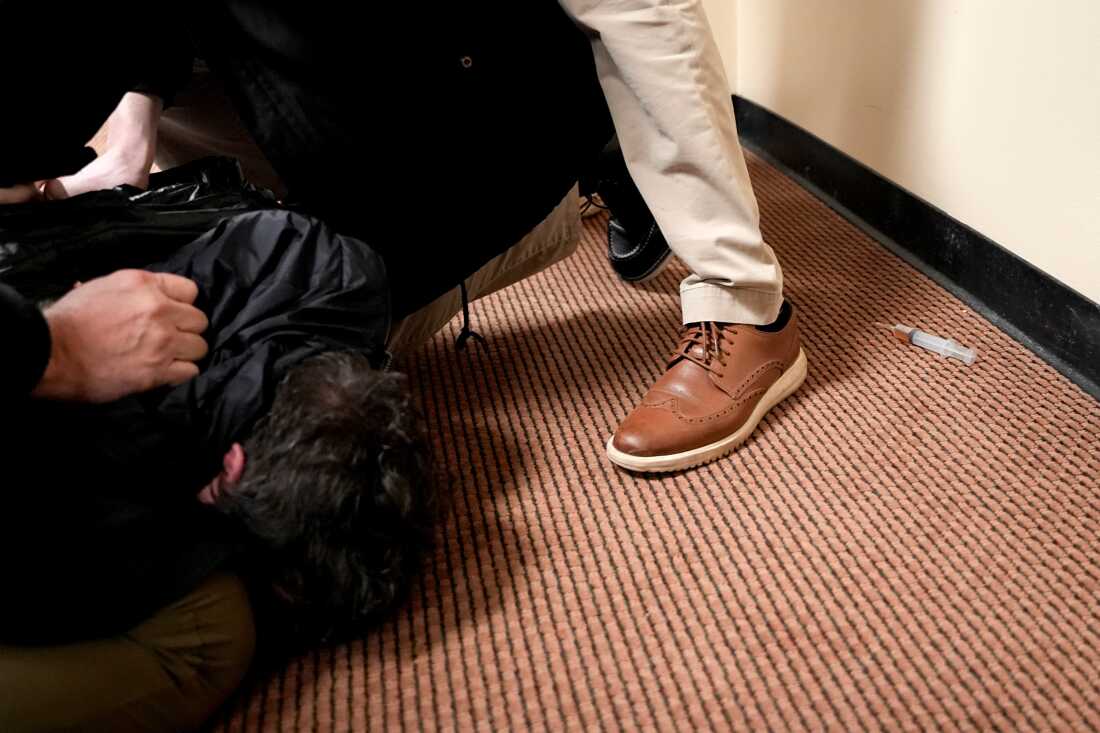
Rep. Ilhan Omar, D-Minn., was rushed by a man during a town hall event Tuesday night and sprayed with a liquid via a syringe.

Footage from the event shows a man approaching Omar at her lectern as she is delivering remarks and spraying an unknown substance in her direction, before swiftly being tackled by security. Omar called on Homeland Security Secretary Kristi Noem to resign or face impeachment immediately before the assault.

Noem has faced criticism from lawmakers on both sides of the aisle in the aftermath of the fatal shooting of 37-year-old intensive care nurse Alex Pretti by federal officers in Minneapolis Saturday.

Advertisement

Omar’s staff can be heard urging her to step away and get “checked out,” with others nearby saying the substance smelled bad.

“We will continue,” Omar responded. “These f******* a**holes are not going to get away with it.”

A statement from Omar’s office released after the event said the individual who approached and sprayed the congresswoman is now in custody.

“The Congresswoman is okay,” the statement read. “She continued with her town hall because she doesn’t let bullies win.”

A syringe lays on the ground after a man, left, approached Representative Ilhan Omar, a Democrat from Minnesota, during a town hall event in Minneapolis, Minnesota, US, on Tuesday, Jan. 27, 2026. The man was apprehended after spraying unknown substance according the to Associated Press. Photographer: Angelina Katsanis/Bloomberg via Getty Images

A syringe lays on the ground after a man, left, approached Representative Ilhan Omar, a Democrat from Minnesota, during a town hall event in Minneapolis, Minnesota, US, on Tuesday, Jan. 27, 2026. The man was apprehended after spraying an unknown substance according to the Associated Press. Photographer: Angelina Katsanis/Bloomberg via Getty Images

Bloomberg/Bloomberg via Getty Images/Bloomberg

Advertisement


hide caption

toggle caption

Bloomberg/Bloomberg via Getty Images/Bloomberg

Advertisement

Omar followed up with a statement on social media saying she will not be intimidated.

Advertisement

As Omar continued her remarks at the town hall, she said: “We are Minnesota strong and we will stay resilient in the face of whatever they might throw at us.”

Just three days ago, fellow Democrat Rep. Maxwell Frost of Florida said he was assaulted at the Sundance Festival by a man “who told me that Trump was going to deport me before he punched me in the face.”

Threats against Congressional lawmakers have been rising. Last year, there was an increase in security funding in the wake of growing concerns about political violence in the country.

According to the U.S. Capitol Police, the number of threat assessment cases has increased for the third year in a row. In 2025, the USCP investigated 14,938 “concerning statements, behaviors, and communications” directed towards congressional lawmakers, their families and staff. That figure represents a nearly 58% increase from 2024.

Advertisement
Continue Reading

News

Video: F.A.A. Ignored Safety Concerns Prior to Collision Over Potomac, N.T.S.B. Says

Published

on

Video: F.A.A. Ignored Safety Concerns Prior to Collision Over Potomac, N.T.S.B. Says

new video loaded: F.A.A. Ignored Safety Concerns Prior to Collision Over Potomac, N.T.S.B. Says

transcript

transcript

F.A.A. Ignored Safety Concerns Prior to Collision Over Potomac, N.T.S.B. Says

The National Transportation Safety Board said that a “multitude of errors” led to the collision between a military helicopter and a commercial jet, killing 67 people last January.

“I imagine there will be some difficult moments today for all of us as we try to provide answers to how a multitude of errors led to this tragedy.” “We have an entire tower who took it upon themselves to try to raise concerns over and over and over and over again, only to get squashed by management and everybody above them within F.A.A. Were they set up for failure?” “They were not adequately prepared to do the jobs they were assigned to do.”

Advertisement
The National Transportation Safety Board said that a “multitude of errors” led to the collision between a military helicopter and a commercial jet, killing 67 people last January.

By Meg Felling

January 27, 2026

Continue Reading

News

Families of killed men file first U.S. federal lawsuit over drug boat strikes

Published

on

Families of killed men file first U.S. federal lawsuit over drug boat strikes

President Trump speaks as U.S. Secretary of Defense Pete Hegseth looks on during a meeting of his Cabinet at the White House in December 2025.

Chip Somodevilla/Getty Images


hide caption

toggle caption

Advertisement

Chip Somodevilla/Getty Images

Relatives of two Trinidadian men killed in an airstrike last October are suing the U.S. government for wrongful death and for carrying out extrajudicial killings.

The case, filed in Massachusetts, is the first lawsuit over the strikes to land in a U.S. federal court since the Trump administration launched a campaign to target vessels off the coast of Venezuela. The American government has carried out three dozen such strikes since September, killing more than 100 people.

Among them are Chad Joseph, 26, and Rishi Samaroo, 41, who relatives say died in what President Trump described as “a lethal kinetic strike” on Oct. 14, 2025. The president posted a short video that day on social media that shows a missile targeting a ship, which erupts in flame.

Advertisement

“This is killing for sport, it’s killing for theater and it’s utterly lawless,” said Baher Azmy, legal director of the Center for Constitutional Rights. “We need a court of law to rein in this administration and provide some accountability to the families.”

The White House and Pentagon justify the strikes as part of a broader push to stop the flow of illegal drugs into the U.S. The Pentagon declined to comment on the lawsuit, saying it doesn’t comment on ongoing litigation.

But the new lawsuit described Joseph and Samaroo as fishermen doing farm work in Venezuela, with no ties to the drug trade. Court papers said they were headed home to family members when the strike occurred and now are presumed dead.

Neither man “presented a concrete, specific, and imminent threat of death or serious physical injury to the United States or anyone at all, and means other than lethal force could have reasonably been employed to neutralize any lesser threat,” according to the lawsuit.

Advertisement

Lenore Burnley, the mother of Chad Joseph, and Sallycar Korasingh, the sister of Rishi Samaroo, are the plaintiffs in the case.

Their court papers allege violations of the Death on the High Seas Act, a 1920 law that makes the U.S. government liable if its agents engage in negligence that results in wrongful death more than 3 miles off American shores. A second claim alleges violations of the Alien Tort Statute, which allows foreign citizens to sue over human rights violations such as deaths that occurred outside an armed conflict, with no judicial process.

The American Civil Liberties Union, the Center for Constitutional Rights, and Jonathan Hafetz at Seton Hall University School of Law are representing the plaintiffs.

“In seeking justice for the senseless killing of their loved ones, our clients are bravely demanding accountability for their devastating losses and standing up against the administration’s assault on the rule of law,” said Brett Max Kaufman, senior counsel at the ACLU.

U.S. lawmakers have raised questions about the legal basis for the strikes for months but the administration has persisted.

Advertisement

—NPR’s Quil Lawrence contributed to this report.

Continue Reading

Trending