News
Photos: Family of Michael Brown Jr. marches on Ferguson 10 years later


Michael Brown Sr., center, leads a unity march commemorating a decade after Michael Brown Jr.’s police killing on Friday, Aug. 9, 2024, outside of Normandy High School in Normandy. Michael Brown Jr., his son, was killed by a Ferguson police officer in 2014 only days after graduating from high school.
Brian Munoz/St. Louis Public Radio
hide caption
toggle caption
Brian Munoz/St. Louis Public Radio
On Aug. 9, 2014, Michael Brown Jr. was shot and killed by a white Ferguson, Mo., police officer.
Brown’s body laid in the street for hours before protests erupted in the north St. Louis County town and around the country. The moment was a flashpoint, sparking renewed calls for justice against police brutality and an emphasis on supporting Black communities.

Michael Brown Sr. and his wife Cal Brown founded the Chosen For Change Organization to turn their pain into purpose.
The nonprofit has a slew of community programming to support the families of those who have lost a child.
Lezley McSpadden, Brown Jr.’s mother, also founded The Michael O.D. Brown We Love Our Sons & Daughters Foundation in the wake of her son’s death.
On Friday, Brown Sr. led a multi-mile unity march from Normandy High School — where Brown Jr. graduated 8 days before he was killed — to Canfield Drive, the site of his son’s death.
“I’m not gonna never let the world forget about my son,” he told St. Louis Public Radio on Friday. “We wanted to show what he did in his life before the hashtag.”
Take a look at the march.
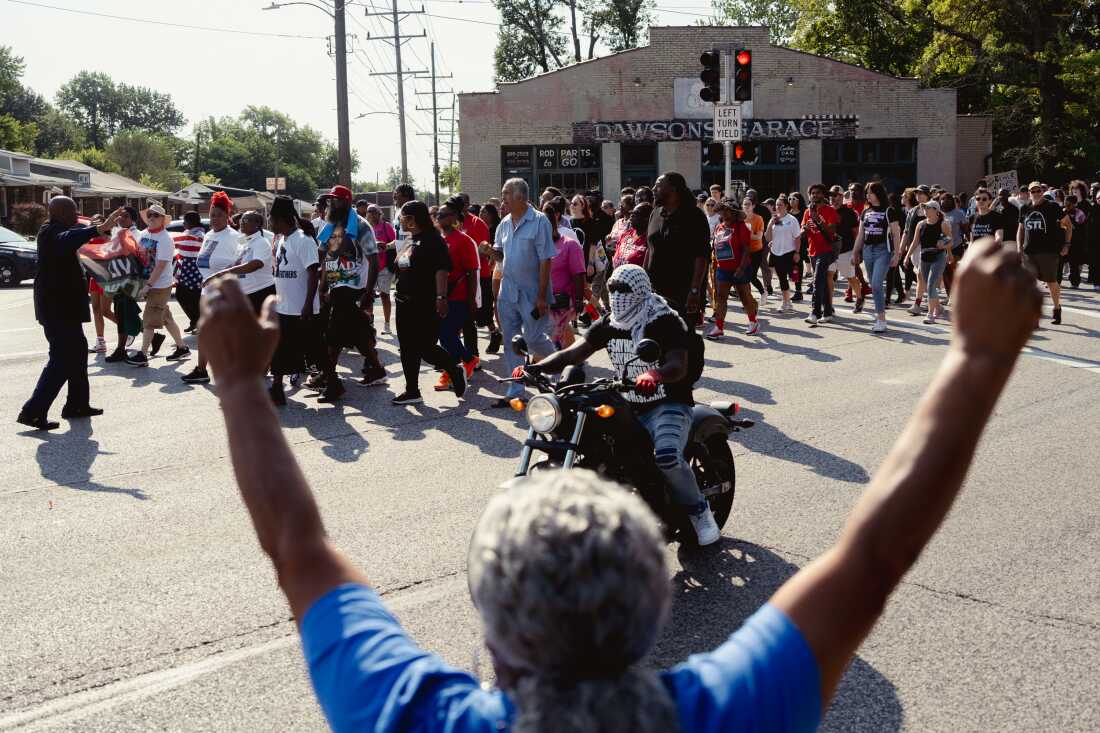
Protestors march in the streets during a unity march.
Brian Munoz/St. Louis Public Radio
hide caption
toggle caption
Brian Munoz/St. Louis Public Radio
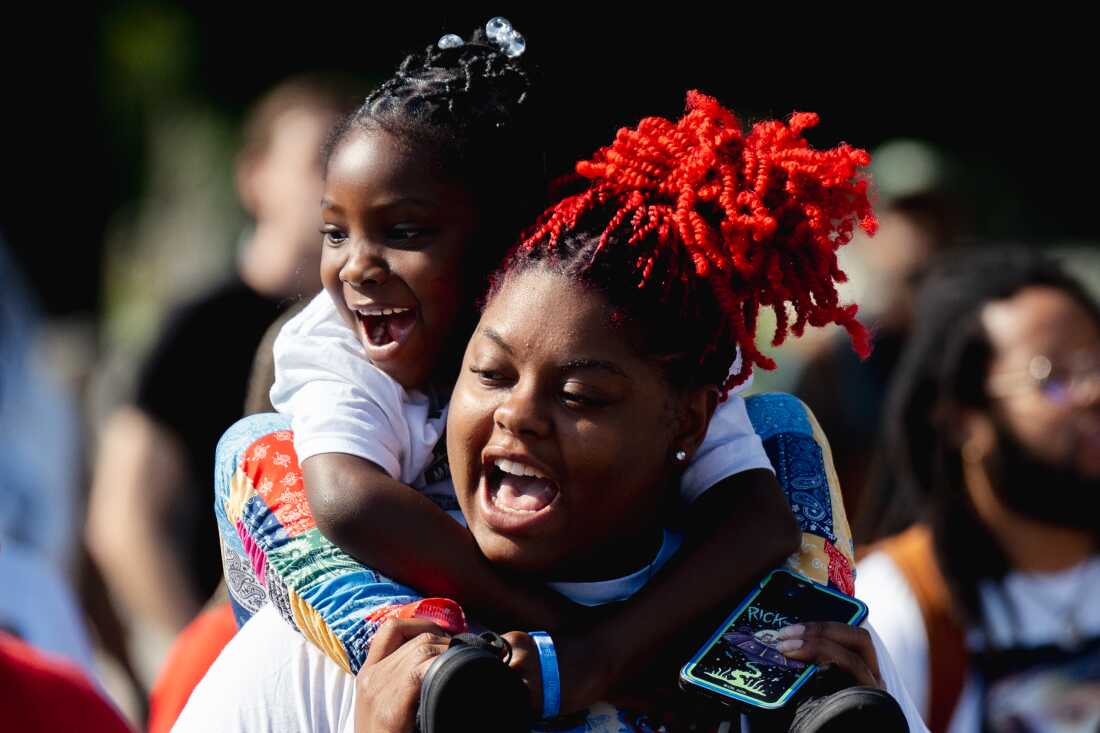
Trinaya’ Walker, 22, holds her daughter Bobbie Ann Atkins, 6, during the unity march.
Brian Munoz/St. Louis Public Radio
hide caption
toggle caption
Brian Munoz/St. Louis Public Radio
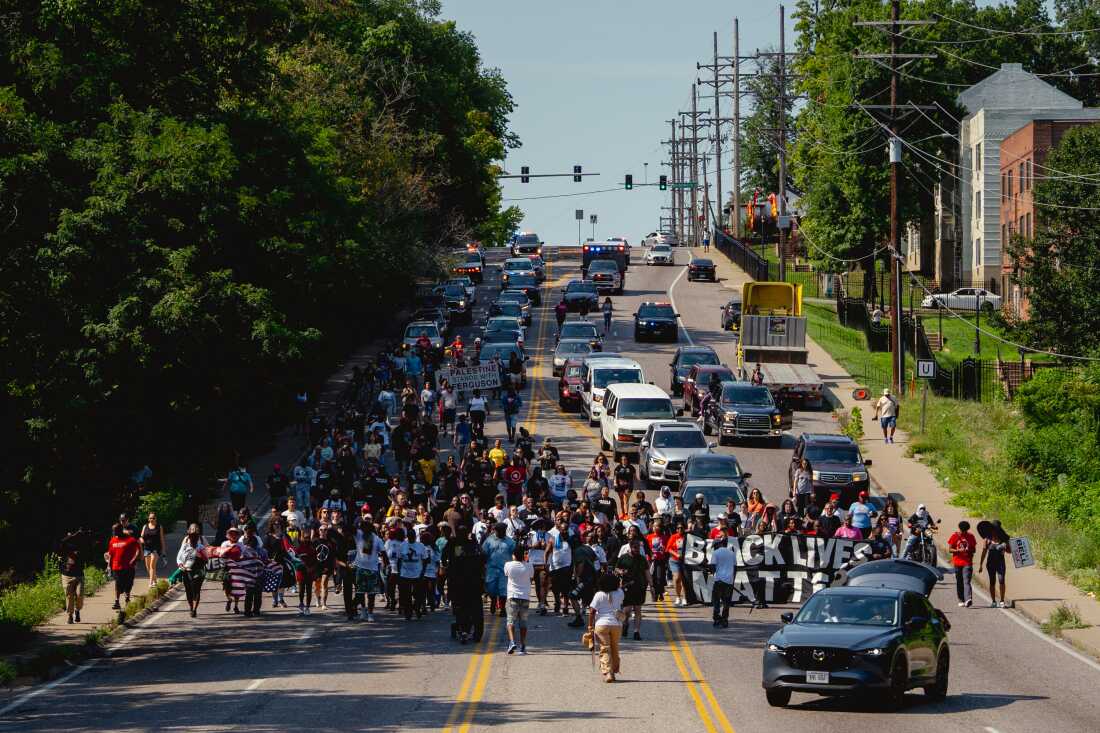
Hundreds of demonstrators take to the streets, during a unity march commemorating a decade after Michael Brown Jr.’s police killing in Ferguson.
Brian Munoz/St. Louis Public Radio
hide caption
toggle caption
Brian Munoz/St. Louis Public Radio
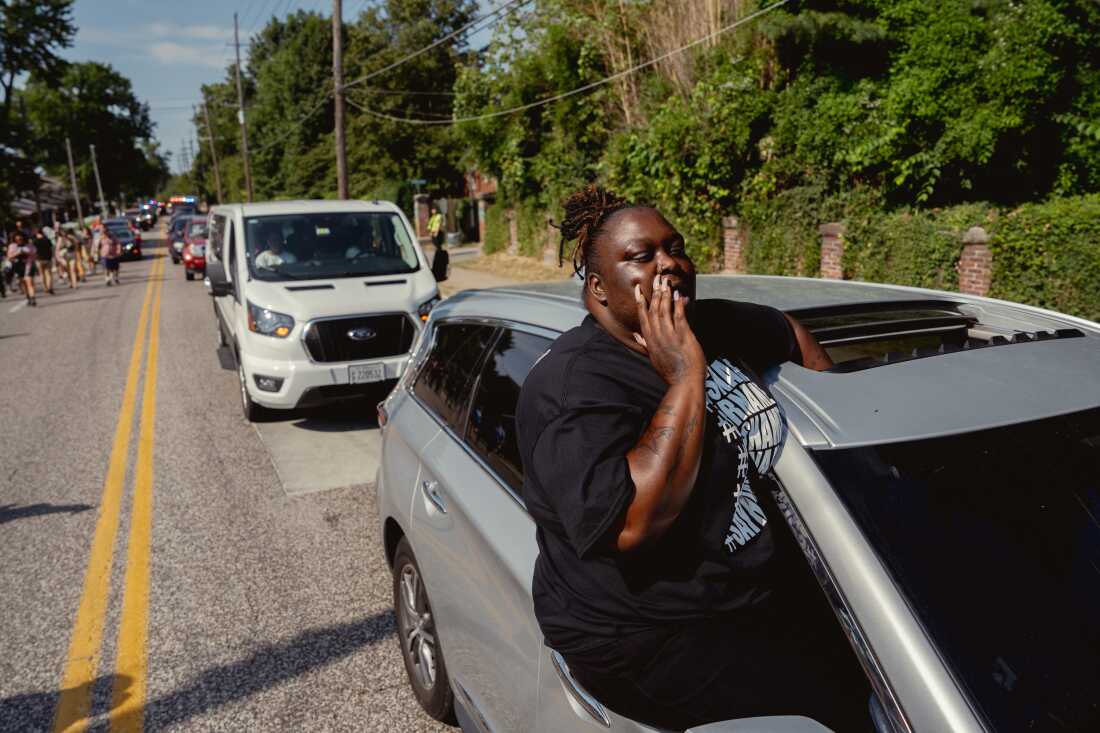
Ebony Williams, 33, of The Ville, yells out “say his name!”, during a unity march commemorating a decade after Michael Brown Jr.’s police killing in Ferguson.
Brian Munoz/St. Louis Public Radio
hide caption
toggle caption
Brian Munoz/St. Louis Public Radio
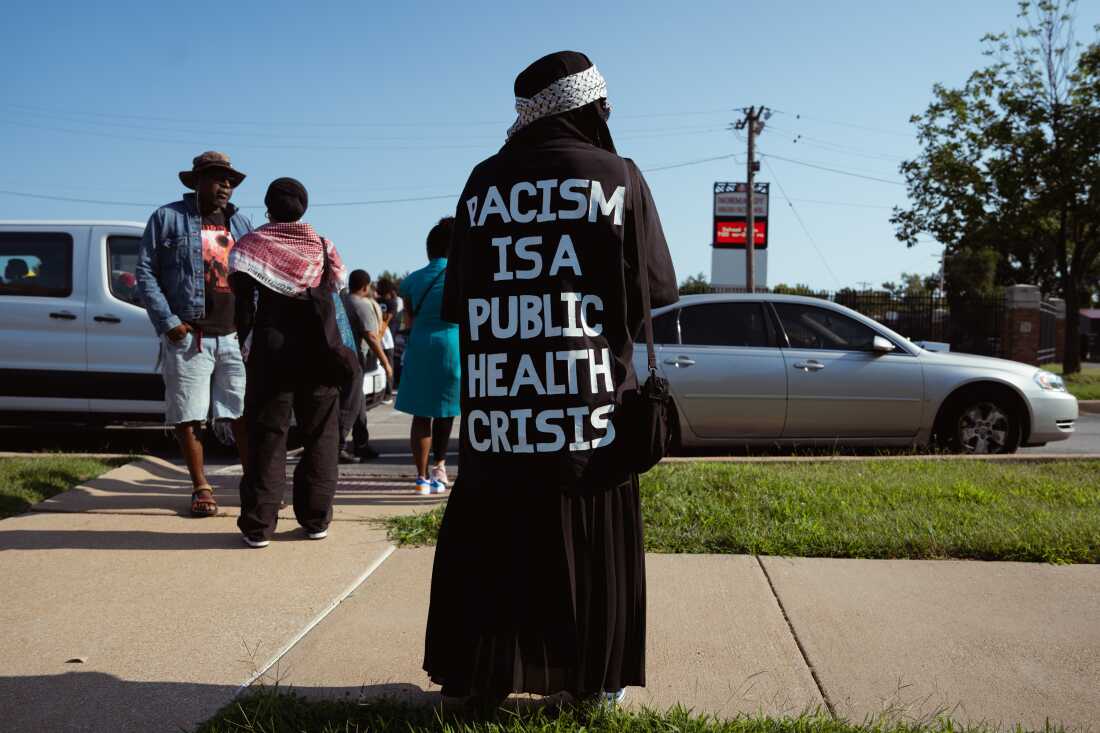
Adara Ameer, 19, of Florissant waits for unity march commemorating a decade after Michael Brown Jr.’s police killing in Ferguson.
Brian Munoz/St. Louis Public Radio
hide caption
toggle caption
Brian Munoz/St. Louis Public Radio

Left, Cornel West speaks during a memorial service commemorating a decade after Brown Jr.’s police killing along Canfield Drive in Ferguson. Right, demonstrators lay a thousand blue roses along Canfield Drive, the site where Michael Brown Jr. was killed.
Brian Munoz/St. Louis Public Radio
hide caption
toggle caption
Brian Munoz/St. Louis Public Radio

Protestors march streets during a unity march commemorating a decade after Michael Brown Jr.’s police killing.
Brian Munoz/St. Louis Public Radio
hide caption
toggle caption
Brian Munoz/St. Louis Public Radio

Roland Garner, 39, of St. Joseph, Missouri, joins hundreds of demonstrators, during a unity march.
Brian Munoz/St. Louis Public Radio
hide caption
toggle caption
Brian Munoz/St. Louis Public Radio
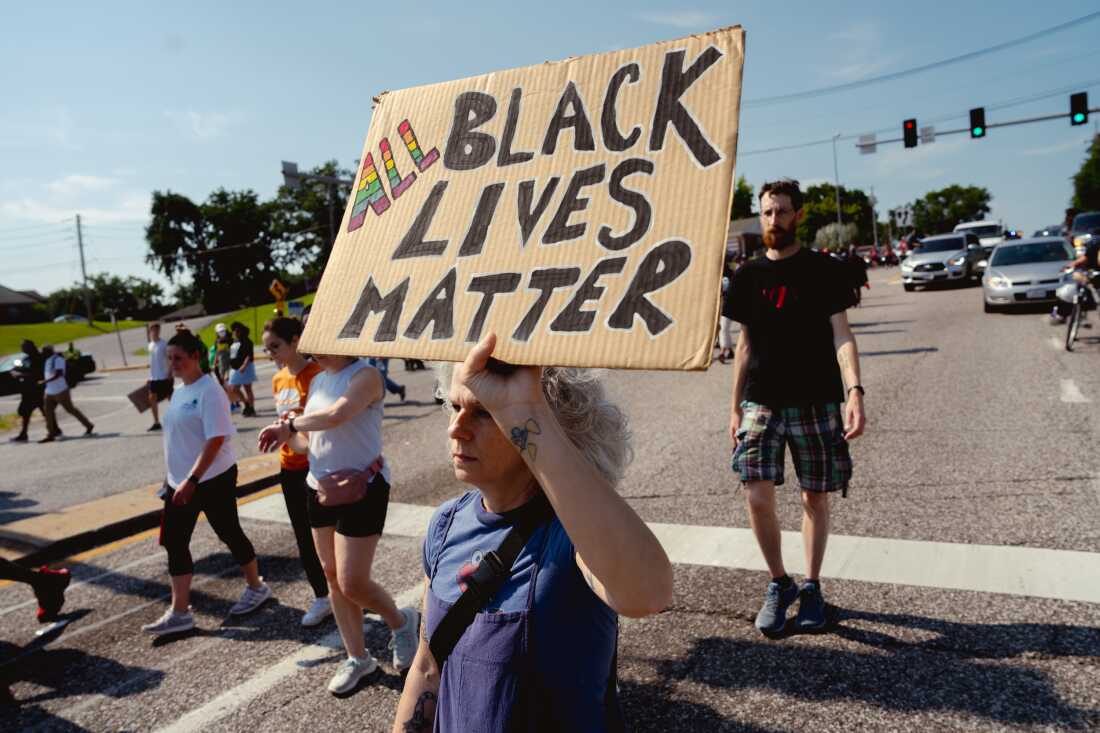
Angelique Kidd, 51, of Ferguson, protests during the unity march.
Brian Munoz/St. Louis Public Radio
hide caption
toggle caption
Brian Munoz/St. Louis Public Radio
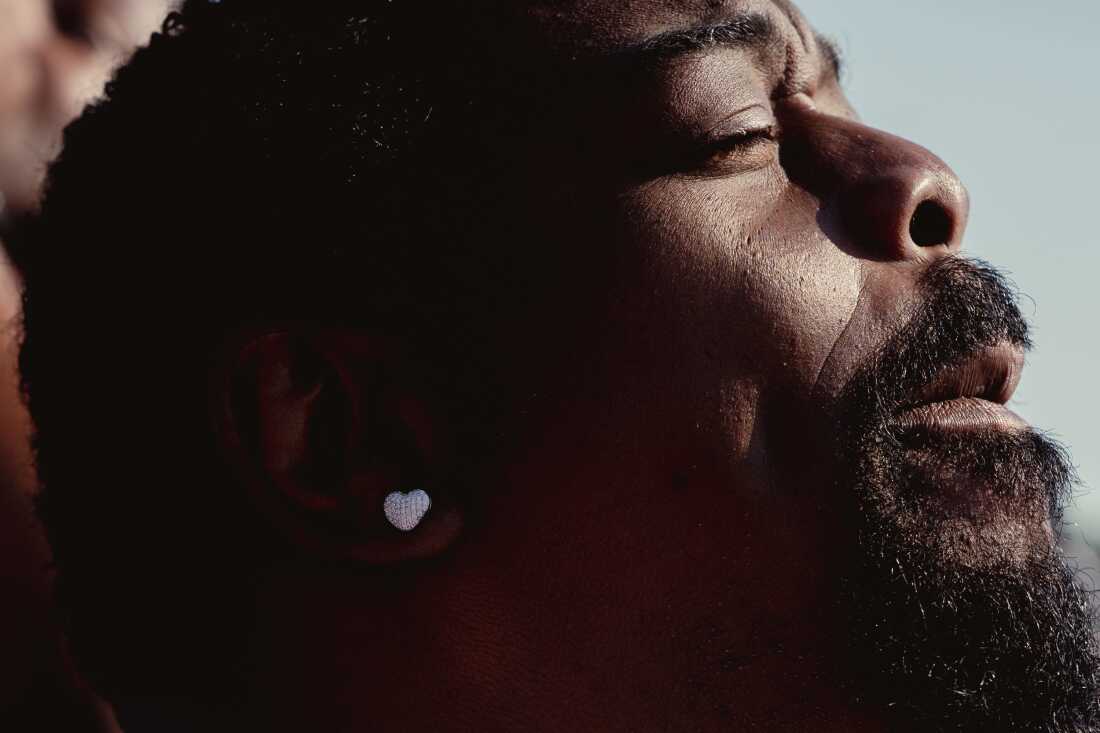
Andrew Joseph, 50, of Tampa Fla., leads chants, during the unity march.
Brian Munoz/St. Louis Public Radio
hide caption
toggle caption
Brian Munoz/St. Louis Public Radio

Demonstrators lay a thousand blue roses along Canfield Drive, the site where Michael Brown Jr. was killed.
Brian Munoz/St. Louis Public Radio
hide caption
toggle caption
Brian Munoz/St. Louis Public Radio
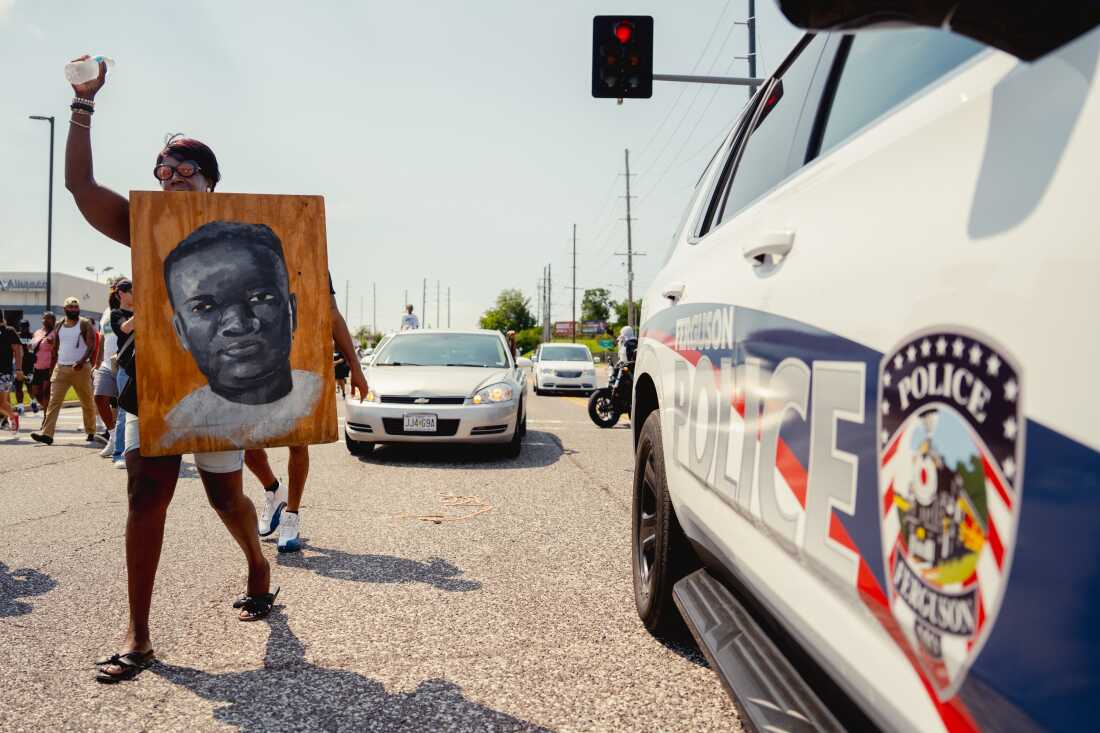
Clara Holmes, 55, of north St. Louis, makes her way to Canfield Drive.
Brian Munoz/St. Louis Public Radio
hide caption
toggle caption
Brian Munoz/St. Louis Public Radio
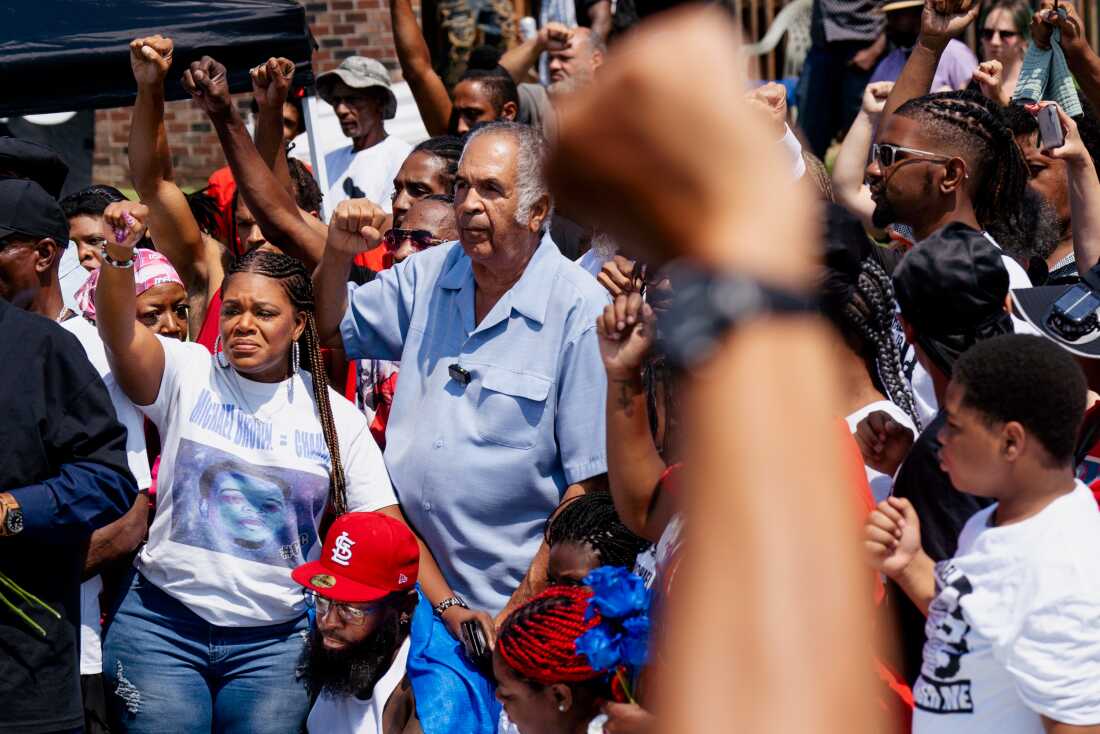
U.S. Rep. Cori Bush, D-St. Louis County, rests her arm on Michael Brown Sr.
Brian Munoz/St. Louis Public Radio
hide caption
toggle caption
Brian Munoz/St. Louis Public Radio
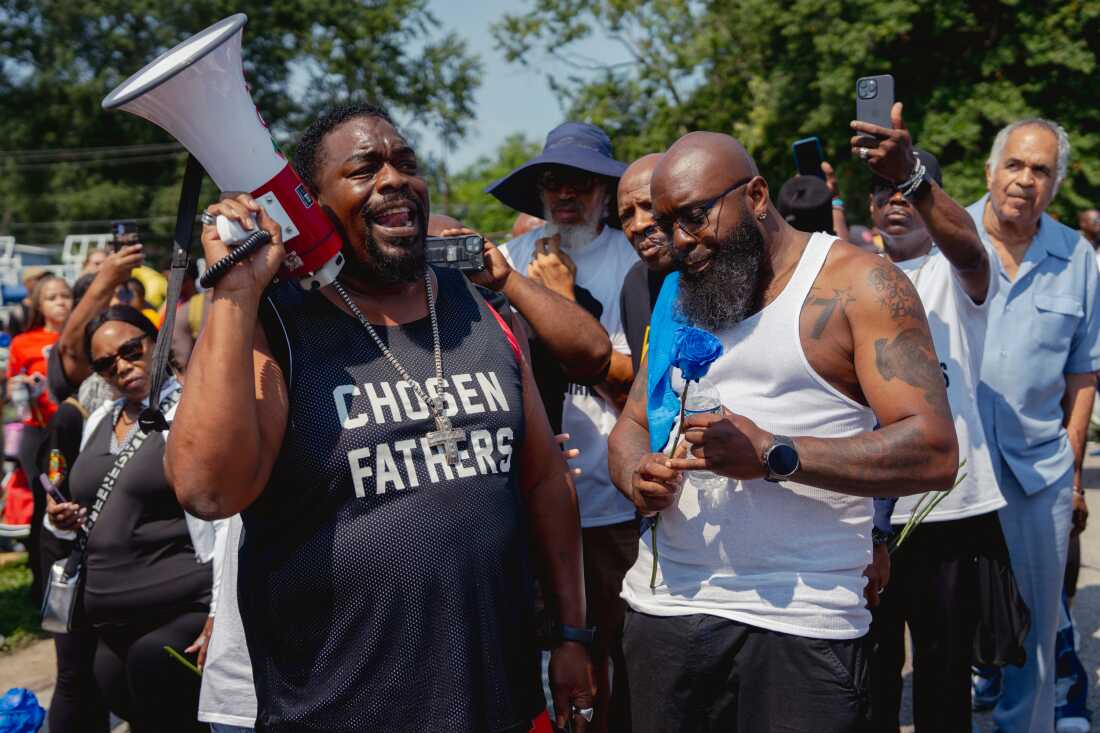
Andrew Joseph, 50, of Tampa Fla., reflects on Michael Brown Jr.’s death alongside his father Michael Brown Sr.
Brian Munoz/St. Louis Public Radio
hide caption
toggle caption
Brian Munoz/St. Louis Public Radio
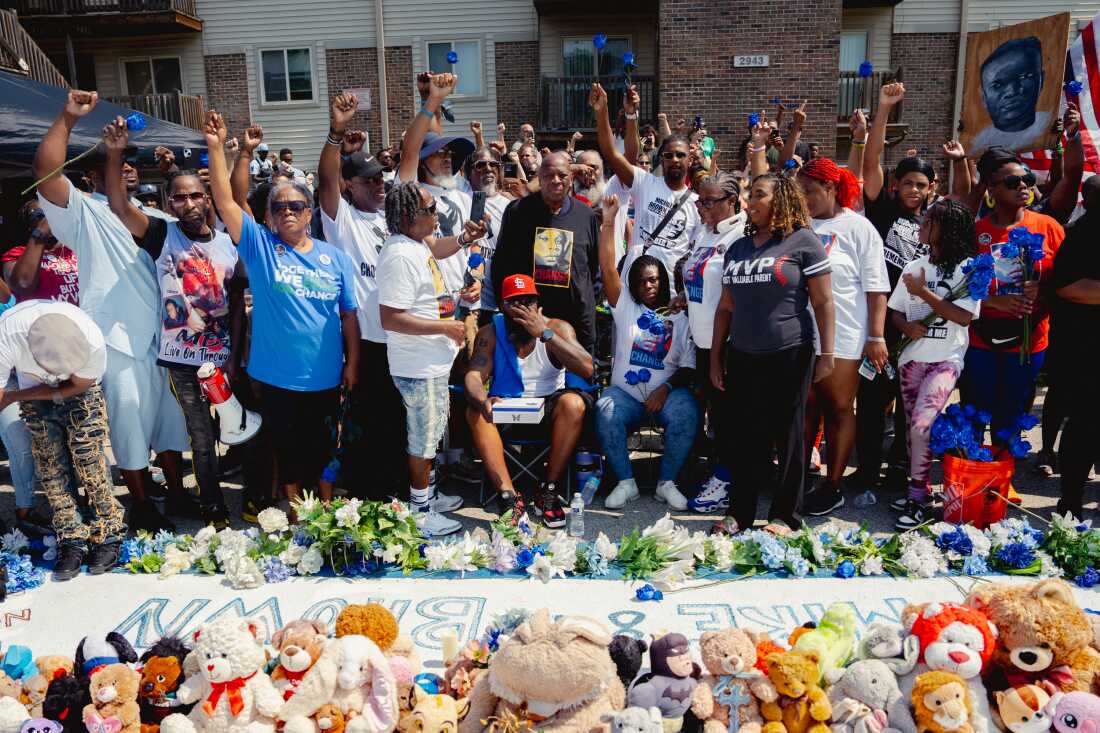
Community activists raise their fists as Michael Brown Sr., center in St. Louis Cardinals hat, wipes his face.
Brian Munoz/St. Louis Public Radio
hide caption
toggle caption
Brian Munoz/St. Louis Public Radio



This year, Maine nearly became the first state to pass a statewide moratorium on new data centers. But before the law could take effect, supporters of an A.I. data center project in the small town of Jay rallied to fight the ban — and won. So why do residents there want one? We traveled to Jay to find out.

The U.S. Supreme Court
Drew Angerer/AFP via Getty Images
hide caption
toggle caption
Drew Angerer/AFP via Getty Images
The U.S. Supreme Court on Thursday handed the Trump administration a tool that could make it far more difficult for asylum seekers to enter the United States.
Asylum is a form of legal protection available to people fleeing persecution in their home countries if they meet certain criteria. Under U.S. law, an asylum seeker who “arrives in” the U.S. is entitled to apply for asylum and generally cannot be removed from the country until their asylum application is processed.
By a 6-3 vote, the high court ruled that federal law allows the government to stop asylum seekers from physically setting foot in the country, effectively keeping them from applying for asylum.
The Obama administration was the first to try stemming the flow of asylum seekers that way. But the lower courts blocked the policy on grounds that it violated federal law by denying asylum to people who otherwise would have qualified for it, had they been permitted to literally put one foot over the border.
The Trump administration, however, sought to revive the policy, contending that the lower court’s ruling “deprives the Executive Branch of a critical tool for addressing border surges and preventing overcrowding at ports of entry.” And on Thursday, the Supreme Court agreed.
Writing for the majority, Justice Samuel Alito ruled that because asylum seekers are not in the U.S. when they are turned away at the border, they did not “arrive in” the country. Therefore, he continued, the legal protections for asylum seekers have not kicked in.
Writing for the liberal dissenters, Justice Sonia Sotomayor noted that Border Patrol agents speak with all immigrants at legal entry points and speaking with an agent is effectively the first step in “arriving in” the U.S.

BOSTON (AP) — A federal judge on Thursday halted President Donald Trump’s executive order that sought to create a federal voter list and limit who can receive a mail ballot.
U.S. District Court Judge Indira Talwani, who was nominated by Democratic President Barack Obama, sided with a coalition of nearly two dozen states that challenged the Republican president’s order in granting a summary judgment. Her ruling applies to this year’s midterm election cycle.
Plaintiffs argued in two lawsuits, both filed in federal court in Boston, that Trump’s order should be found unconstitutional because the states and Congress, not the president, have the power to set election rules. The judge agreed, noting in her ruling that the provisions of Trump’s order “unconstitutionally violate the separation of powers.”
It was the second ruling in as many days against executive orders Trump has signed seeking oversight of the nation’s elections. A separate ruling Wednesday prohibited an executive order he had signed last year that would have required people to show documents proving their citizenship when registering to vote.
The administration, in its motions to dismiss the lawsuits challenging the order seeking to establish a federal voter list, argued that the motions are premature and that plaintiffs lacked the legal basis to bring their claim based on the Administrative Procedure Act, which governs how federal agencies develop and issue regulations.
But in an interim order before Thursday’s ruling, Talwani said the motions pertaining to this year’s election cycle were relevant: “In light of the EO’s specific deadlines over the next three months, and the reality that elections will be occurring throughout this period with the November 3, 2026 midterm occurring in just five months, postponing judicial review is impracticable and may inflict significant hardship on Plaintiffs,” she wrote. That order denied the Trump administration’s motion to dismiss the challenges.
Trump’s executive order, the second one aimed at elections during his second term, comes as he continues to raise the specter of widespread voting by noncitizens as a reason to change election rules. But states already have detailed processes aimed at keeping their voter rolls accurate, and voting by noncitizens has been shown to be rare. It also is a felony that can be punishable by deportation.
Trump issued his second order in March after a bill he supported to overhaul voting stalled in Congress. The order would have had the federal government create a list of eligible voters and then directed the U.S. Postal Service to deliver mail ballots only to those on the list. Election officials argued that it was ripe for abuse and could cause chaos, and the postal union has objected to the idea of mail carriers policing ballots.
The Postal Service has published a proposed rule required by Trump’s executive order in the Federal Register. Among other things, the rule would not apply to primary elections or overseas ballots.
The lawsuit seeking summary judgment was filed by Democratic attorneys general representing 22 states and the District of Columbia. Also signing on were attorneys representing Democratic Gov. Josh Shapiro of Pennsylvania, which has a Republican attorney general.
The states also told the court that the move imposes a costly burden on election officials to comply and would spread fear about the possibility of prosecution. Stephen Pezzi, a lawyer for the Trump administration, had argued that no one would be prosecuted for violating the order.
In a separate lawsuit filed against the executive order, a federal judge in Washington, D.C., in May agreed with the Trump administration that it was too early to block the order because it had yet to be implemented. That lawsuit was brought by Democratic and civil rights groups, who have appealed.
Since his 2020 presidential election loss to Democrat Joe Biden, Trump has groundlessly claimed mail voting is rife with fraud and has launched a federal investigation into that year’s vote, even though repeated audits and investigations, including ones run by Republicans, found it was free of widespread fraud. Trump also has said he wants to “take over” election administration in Democratic areas.
-
 South-Carolina2 minutes ago
A 1776 midnight battle in Laurens County: The Battle of Fort Lindley
-
South Dakota4 minutes ago
SD Lottery Millionaire for Life winning numbers for June 25, 2026
-
Tennessee10 minutes ago
TN Lottery Cash 3 Morning, Cash 3 Midday winning numbers for June 25, 2026
-
Texas17 minutes ago
Texas school board to vote on required Bible readings in public education
-

 Utah19 minutes ago
Lawsuit claims Utah prison wrongfully conducted mass strip search of more than 100 women
-
Vermont24 minutes ago
VT Lottery Gimme 5, Pick 3 results for June 25, 2026
-
 Virginia32 minutes ago
Virginia man uses art to heal after years in prison, mental health battle
-

 Washington34 minutes ago
AJ Dybantsa arrives in Washington, ready to work on turning Wizards around

