News
National Guard member dies from injuries. And, death toll in Hong Kong fire rises


Good morning. You’re reading the Up First newsletter. Subscribe here to get it delivered to your inbox, and listen to the Up First podcast for all the news you need to start your day.
Today’s top stories
Sarah Beckstrom, one of two West Virginia National Guard members who were shot in Washington, D.C., on Wednesday, has died. President Trump announced the 20-year-old’s death during a Thanksgiving call to service members. Beckstrom and the other Guard member, 24-year-old Andrew Wolfe, were on patrol a few blocks away from the White House when the alleged gunman, Rahmanullah Lakanwal, opened fire. Wolfe remains in critical condition. In the wake of this shooting, the Trump administration is launching a comprehensive “reexamination” of thousands of refugees and migrants who have been admitted to the U.S. and granted green cards.
This photo combination shows West Virginia National Guard Staff Sgt. Andrew Wolfe (left) and Specialist Sarah Beckstrom, who were injured in Wednesday’s shooting in Washington, D.C.
U.S. Attorney’s Office/AP
hide caption
toggle caption
U.S. Attorney’s Office/AP
- 🎧 Lakanwal served in Afghanistan alongside U.S. forces as part of an elite counter-terrorism unit connected to the CIA and the military, NPR’s Brian Mann tells Up First. The alleged gunman applied for asylum during the Biden administration and was granted protection in April of this year under the Trump administration. Trump has called for an effort to “denaturalize migrants” and “deport” foreign nationals. Mann notes that the Trump administration’s narrative suggests that Lakanwal was allowed into the U.S. without proper vetting, indicating that this could be a broader issue. But sources like the nonprofit group AfghanEvac tell NPR that Lakanwal would have been scrutinized repeatedly in Afghanistan and before he arrived in the U.S. Experts say that while the vetting process for Afghan refugees was audited and found to be imperfect, it was thorough. They also emphasize that the majority of refugees from Afghanistan are living in the U.S. peacefully.
At least 128 people have died after a massive fire engulfed a high-rise housing complex that houses around 4,600 people in Hong Kong from Wednesday to Friday. This is one of the region’s deadliest blazes in decades, and authorities have indicated that the death toll may continue to rise. The police have arrested three men for alleged manslaughter in connection with the fire. Here’s what else we know.
(Just a few) of the Books We Love
Hey folks – Andrew Limbong here, host of NPR’s Book of the Day podcast. I’m tapping in this week to let you all know about our annual recommendation engine, Books We Love. If you wanna come and hang and keep chatting about books stuff, subscribe to the books newsletter!
This week, NPR dropped its massive year-end book recommendation tool, Books We Love. It’s not quite a year-end list, 10 best or whatever, seeing as there are more than 380 books included. Instead, it’s a way of saying: Here’s a bunch of books. There’s something in here for you.
But I get it — 380 is a daunting number, even with Books We Love’s handy-dandy filter tag system. So here’s just a small slice, a sliver, a taste of a few of the books several of our staffers and critics were into this year.

📚 The Dream Hotel by Laila Lalami — You know that spooky feeling you get when you make small talk with someone about needing a new TV, and your phone then just happens to send you the latest TV deals? This dystopian novel is like that but scarier. Emily Kwong, host of NPR’s Short Wave, writes, “I found The Dream Hotel instructive for navigating a society beset by mass surveillance — where the only escape can be found in shouldering risk together.”
- 📚 King of Ashes by S.A. Cosby — If gritty crime fiction is more your thing, Cosby’s latest centers around a family-run small business that gets roped into being involved with a local drug gang. If you think you’ve heard this one before, that small business happens to be a crematorium. Weekend Edition producer Melissa Gray writes, “This story spins and spins violently to a dark and satisfying conclusion.”
- 📚 Mother Mary Comes to Me by Arundhati Roy — This time of year finds lots of folks feeling … different, complicated, conflicting feelings about their parents. The novelist Arundhati Roy wrestles with her own ambivalent feelings about her mother in this new memoir. Morning Edition host Leila Fadel writes, “It’s a story of turbulent love and of liberation that is beautiful, witty and at times uncomfortable to read.”
- 📚 Everything Is Tuberculosis: The History and Persistence of Our Deadliest Infection by John Green — You might recognize TB by its more romantic name, consumption. But … it’s weird there was a time when we romanticized this deadly disease, right? In this book, Green presents TB as very much a present, fatal, yet curable concern. Here & Now producer James Perkins Mastromarino writes that the book is “witty, cogent and achingly beautiful.”
Again, this is just a tiny fraction of the hundreds of books we’ve got on this year’s edition of Books We Love, as recommended by our staffers and critics. But if you’re into this and want to read about books all year round, subscribe to the books newsletter!
Black Friday stories you may have missed

It’s gift-giving season, and some consumer and child advocacy groups are raising concerns about the latest buzz-worthy AI toys
Elva Etienne/Getty Images
hide caption
toggle caption
Elva Etienne/Getty Images
The nonprofit children’s safety organization Fairplay is urging gift-givers to refrain from purchasing AI toys for kids this holiday season. In an advisory, Fairplay and other child and consumer advocacy groups highlight the potential dangers of toys such as interactive dolls and children’s robots designed to mimic human behavior and engage with kids as if they are friends. The advisory points out that these toys exploit children’s trust and can disrupt human relationships, among other negative effects.
Muralist Maxx Moses is putting the “Black” in Black Friday. For the second year in a row, he’s hosting the Black Friday Artists Market at the Graffiti Gardens in San Diego. Moses painted the walls of the studio, which he uses to partner with local organizations. The market will feature a diverse group of emerging and established local artists, aiming to celebrate Black culture, community and economics. (via KPBS)
This holiday shopping season, expect deep discounts as retailers aim to encourage cautious shoppers to splurge. The National Retail Federation predicts a record-breaking season, with Americans projected to spend over $1 trillion on gifts, food, and decorations, reflecting a growth rate of about 4% — similar to last year.
Now that the Thanksgiving excitement is over, it is time for millions of Americans to make that long trek home. For some, the trip means dealing with car sickness. If you are one of those people, don’t fret, NPR’s How To Do Everything podcast has the guidance you need to make the ride better.
Weekend picks

Renate Reinsve in Sentimental Value.
Neon
hide caption
toggle caption
Neon
Check out what NPR is watching, reading and listening to this weekend:
🍿 Movies: In Sentimental Value, a well-known filmmaker works on his next feature while he tries to reconnect with his estranged daughters. According to Pop Culture Happy Hour, his endeavor highlights the complexity between art and parenthood.
📺 TV: This week marked the beginning of the end for Netflix’s 1980s-set horror drama Stranger Things. But will this final season provide a satisfying conclusion? Here’s what NPR critic Eric Deggans has to say. (Warning: there are spoilers ahead).
📚 Books: Do you really need MORE recommendations after Andrew Limbong’s essay? If the answer is yes, check out four books that were released this week, which range from a deep dive into crosswords to a posthumous collection of short stories.
🎵 Music: Now that Thanksgiving is over, as Mariah Carey famously says, “It’s time…” to turn on the holiday music. Download the NPR app today and explore our special collection of holiday music streams from across the NPR network, from the perfect soundtrack for your next party to the finest holiday jazz.
🍽️ Food: Are leftovers taking over your fridge today? Chef Kathy Gunst offers recipes to help transform them into something possibly even better than when you first ate them.
This newsletter was edited by Suzanne Nuyen.






new video loaded: Senators Question Kristi Noem on ICE Immigration Tactics
transcript
transcript
Senators Question Kristi Noem on ICE Immigration Tactics
Homeland Security Secretary Kristi Noem repeatedly refused to apologize for suggesting that Alex Pretti and Renee Good, two U.S. citizens shot and killed by agents, were domestic terrorists.
-
What we’ve seen is a disaster under your leadership, Ms. Noem. A disaster. What we’ve seen is innocent people getting detained that turn out are American citizens. I could talk about the culture that’s been created here. After the killings of Renee Good and Alex Pretti, when I spoke to Alex’s parents, they told me that you calling him a domestic terrorist — this was directly from them — the day after he was killed, a nurse in our V.A., Alex — one of the most hurtful things they could ever imagine was said by you about their son. Do you have anything you want to say to Alex Pretti’s parents? Ma’am, I did not call him a domestic terrorist. I said It appeared to be an incident of — I think the parents saw it for what it was. In a hearing — recent hearing before the HSGAC committee, C.B.P. and ICE officials testified under oath that their agencies did not inform you that Pretti was a domestic terrorist — during that hearing, stated during that hearing, I was getting reports from the ground, from agents at the scene, and I would say that it was a chaotic scene. How did you think that calling them domestic terrorists at that scene was somehow going to calm the situation? The fact that you can’t admit to a mistake, which looks like under investigation, it’s going to prove that Ms. Good and Mr. Pretti probably should not have been shot in the face and in the back. Law enforcement needs to learn from that. You don’t protect them by not looking after the facts.

By Christina Kelso and Jackeline Luna
March 3, 2026

The Trump administration is sending pregnant unaccompanied minors to a South Texas shelter (above) flagged as medically inadequate by officials from the Office of Refugee Resettlement. The facility is run by a for-profit contractor called Urban Strategies.
Patricia Lim/KUT News
hide caption
toggle caption
Patricia Lim/KUT News
The Trump administration is sending all pregnant unaccompanied minors apprehended by immigration enforcement to a single group shelter in South Texas. The decision was made over urgent objections from some of the administration’s own health and child welfare officials, who say both the facility and the region lack the specialized care the girls need.
That’s according to seven officials who work at the Office of Refugee Resettlement within the U.S. Department of Health and Human Services, which takes custody of children who cross the border without a parent or legal guardian, or are separated from family by immigration authorities. The children remain in ORR’s care until they can be released to an adult or deported, or turn 18.
All of the officials asked not to be named for fear of retaliation.
Since late July, more than a dozen pregnant minors have been placed at the Texas facility, which is in the small border city of San Benito. Some were as young as 13, and at least half of those taken in so far became pregnant as a result of rape, the officials said. Their pregnancies are considered high risk by definition, particularly for the youngest girls.
“This group of kids is clearly recognized as our most vulnerable,” one of the officials said. Rank-and-file staff, the official said, are “losing sleep over it, wondering if kids are going to be placed in programs where they’re not going to have access to the care they need.”
The move marks a sharp departure from longstanding federal practice, which placed pregnant, unaccompanied migrant children in ORR shelters or foster homes around the country that are equipped to handle high-risk pregnancies.
The ORR officials said they were never told why the girls are being concentrated in a single location, let alone in this particular shelter in Texas. But they — along with more than a dozen former government officials, health care professionals, migrant advocates and civil rights attorneys — worry the Trump administration is knowingly putting the children at risk to advance an ideological goal: denying them access to abortion by placing them in a state where it’s virtually banned.
“This is 100% and exclusively about abortion,” said Jonathan White, a longtime federal health official who ran ORR’s unaccompanied children program for part of President Trump’s first term. White, who recently retired from the government, said the administration tried and failed to restrict abortion access for unaccompanied minors in 2017. “Now they casually roll out what they brutally fought to accomplish last time and didn’t.”
Asked if the administration is sending pregnant children to San Benito to restrict their access to abortion, HHS said in a statement that the allegation was “completely inaccurate.”
In an earlier statement, the department said that “ORR’s placement decisions are guided by child welfare best practices and are designed to ensure each child is housed in the safest, most developmentally appropriate setting, including for children who are pregnant or parenting.”
But several of the ORR officials took issue with the department’s statement. “ORR is supposed to be a child welfare organization,” one of them said. “Putting pregnant kids in San Benito is not a decision you make when you care about children’s safety.”
ORR’s acting director, Angie Salazar, instructed agency staff to send “any pregnant children” to San Benito beginning July 22, 2025, according to an internal email obtained as part of a six-month investigation by The California Newsroom and The Texas Newsroom, public media collaboratives that worked together to produce this story.

A copy of the July 22, 2025, email notifying ORR supervisors of the directive to send pregnant unaccompanied minors to a single shelter in San Benito, Texas. The move comes over objections from the government’s own health and child welfare officials.
hide caption
toggle caption
Several of the officials said a handful of pregnant girls have mistakenly been placed in other shelters because immigration authorities didn’t know they were pregnant when they were transferred to ORR custody.
Since the July order, none of the pregnant girls at the San Benito facility have experienced major medical problems, according to the ORR officials and Aimee Korolev, deputy director of ProBAR, an organization that provides legal services to children there. They said several of the girls have given birth and are detained with their infants.
But ORR officials interviewed for this story said they worry the shelter is only one high-risk pregnancy away from catastrophe.
“I feel like we’re just waiting for something terrible to happen,” one of the officials said.
‘Blown away by the level of risk’
There are dozens of ORR shelters or foster homes across the country that are designated to care for pregnant unaccompanied children, according to several of the ORR officials, with 12 in Texas alone. None of them could recall a time when all of the pregnant minors in the agency’s custody were concentrated in one shelter.
Detaining them in San Benito, Texas, doctors and public health experts said, is a dangerous gambit.
“It’s not good to be a pregnant person in Texas, no matter who you are,” said Annie Leone, a nurse midwife who recently spent five years caring for pregnant and postpartum migrant women and girls at a large family shelter not far from San Benito. “So, to put pregnant migrant kids in Texas, and then in one of the worst health care regions of Texas, is not good at all.”
The specialized obstetric care that exists in Texas is mostly available in its larger cities, hours from San Benito. And several factors, including the high number of uninsured patients, have eroded the availability of health care across the state.
Furthermore, Texas’ near-ban on abortion has been especially devastating to obstetric care. The law allows an exception in cases where the pregnant person’s life is in danger or one of her bodily functions is at risk, but doctors have been confused as to what that means.
Many doctors have left to practice elsewhere, and those who’ve stayed are often scared to perform procedures they worry could come with criminal charges. While Texas passed a law clarifying the exceptions last year, experts have said it may not be enough to assuage doctors’ fears.
Several maternal health experts listed the potential dangers for the girls at the San Benito shelter: If one of them develops an ectopic pregnancy (where the fertilized egg implants outside the uterus), if she miscarries or if her water breaks too early and she gets an infection, the emergency care she needs could be delayed or denied by doctors wary of the abortion ban.
Getting the care that is available could take too long to save her life or the baby’s, they added.
Adolescents are also more likely to give birth early, which can be life-threatening for both mother and baby. The youngest face complications during labor and delivery because their pelvises aren’t fully developed, said Dr. Anne-Marie Amies Oelschlager, an obstetrician in Washington state who specializes in adolescent pregnancy.
“These are young adolescents who are still going through puberty,” she said. “Their bodies are still changing.”
Pregnant girls who recently endured the often harrowing journey to the U.S. face even more risk, obstetrics experts said. Experts who work with migrant children say many are raped along the way and contract sexually transmitted infections that can be dangerous during pregnancy. Add to that little to no access to prenatal care or proper nourishment, and then the trauma of being detained.
“You couldn’t set up a worse scenario,” said Dr. Blair Cushing, who runs a women’s health clinic in McAllen, about 45 minutes from San Benito. “I’m kind of blown away by the level of risk that they’re concentrating in this facility.”
A history of problems
The San Benito shelter is owned and operated by Urban Strategies, a for-profit company that has contracted with the federal government to care for unaccompanied children for more than a decade, according to USAspending.gov.

Meliza Fonseca lives across the street from the San Benito shelter. She said she occasionally sees kids in the yard on weekends, “but for the most part, you don’t see them.”
Patricia Lim/KUT
hide caption
toggle caption
Patricia Lim/KUT
The main building, an old tan brick Baptist Church, occupies a city block in downtown San Benito, a quiet town of about 25,000. The church was converted to a migrant shelter in 2015 and was managed by two other contractors before Urban Strategies took it over in 2021.
On a fall day last year, there were no signs of activity at the facility, though children’s lawn toys and playground equipment were visible behind a wooden fence. A guard was stationed at one of the entrances.
“It’s pretty quiet, just like it is today,” said Meliza Fonseca, who lives nearby. “That’s the way it is every day.”
She said she occasionally sees kids playing in the yard on weekends, “but for the most part, you don’t see them.”
Reached by email, the founder and president of Urban Strategies, Lisa Cummins, wrote that the company is “deeply committed to the care and well-being of the children we serve,” and directed any questions about ORR-contracted shelters to the federal government.
When asked about the San Benito facility, HHS wrote that “Urban Strategies has a long-standing record of delivering high-quality care to pregnant unaccompanied minors, with a consistently low staff turnover.”
But the ORR officials who spoke with the newsrooms said that as recently as 2024, staff members at the shelter failed to arrange timely medical appointments for pregnant girls or immediately share critical health information with the federal agency and discharged some of them without arrangements to continue their medical care.
ORR barred the shelter from receiving pregnant girls from September to December of 2024 while Urban Strategies implemented a remediation plan, but the plan did not add staff or enhance their qualifications, the officials said.
Some of the officials said ORR’s leadership was provided with a list of shelters that are better prepared to handle children with high-risk pregnancies. All of those shelters are outside Texas, in regions where the full range of necessary medical care is available. Yet the directive to place them at San Benito remains in place.
“It’s cruel, it’s just cruel,” one of the officials said. “They don’t care about any of these kids. They’re playing politics with children’s health.”
‘A dress rehearsal’
Jonathan White, who ran ORR’s unaccompanied children program from January of 2017 to March of 2018, said he wasn’t surprised to learn that the new administration is moving pregnant unaccompanied children to Texas.
“I’ve been expecting this since Trump returned to office,” White said in an interview.
He said he views the San Benito order as a continuation of an anti-abortion policy shift that began in 2017, which “ultimately proved to be a dress rehearsal for the current administration.”
Scott Lloyd, the agency’s director at the time, denied girls in ORR custody permission to end their pregnancies, court records show. Lloyd also required the girls to get counseling about the benefits of motherhood and the harms of abortion and personally pleaded with some of them to reconsider.
“I worked to treat all of the children in ORR care with dignity, including the unborn children,” Lloyd told the newsrooms in an email.
In the fall of 2017, the American Civil Liberties Union filed a class action lawsuit against Lloyd and the Trump administration on behalf of pregnant girls in ORR custody. The ACLU argued that denying the girls abortions violated their constitutional rights, established by the Supreme Court in its 1973 Roe v. Wade decision.
Not long after the lawsuit was filed, White said, he received a late-night phone call from Lloyd, who had a request. He wanted White to transfer an unaccompanied pregnant girl who was seeking an abortion to a migrant shelter in Texas, where, under state law, it would have been too late for her to terminate her pregnancy. White said that he believed following the order would have been unlawful because it might have denied the girl access to legal relief under the lawsuit, so he refused. The girl was not transferred.
Lloyd, who has since left the government, acknowledged making the request but said he didn’t think it was illegal.
The lawsuit was settled in 2020; the first Trump administration agreed not to impede abortion access for migrant youth in federal custody going forward. Four years later, the Biden administration cemented the deal in official regulations: If a child who wanted to terminate her pregnancy was detained in a state where it was not legal, ORR had to move them to a state where it was.
That rule remains in place, and the agency appears to be following it: ORR has transferred two pregnant girls out of Texas since July, though the agency officials said one of the girls chose not to terminate her pregnancy.
But now that Trump is back in office, his administration is working to end the policy.
‘Elegant and simple’
Even before Trump won reelection, policymakers in his circle were planning a renewed attempt to restrict abortion rights for unaccompanied minors.
Project 2025, the Heritage Foundation’s blueprint for a politically conservative overhaul of the federal government, called for ORR to stop facilitating abortions for children in its care. The plan advised the government not to detain unaccompanied children in states where abortion is available.
Such a change is now possible, Project 2025 argued, because Roe v. Wade is no longer an obstacle. Since the Supreme Court overturned the landmark decision in 2022, there is no longer a federal right to abortion.
Upon returning to office, Trump signed an executive order “to end the forced use of Federal taxpayer dollars to fund or promote elective abortion.”
Then, in early July, the Department of Justice reconsidered a longstanding federal law, known as the Hyde Amendment, that governs the use of taxpayer money for abortion. The DOJ concluded that the government cannot pay to transport detainees from one state to another to facilitate abortion access, except in cases of rape or incest or to save the life of the mother.
And now, ORR is working to rescind the Biden-era requirement that pregnant girls requesting an abortion be moved to states where it’s available. On Jan. 23, the agency submitted the proposed change for government approval, though it has not yet published the details.
Several of the ORR officials who spoke with the newsrooms said it’s unclear whether children in the agency’s custody who have been raped or need emergency medical care will still be allowed to get abortions.
“HHS does not comment on pending or pre-decisional rulemaking,” the department wrote when asked for details of the regulatory change. “ORR will continue to comply with all applicable federal laws, including requirements for providing necessary medical care to children in ORR custody.”
The day the change was submitted, an unnamed Health and Human Services spokesperson told The Daily Signal, a conservative news site, “Our goal is to save lives both for these young children that are coming across the border, that are pregnant, and to save the lives of their unborn babies.”
Experts who spoke with the newsrooms said it’s unclear why the government would concentrate pregnant children in one Texas shelter, rather than disperse them at shelters throughout the state. But they said they’re convinced that the San Benito directive and the anti-abortion rule change are meant to work hand in hand: Once pregnant children are placed at the San Benito shelter, the new regulations could mean they cannot be moved out of Texas to get abortions — even if keeping them there puts them at risk.
“It’s so elegant and simple,” said White, the former head of the unaccompanied children program. “All they have to do is send them to Texas.”
Mark Betancourt is a freelance journalist and regular contributor to The California Newsroom.
Mose Buchele with The Texas Newsroom contributed reporting.
This story was produced by The California Newsroom and The Texas Newsroom. The California Newsroom is a collaboration of public media outlets that includes NPR, CalMatters, KQED (San Francisco), LAist and KCRW (Los Angeles), KPBS (San Diego) and other stations across the state. The Texas Newsroom is a public radio journalism collaboration that includes NPR, KERA (North Texas), Houston Public Media, KUT (Austin), Texas Public Radio (San Antonio) and other stations across the state.
News
Trump claims US stockpiles mean wars can be fought ‘forever’; Kristi Noem testifies before Congress – US politics live

Trump says US stockpiles mean “wars can be fought ‘forever’”
In a late night post on Truth Social, Donald Trump said that the US munitions stockpiles “at the medium and upper medium grade, never been higher or better”.
He added that the US has a “virtually unlimited supply of these weapons”, meaning that “wars can be fought ‘forever’”.
This comes after Trump said that the US-Israel war on Iran could go beyond the four-five weeks that the administration initially predicted. The president also did not rule out the possibility of US boots on the ground in Iran during an interview with the New York Post on Monday.
“I rebuilt the military in my first term, and continue to do so. The United States is stocked, and ready to WIN, BIG!!!,” he wrote.
Key events
During his opening remarks, Senate judicicary committee chairman, Chuck Grassley, blamed Democrats for the ongoing shutdown Department of Homeland Security (DHS) but highlighted four agencies: the Secret Service, Federal Emergency Management Agency (FEMA), the Transportation Security Administration (TSA), and the Coast Guard.
Democrats are demanding tighter guardrails for federal immigration enforcement, but a sweeping tax bill signed into law last year conferred $75bn for Immigration and Customs Enforcement (ICE), which means the agency is still functional amid the wider department shuttering.
In a late night post on Truth Social, Donald Trump said that the US munitions stockpiles “at the medium and upper medium grade, never been higher or better”. He added that the US has a “virtually unlimited supply of these weapons”, meaning that “wars can be fought ‘forever’”.
This comes after Trump said that the US-Israel war on Iran could go beyond the four-five weeks that the administration initially predicted. The president also did not rule out the possibility of US boots on the ground in Iran during an interview with the New York Post on Monday.
“I rebuilt the military in my first term, and continue to do so. The United States is stocked, and ready to WIN, BIG!!!,” he wrote.
The embattled homeland security secretary, Kristi Noem, will answer questions from lawmakers on the Senate judiciary committee today.
This will be the first time she’s addressed members of Congress since federal immigration officers fatally shot two US citizens – Renee Good and Alex Pretti – during a surge of law enforcement in Minneapolis. The actions of Immigration and Customs Enforcement (ICE) and Customs and Border Protection (CBP) throughout the crackdown drew condemnation from both parties. Now, a funding bill to keep Noem’s department open remains stalled on Capitol Hill. Democrats have pushed for stronger guardrails on immigration enforcement agents, while Republicans have called many of their demands (like the need for officers to appear visible and no longer wear masks while patrolling and making arrests) non-starters.
Several Democrats have also called for Noem to resign or risk impeachment.
We’ll bring you the latest lines as things get underway.
Donald Trump is in Washington today. We will hear from him at 11am when he welcomes German chancellor Friedrich Merz to the White House for a bilateral meeting. We’ll bring you the latest lines from that summit, particularly the president’s first in-person meeting with a close ally since the US-Israel war on Iran began. The conflict enters its fourth day, with six US service members killed and 787 Iranian casualties since strikes started on Saturday.
Later Trump will meet with energy secretary Chris Wright at 2pm ET. That will be closed to the press but we’ll let you know if the opens up. President Donald Trump said on Tuesday that Tehran wanted to talk but it was too late, as the United States continued its military operation against Iran.
“Their air defense, Air Force, Navy, and Leadership is gone. They want to talk. I said “Too Late!” Trump said in a Truth Social post commenting on an opinion piece.
Jessica Elgot Donald Trump has criticised Keir Starmer again over the UK’s refusal to aid the offensive strikes on Iran, saying the “relationship is obviously not what it was”.
Starmer had issued his strongest rebuke yet of Trump’s action in Iran, saying the UK did not believe in “regime change from the skies” and defended his decision not to allow the use of British bases to conduct the strikes.
But the prime minister said the UK would allow the use of its bases for defensive action to protect allied forces and nations in the Gulf and Middle East who have been hit by a wave of retaliatory strikes after the US-Israeli attacks on Iran. Speaking to the Sun, Trump compared Starmer’s actions unfavourably with France’s support for the strikes and with the backing of the Nato secretary general, Mark Rutte. “He has not been helpful. I never thought I’d see that. I never thought I’d see that from the UK. We love the UK,” he said.
“It’s a different world, actually. It’s just a much different kind of relationship that we’ve had with your country before. It’s very sad to see that the relationship is obviously not what it was.”
Dharna Noor
A North Carolina congressional primary on Tuesday is an early test of datacenter politics – a fight increasingly shaping elections nationwide.
In the Durham-area fourth district, Congresswoman Valerie Foushee is seeking her third term against progressive challenger Nida Allam, a Durham county commissioner she defeated in 2022. The heated rematch comes against the backdrop of a major datacenter battle in the district. Allam has come out staunchly against a massive new proposed facility, and is supporting a federal datacenter moratorium. Foushee, meanwhile, said she does not personally support the new development, but that datacenter decisions should be left to local leaders, not federal ones.
Until mid-February, Allam’s campaign donations dwarfed Foushee’s, thanks to Pacs such as Justice Democrats and gun control activist David Hogg’s Leaders We Deserve. In the last two weeks, that picture has changed dramatically as major Pacs have raced to back the incumbent.
Chief among them is Jobs and Democracy, a Super Pac whose sole disclosed donor is Anthropic, the AI firm behind Claude. The group has spent about $1.6m on Foushee’s re-election campaign since February 21.
Though Anthropic has no known links to the local datacenter proposal, opposition to it has left some local residents especially skeptical of all political funding tied to big tech.
Anthropic brands itself as safety-focused, making headlines in recent days for refusing the Pentagon’s demand for unfettered use of its products, though its tools have since reportedly been used in strikes on Iran. The company has backed some state AI safeguards and last year helped defeat a federal ban on state AI regulations. George Chidi The marquee matchup for the open US Senate seat in North Carolina will begin to resolve into focus Tuesday, with a well-known former Democratic governor and a Donald Trump-endorsed but untested Republican appearing to lead the field.
In the Democratic primary, former two-term governor Roy Cooper is ahead in recent polling against the slate of other candidates who have never held elected office. Cooper is widely seen among North Carolina’s Democrats as their best chance at flipping a Republican-controlled seat, now held by retiring US senator Thom Tillis, a conservative who has turned hard against the Trump administration on its handling of healthcare, defense and the Epstein file disclosures.
For Republicans, Michael Whatley, the former Republican National Committee chair, leads the field in polling, with his closest competitor, representative Don Brown, in the single digits.
Polling in both primaries has been relatively scant and may have masked softness in conservative support for Whatley. About half of the Republican electorate remains undecided heading to voting booths Tuesday.
Whatley has Trump’s endorsement, but that hasn’t stopped the grumbling on the right.
“The president made a horrible mistake forcing Whatley on us,” said Brant Clifton, who publishes the Daily Haymaker, a conservative news site in North Carolina. Whatley has been closely connected to Tillis over the years, which sullies him among voters for whom Tillis has become unpopular, Clifton said. “Trump spends a lot of time talking about how bad Tillis sucks and expressing his anger at Tillis, but here he is. He’s got the RNC working to shove Mike Whatley down our throats, but Tom Tillis and his wife are responsible for elevating Whatley out of obscurity to the state Republican party chairmanship.”
Homeland security secretary Kristi Noem is expected to testify before the Senate Judiciary Committee later today, with funding for her department still stalled due to Democratic objections to its aggressive tactics.
It will be the first time Noem has appeared before the committee since two people were killed by federal immigration officers in Minneapolis in January.
Noem, appointed by Trump last year, also may field questions on other matters including possible threats to the United States after the US attacks on Iran and reports of disorder within her department.
The former South Dakota governor has overseen Trump’s immigration agenda, including the deployment of thousands of masked federal agents to US cities, where they have swept through neighborhoods in search of possible immigration offenders and clashed with residents. Noem is scheduled to testify before the Senate Judiciary Committee on Tuesday and the House of Representatives Judiciary Committee on Wednesday.
President Trump hosts Germany’s Friedrich Merz later today for his first visit with a foreign leader since joining Israel in strikes on Iran.
The long-scheduled White House meeting was supposed to focus on the war in Ukraine and rocky EU-US trade relations, part of a wider effort to salvage frayed transatlantic ties.
But Trump’s signal that airstrikes against Iran could go on for weeks has upended the global agenda, with Tehran striking back against US bases and allies in the region, AFP reported.
Merz, a harsh critic of the Islamic republic’s leadership, said Berlin shared the Iranian people’s “relief” that the “mullah regime is coming to an end”. Yet he declined to “lecture” the United States and Israel on the legality of the Iran strikes aimed at ending Tehran’s nuclear and missile programs.
Hello and welcome to the US politics live blog.
With all members of Congress across both houses due to be briefed today on the Iran strikes, the Trump administration has presented a shifting new justification for its war.
Secretary of state Marco Rubio, defense secretary Pete Hegseth and general Dan Caine will brief the full membership of the House and Senate on Tuesday, with a possisble vote on parallel war powers measures to follow.
It comes after House speaker Mike Johnson suggested on Monday that the White House believed Israel was determined to act on its own, leaving the president with a “very difficult decision”. The Republican was speaking following a classified briefing at the Capitol, the first for congressional leaders since the start of the conflict, a joint US-Israel military campaign that killed Iran’s supreme leader Ayatollah Ali Khamenei.
The strikes have quickly spiraled into a wider Middle East conflict, leaving hundreds of people dead, including at least six US military service personnel.
Johnson said the attack on Iran was a “defensive operation” because Israel was ready to act against Iran, “with or without American support”.
“The commander in chief has said this is going to be an operation that is short in duration,” Johnson said. “We certainly hope that’s true.”
Politico is reporting that he Senate could vote as early as Tuesday on senators Tim Kaine and Rand Paul’s measure to limit Trump’s strikes, followed by a separate House vote on a resolution from Thomas Massie and Ro Khanna. The Democrats’ strategy of forcing votes on war power resolutions has been portrayed as a way for Congress to reclaim its constitutional powers to declare war but have, so far, all failed.
In other developments:
In his first conference since the joint US-Israel operation against Iran, Donald Trump laid out his administration’s objectives moving forward. This includes destroying Iran’s missile capabilities, annihilating their navy, preventing Iran from ever having nuclear weapons, and ensuring the country “cannot continue to arm, fund and direct terrorist armies outside their borders”.
In a heated Pentagon press conference, Pete Hegseth initially said that US troops wouldn’t be in Iran, but later said he wouldn’t get into details. “We’re not going to go into the exercise of what we will or will not do,” he said. “This is not Iraq. This is not endless … Our generation knows better, and so does this president.”
US Central Command (Centcom) said that six service members have been killed in action, and eighteen have been seriously wounded in the US-Israel war on Iran.
The US state department is urging Americans to “depart now” from more than a dozen Middle Eastern countries, following the US-Israel strikes on Iran. Hundreds of thousands of travelers are currently stranded in the Gulf states, as the airspace over some of the world’s busiest airports, such as Dubai and Abu Dhabi, closed over the weekend.
Kuwait air defences mistakenly shot down three US F-15 fighter jets flying in Iran-related operations, the US Central Command (Centcom) said on Monday. All six crew members ejected safely, were safely recovered and in stable condition.
In an appearance on Fox News, Israeli prime minister Benjamin Netanyahu said Iran’s “ballistic missile program and their atomic bomb program” would have been “immune within months” if the United States and Israel had not struck the country this weekend.
Trump says US stockpiles mean “wars can be fought ‘forever’”
DHS secretary to testify before Congress
Trump rebukes Starmer over UK refusal to back strikes on Iran
North Carolina kicks off some of first midterm primaries for key Senate and House races

Noem to face questions over immigration enforcement and DHS shutdown
Trump hosts Germany’s Merz for talks eclipsed by Middle East war
Congress to be briefed on Iran strikes ahead of vote over president’s war powers

Las Vegas first responders conduct seven-hour rescue of injured climber stranded 600 feet up rock face

Breaking: Arkansas Announces Significant Partnership With Tyson Foods, Including New Uniform Patch Logos

Ted Cruz endorses Texas state Rep Steve Toth in GOP primary challenge to Dan Crenshaw

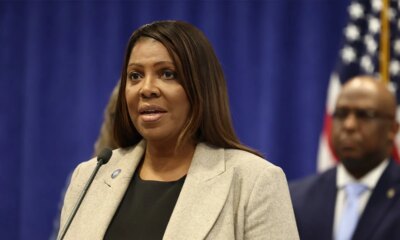
New York AG orders Manhattan hospital to resume gender-transition treatment for transgender youth

Detroit Pistons’ loss to Cavs shows weaknesses before playoffs

Florida High School Football Rankings: Top 25 teams – Oct. 21

Cleary's 21 help Le Moyne down Central Connecticut State 69-64 in OT

How old is Bo Nix? What to know about Oregon quarterback ahead of 2024 NFL Draft

99th annual Pony Swim held in Virginia

Indiana Members Credit Union announced as new anchor tenant at Bottleworks District

Video: Senators Question Kristi Noem on ICE Immigration Tactics

Combustible Republican Senate primary in Texas heading into overtime

Hungarian veto proves EU needs less unanimity, says new Dutch PM
Pregnant migrant girls are being sent to a Texas shelter flagged as medically risky

Fraud-plagued Minnesota sues Trump admin for withholding $243M in Medicaid payments
-

 World6 days ago
Exclusive: DeepSeek withholds latest AI model from US chipmakers including Nvidia, sources say
-

 Massachusetts7 days ago
Mother and daughter injured in Taunton house explosion
-

 Denver, CO7 days ago
10 acres charred, 5 injured in Thornton grass fire, evacuation orders lifted
-

 Louisiana1 week ago
Wildfire near Gum Swamp Road in Livingston Parish now under control; more than 200 acres burned
-

 Oregon5 days ago
2026 OSAA Oregon Wrestling State Championship Results And Brackets – FloWrestling
-

 Florida3 days ago
Florida man rescued after being stuck in shoulder-deep mud for days
-

 Maryland3 days ago
AM showers Sunday in Maryland
-

 Culture1 week ago
Try This Quiz on Thrilling Books That Became Popular Movies