Connect with us

News

N Ireland should cut corporate tax to boost growth, says business lobby

Published

on

N Ireland should cut corporate tax to boost growth, says business lobby

Unlock the Editor’s Digest for free

Northern Ireland should slash corporation tax in line with the Republic of Ireland to drive growth in the cash-strapped region, according a proposal from the region’s biggest business lobby group.

The gulf between the UK’s 25 per cent headline corporation tax rate and Ireland’s rate of 12.5 per cent for small firms and 15 per cent for large companies is making it impossible to compete for investment, said the Federation of Small Businesses.

The group has outlined its plan to the finance ministry at Stormont and UK officials ahead of detailed talks on the subject.

Advertisement

Ireland’s rate of corporation tax, well below the EU average, has driven a budget surplus and the FSB says reviving mothballed plans for Northern Ireland to cut its rate could create jobs and boost the region’s economic fortunes.

“We are massively disadvantaged,” said Roger Pollen, FSB head of external affairs. “Aligning with the Republic of Ireland isn’t going to impact the UK but it would dramatically affect our local economy.”

The vast majority of Northern Ireland’s funding comes from an annual “block grant” payment of £15bn at present. The Stormont executive raises less than £1 in every £20 of the region’s tax revenue — some £1.5bn in 2023-24.

Northern Ireland contributed £1.2bn to the UK Treasury from corporation tax in 2021-22, the latest year for which data is available, according to the Office for National Statistics.

The UK passed legislation in 2015 to allow Northern Ireland to set its corporation tax rate. But the act was never implemented because of frequent political crises and the stipulation that the region would first have to demonstrate its finances were sustainable.

Advertisement

Under an agreement dubbed “Safeguarding the Union” that helped restore Stormont in February after a two year hiatus, London promised to “swiftly progress” its corporation tax devolution commitments “supported by the necessary resource from within HM Treasury”.

Northern Ireland’s finance minister Caoimhe Archibald is discussing a new fiscal framework for the region with the UK government © Liam McBurney/PA

Under the FSB’s plan, sums raised would not be deducted from the block grant for several years under a kind of “overdraft facility” to give the scheme time to get established. The business body argues that a lower tax rate would attract more global manufacturing investment and thus boost receipts.

“We need to be imaginative about it,” Pollen said. “What do you do in a company if you don’t have the cash to buy a business? You borrow and pay it back from the increased value and revenues of the business.”

Despite the trade-boosting prospects offered by Northern Ireland’s unique post-Brexit access to both the EU’s single market for goods and Britain, the former linen and shipbuilding powerhouse is struggling financially.

Ministers have warned they cannot afford to continue to deliver even the current level of crumbling public services. Productivity is 11 per cent below the UK average and the region has the UK’s second highest number of people neither employed nor looking for work.

Advertisement

The UK government wants Northern Ireland to raise revenue by introducing water rates and increasing other charges that are lower than in Britain. But Pollen said the answer was “revenue raising not by increasing corporation tax but by growing the corporation tax pie”.

Higher investment would also mean more jobs and thus more payroll and other tax revenue that would continue to flow to the UK Treasury, according to the FSB.

A low tax policy has paid dividends for the Republic of Ireland with corporate tax receipts more than doubling since 2019, to a record €24bn last year. However, Dublin has warned that the bonanza is already waning.

Column chart of Forecasts for Irish general government fiscal balance, (€bn) showing Corporation tax revenues have pushed Ireland’s fiscal position into a healthy surplus

Slashing corporation tax in a region that already enjoys better post-Brexit access to the EU than the rest of the UK would be a “hard sell” in Britain, said Lorraine Nelson, tax partner at consultancy BDO Northern Ireland.

Caoimhe Archibald, Northern Ireland’s finance minister, said she was discussing a new fiscal framework for the region with the UK government.

“It is my intention that this would also include how increased fiscal powers could be devolved to the executive,” she told the Financial Times. “l welcome any proposals or evidence that could inform this work and my officials and I are happy to engage with business leaders on this.”

Advertisement

London, which has agreed £3.3bn in extra financing for Northern Ireland to ease current pressures, said it was working closely with Stormont on its Safeguarding the Union commitments.

“This includes further work on the devolution of the rate of corporation tax to Northern Ireland,” it said.

News

What the Supreme Court did on the final day of its term

Published

on

What the Supreme Court did on the final day of its term

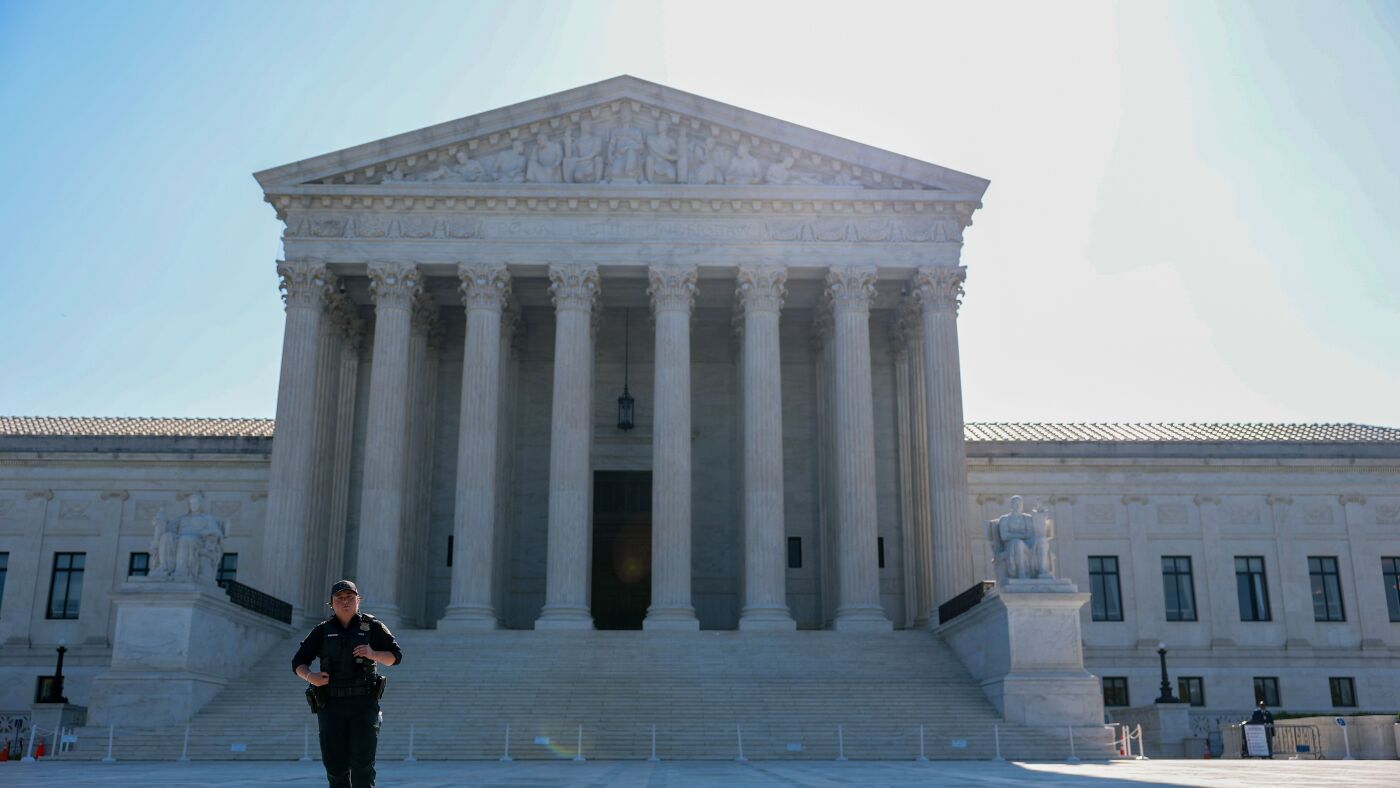
The U.S. Supreme Court

Tasos Katopodis/Getty Images


hide caption

toggle caption

Advertisement

Tasos Katopodis/Getty Images

The Supreme Court Tuesday upheld the long-established right of children born on U.S. soil to automatic American citizenship, regardless of their parents’ immigration status. In so doing, the court rejected President Trump’s most aggressive attempt to limit immigration in the United States.

Writing for the court majority, Chief Justice John Roberts traced birthright citizenship back to the founding of the nation. Just as the colonists demanded “the rights of Englishmen” more than 250 years ago, he said, Congress, after the Civil War, amended the Constitution to specify automatic citizenship for any child born on U.S. soil.

“Citizenship then and now was the right to have rights”—and the framers of the 14th amendment extended that promise to every free born person in this land. He concluded: “We keep that promise today.”

Advertisement

The vote was 6-to-3, depending on how you count it. Altogether, five justices signed on to the Roberts’ majority opinion. A sixth, Justice Brett Kavanaugh, agreed only that federal legislation enacted in the 1950s grants automatic citizenship for children born in the U.S.

Justice Clarence Thomas wrote the lead dissent, a 91-page opus that agreed with Trump’s assertion that the 14th amendment only applied to former slaves and their descendants. The Thomas dissent added ominously that he “was not sure that “today’s opinion will stand the test of time.” The dissent was joined by Justice Neil Gorsuch, with Justice Samuel Alito writing a separate dissent.

Justice Ketanji Brown Jackson, who, like Thomas is African American, responded to some of the themes in the Thomas dissent.

“Despite his longstanding endorsement of a colorblind society,” she wrote, “Justice Thomas now surprisingly suggests that the citizenship clause was a race-conscious remedial measure relating only to freed slaves.”

Cecillia Wang, legal director of the ACLU, who successfully argued the case at the Supreme Court, said President’s Trump failed attempt to limit birthright citizenship was transparent.

Advertisement
Continue Reading

News

Rep. Tom Kean returns to Congress, says depression is why he went missing for months

Published

on

Rep. Tom Kean returns to Congress, says depression is why he went missing for months

Rep. Thomas Kean Jr., R-N.J., arrives at the U.S. Capitol with his wife Rhonda Kean on June 30.

Anna Moneymaker/Getty Images


hide caption

toggle caption

Advertisement

Anna Moneymaker/Getty Images

New Jersey Republican Thomas Kean Jr. said it was struggles with depression that kept him away from Congress for nearly four months with no explanation to his constituents.

Kean last voted on March 5th, missing numerous votes and other appearances on Capitol Hill since. In April, House Speaker Mike Johnson told reporters he had spoken to Kean and that he was dealing with an undisclosed medical issue. Kean was not spotted until recently at his New Jersey home.

Speaking from the House floor on Tuesday, the second term lawmaker said he had checked into a hospital for testing several months ago after health concerns, and was subsequently diagnosed with depression.

Advertisement

“Talking about myself has never come naturally,” Kean said. “But I believe that I owe an explanation to the people of New Jersey’s seventh district, to my colleagues in this chamber and to the American people for my absence.”

Kean said he originally did not think his diagnosis would result in a long-term absence. Doctors recommended he remain in the hospital to address the illness, and it was his fastest route to recovery, he said.

“It is physical. It is emotional,” he said. “And until you experience it yourself, it is difficult to fully understand how powerful this illness could be.”

Kean said he miscalculated how long he would be away, estimating it would be a matter of weeks. However, he said like the roughly 48 million Americans who have battled the illness, he learned there is no timeline for recovery.

“I am grateful that I accepted help,” Kean said. “Today I stand before you healthier, stronger and excited to return to the work that I love.”

Advertisement

Kean’s absence proved a struggle for House Republicans, who contend with a razor thin majority to pass party priorities. For weeks, Kean and his office declined to share additional details on why he was away, feeding rumors and speculation and raising interest in a member known for his privacy.

Continue Reading

News

Michigan governor threatens to pull troops from D.C. if used for Trump task force

Published

on

Michigan governor threatens to pull troops from D.C. if used for Trump task force

Members of the National Guard stand in front of a large image of U.S. President Donald Trump that hangs from the the Robert F. Kennedy Department of Justice Building on May 18, 2026 in Washington, D.C.

Andrew Harnik/Getty Images North America


hide caption

toggle caption

Advertisement

Andrew Harnik/Getty Images North America

WASHINGTON, D.C. — In a strongly worded letter to the head of Michigan’s National Guard, Gov. Gretchen Whitmer reiterated troops from her state are only to be used for operations surrounding America 250 celebrations in Washington, D.C., and not for President Trump’s long-running — and controversial — joint task force to fight crime. She said that she would pull her troops from the city if that is not the case, in the letter obtained by NPR.

“Please take all necessary measures to ensure the Michigan National Guard is only supporting the narrow and limited America 250 Mission and is in no way supporting the D.C. Safe and Beautiful Mission,” wrote Gov. Whitmer, referencing the official name for the federal task force.

Trump deployed hundreds of troops to Washington, D.C., in August of 2025, in what experts said was a stunning departure from governing norms. He said he did so to address rampant crime, despite declining crime rates at the time. The number of troops in the city has increased over time to more than 4,800 from Washington, D.C. and almost two dozen states, which until recently were exclusively Republican-led.

Advertisement

Michigan — which has 161 guard members currently in the city — is one of four Democratic-led states that sent members of their National Guard to D.C. in recent weeks, ahead of an influx of tourists for America 250 celebrations. North Carolina and Kentucky each sent one member of their guard, while Minnesota sent more than a hundred last week.

Kentucky confirmed to NPR Monday that it had recalled its one guard member over the weekend, after that member was “diverted to the task force by the federal government without the knowledge or consent of Gov. Beshear of the Kentucky Guard,” Scottie Ellis, a spokesperson for Gov. Beshear, wrote to NPR in an email.

When contacted by NPR, spokespeople for each respective Democratic governor’s office made it clear that their guard members were sent to help specifically with America 250, not for law enforcement purposes as part of the larger ongoing federal joint task force operation. All four states have been clear about their opposition to the Trump administration’s ongoing deployment of National Guard troops to D.C., filing an amicus brief in support of litigation challenging it as recently as May.

Continue Reading
Advertisement

Trending