Connect with us

News

Elon Musk fires Tesla’s entire supercharger team

Published

on

Elon Musk fires Tesla’s entire supercharger team

Unlock the Editor’s Digest for free

Elon Musk has shut down the division that runs Tesla’s Supercharger business, dismissed two senior executives and fired hundreds more staff as the electric-car maker continues its restructuring amid a sharp downturn in the EV market.

Musk announced internally on Monday that the head of the superchargers group, Rebecca Tinucci, and Daniel Ho, head of new products, would be leaving along with their entire teams. About 500 people were in the supercharger group, the memo said.

Tesla’s supercharger system is among the largest charging networks in the world, and was one the reasons the company enjoyed such a commanding lead over rival carmakers for so long. While the supercharger operations will continue, the move raises questions over the future of the charging business.

Advertisement

The entire public policy unit will also be disbanded following the departure of its leader, Rohan Patel, in the middle of April.

“Hopefully these actions are making it clear that we need to be absolutely hard core about headcount and cost reduction,’ Musk wrote in the memo, which was first reported by The Information. “While some execstaff are taking this seriously, most are not yet doing so.”

Any manager “who retains more than three people who don’t obviously pass the excellent, necessary and trustworthy test” should resign, he added.

Tesla did not respond to a request for comment.

The latest dismissals at the company come after Musk announced last month that the carmaker would cut “more than 10 per cent” of its total workforce, more than 14,000 jobs, in order to be “lean, innovative and hungry”.

Advertisement

The urgency of the shift was underlined by Tesla reporting a decline of almost 10 per cent in revenues in the first quarter of this year, its first year-on-year quarterly drop since the start of 2020. The share price has more than halved from its November 2021 peak of just under $410 a share.

The decision took staff by surprise. Will Jameson, who worked in the Tesla supercharger team, wrote on X that Musk “has let our entire charging org go”. Another employee of that division, George Bahadue, posted on LinkedIn confirming he had been let go.

He added: “What this means for the charging network, [North American Charging Standard] NACS, and all the exciting work we were doing across the industry, I don’t yet know. What a wild ride it has been.”

When Jameson was asked by a reader on X why the entire division had been let go, he replied “your guess is as good as mine”.

Musk said in the memo that superchargers sites currently under construction would be finished and “some” new locations would be constructed.

Advertisement

The surprise move comes despite Tesla having built the dominant EV charging network with 50,000 sites globally and 15,000 in North America. Recently it has signed contracts with several key rivals including Ford, General Motors and Rivian to use its NACS charging standard.

Models from other carmakers will be able to use its branded charging stations, potentially bringing Tesla significant revenue stream, as well as establishing it as the de facto industry standard.

Tinucci, Ho and Patel are not the only long-standing Musk lieutenants to leave this year. Drew Baglino, senior vice-president leading Tesla’s engineering and technology development for batteries, motors and energy products, resigned in April and Martin Viecha, its head of investor relations, said he would step down on the company’s first-quarter earnings call last week.

Advertisement

News

What the Supreme Court did on the final day of its term

Published

on

What the Supreme Court did on the final day of its term

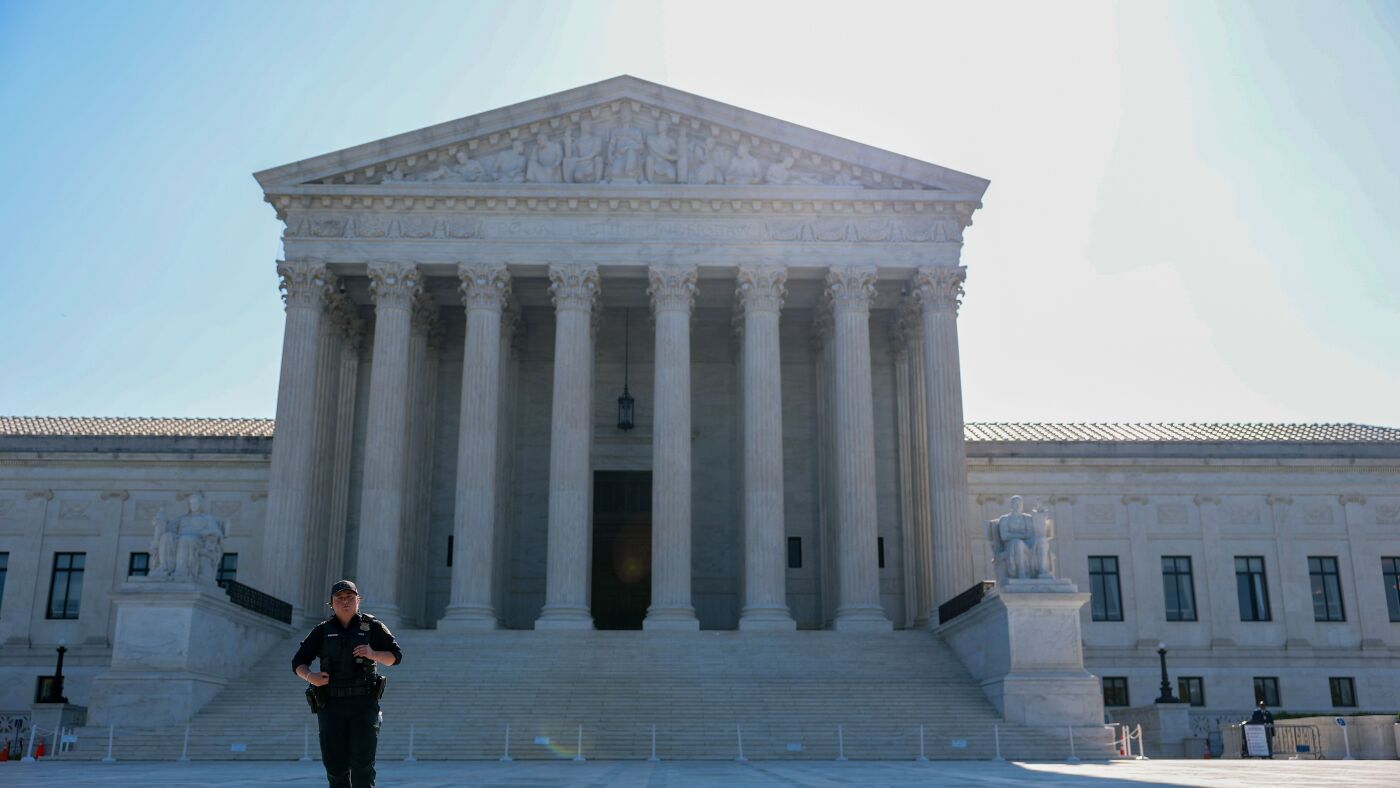
The U.S. Supreme Court

Tasos Katopodis/Getty Images


hide caption

toggle caption

Advertisement

Tasos Katopodis/Getty Images

The Supreme Court Tuesday upheld the long-established right of children born on U.S. soil to automatic American citizenship, regardless of their parents’ immigration status. In so doing, the court rejected President Trump’s most aggressive attempt to limit immigration in the United States.

Writing for the court majority, Chief Justice John Roberts traced birthright citizenship back to the founding of the nation. Just as the colonists demanded “the rights of Englishmen” more than 250 years ago, he said, Congress, after the Civil War, amended the Constitution to specify automatic citizenship for any child born on U.S. soil.

“Citizenship then and now was the right to have rights”—and the framers of the 14th amendment extended that promise to every free born person in this land. He concluded: “We keep that promise today.”

Advertisement

The vote was 6-to-3, depending on how you count it. Altogether, five justices signed on to the Roberts’ majority opinion. A sixth, Justice Brett Kavanaugh, agreed only that federal legislation enacted in the 1950s grants automatic citizenship for children born in the U.S.

Justice Clarence Thomas wrote the lead dissent, a 91-page opus that agreed with Trump’s assertion that the 14th amendment only applied to former slaves and their descendants. The Thomas dissent added ominously that he “was not sure that “today’s opinion will stand the test of time.” The dissent was joined by Justice Neil Gorsuch, with Justice Samuel Alito writing a separate dissent.

Justice Ketanji Brown Jackson, who, like Thomas is African American, responded to some of the themes in the Thomas dissent.

“Despite his longstanding endorsement of a colorblind society,” she wrote, “Justice Thomas now surprisingly suggests that the citizenship clause was a race-conscious remedial measure relating only to freed slaves.”

Cecillia Wang, legal director of the ACLU, who successfully argued the case at the Supreme Court, said President’s Trump failed attempt to limit birthright citizenship was transparent.

Advertisement
Continue Reading

News

Rep. Tom Kean returns to Congress, says depression is why he went missing for months

Published

on

Rep. Tom Kean returns to Congress, says depression is why he went missing for months

Rep. Thomas Kean Jr., R-N.J., arrives at the U.S. Capitol with his wife Rhonda Kean on June 30.

Anna Moneymaker/Getty Images


hide caption

toggle caption

Advertisement

Anna Moneymaker/Getty Images

New Jersey Republican Thomas Kean Jr. said it was struggles with depression that kept him away from Congress for nearly four months with no explanation to his constituents.

Kean last voted on March 5th, missing numerous votes and other appearances on Capitol Hill since. In April, House Speaker Mike Johnson told reporters he had spoken to Kean and that he was dealing with an undisclosed medical issue. Kean was not spotted until recently at his New Jersey home.

Speaking from the House floor on Tuesday, the second term lawmaker said he had checked into a hospital for testing several months ago after health concerns, and was subsequently diagnosed with depression.

Advertisement

“Talking about myself has never come naturally,” Kean said. “But I believe that I owe an explanation to the people of New Jersey’s seventh district, to my colleagues in this chamber and to the American people for my absence.”

Kean said he originally did not think his diagnosis would result in a long-term absence. Doctors recommended he remain in the hospital to address the illness, and it was his fastest route to recovery, he said.

“It is physical. It is emotional,” he said. “And until you experience it yourself, it is difficult to fully understand how powerful this illness could be.”

Kean said he miscalculated how long he would be away, estimating it would be a matter of weeks. However, he said like the roughly 48 million Americans who have battled the illness, he learned there is no timeline for recovery.

“I am grateful that I accepted help,” Kean said. “Today I stand before you healthier, stronger and excited to return to the work that I love.”

Advertisement

Kean’s absence proved a struggle for House Republicans, who contend with a razor thin majority to pass party priorities. For weeks, Kean and his office declined to share additional details on why he was away, feeding rumors and speculation and raising interest in a member known for his privacy.

Continue Reading

News

Michigan governor threatens to pull troops from D.C. if used for Trump task force

Published

on

Michigan governor threatens to pull troops from D.C. if used for Trump task force

Members of the National Guard stand in front of a large image of U.S. President Donald Trump that hangs from the the Robert F. Kennedy Department of Justice Building on May 18, 2026 in Washington, D.C.

Andrew Harnik/Getty Images North America


hide caption

toggle caption

Advertisement

Andrew Harnik/Getty Images North America

WASHINGTON, D.C. — In a strongly worded letter to the head of Michigan’s National Guard, Gov. Gretchen Whitmer reiterated troops from her state are only to be used for operations surrounding America 250 celebrations in Washington, D.C., and not for President Trump’s long-running — and controversial — joint task force to fight crime. She said that she would pull her troops from the city if that is not the case, in the letter obtained by NPR.

“Please take all necessary measures to ensure the Michigan National Guard is only supporting the narrow and limited America 250 Mission and is in no way supporting the D.C. Safe and Beautiful Mission,” wrote Gov. Whitmer, referencing the official name for the federal task force.

Trump deployed hundreds of troops to Washington, D.C., in August of 2025, in what experts said was a stunning departure from governing norms. He said he did so to address rampant crime, despite declining crime rates at the time. The number of troops in the city has increased over time to more than 4,800 from Washington, D.C. and almost two dozen states, which until recently were exclusively Republican-led.

Advertisement

Michigan — which has 161 guard members currently in the city — is one of four Democratic-led states that sent members of their National Guard to D.C. in recent weeks, ahead of an influx of tourists for America 250 celebrations. North Carolina and Kentucky each sent one member of their guard, while Minnesota sent more than a hundred last week.

Kentucky confirmed to NPR Monday that it had recalled its one guard member over the weekend, after that member was “diverted to the task force by the federal government without the knowledge or consent of Gov. Beshear of the Kentucky Guard,” Scottie Ellis, a spokesperson for Gov. Beshear, wrote to NPR in an email.

When contacted by NPR, spokespeople for each respective Democratic governor’s office made it clear that their guard members were sent to help specifically with America 250, not for law enforcement purposes as part of the larger ongoing federal joint task force operation. All four states have been clear about their opposition to the Trump administration’s ongoing deployment of National Guard troops to D.C., filing an amicus brief in support of litigation challenging it as recently as May.

Continue Reading
Advertisement

Trending