Connect with us

News

Dealmaker Steven Klinsky quietly hits home runs away from ’80s limelight

Published

on

Dealmaker Steven Klinsky quietly hits home runs away from ’80s limelight

Dealmaker Steven Klinsky had a front-row seat to the most operatic takeover drama Wall Street has ever seen, the knives-out multibillion-dollar battle for control of RJR Nabisco.

From that 1980s contest he learned a formative lesson: stay far away from the highly leveraged takeovers orchestrated by swashbuckling debt junkies. The results have been a quiet success.

His New Mountain Capital has focused on building up mid-sized companies in predictable industries using modest amounts of debt. Returns have been robust and investors are rewarding the results, with the New York-based group raising $15.4bn for its seventh buyout fund, exceeding a $12bn target set last year — and bucking a recent trend of poor industry-wide fundraising.

New Mountain joins private equity groups such as CVC Capital Partners, Clayton, Dubilier & Rice, Warburg Pincus and EQT that have exceeded their fund targets at a time when many rivals have fallen short of their goals.

It is part of a rare successful streak of the past few years among buyout groups that steered away from pursuing peak-valuation deals during the frenzied markets of 2021 and instead consistently returned cash to investors.

Advertisement

“I preach against the old private equity model of 40 years ago where people think you borrow as much as you can, go play golf, and see if it all worked out in five years,” Klinsky said in an interview with the Financial Times.

The group is known for its ability to build small businesses in sectors including healthcare services, software and manufacturing into industry leaders by pushing their products into new markets, or by identifying acquisitions.

“New Mountain’s judicious use of leverage and its focus on building businesses in faster-growing parts of the economy have insulated the firm from the brunt of the Federal Reserve’s interest rate hikes,” said Maxwell Snyder, vice-president of alternatives at NewEdge Wealth, an investor in its funds.

Fundraising for the private equity industry slowed dramatically in 2022 when interest rates rose quickly and public stock valuations fell, causing large investors to become overexposed to private assets and pull back from investing in new funds.

The industry’s challenges have been exacerbated by a slowdown in dealmaking and initial public offering activity that has made it hard for PE groups to exit their investments even as public markets reach new highs. In 2023, buyout firms distributed the lowest amount of cash versus what they called from investors since the 2008 financial crisis, according to Bain & Co.

Advertisement

New Mountain, however, has returned more capital than it has invested in recent years. Since January 2021, the firm has sold more than 20 companies, returning well over $10bn in cash to its investors because of successful deals such as Signify Health, a healthcare IT company.

Its 2017-era buyout fund returned 1.16 times what investors had committed by the end of 2023, making it the rare fund from that year to have returned a surplus of cash to investors, according to documents published by public pension funds. When including the fund’s remaining unsold investments, it has generated a 2.4 times gain.

New Mountain’s assets under management have more than doubled to $55bn since 2018, when Klinsky sold a minority stake in the group to Blackstone that cemented his billionaire status. The investment allowed him and his partners to invest $1.4bn into their new fund. It has also given them the financial heft to remain private and resist seeking a tie-up with a larger asset manager, Klinsky added.

As a partner in his early 30s at Forstmann Little, an early pioneer of the $4tn private equity industry, Klinsky became a top lieutenant to Ted Forstmann as the prolific financier studied a bid for RJR Nabisco. It was the seminal deal of the go-go 1980s, later chronicled in the book Barbarians at the Gate.

Klinsky had a memorable bit part in the saga.

Advertisement

Ross Johnson, the chief executive of RJR, had approached Forstmann about teaming up as a “white knight” to counter a takeover effort led by KKR. After hearing Johnson’s pitch, Forstmann consulted Klinsky, a trusted number cruncher, to see whether it was workable. “I think he’s totally insane,” Klinsky is quoted as saying in the book.

Forstmann never bid on RJR, which was sold to KKR for $29bn, but quickly became an emblem of the private equity industry’s hubris as it struggled under the crippling weight of its takeover debt.

When he left Forstmann Little in 1999 to create his own private equity outfit, Klinsky decided on a different approach.

Many of the companies New Mountain buys are family-owned businesses that have never made an acquisition or built operations outside of the US. In many deals, New Mountain forges novel corporate strategies.

The style has helped the firm earn large windfalls at a time when many rivals are contending with an industry reckoning.

Advertisement

In 2017 New Mountain made a push into so-called “value-added care”, with companies focused on preventive health measures to lower costs. It acquired and merged two small companies in the sector for less than $500mn and renamed the group Signify Health. Last year, New Mountain sold the company to CVS for $8bn.

It also had success in technology investments. Klinsky’s firm acquired a small logistics software company called RedPrairie in 2010 for $550mn. Under new management, the company plotted acquisitions and built artificial intelligence tools that propelled it into a leader in identifying supply chain bottlenecks. In 2021, it sold the rebranded company, Blue Yonder, to Panasonic for $8bn, generating more than $5bn for its investors and employees at the company.

Another big windfall has been Avantor, a pharmaceutical chemicals company that New Mountain acquired from Mallinckrodt for less than $300mn in 2010. Klinsky’s firm pushed Avantor into specialised chemicals that earn higher margins. In 2019, it listed Avantor, which now trades at a $15bn valuation. New Mountain has earned gains exceeding $3bn, according to the FT’s calculations.

Klinsky said he prefers investing in these midsized companies partially because they offer many more growth opportunities for his 200-plus dealmakers and consultants to pursue.

“[A] $500mn company could be a leader in an important niche industry, but there are so many things that the management hasn’t done yet . . . If you are a $10bn company, you probably have done almost everything smart there is to do,” he said. Such businesses are easier to sell to corporate buyers and other buyout firms, he added.

Advertisement

Though private equity is under pressure from the slowdown in dealmaking, Klinsky does not see a coming industry washout. He said the sector has become more professional with less-cavalier capital structures.

“I don’t see a hard landing or crisis in private equity,” he said. “The companies are much less leveraged than they were in the old days. In 1981, a buyout had 19 parts debt and just one part equity. So people threw away the keys on bad deals.”

News

Former Olympian pleads not guilty in reflecting pool vandalism charges

Published

on

Former Olympian pleads not guilty in reflecting pool vandalism charges

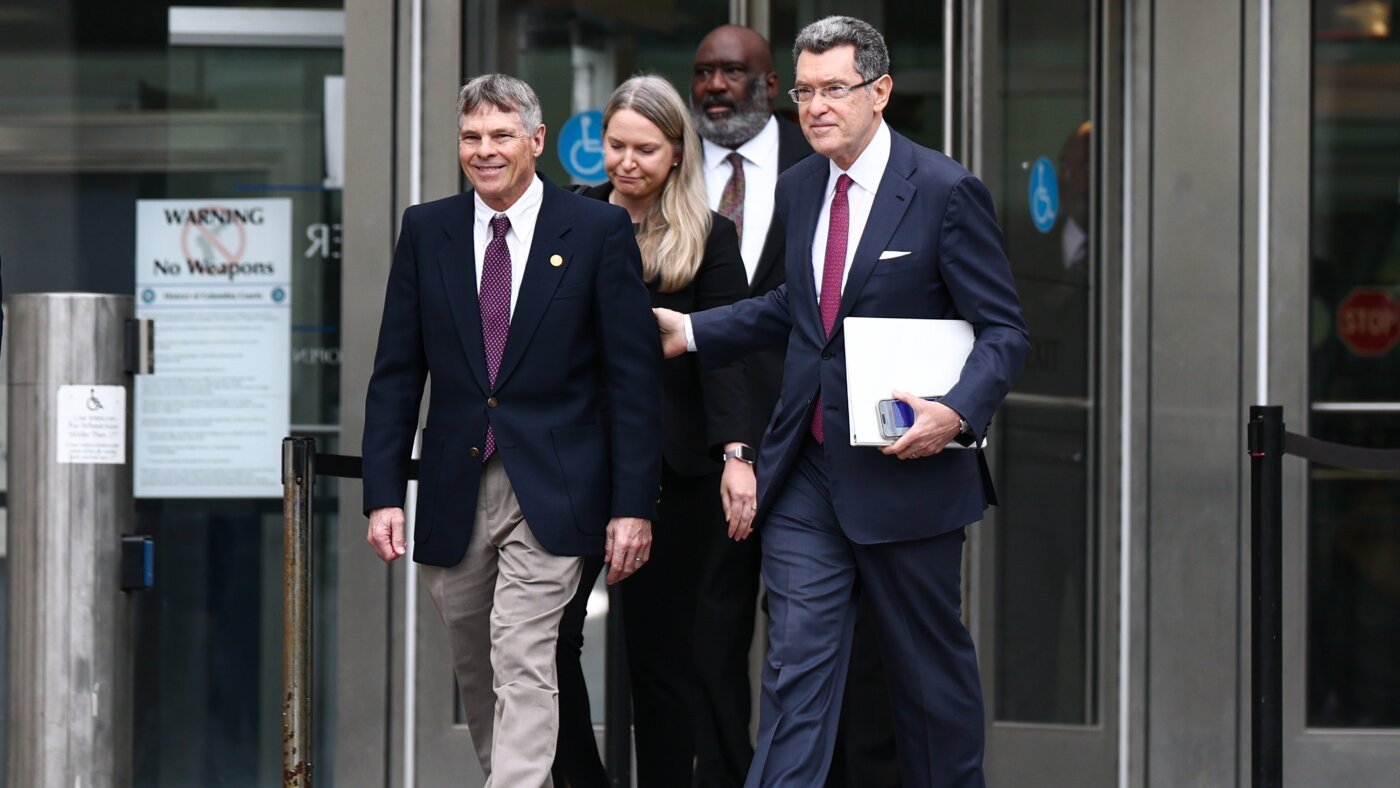
Former U.S. Olympian David Hearn (left) walks with his attorney Norman Eisen to speak to reporters and protesters gathered after his arraignment at the Superior Court of the District of Columbia in Washington, D.C. on Thursday.

Finn Gomez/Getty Images


hide caption


toggle caption

Advertisement

Finn Gomez/Getty Images

Former U.S. Olympic canoeist David Hearn pleaded not guilty to damaging the Lincoln Memorial Reflecting Pool in D.C. Superior Court Thursday morning.

Federal prosecutors charged Hearn with a single count of destruction of property causing more than $1,000 in damage to the pool.

Hearn has previously claimed, which his attorneys repeated during a short press conference outside the court, that he simply touched the water in the pool out of curiosity.

Advertisement

The Trump administration had just completed a $14 million renovation of the pool.

But shortly after the work finished, peeling paint and algae gathered in the water. The remodel has been largely criticized as a massive failure and waste of taxpayer dollars.

Superior Court Judge Carmen McLean released Hearn on his own recognizance. His next hearing is scheduled for Aug. 5.

Norm Eisen, one of Hearn’s attorneys, spoke to reporters outside of court following the hearing. He said the administration is using Hearn as a “scapegoat … for their own failures.”

“It is not a crime to touch the reflecting pool, to touch water in the United States of America,” he said.

Advertisement

Prosecutors say there is a host of evidence against Hearn.

This is a developing story.

Continue Reading

News

Three more people charged with damaging Reflecting Pool after Trump’s multimillion-dollar restoration | CNN Politics

Published

on

Three more people charged with damaging Reflecting Pool after Trump’s multimillion-dollar restoration | CNN Politics

Three more people have been criminally charged with destruction of property at the Lincoln Memorial Reflecting Pool.

Officers say they detained Cameron Thiers, Sophie Dennison-Gibby and Justin Carreno one Saturday afternoon in June and described in court documents witnessing them peeling and removing pieces of blue paint from the Reflecting Pool.

One officer “witnessed Carreno reach down into the reflecting pool and pull up a piece of the blue paint,” according to the court documents.

The officer who detained Dennison-Gibby “found 1 additional piece of the reflecting pool liner” in her purse, the documents said.

All three incidents were recorded on the officers’ body worn cameras, they said in the court documents.

Advertisement

Several “partnering law enforcement agencies assigned to the Reflecting Pool” working with US Park Police were involved in detaining the two men and one woman — including officers from Texas, Oklahoma, Montana and California.

One of the officers said in court documents that Thiers “admitted to removing a piece of blue sealant from the Reflecting Pool and still had it in his hand when I made contact with him.”

The three defendants were arraigned in court Wednesday and pleaded not guilty to the misdemeanor charges of destruction of property with a value less than $1,000. The judge ordered them to stay away from the Reflecting Pool.

Lawyers for Thiers and Dennison-Gibby declined to comment. CNN has reached out to Carreno’s attorney.

If found guilty of destruction of property, the defendants could be fined up to $1,000 and face a maximum of 180 days behind bars.

Advertisement

The New York Times first reported that three additional people had been charged with damaging the Reflecting Pool.

President Donald Trump has repeatedly claimed that vandals caused major damage to the pool by gashing the lining after his administration spent more than $14 million on renovations, though he has not provided evidence to support that claim. The officers who charged Carreno, Thiers and Dennison-Gibby did not accuse them of gashing the lining.

Former Olympic canoeist David Hearn was indicted by a grand jury in Washington, DC, last week for allegedly damaging the Reflecting Pool. Hearn — unlike Carreno, Thiers and Dennison-Gibby – was charged with destruction of property with a value of more than $1,000 which carries a maximum penalty of 10 years in prison, if convicted. He is set to be arraigned in court Thursday.

Crews began draining the Reflecting Pool over the weekend to make repairs, according to Interior Secretary Doug Burgum, for the second time in three months.

The move comes after weeks of problems – algae blooms, green-hued water, a chipping bottom and the administration’s allegations of vandalism – that have plagued the iconic landmark, making its woes the subject of national interest.

Advertisement
Continue Reading

News

Supreme Court financial disclosures reveal how their books add to their income

Published

on

Supreme Court financial disclosures reveal how their books add to their income

Supreme Court Justice Amy Coney Barrett speaks at the Reagan Library on Sept. 9, 2025, in Simi Valley, Calif. Barrett discussed and signed copies of her new book, Listening to the Law: Reflections on the Court and Constitution.

Mario Tama/Getty Images


hide caption


toggle caption

Advertisement

Mario Tama/Getty Images

Even as the Supreme Court was handing down one legal thunderbolt after another last week, the justices were quietly releasing their annual financial reports. Justice Samuel Alito was the only sitting justice to request an extension, which he has done for 15 years. The disclosures do not give a complete account of the justices’ total income and wealth, but they give insights into their concertgoing, guest professorships and even their involvement in youth sports.

In addition to their salaries, much of the justices’ reported income came from their book deals. Justice Ketanji Brown Jackson led the pack earning more than $1.1 million last year for a total of roughly $4 million since her memoir, Lovely One, was published in 2024.

Justices Sonia Sotomayor, Neil Gorsuch, Amy Coney Barrett and retired Justice Anthony Kennedy also reported income from published books. Earnings from their books ranged from $849,000 for Barrett, to $300,000 for Gorsuch and $88,000 for Sotomayor, whose books include her 2013 autobiography and five children’s books. Justice Clarence Thomas, who previously earned $1.5 million for his 2007 memoir, listed no publisher payments last year, and Justice Brett Kavanaugh, one of 13 co-authors of a 2016 legal treatise, also received no payments last year. Kavanaugh is said to be working on a memoir but he listed no payments for the anticipated book. Alito does have a book coming out in the fall, but with his financial report still outstanding, there is no data on how much he was paid for the work in 2025.

Advertisement

The only two sitting justices who have not written books are Chief Justice John Roberts and Justice Elena Kagan.

Many justices also earned income from teaching at law schools. Roberts reported income from New England Law, located in Boston, and Gorsuch reported teaching income from George Mason University in Virginia. Thomas taught classes at Catholic University in Washington, D.C., and Barrett and Kavanaugh taught at Notre Dame Law School. Barrett graduated from the school and began teaching there 23 years ago; Kavanaugh has family connections to Notre Dame.

Continue Reading
Advertisement

Trending