Connect with us

News

Businesses bemoan Indian ‘tax terrorism’ and red tape

Published

on

Businesses bemoan Indian ‘tax terrorism’ and red tape

On the face of it, expanding operations in one of the world’s fastest-growing countries should be a no-brainer, but for bearings maker Timken India, there may be easier places to do business.

Sanjay Koul, managing director, told investors last year that the Ohio-based parent company could instead look at other countries “where there is less of tax terrorism” and “where they can have ease of doing business”.

Since then, the company has been hit with an unexpected Rs250mn ($2.9mn) tax demand, which it is contesting.

For Timken, there are still good reasons to be in India, and Koul said “India is a great place to source”. But when asked about further investments in the country, he said: “Obviously, we want to carefully invest so that we get the best bang for the buck.”

The experience of a company that has been in India for about three decades, employs more than 1,200 staff and has operations in several Indian states speaks to authorities’ challenge as economic growth slows.

Advertisement

Investors have long urged India to reduce red tape, relax labour laws and simplify taxation and compliance, arguing that reform, particularly of taxation, could stimulate investment and create jobs.

India Business Briefing

The Indian professional’s must-read on business and policy in the world’s fastest-growing economy. Sign up for the newsletter here

At a time when Prime Minister Narendra Modi has wooed global investors such as Apple and wants to establish India as a global manufacturing hub to rival China, it has become a matter of pressing importance.

Modi’s chief economic adviser V Anantha Nageswaran has urged central and state governments to “get out of the way” and to start “rolling back regulation significantly” or face a “high risk of economic growth stagnation”.

With growth forecast at 6.5 per cent for the current fiscal year, down from 9.2 per cent in 2023-24, finance minister Nirmala Sitharaman in February used this year’s budget to announce a review of business rules, certifications, licences and compliances as well as the creation of an investment friendliness index of states.

Advertisement

Just before his appointment as governor of India’s central bank, former revenue secretary Sanjay Malhotra in December warned government tax officers that they should “not kill the golden goose” with their demands.

Already, many blame falling investment on red tape and erratic enforcement of taxation. Net foreign investment flows fell to about $1.2bn during April to December, from $7.8bn during the same period in the previous year, according to the central bank’s February economic bulletin.

Some content could not load. Check your internet connection or browser settings.

Under Modi, India has eased company registrations, consolidated labour codes and digitised tax processes, all with the aim of making life easier for business.

Still “nobody is going to consider India an easy country to do business in, there is still a lot of capriciousness in the implementation of rules and regulation”, said Nirmalya Kumar, professor at Singapore Management University. It remained difficult to set up and exit a business and fire people, the former Tata Sons executive said.

Advertisement

Several regulations dated back to the early days of independence from Britain, said Ajay Shriram, chair of the Ease of Doing Business task force at the Confederation of Indian Industry. Although seldom enforced, he said that the Factories Act of 1948 can result in jail terms for business owners for minor violations — including not whitewashing toilets.

A landmark national goods and services tax reform in 2017 did simplify taxation, but many companies fall foul of India’s tax system and are sucked into marathon legal disputes. Taxes are levied at three levels — central, state and local — and can be interpreted in a vague and contradictory fashion.

In February, in the High Court of Mumbai, a lawyer for Volkswagen’s Indian arm argued that a $1.4bn tax demand made on the company last year over an alleged misclassification in the importation of car parts was a “matter of life and death” for a carmaker that employs 4,500 people.

In August, Indian technology services giant Infosys was hit with a $4bn retrospective tax notice. South Korean carmaker Kia is also fighting tax demands.

Heineken beer bottles are arranged upright in a cooler
Alcoholic beverage companies, including Heineken’s India business, have been targeted in raids and embroiled in tax and licence disputes © Priyanshu Singh/Reuters

In February, Sitharaman put forward a bill in parliament, proposing cutting half of the 500,000 words in the 1961 income tax manual in an aim to reduce disputes. Disputed tax demands totalled Rs13.4tn as of March 2024, according to the finance ministry.

Alcoholic beverage companies, including Diageo, Pernod Ricard and Heineken’s Indian businesses have been targeted in raids and embroiled in tax and licence disputes amid an ever-shifting patchwork of regulation, in a country where booze is seen as taboo by many and a cash cow by states that retain control over liquor taxation.

Advertisement

While recent government announcements meant to remove bottlenecks “will help”, Kumar said, taxation “is quite complicated for people to figure out, the legal system still takes a long time for disputes to get resolved”.

An unwieldy bureaucracy, characterised by overlapping offices and opaque approvals, makes change difficult.

“A lot of it is like Yes Minister,” said a senior executive at a major Mumbai-based business conglomerate, referring to the classic British satirical show where civil servants thwart attempts at reform while senior officials “end up getting frustrated because the hydra has grown too much”.  

Some content could not load. Check your internet connection or browser settings.

In this context, many businesses see China’s centralised system as more attractive.

“If you set up a factory in China you get everything right up there, signed, sealed and delivered up front with a lot of land, with all the connections given, road access given and the only job is to set up the factory,” said a top executive at a major Indian company.

Advertisement

In India, “they just let it meander, rather than somebody taking charge”.

Continue Reading
Click to comment

Leave a Reply

Your email address will not be published. Required fields are marked *

This site uses Akismet to reduce spam. Learn how your comment data is processed.

News

Former Olympian pleads not guilty in reflecting pool vandalism charges

Published

on

Former Olympian pleads not guilty in reflecting pool vandalism charges

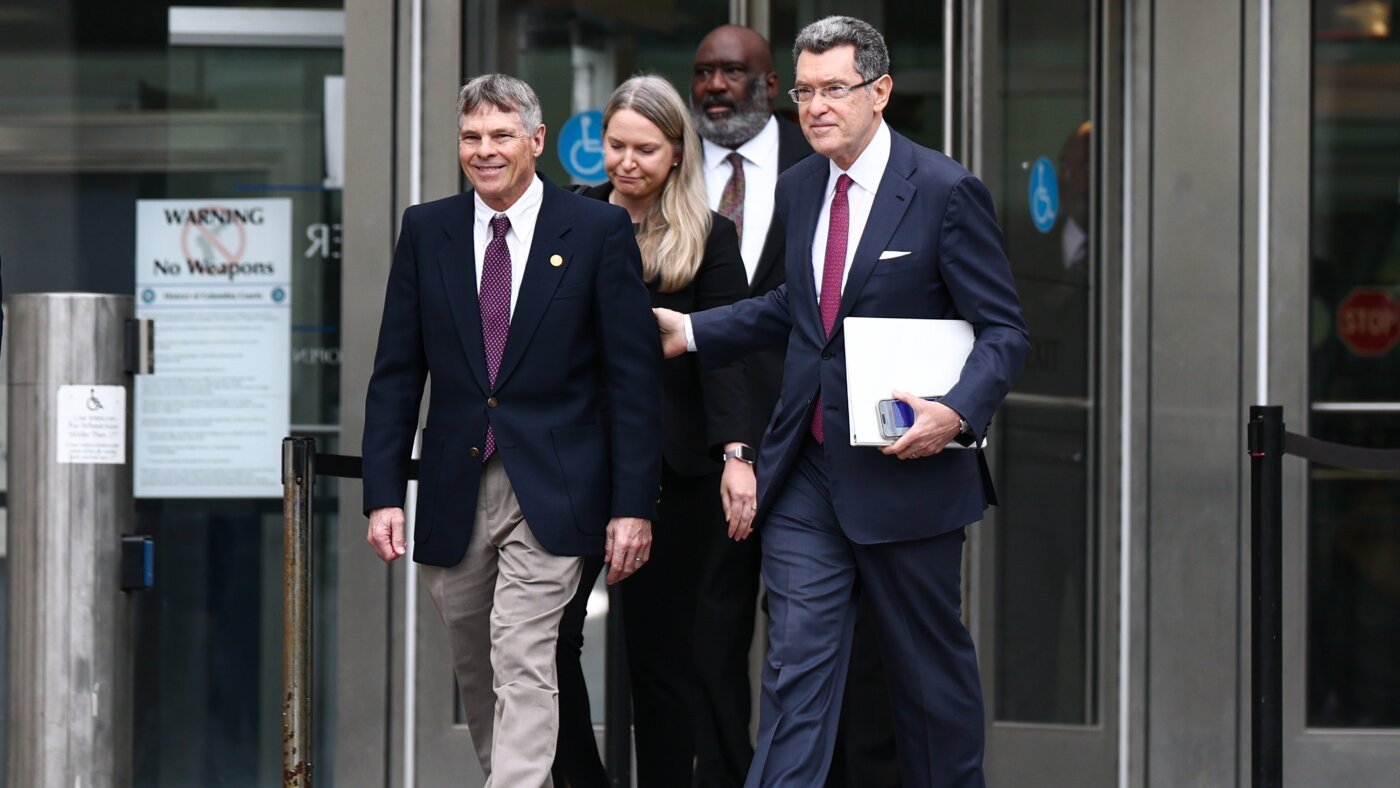
Former U.S. Olympian David Hearn (left) walks with his attorney Norman Eisen to speak to reporters and protesters gathered after his arraignment at the Superior Court of the District of Columbia in Washington, D.C. on Thursday.

Finn Gomez/Getty Images


hide caption


toggle caption

Advertisement

Finn Gomez/Getty Images

Former U.S. Olympic canoeist David Hearn pleaded not guilty to damaging the Lincoln Memorial Reflecting Pool in D.C. Superior Court Thursday morning.

Federal prosecutors charged Hearn with a single count of destruction of property causing more than $1,000 in damage to the pool.

Hearn has previously claimed, which his attorneys repeated during a short press conference outside the court, that he simply touched the water in the pool out of curiosity.

Advertisement

The Trump administration had just completed a $14 million renovation of the pool.

But shortly after the work finished, peeling paint and algae gathered in the water. The remodel has been largely criticized as a massive failure and waste of taxpayer dollars.

Superior Court Judge Carmen McLean released Hearn on his own recognizance. His next hearing is scheduled for Aug. 5.

Norm Eisen, one of Hearn’s attorneys, spoke to reporters outside of court following the hearing. He said the administration is using Hearn as a “scapegoat … for their own failures.”

“It is not a crime to touch the reflecting pool, to touch water in the United States of America,” he said.

Advertisement

Prosecutors say there is a host of evidence against Hearn.

This is a developing story.

Continue Reading

News

Three more people charged with damaging Reflecting Pool after Trump’s multimillion-dollar restoration | CNN Politics

Published

on

Three more people charged with damaging Reflecting Pool after Trump’s multimillion-dollar restoration | CNN Politics

Three more people have been criminally charged with destruction of property at the Lincoln Memorial Reflecting Pool.

Officers say they detained Cameron Thiers, Sophie Dennison-Gibby and Justin Carreno one Saturday afternoon in June and described in court documents witnessing them peeling and removing pieces of blue paint from the Reflecting Pool.

One officer “witnessed Carreno reach down into the reflecting pool and pull up a piece of the blue paint,” according to the court documents.

The officer who detained Dennison-Gibby “found 1 additional piece of the reflecting pool liner” in her purse, the documents said.

All three incidents were recorded on the officers’ body worn cameras, they said in the court documents.

Advertisement

Several “partnering law enforcement agencies assigned to the Reflecting Pool” working with US Park Police were involved in detaining the two men and one woman — including officers from Texas, Oklahoma, Montana and California.

One of the officers said in court documents that Thiers “admitted to removing a piece of blue sealant from the Reflecting Pool and still had it in his hand when I made contact with him.”

The three defendants were arraigned in court Wednesday and pleaded not guilty to the misdemeanor charges of destruction of property with a value less than $1,000. The judge ordered them to stay away from the Reflecting Pool.

Lawyers for Thiers and Dennison-Gibby declined to comment. CNN has reached out to Carreno’s attorney.

If found guilty of destruction of property, the defendants could be fined up to $1,000 and face a maximum of 180 days behind bars.

Advertisement

The New York Times first reported that three additional people had been charged with damaging the Reflecting Pool.

President Donald Trump has repeatedly claimed that vandals caused major damage to the pool by gashing the lining after his administration spent more than $14 million on renovations, though he has not provided evidence to support that claim. The officers who charged Carreno, Thiers and Dennison-Gibby did not accuse them of gashing the lining.

Former Olympic canoeist David Hearn was indicted by a grand jury in Washington, DC, last week for allegedly damaging the Reflecting Pool. Hearn — unlike Carreno, Thiers and Dennison-Gibby – was charged with destruction of property with a value of more than $1,000 which carries a maximum penalty of 10 years in prison, if convicted. He is set to be arraigned in court Thursday.

Crews began draining the Reflecting Pool over the weekend to make repairs, according to Interior Secretary Doug Burgum, for the second time in three months.

The move comes after weeks of problems – algae blooms, green-hued water, a chipping bottom and the administration’s allegations of vandalism – that have plagued the iconic landmark, making its woes the subject of national interest.

Advertisement
Continue Reading

News

Supreme Court financial disclosures reveal how their books add to their income

Published

on

Supreme Court financial disclosures reveal how their books add to their income

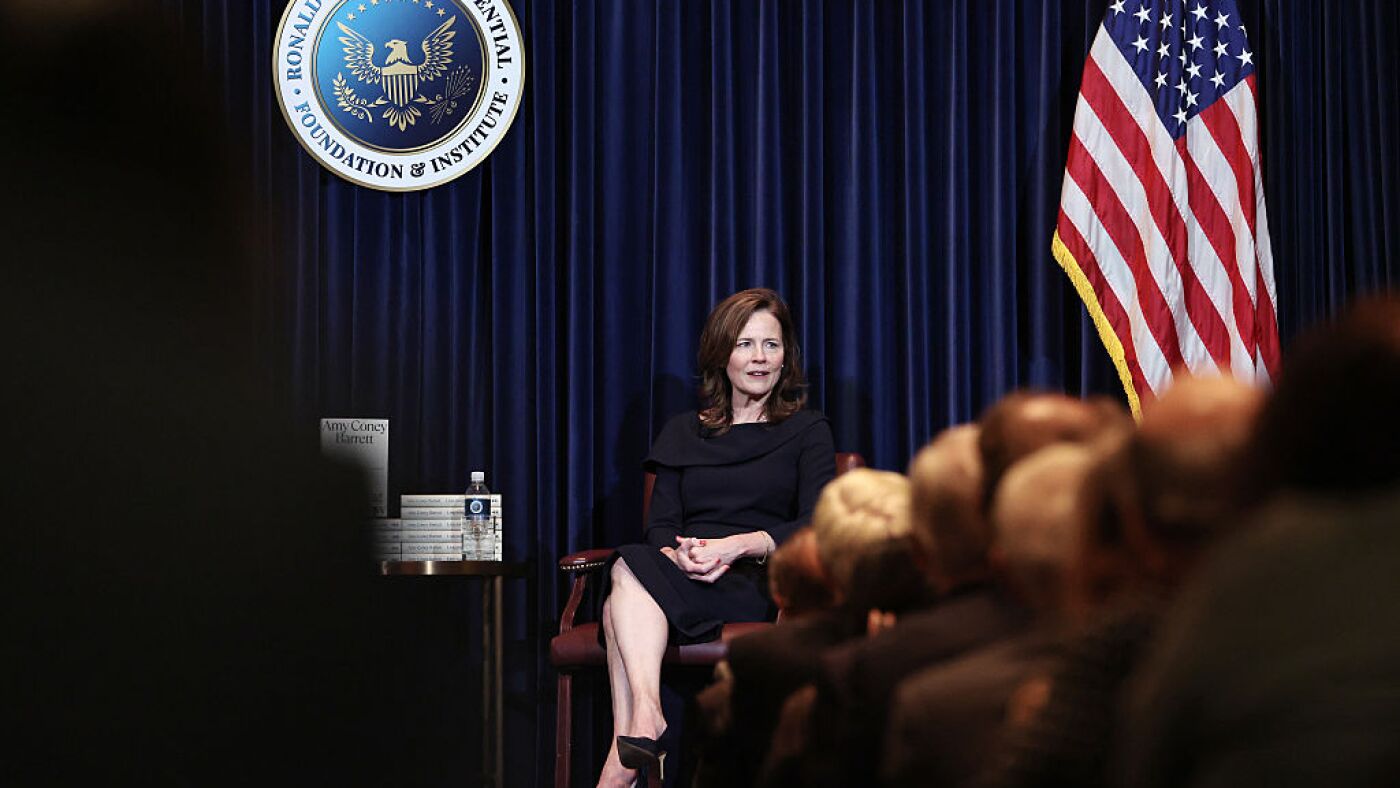
Supreme Court Justice Amy Coney Barrett speaks at the Reagan Library on Sept. 9, 2025, in Simi Valley, Calif. Barrett discussed and signed copies of her new book, Listening to the Law: Reflections on the Court and Constitution.

Mario Tama/Getty Images


hide caption


toggle caption

Advertisement

Mario Tama/Getty Images

Even as the Supreme Court was handing down one legal thunderbolt after another last week, the justices were quietly releasing their annual financial reports. Justice Samuel Alito was the only sitting justice to request an extension, which he has done for 15 years. The disclosures do not give a complete account of the justices’ total income and wealth, but they give insights into their concertgoing, guest professorships and even their involvement in youth sports.

In addition to their salaries, much of the justices’ reported income came from their book deals. Justice Ketanji Brown Jackson led the pack earning more than $1.1 million last year for a total of roughly $4 million since her memoir, Lovely One, was published in 2024.

Justices Sonia Sotomayor, Neil Gorsuch, Amy Coney Barrett and retired Justice Anthony Kennedy also reported income from published books. Earnings from their books ranged from $849,000 for Barrett, to $300,000 for Gorsuch and $88,000 for Sotomayor, whose books include her 2013 autobiography and five children’s books. Justice Clarence Thomas, who previously earned $1.5 million for his 2007 memoir, listed no publisher payments last year, and Justice Brett Kavanaugh, one of 13 co-authors of a 2016 legal treatise, also received no payments last year. Kavanaugh is said to be working on a memoir but he listed no payments for the anticipated book. Alito does have a book coming out in the fall, but with his financial report still outstanding, there is no data on how much he was paid for the work in 2025.

Advertisement

The only two sitting justices who have not written books are Chief Justice John Roberts and Justice Elena Kagan.

Many justices also earned income from teaching at law schools. Roberts reported income from New England Law, located in Boston, and Gorsuch reported teaching income from George Mason University in Virginia. Thomas taught classes at Catholic University in Washington, D.C., and Barrett and Kavanaugh taught at Notre Dame Law School. Barrett graduated from the school and began teaching there 23 years ago; Kavanaugh has family connections to Notre Dame.

Continue Reading
Advertisement

Trending